
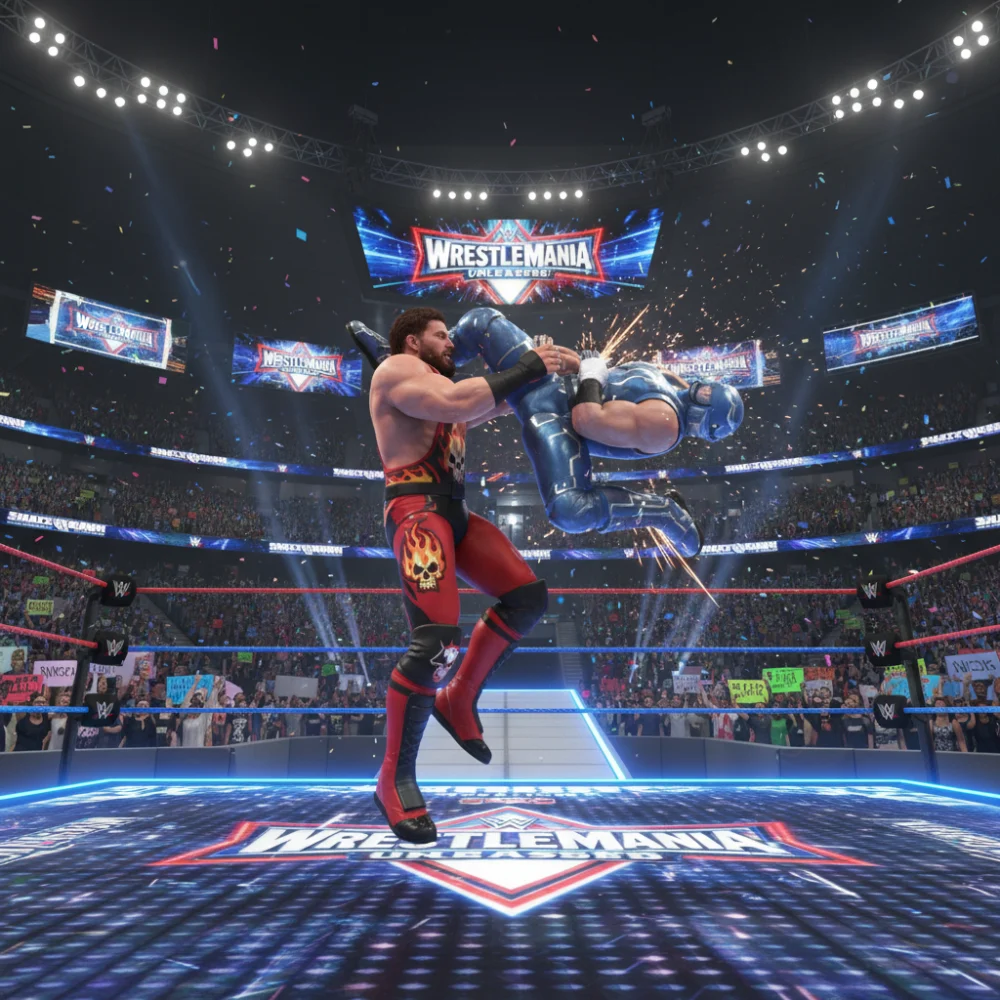
The Evolution of Digital Grappling
Wrestling video games occupy a unique niche in the gaming industry, bridging the gap between competitive fighting games and sports simulations. Unlike traditional fighters like Street Fighter or Tekken, which rely on health bars and complex combo inputs, wrestling games often prioritize the spectacle, storytelling, and psychology of a match. For decades, developers have struggled to balance the scripted nature of professional wrestling with the need for competitive gameplay mechanics, resulting in a fascinating evolution of control schemes and graphical styles.
The history of the genre can be traced back to the arcades of the early 1980s. Titles like Mat Mania and The Big Pro Wrestling! laid the groundwork, offering simple button-mashing mechanics where players engaged in tests of strength. However, it was Nintendo’s Pro Wrestling for the NES that truly popularized the genre in home consoles. With its memorable roster, including the likes of Starman and Amazon, and the iconic translation error “A Winner Is You,” this game established the fundamental concept of wearing down an opponent before attempting a pinfall or submission.
The 16-Bit Wars and Arcade Action
As technology advanced to the 16-bit era, the rivalry between Nintendo and Sega mirrored the real-life competition in the wrestling business. This period saw the release of WWF Royal Rumble and WWF Raw, which introduced a “tug-of-war” grappling mechanic. Players had to mash buttons faster than their opponents to execute moves. While rudimentary by modern standards, these games captured the colorful aesthetic of the early 90s wrestling boom, featuring digitized sprites of legends like Hulk Hogan, Bret Hart, and The Undertaker.
Simultaneously, the arcade scene flourished with WWF WrestleFest. Developed by Technos Japan, this game is still revered today for its vibrant graphics and frantic tag-team action. It allowed players to perform signature moves and double-team attacks, creating a chaotic energy that perfectly encapsulated the Golden Era of wrestling. The collaborative nature of the gameplay made it a staple in arcades, proving that wrestling games could be just as social as they were competitive.
The AKI Engine Revolution
The Nintendo 64 era is widely considered the golden age of wrestling video games, primarily due to the work of AKI Corporation. Starting with WCW vs. nWo: World Tour and culminating in WWF No Mercy, AKI introduced a revolutionary grappling system. Instead of mindless button mashing, players held a grapple button to initiate a clinch, from which they could perform weak or strong moves depending on the direction pressed. This system emphasized timing and momentum, allowing for a strategic depth that had never been seen before.
WWF No Mercy, released in 2000, remains the benchmark against which many modern wrestling games are measured. It featured a branching story mode that reacted to wins and losses, a massive roster, and an extensive Create-A-Wrestler (CAW) mode. The persistence of the AKI engine’s popularity is evident in the modding community, which continues to update No Mercy textures and rosters more than two decades after its release.
The PlayStation Era and SmackDown!
While Nintendo owners enjoyed the technical depth of AKI games, PlayStation owners were treated to the faster, more arcade-like experience of the SmackDown! series developed by Yuke’s. The early entries, such as SmackDown! 2: Know Your Role, focused on speed and chaotic backstage brawls. These games prioritized the “entertainment” aspect of World Wrestling Entertainment, featuring intricate season modes and elaborate entrance sequences that utilized the CD-ROM storage capacity.
The pinnacle of this era was arguably WWE SmackDown! Here Comes the Pain on the PlayStation 2. This title struck a perfect balance between simulation and arcade fun. It introduced a more sophisticated grappling system while retaining the fast pace of its predecessors. The roster was staggering, creating a snapshot of the “Ruthless Aggression” era, and the inclusion of legends and varied match types like the Elimination Chamber made it a fan favorite that is still played competitively today.
The Transition to Simulation
As the franchise transitioned into the SmackDown vs. Raw series, the developers began to push for more realism. This era introduced the “Ultimate Control” grapple system and stamina meters, forcing players to manage their energy rather than sprinting around the ring indefinitely. While this added a layer of strategy, some fans felt it slowed down the gameplay too much. This period also saw the introduction of “Universe Mode,” a sandbox feature allowing players to book their own shows, rivalries, and title changes.
In 2013, the license shifted from THQ to 2K Sports, marking a significant turning point. Under the 2K banner, the visual fidelity of wrestling games skyrocketed. Using advanced face-scanning technology, developers created digital avatars that were nearly indistinguishable from their real-life counterparts. However, the gameplay shifted heavily toward simulation, attempting to recreate the pacing of a televised broadcast. This polarized the community, with some praising the realism and others missing the arcade fun of the past.
The Disaster and the Rebirth
The genre hit a low point with the release of WWE 2K20. Plagued by game-breaking bugs, glitchy physics, and poor visuals, the game was a critical and commercial failure. It forced 2K to cancel the following year’s mainline release, a virtually unprecedented move in annual sports gaming. This hiatus allowed the developers to rebuild the engine, resulting in the well-received WWE 2K22, which simplified the controls and reintroduced a faster, combo-heavy style of play reminiscent of fighting games.
The Cult of Fire Pro Wrestling
Outside the WWE ecosystem, Fire Pro Wrestling World stands as the champion of the hardcore enthusiast. Renowned for its 2D sprites and incredibly deep logic system, Fire Pro allows players to program exactly how a CPU wrestler behaves in every situation. From the frequency of taunts to the timing of finishing moves, the customization is limitless. It is less about playing the match and more about simulating the perfect bout, earning it a dedicated following among wrestling purists.
Management Simulations
For those who prefer the booker’s office to the ring, text-based management simulators offer a different kind of thrill. Games like Total Extreme Wrestling (TEW) and Journey of Wrestling strip away the graphics entirely, focusing on contracts, TV ratings, and locker room morale. These games challenge players to run a promotion, requiring them to build stars, manage egos, and navigate the financial realities of the wrestling business. They provide a level of depth that graphical action games simply cannot match.
The Indie Scene and Competition
The monopoly of WWE games has recently been challenged by All Elite Wrestling’s AEW Fight Forever. Developed by Yuke’s, this game deliberately harkens back to the No Mercy era, prioritizing accessible, arcade-style gameplay over hyper-realism. Additionally, indie developer MDickie has cultivated a massive following with Wrestling Empire, a rough-around-the-edges mobile and switch game that offers unprecedented freedom, allowing players to roam the arena, injure opponents, and engage in a chaotic career mode that is as hilarious as it is violent.
Community Creations and The Future
One of the most vital components of modern wrestling games is the “Community Creations” suite. This feature allows talented users to create wrestlers, arenas, and championships that are not officially in the game and share them with the world. It keeps the game fresh, allowing players to download updated attires or wrestlers from other promotions. As we look to the future, the demand for better physics engines, deeper General Manager modes, and cross-platform capabilities continues to drive innovation in this unique and enduring genre.