As the calendar pages turned, signaling the close of another tumultuous year in professional wrestling, the landscape shifted dramatically, punctuated by major events that left an indelible mark on the sport’s collective consciousness. The closing weeks of the year often serve as both a reflective period and a launchpad for the narratives that will define the coming months, and this particular transition was no exception. From high-stakes championship encounters that reshaped the top of the card to the quiet acknowledgment of figures who contributed to wrestling’s rich history, the industry was a vibrant tapestry of present-day drama and historical resonance. At the forefront of recent discussions was a significant pay-per-view spectacle that aimed to cap off the year with a bang, alongside the ever-present churn of weekly television, the fluctuating currents of viewership metrics, and a poignant moment of remembrance for a grappling legend.
The focus of much contemporary conversation orbited around a major event titled "Worlds End," an ambitious endeavor designed to provide a definitive conclusion to several long-running storylines and crown new champions, effectively resetting the stage for the new year. Staged in Long Island, New York, the show carried a palpable energy, particularly given its proximity to the hometown of its central figure, Maxwell Jacob Friedman, the then-reigning World Champion. The event promised a night of high drama, significant turns, and the kind of hard-hitting action fans have come to expect from the promotion. While some elements delivered on this promise with resounding success, others left lingering questions, sparking widespread debate among the passionate fanbase and industry observers alike.
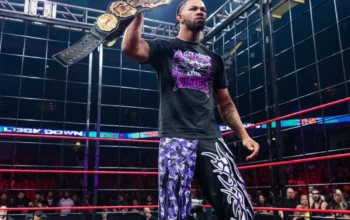
The main event of Worlds End was undoubtedly the most anticipated match on the card, pitting MJF against the formidable "King of Television," Samoa Joe, for the AEW World Championship. The storyline leading into this clash was meticulously crafted, showcasing MJF’s protracted struggle with a debilitating neck injury and the psychological toll it took on him, juxtaposed with Samoa Joe’s relentless, almost predatory pursuit of the title. Joe, a veteran known for his legitimate toughness and submission prowess, had systematically dismantled opponents throughout the year, culminating in his challenge to Friedman. The match itself was a brutal affair, a true contest of wills that saw MJF battle through apparent pain, utilizing his cunning and resilience to try and overcome the dominant challenger. However, despite a valiant effort and flashes of his signature brilliance, the injury angle proved to be a decisive factor. Samoa Joe, capitalizing on Friedman’s vulnerabilities, locked in the Coquina Clutch, forcing the champion to pass out and thus ending his historic 400-plus day reign. This outcome not only crowned a new, dominant world champion in Samoa Joe, ushering in a new era of unyielding authority at the top of the card, but also left the future of MJF shrouded in uncertainty, teasing a potential hiatus for recovery or a dramatic shift in his character upon return. The reveal of "The Devil" and his faction immediately following the main event further amplified the post-match chaos, introducing a new layer of intrigue and promising a complex, multi-layered narrative to unfold in the coming weeks.
Beyond the main event, Worlds End delivered another pivotal championship encounter with the final of the Continental Classic tournament, a gruelling round-robin style competition culminating in a triple crown championship match. The tournament, designed to test the mettle of the roster’s elite, saw two of professional wrestling’s most respected and hard-hitting veterans, Eddie Kingston and Jon Moxley, clash in the final. Their history, both as allies and adversaries, added immense emotional weight to the contest. Kingston, a man who wears his heart on his sleeve and whose career has been a testament to perseverance, was chasing not only a prestigious tournament victory but also the unification of the ROH World Championship, the NJPW Strong Openweight Championship, and the newly minted Continental Championship. The match was a visceral, no-holds-barred fight, reflecting the deep personal connection and shared philosophy of violence between the two men. In a moment that resonated deeply with fans, Kingston emerged victorious, capturing the Continental Crown and solidifying his status as a legitimate main event player and a champion of the people. His emotional celebration, coupled with Moxley’s respectful acknowledgment, provided one of the most heartwarming and cathartic conclusions to any storyline in recent memory, cementing Kingston’s legacy and opening doors for new challenges as a multi-title holder.
The undercard of Worlds End also featured several compelling matchups that either advanced ongoing feuds or positioned new contenders for future title opportunities. Christian Cage defended his TNT Championship against Adam Copeland, a rivalry steeped in decades of shared history and recent animosity. Their encounter was a brutal spectacle, marked by the kind of calculated aggression only two seasoned veterans can deliver. While Cage ultimately retained his title through nefarious means, the feud felt far from over, promising further dramatic confrontations between the former best friends. Another standout performance came from Swerve Strickland, who continued his meteoric rise with a dominant victory over Keith Lee. Strickland’s commanding presence and evolving character work have positioned him as a top contender for the world title, and his victory at Worlds End only further solidified his dangerous aura. The women’s division also saw its championship defended, with Toni Storm continuing her "Timeless" reign against Riho. While a solid contest, it felt somewhat overshadowed by the broader narratives, highlighting a persistent challenge in giving the women’s division consistent, high-profile storytelling. Similarly, the Tag Team Championship bout, featuring Ricky Starks and Big Bill defending against a field of challengers, delivered action but struggled to fully capture the narrative momentum of the evening’s top contests. The overall pacing of Worlds End, while packed with action, sometimes suffered from an overabundance of matches, leading to moments where the crowd’s energy waxed and waned, a common pitfall for cards attempting to do too much.
In the immediate aftermath of a major pay-per-view like Worlds End, the focus quickly shifts to the weekly television programming – Dynamite, Rampage, and Collision – which serve as the essential conduits for advancing storylines and building anticipation for future events. The week following Worlds End was crucial for translating the PPV’s developments into actionable narratives. The crowning of Samoa Joe as the new World Champion instantly created a fresh dynamic at the top of the card. Who would step up to challenge this formidable champion? The lingering question of MJF’s status and the identity of "The Devil" became paramount, dominating discussions and promising explosive reveals. Similarly, Eddie Kingston’s triple crown victory presented new booking possibilities, as he now carried three championships across multiple promotions, requiring careful planning to manage his schedule and challengers. Weekly television shows are the lifeblood of any wrestling promotion, providing the consistent narrative threads that connect major events. They are where feuds are ignited, character arcs are developed, and the roster’s depth is showcased. The challenge lies in maintaining momentum, introducing new talent effectively, and ensuring that every segment contributes meaningfully to the overarching tapestry of stories. The booking team faced the immediate task of leveraging the Worlds End fallout to create compelling reasons for viewers to tune in each week, setting the stage for the next cycle of rivalries and title pursuits.
Beyond the immediate in-ring action and storyline developments, the broader health of the wrestling industry is often gauged through television ratings. These metrics, while not the sole determinant of success, offer a snapshot of viewership trends, fan engagement, and the competitive landscape. Analysis of recent ratings notes often reveals the ebb and flow of audience interest, influenced by a myriad of factors including seasonal viewership patterns, competition from other programming, the strength of ongoing storylines, and the drawing power of individual stars. For instance, holiday periods often see fluctuations, and the end-of-year scheduling can impact live viewership. Promotions constantly analyze these numbers to understand what resonates with their audience, informing creative decisions and strategic planning. A strong rating signifies a healthy connection with the fanbase and positive momentum, while dips can signal a need for creative adjustments or a renewed focus on building star power. In a fragmented media landscape, maintaining consistent viewership is a significant achievement, and the ongoing battle for supremacy in the ratings reflects the dynamic and fiercely competitive nature of professional wrestling. Both major promotions constantly strive to capture and retain audience attention, using compelling storytelling and high-quality in-ring performances as their primary weapons.
While AEW was busy wrapping up its year with a major PPV, the WWE landscape, particularly on Friday nights with SmackDown, continued its relentless march towards the Royal Rumble and ultimately WrestleMania. Around this time, SmackDown was a crucial battleground for advancing key storylines, most notably those involving the dominant Bloodline faction and the build-up to the highly anticipated men’s and women’s Royal Rumble matches. The blue brand consistently delivered compelling narratives, often centered around the intricate dynamics within the Bloodline, the pursuit of Roman Reigns’ Undisputed WWE Universal Championship, and the emergence of new challengers. The show’s focus on character development, long-term booking, and the dramatic interplay between its top stars ensured its consistent viewership. The atmosphere was one of anticipation, as the "Road to WrestleMania" was beginning to truly take shape, with every match and segment potentially influencing who would stand tall at the biggest show of the year. SmackDown’s ability to blend high-stakes wrestling with captivating soap opera elements remained a testament to its enduring appeal, serving as a powerful counterpoint to the more action-heavy focus often seen elsewhere in the industry.
In addition to the current happenings in the wrestling world, a moment of reflection was warranted for the remarkable life and contributions of Roland Bock, a name that resonates with profound significance for those who appreciate the deep, legitimate roots of professional wrestling and catch wrestling. Bock, a German amateur wrestling legend, transitioned to professional wrestling in Japan during the 1970s, leaving an indelible mark on the sport. He was renowned for his incredible legitimate strength and grappling prowess, cultivated through a decorated amateur career that saw him compete in the Olympic Games. When he entered the world of professional wrestling, particularly in Japan, he quickly earned a reputation as a true "shooter" – a wrestler with genuine combat skills, capable of legitimately out-grappling almost anyone.

Bock’s career saw him cross paths with some of the most respected figures in wrestling history, including Karl Gotch, "The God of Wrestling," and Antonio Inoki, the founder of New Japan Pro-Wrestling. His matches, particularly those in New Japan, were characterized by their intense realism and technical precision, a stark contrast to the more theatrical style prevalent in other parts of the world. He was seen as a legitimate threat, an opponent who could truly push a top star to their limits, blurring the lines between sport and spectacle. His brief but impactful tenure in Japan contributed significantly to the "strong style" ethos that would become a hallmark of New Japan Pro-Wrestling, emphasizing realistic strikes, submissions, and a hard-hitting approach to the craft. Bock’s legacy is one of unwavering legitimacy and a commitment to the foundational principles of grappling. He represented a bridge between traditional amateur wrestling and the professional arena, reminding fans and practitioners alike of the sport’s formidable athletic origins. His life serves as a powerful testament to the enduring appeal of genuine athleticism and the art of competitive combat within the theatrical framework of professional wrestling. He remains a revered figure among purists and historians, a symbol of wrestling’s more "real" past.
Finally, amidst the whirlwind of championship changes, burgeoning storylines, and historical retrospectives, there was a quiet, somber note concerning Rick Link, who entered hospice care. While not a mainstream wrestling personality, Link was a figure known within certain circles of the wrestling community, particularly among those associated with long-running wrestling media outlets and industry insiders. These personal connections, often unseen by the wider public, form the bedrock of the wrestling community, binding individuals through shared passion and collective experiences. His situation served as a poignant reminder of the human element behind the spectacle, a moment to acknowledge those who contribute to the broader ecosystem of professional wrestling, whether in the spotlight or behind the scenes, and the inevitable passage of time for everyone involved in this unique world.
As the curtain fell on the year, leaving behind the echoes of Worlds End and the foundational narratives for the year to come, the wrestling industry once again proved its dynamic and ever-evolving nature. The crowning of new champions, the resolution of long-standing feuds, and the introduction of fresh mysteries all converged to create a compelling conclusion to one chapter and an exciting prelude to the next. The constant interplay between in-ring performance, character development, weekly television programming, and the broader business metrics of ratings ensures that professional wrestling remains a vibrant, unpredictable, and endlessly fascinating form of entertainment. And as the industry charges forward, it carries with it not only the promise of future spectacles but also the indelible marks left by legends like Roland Bock, whose contributions continue to shape its rich and storied history, reminding us that every bump, every hold, and every character contributes to a grand, ongoing narrative that transcends generations.