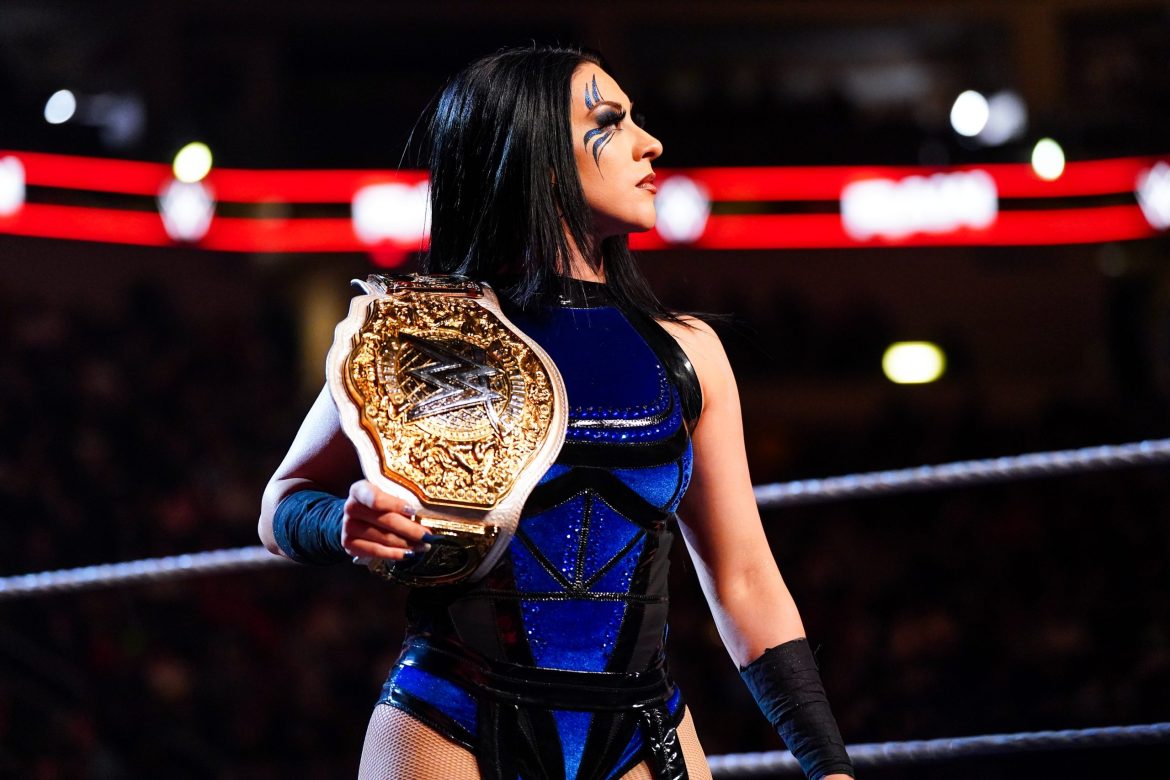
As the calendar pages turn towards the twilight of 2025, World Wrestling Entertainment’s Monday Night Raw delivered a high-stakes broadcast from the electric Kia Center in Orlando, Florida, setting the stage for what promises to be a transformative period for the company. With the monumental Netflix anniversary episode looming just a week away, and the annual pilgrimage to the Royal Rumble Premium Live Event next month in Saudi Arabia firmly on the horizon, this particular December 29th edition of the flagship program felt less like a typical weekly offering and more like a pivotal waypoint. Two coveted championships hung in the balance, signaling a clear intent to elevate the competitive landscape and ensure that every performer on the red brand understood the magnitude of the opportunities and challenges ahead. The air was thick with anticipation, not merely for the immediate outcomes but for the long-term implications these battles would carve into the fabric of WWE’s future, as a new year, a new broadcasting home, and the illustrious "Road to WrestleMania" all converged.
The evening’s spotlight first shone brightly on the Women’s World Championship, where the reigning champion, Stephanie Vaquer, found herself in the unenviable position of defending her title against not one, but two formidable challengers: the returning icon, Nikki Bella, and the powerhouse contender, Raquel Rodriguez, in a grueling triple threat encounter. Vaquer, a relative newcomer to the global stage but one who had rapidly ascended through the ranks of WWE’s international talent pool, had captured the Women’s World Championship with a blend of calculated aggression and submission prowess that had surprised many. Her reign, though still in its nascent stages, had been marked by a fierce determination to prove her legitimacy against a roster teeming with established stars. She had demonstrated an uncanny ability to adapt to her opponents, often finding ingenious ways to neutralize their strengths before applying her signature hold, forcing many to tap out. This triple threat, however, represented her most significant test to date, a multi-woman maelstrom where alliances are fleeting and opportunism reigns supreme.
Nikki Bella’s presence in this championship fray was a testament to her enduring legacy and undeniable star power. A former Divas Champion and a bona fide Hall of Famer, Bella’s unexpected re-emergence in the title picture had sent shockwaves through the locker room and the WWE Universe alike. Her return wasn’t merely a nostalgic appearance; it was a statement of intent. Nikki had never shied away from the spotlight, and her career was defined by her ability to evolve, both inside and outside the ring. Her experience in high-pressure situations, her calculated ring presence, and her willingness to bend the rules if necessary, made her an immediate threat to Vaquer’s reign. The question lingered whether Bella’s return was a one-off attempt at glory or the prelude to a more sustained run, but regardless, her focus on the Women’s World Championship was absolute, driven by a desire to prove that her skills and star power had not diminished with time.
Completing the trio of challengers was Raquel Rodriguez, a dominant force whose raw strength and imposing stature had made her a consistent threat in any division she entered. Rodriguez had previously tasted championship gold, both as an NXT Women’s Champion and a multiple-time WWE Women’s Tag Team Champion, but the elusive Women’s World Championship had thus far evaded her grasp. Her path to this triple threat match had likely been paved with impressive victories and a relentless pursuit of singles glory, embodying the spirit of a warrior who refuses to be denied. Her power-based offense, characterized by devastating slams and impactful strikes, presented a stark contrast to Vaquer’s technicality and Bella’s opportunistic style. In a triple threat, Rodriguez’s ability to dominate two opponents simultaneously or to isolate one for a decisive blow would be crucial. The match itself promised a fascinating clash of styles: Vaquer’s precision, Bella’s cunning, and Rodriguez’s brute force, all converging with the ultimate prize hanging overhead. Each competitor knew that a single misstep or a moment of hesitation could cost them the championship, adding an extra layer of tension to an already volatile encounter.
Later in the evening, another set of prestigious titles was on the line as the World Tag Team Champions, the unlikely yet highly effective duo of AJ Styles and Dragon Lee, prepared to defend their gold against the legendary, multi-time champions, The Usos. The formation of Styles and Lee as a tag team had been one of the more intriguing developments on Raw. AJ Styles, "The Phenomenal One," a Grand Slam Champion and a veteran whose career spans decades and continents, brought unparalleled experience, technical mastery, and a calculated aggression to the partnership. His presence elevated any division he entered, and his foray into tag team wrestling with a rising star like Dragon Lee spoke volumes about his willingness to adapt and mentor. Dragon Lee, on the other hand, represented the exciting future of professional wrestling. A high-flying prodigy known for his breathtaking aerial maneuvers and lightning-fast strikes, Lee brought an exhilarating dynamism that perfectly complemented Styles’ grounded, methodical approach. Their championship reign had likely been a blend of Styles’ strategic brilliance and Lee’s explosive offense, making them a formidable pairing that had captured the imaginations of the WWE Universe.
Their challengers, The Usos, needed no introduction. Jey and Jimmy Uso had cemented their status as one of the greatest tag teams in WWE history, boasting an impressive collection of championships and a legacy built on undeniable chemistry, hard-hitting offense, and an innate understanding of tag team psychology. Their journey had been complex, marked by periods of dominance, controversial alliances, and personal struggles, yet their commitment to the tag team division had always remained unwavering. Whether as part of a dominant faction or as a standalone force, The Usos consistently delivered high-octane performances, their signature Superkicks and top-rope splashes a constant threat. Their quest for another World Tag Team Championship reign was a clear indication that despite their myriad accomplishments, the desire for more gold burned as brightly as ever. This match was not just a title defense; it was a generational clash of styles and philosophies. Styles and Lee represented a dynamic, almost experimental pairing, while The Usos embodied the hardened, traditional excellence of tag team wrestling. The strategic nuances, the rapid-fire exchanges, and the inevitable dramatic near-falls were all but guaranteed in a contest between four athletes of this caliber, all vying for supremacy.
Beyond the championship contests, the December 29th Raw also featured a compelling singles encounter between the legendary Rey Mysterio and the ambitious Austin Theory. Rey Mysterio, a living legend whose career has inspired generations, continued to defy Father Time with his unparalleled lucha libre artistry and incredible resilience. A former WWE Champion, World Heavyweight Champion, and Royal Rumble winner, Mysterio’s influence on the industry is immeasurable. Despite his veteran status, he remained a potent force, his high-flying offense and innovative maneuvers still capable of captivating audiences and defeating opponents half his age. His appearance on Raw always brought a sense of awe and respect, a reminder of the enduring power of his legacy.
Across the ring stood Austin Theory, a young, self-assured talent who had consistently positioned himself as a future face of the company. Theory, with his chiseled physique and arrogant demeanor, possessed all the tools to become a top-tier star, having already captured the United States Championship and even holding the coveted Money in the Bank briefcase at one point in his career. His journey had been one of rapid ascent, marked by significant opportunities and a relentless pursuit of personal glory, often at the expense of others. A match against Rey Mysterio was more than just another contest for Theory; it was an opportunity to prove his mettle against a bona fide icon, to demonstrate that he could hang with, and perhaps even surpass, a legend. The clash between Mysterio’s experience and high-flying agility versus Theory’s youthful strength and unbridled confidence promised a captivating narrative. Would Theory be able to outsmart the master of the 619, or would Mysterio once again prove that experience and heart can overcome youthful arrogance? The implications of a victory for either man, especially with Royal Rumble season heating up, were significant, potentially providing a crucial boost in momentum.
The show itself was set to kick off with a segment involving "The Vision," a moniker that, for many keen observers of the WWE landscape, immediately conjured images of the flamboyant and enigmatic Seth "Freakin" Rollins. As "The Visionary," Rollins has long established himself as a central figure on Monday Night Raw, known for his elaborate entrances, his distinctive laugh, and his captivating, often unhinged, promos. If indeed "The Vision" referred to Rollins, his presence opening the show was a clear signal of the night’s importance and the narrative direction WWE intended to pursue. Rollins, a multi-time world champion and a perennial main event player, thrives on grand pronouncements and setting the tone. His segments are rarely inconsequential; they often involve challenging authority, issuing open challenges, or laying out his grand plans for domination. With the Netflix transition just days away and the Royal Rumble looming, Rollins’ "vision" for his own future, and potentially the future of Raw, would be under intense scrutiny. A powerful opening statement from such a pivotal character could easily dictate the mood and direction for the entire three-hour broadcast, potentially setting up new feuds or reigniting old rivalries as the calendar flipped to a new year and a new era.
The broader context of this Raw episode cannot be overstated. The impending Netflix anniversary episode next week represents a monumental shift in WWE’s broadcasting strategy, marking a new chapter in its storied history. Moving its flagship show to a global streaming platform like Netflix is a game-changer, promising increased international reach and a redefinition of how fans consume weekly wrestling content. This December 29th episode, therefore, served as a vital bridge, a final opportunity for WWE to refine its storylines and build maximum anticipation before this historic transition. Every match, every promo, every segment was meticulously crafted to ensure that viewers were invested not just in the immediate outcomes, but in the unfolding narrative that would carry over into the Netflix era. The performers on the roster were undoubtedly aware of the increased visibility and the heightened stakes, pushing them to deliver their absolute best as they stood on the precipice of this new broadcasting frontier.
Furthermore, the shadow of the Royal Rumble Premium Live Event, scheduled for next month in Saudi Arabia, loomed large over the proceedings. The Royal Rumble is traditionally the official start of the "Road to WrestleMania," offering both men’s and women’s winners a guaranteed championship opportunity at the grandest stage of them all. This particular Rumble’s location in Saudi Arabia adds a unique cultural and logistical dimension, but its core significance remains unchanged. Every singles victory, every championship defense, every impactful promo on Raw was a potential building block for a performer’s momentum heading into one of WWE’s most exciting and unpredictable events. Superstars would be looking to make statements, assert their dominance, and position themselves as credible threats to win the coveted 30-person over-the-top-rope battle royals. The championship matches on Raw were particularly crucial in this regard, as holding gold going into the Rumble season often provides a distinct advantage, or conversely, makes a target of the champion for those seeking to dethrone them before WrestleMania.
The Kia Center in Orlando, Florida, a city deeply intertwined with WWE’s developmental and performance infrastructure, provided a fitting backdrop for this pivotal episode. Florida has long been a hotbed for professional wrestling, home to the WWE Performance Center and the NXT brand, making it a familiar and passionate environment for the WWE Universe. The energy from the live crowd in Orlando would undoubtedly fuel the performers, adding an extra layer of intensity to the championship showdowns and the crucial singles contests. As the final Monday Night Raw of the year approached its conclusion, the reverberations of its outcomes would echo throughout the wrestling world. The champions who retained their titles would solidify their standing, while new challengers would emerge, eager to seize their moment. The stage was set, the stakes were astronomical, and the promise of a new era for WWE loomed brightly on the horizon, ensuring that this December 29th broadcast would be remembered not just for its immediate action, but for its profound implications on the path ahead.