
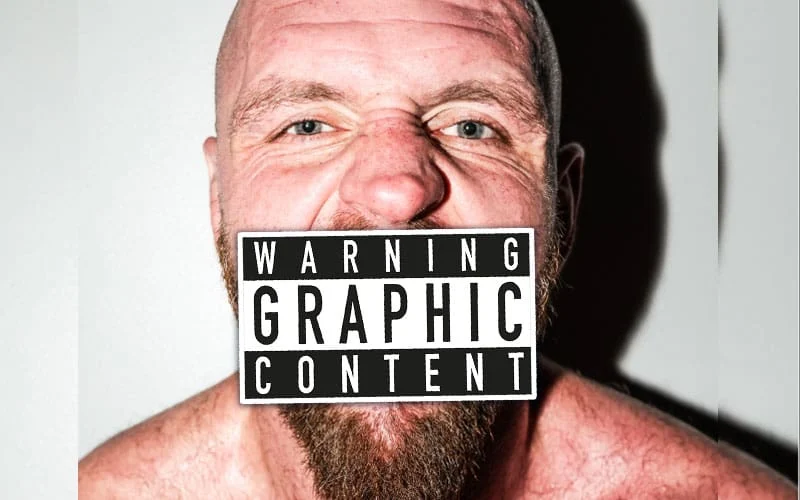
The atmosphere surrounding professional wrestling at the close of the year often carries a heavy sense of finality, as long-standing grudges reach their breaking point and the physical toll of a grueling calendar year begins to manifest in the bodies of the performers. At the most recent iteration of AEW Worlds End, this sentiment was captured not just in the wins and losses recorded in the history books, but in the physical sacrifice etched onto the face of one of the industry’s most resilient figures. Jon Moxley has long built a reputation as the backbone of All Elite Wrestling, a man whose identity is inextricably linked to the concept of endurance and the philosophy that greatness is only achieved through a willingness to suffer. As the curtain fell on the 2025 edition of the event, Moxley once again proved why he is considered the ultimate warrior of the modern era, securing the AEW Continental Championship through a gauntlet of pain that would have sidelined a lesser athlete. The night was defined by a specific kind of brutality, one that saw Moxley leave the arena with a new piece of gold around his waist and one less intact tooth in his mouth, a trade-off that the "Death Rider" seemed more than happy to make in his pursuit of excellence.
The journey to the finals of the Continental Classic is designed to be a marathon of attrition, testing the stamina, technical acumen, and mental fortitude of every participant involved. For Moxley, the path to the podium required him to navigate a minefield of world-class talent, culminating in a high-stakes semifinal encounter that would set the tone for the rest of his evening. His opponent in this penultimate stage was Kyle Fletcher, a young man who has rapidly ascended the ranks of the professional wrestling world to become one of the most dangerous and respected strikers on the roster. Fletcher represents the new guard of the industry—explosive, fearless, and possessing a "stiff" style that leaves no room for error. When the bell rang for their semifinal clash, it was clear that neither man intended to give an inch. The match was a visceral display of European-influenced technicality mixed with the raw, unbridled aggression that has become Moxley’s trademark. It was during this fierce exchange of strikes and high-impact maneuvers that the physical cost of the tournament became visible. A devastating shot to the jaw, delivered with the kind of velocity that only a competitor of Fletcher’s caliber can muster, connected squarely with Moxley’s face. The impact was audible to those at ringside, and while many in the audience might have assumed it was merely another loud "thud" in a night full of them, the reality was a legitimate injury that saw a portion of Moxley’s tooth fly across the canvas.
Most athletes would have been momentarily stunned or perhaps even sought a brief reprieve to assess the damage, but Jon Moxley is not built like most athletes. The "Purveyor of Violence" has spent his career conditioning himself to treat physical trauma as a mere distraction rather than a deterrent. Instead of slowing down, the sight of his own blood and the sensation of the jagged edge where his tooth used to be seemed to fuel a renewed sense of urgency. He finished the match against Fletcher with the same relentless pace he started with, eventually securing the victory and moving on to the finals. This display of grit served as a stark reminder of the stakes involved in the Continental Classic. The tournament isn’t just about winning a title; it is about proving who can survive the most hostile environment imaginable. By the time Moxley’s hand was raised in the semifinals, he was already carrying the physical scars of the war, yet his focus remained entirely on the final hurdle that stood between him and the championship.
The championship final presented a challenge of legendary proportions, as Moxley found himself standing across the ring from Kazuchika Okada. To many fans and analysts, Okada represents the gold standard of professional wrestling—a man whose career in Japan and now in AEW has been defined by elegance, precision, and an almost supernatural ability to perform under the brightest lights. The contrast between the two finalists could not have been more pronounced. Okada is the "Rainmaker," a polished and methodical technician who carries himself with the regality of a king. Moxley is the brawler from the streets, a man who prefers the dirt and the grime of a fight over the pageantry of a traditional wrestling match. This clash of styles and philosophies was the centerpiece of Worlds End, and the presence of the AEW Continental Championship on the line only heightened the tension. The match was a masterclass in storytelling, with Okada attempting to dissect Moxley with his signature dropkicks and the feared Rainmaker lariat, while Moxley relied on his durability and his ability to turn any wrestling match into a desperate struggle for survival.
Throughout the final, the injury sustained earlier in the night was a silent protagonist. Every time the camera zoomed in on Moxley’s face, the gap in his smile served as a visual representation of the "all-in" mentality that AEW fans have come to admire. It wasn’t just a chipped tooth; it was a badge of honor, a testament to the fact that Moxley had already given a piece of himself to the tournament before the final bell had even rung. The battle with Okada pushed both men to their absolute limits, stretching past the twenty-minute mark as they traded foundational strikes and near-falls that left the capacity crowd in a state of perpetual frenzy. In the end, it was Moxley’s refusal to stay down that proved to be the deciding factor. He absorbed the best that the "Rainmaker" had to offer and fired back with a tenacity that eventually overwhelmed the legendary challenger. When the referee’s hand hit the mat for the third time, signaling Moxley’s victory and his ascension to the throne of the Continental Championship, the arena erupted in a roar of approval that recognized not just the win, but the sheer willpower required to achieve it.
In the immediate aftermath of the event, the wrestling world was abuzz with talk of the match quality and the prestige that Moxley’s win brought to the Continental Title. However, it was a single image shared by the promotion that truly captured the essence of the night. A photograph emerged showing a weary but triumphant Moxley, the new championship belt draped over his shoulder, sporting a wide, uninhibited grin that proudly displayed the missing fragment of his tooth. It was an image that went viral almost instantly, resonating with a fanbase that values authenticity above all else. In an era where professional wrestling is often scrutinized for its theatricality, Moxley’s "championship smile" was a reminder of the very real physical stakes that these performers face every time they step through the ropes. The photo didn’t just show a man who had won a match; it showed a man who had found joy in the struggle and who viewed his injury as a small price to pay for the glory of being the best.
The significance of this moment extends beyond a single night or a single injury. It speaks to the broader narrative of Jon Moxley’s career and his role within the landscape of All Elite Wrestling. Since the company’s inception, Moxley has been the person the promotion turns to when things get tough. Whether it was leading the locker room through the challenges of the pandemic era or stepping up to stabilize the main event scene during periods of transition, he has consistently been the reliable, hard-hitting heart of the roster. His victory in the Continental Classic, particularly coming against a lineup that included stars like Okada, Fletcher, and Takeshita, cements his status as the ultimate "Ace." The Continental Championship was designed to highlight the best in-ring competitors in the world, emphasizing a "triple crown" heritage and a focus on pure wrestling talent. By becoming the standard-bearer for this title, Moxley has ensured that the championship will be viewed with the same level of respect as the world title itself.
Furthermore, the match with Kyle Fletcher earlier in the night should not be overlooked in the grand scheme of the tournament’s legacy. Fletcher’s role in "chipping" the champion is a metaphorical passing of the torch in terms of intensity. While Moxley walked away with the win and the gold, Fletcher walked away with the reputation of a man who can stand toe-to-toe with a legend and leave a lasting mark. This kind of "iron sharpens iron" environment is exactly what the Continental Classic was intended to foster. It creates a platform where veterans are tested to their breaking point and younger stars are given the opportunity to prove they belong in the conversation with the elite. The fact that Moxley’s injury occurred during a match with a rising star like Fletcher adds a layer of depth to the story, suggesting that the future of the promotion is just as violent and competitive as its present.
As 2025 draws to a close and the wrestling world looks toward the beginning of a new year, the image of Jon Moxley’s battered face will likely remain one of the defining visuals of the season. It serves as a perfect encapsulation of the "Death Rider" persona—a man who does not seek out pain, but who certainly does not shy away from it when it stands in the path of his goals. For the fans who have followed Moxley from his early days on the independent circuit to the heights of global superstardom, this latest chapter is simply another confirmation of what they have always known: there is no one more dedicated to the craft of professional wrestling than Jon Moxley. He doesn’t just play a character; he lives the reality of the sport, embracing the bruises, the blood, and the broken teeth as essential components of his journey.
The AEW Continental Championship now rests in the hands of a man who has proven he will do whatever it takes to keep it. The tournament may be over, but the reign of Moxley is only just beginning, and if the events of Worlds End are any indication, his challengers can expect a physical ordeal unlike any other. The "Purveyor of Violence" has set a high bar for the coming year, challenging every member of the roster to match his intensity and his willingness to sacrifice. As he moves forward, Moxley carries with him the weight of the gold and the memory of a hard-fought battle, evidenced by a smile that tells the story of a champion who truly earned his place at the top. In the world of professional wrestling, titles come and go, but the legends are forged in the moments where the line between the performance and the reality disappears. At Worlds End, Jon Moxley didn’t just win a tournament; he reminded the world that the price of greatness is often paid in pieces of oneself, and he was more than willing to pay the toll.