The landscape of professional wrestling often finds itself in a state of flux during the final weeks of the calendar year, as holiday festivities and seasonal television viewing habits shift the traditional landscape of sports entertainment viewership. For WWE’s developmental brand, the broadcast airing on December 23, 2025, served as a pivotal moment in establishing the trajectory for the upcoming year, specifically building toward the highly anticipated New Year’s Evil special. This particular episode of NXT, broadcast on The CW Network, showcased a blend of high-stakes narrative progression and the continued evolution of the brand’s newest stars. As the industry looked toward the closing of the year, the data surrounding this episode provided a fascinating glimpse into the brand’s current standing within the broader television market, especially as it continues to find its footing on its new broadcast home.
When examining the quantitative performance of the December 23rd episode, the figures revealed a slight contraction in the total audience compared to the previous week’s outing. The program attracted an average of 602,000 viewers throughout its two-hour duration, a figure that represents a minor dip from the 607,000 viewers who tuned in for the December 16th broadcast. This decrease of 5,000 viewers constitutes a marginal decline of approximately 0.8 percent. While any downward movement in viewership is scrutinized by analysts and fans alike, such a small variance is often considered negligible within the context of weekly television, particularly during a week where holiday preparations often take precedence over appointment viewing. The stability of the audience suggests a loyal core viewership that remains committed to the NXT product regardless of seasonal distractions.
Perhaps more significant than the total viewership numbers was the performance in the highly coveted 18-to-49 demographic. In this key age bracket, which advertisers prioritize when determining the value of a program, NXT managed to maintain a consistent 0.08 rating. This figure was identical to the rating achieved during the December 16th episode, indicating that while the total number of eyes on the product may have fluctuated slightly, the core demographic of younger and middle-aged adults remained perfectly stable. In the competitive world of modern television, maintaining a steady hold on this specific audience is often viewed as a victory, as it demonstrates the brand’s ability to retain its most valuable consumers even when the overall viewership sees a minor ebb and flow. It is important to note that these statistics reflect linear television viewership on The CW and do not account for the significant number of fans who consume the product via digital streaming platforms or through the network’s official application, where a younger, tech-savvy audience often migrates.
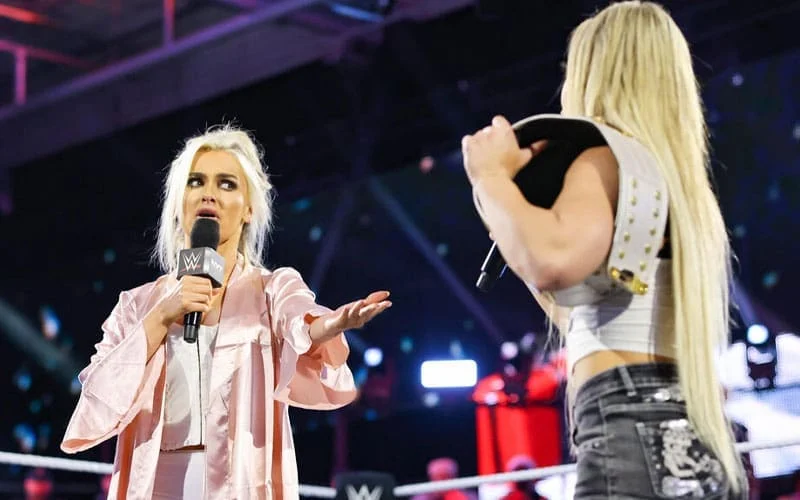
The narrative backbone of the December 23rd episode was heavily centered on the fallout from a controversial and somewhat perplexing title change that occurred the week prior. Thea Hail, the high-energy standout of the Chase U faction, had recently captured the NXT Women’s North American Championship in a match that left many fans and competitors questioning the finality of the result. Among the most vocal critics was the former champion, Blake Monroe, whose intensity and physical dominance have made her a cornerstone of the women’s division. The tension between these two athletes reached a boiling point during the holiday broadcast, as Monroe confronted the new champion in a segment that crackled with genuine animosity. Monroe’s demand was simple and direct: she wanted the opportunity to reclaim the gold that she believed was still rightfully hers.
Thea Hail, who has grown significantly from her early days as a frantic underdog into a more resilient and confident competitor, did not shy away from the challenge. Despite the daunting presence of Monroe, Hail accepted the proposal for a rematch, setting the stage for a high-stakes encounter at the New Year’s Evil event. This feud has become one of the primary drivers of interest for the NXT women’s division, as it pits two very different styles and personalities against one another. Monroe represents a stoic, powerhouse athleticism, while Hail embodies the spirit of perseverance and the chaotic energy that has made Chase U a fan-favorite group. The escalation of this rivalry on the December 23rd show provided the necessary emotional stakes to carry the audience into the new year, ensuring that the Women’s North American Title remains a focal point of the brand’s storytelling.
Beyond the championship picture, the episode also dedicated significant time to the burgeoning conflict between Ricky Saints and Je’Von Evans. Evans, often referred to as the "Young OG," has been on a meteoric rise within the NXT ranks, captivating audiences with his unparalleled athleticism and natural charisma. However, his ascent has not gone unnoticed by the veteran-minded and often abrasive Ricky Saints. The two engaged in a fierce verbal altercation on the December 23rd show, a segment that highlighted the psychological warfare that often precedes physical combat in professional wrestling. This war of words served to further establish Evans as a future cornerstone of the brand while simultaneously showcasing Saints’ ability to act as a formidable antagonist. The chemistry between the two in a promo setting suggests that their eventual in-ring encounter will be a highlight of the winter season.
The broader context of NXT’s move to The CW Network cannot be ignored when discussing these viewership trends. Since transitioning to a major broadcast network, the brand has been exposed to a wider potential audience than it ever had on cable television. This transition brings with it a different set of expectations and a new demographic of viewers who may be discovering the product for the first time. The consistency of the 0.08 demo rating suggests that the move has successfully established a baseline audience on the network. As the brand continues to integrate its storylines with the unique promotional opportunities offered by broadcast television, the hope within the industry is that these numbers will see a gradual upward trend as 2026 progresses.
The December 23rd broadcast was not merely about the numbers or the main event storylines; it was a comprehensive showcase of the depth of the NXT roster. From the tag team division to the mid-card rivalries, the episode functioned as a bridge between the foundational work of the autumn and the explosive potential of the winter. The creative direction under the guidance of the WWE developmental team has focused heavily on character development and long-term narrative arcs, a strategy that appears to be resonating with the audience that stayed tuned in during the holiday week. By grounding the show in relatable conflicts—such as Monroe’s sense of injustice and Evans’ quest for respect—the brand ensures that viewers have a reason to return week after week.
Analyzing the 0.8 percent viewership decline also requires an understanding of the competitive landscape on Tuesday nights. While NXT remains a dominant force in its time slot for wrestling fans, it must contend with a variety of seasonal programming, including holiday specials, sports broadcasts, and the general trend of lower television usage during the week of Christmas. In years past, viewership for all professional wrestling programs has historically seen a dip during this period. Therefore, the fact that NXT lost only 5,000 viewers can be interpreted as a sign of incredible resilience. It suggests that the brand’s narrative momentum, particularly the Monroe and Hail saga, was compelling enough to keep the majority of the audience engaged despite the various distractions of the season.
Looking ahead, the fallout from this episode is expected to culminate in a significant ratings draw for the New Year’s Evil special. Historically, NXT’s themed episodes serve as a "Premium Live Event" caliber experience on free television, often resulting in a noticeable spike in both total viewers and demographic ratings. The groundwork laid on December 23rd—specifically the confirmation of the North American Championship rematch—is a calculated move to ensure that the first major show of 2026 starts with a significant amount of momentum. The creative team has successfully positioned Thea Hail as a champion under fire, a role that traditionally garners significant sympathy and support from the audience, while Blake Monroe continues to excel as the relentless pursuer.
Furthermore, the interaction between Je’Von Evans and Ricky Saints adds a layer of intrigue to the men’s division that complements the title scenes. Evans, in particular, represents the "new guard" of NXT—performers who are not only gifted in the ring but possess the intangible qualities necessary to become crossover stars in the main roster of WWE. His development throughout late 2025 has been a primary focus of the brand, and the December 23rd episode was another step in solidifying his position as a top-tier talent. The verbal exchange with Saints allowed Evans to show a more serious, grounded side of his character, moving beyond the high-flying highlights that first made him famous.
As the industry moves into 2026, the metrics from late December will serve as a benchmark for the brand’s health. While the slight dip to 602,000 viewers might be the headline for some, the internal takeaway for WWE and The CW is likely one of stability. In an era where cord-cutting and fragmented viewing habits make traditional television growth difficult, maintaining a consistent audience is a form of success. The brand’s ability to weave together intricate storylines like the one involving Hail and Monroe, while also managing the transition of new talent like Evans, speaks to a robust creative system that is firing on all cylinders.
Ultimately, the December 23, 2025, episode of NXT was a testament to the brand’s ability to navigate the complexities of holiday-season television. It successfully moved the needle on its most important storylines, kept its key demographic intact, and set the stage for a blockbuster start to the new year. While the total viewership saw a minor correction, the energy and engagement surrounding the product remains high. As fans look forward to New Year’s Evil and the resolution of the Monroe-Hail conflict, the foundation laid during this broadcast ensures that the road to 2026 is paved with anticipation and high-stakes drama. The developmental brand continues to prove that it is more than just a training ground; it is a destination for compelling television that can hold its own on a major broadcast network, even when the calendar suggests the world might be looking elsewhere.