The dawn of a new year in professional wrestling often heralds a fresh slate, a renewed sense of purpose, and the initial rumblings of what promises to be an arduous Road to WrestleMania. For WWE’s Friday Night SmackDown, January 2, 2026, was not merely another episode but a statement of intent, an ambitious foray back into a three-hour broadcast format that fundamentally reshaped its weekly narrative potential. Emanating live from Buffalo, New York, this extended presentation wasn’t just about adding more content; it was about injecting deeper storylines, showcasing a broader spectrum of the roster, and intensifying the high-stakes drama surrounding the coveted WWE Championship. The decision to expand SmackDown to three hours, a runtime typically reserved for its Monday night counterpart, WWE Raw, carries with it both immense opportunity and inherent challenges. Historically, a longer SmackDown has been met with mixed reception, sometimes stretching the product thin, yet at other times allowing for a richer, more nuanced development of characters and feuds. This particular installment aimed squarely for the latter, delivering a meticulously crafted program that set a formidable tone for the year ahead, punctuated by a reigning champion under siege and the triumphant, yet calculating, return of a certified legend.
At the epicenter of SmackDown’s narrative universe stood Cody Rhodes, the reigning WWE Champion, a figure whose entire career trajectory had culminated in securing the industry’s top prize. His reign, however, was far from a quiet coronation; it was a relentless gauntlet, a testament to the adage that reaching the summit is often less challenging than staying there. Rhodes, portrayed as a strategist beneath his public persona, acknowledged the target on his back, viewing the envy of his peers not as a burden but as a fuel for his continued dominance. He understood the immense value of the gold he carried, and the inherent drive it ignited in every competitor on the roster. The champion’s immediate focus was squarely on Drew McIntyre, a formidable challenger whose recent descent into calculated villainy had added a chilling dimension to his already impressive arsenal. McIntyre, the "Scottish Warrior," had grown increasingly bitter and resentful, convinced that he was perpetually overlooked and robbed of his rightful place at the top. This simmering frustration had curdled into a potent blend of aggression and psychological warfare, positioning him as the perfect antagonist to Rhodes’ heroic champion.
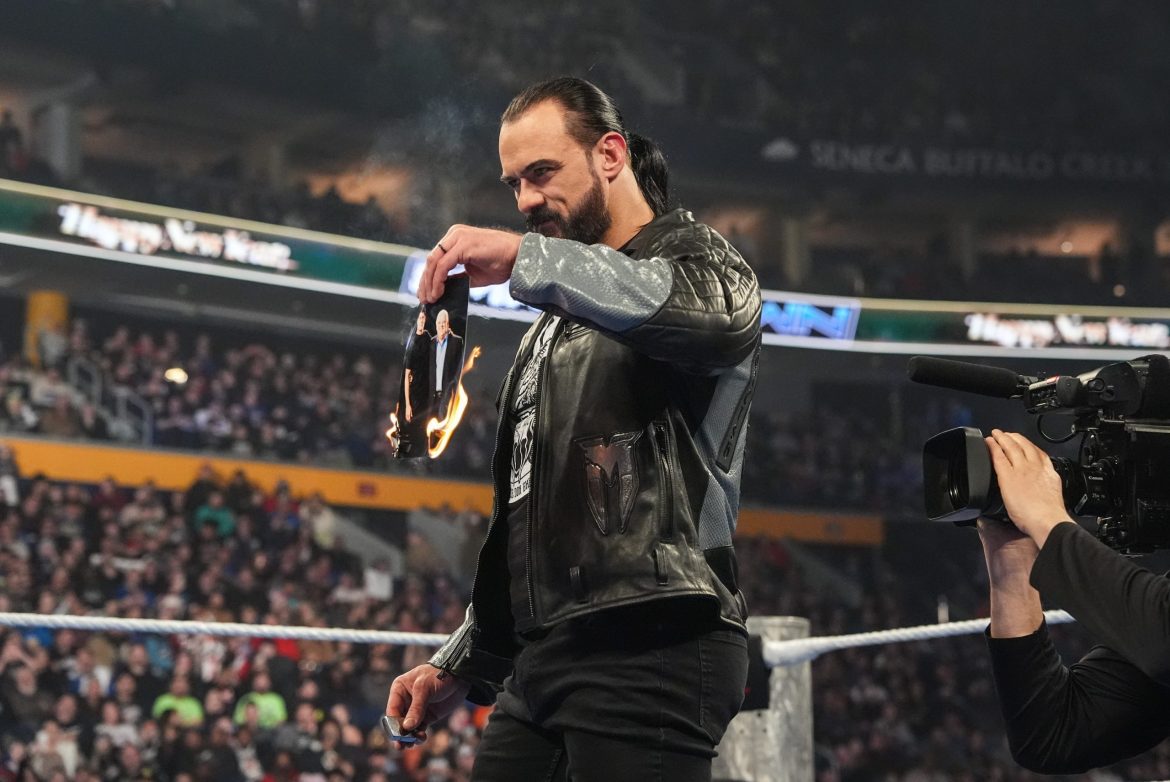
The rivalry between Rhodes and McIntyre had already escalated to deeply personal levels, but the Buffalo broadcast witnessed an egregious act of disrespect that truly defined McIntyre’s current villainous persona. In a pre-taped segment that sent shockwaves through the wrestling world, McIntyre ambushed Rhodes’ tour bus, a deliberate invasion of the champion’s personal space. His discovery of a framed photograph depicting Cody alongside his late, legendary father, "The American Dream" Dusty Rhodes, was not merely coincidental; it was a premeditated strike at the champion’s very core. McIntyre, with a cruel smirk, proceeded to smash the frame, uttering words designed to inflict maximum emotional damage. He mockingly wished Dusty was alive to witness Cody’s current state, then twisted the knife further, suggesting that the elder Rhodes would be "truly, truly ashamed." The most venomous barb, however, was a direct reference to a popular wrestling phrase, "a cold day in hell," which McIntyre repurposed into a chilling taunt, implying that Dusty would need a coat in the afterlife because McIntyre was about to bring the "chill" by reclaiming the championship. This profound disrespect for a beloved, deceased legend is a cardinal sin in the unwritten rules of professional wrestling, immediately cementing McIntyre’s status as a top-tier heel and ensuring a visceral reaction from the audience.
The segment culminated in a harrowing spectacle in the center of the ring. As security personnel intervened to prevent a furious Cody Rhodes from reaching McIntyre, who had made his way to the squared circle, the "Scottish Warrior" produced a trash can and a lighter. With a chillingly deliberate motion, he set the remnants of Cody’s cherished photograph ablaze, a triumphant, sadistic grin plastered across his face as the champion watched, helpless and enraged, from the entrance ramp. This act of pyromania wasn’t just physical destruction; it was a symbolic immolation of Cody’s legacy, a direct challenge to the very foundation of his identity as the son of "The American Dream." The dramatic irony of the situation was palpable: a pre-existing stipulation decreed that if Rhodes were to physically touch McIntyre before their scheduled championship encounter, he would forfeit the WWE Championship. This rule, designed to heighten anticipation and control aggression, inadvertently became McIntyre’s shield, allowing him to commit heinous acts without immediate physical reprisal from the champion. Cody’s agonizing restraint, forced by the very rules meant to protect the sanctity of the title, amplified the emotional impact of McIntyre’s heinous actions, further intensifying the anticipation for their inevitable clash.
The stage for their championship showdown was thus set with an unprecedented level of animosity, culminating in a "Three Stages of Hell" match. This stipulation, steeped in wrestling lore, promised a grueling, multi-fall encounter designed to push both competitors to their absolute limits. McIntyre, ever the tactician, outlined the specific challenges: the first fall would be a straight wrestling match, a test of pure technical prowess, allowing him to prove he could outwrestle the champion. Should the contest extend, the second fall would transform into a Falls Count Anywhere match, a chaotic free-for-all where the battlefield would expand beyond the confines of the ring, giving McIntyre the liberty to inflict punishment across the entire arena. If the scores were tied after two falls, the ultimate decider would be an old-school Steel Cage match, a structure historically synonymous with brutal, inescapable conflict, designed to prevent outside interference and ensure a definitive winner. This multi-layered challenge perfectly encapsulated the depth of their feud, promising a definitive, career-defining contest that would undoubtedly leave an indelible mark on both men, win or lose.
Beyond the championship drama, the Buffalo show also marked the highly anticipated return of a true wrestling icon: Randy Orton. "The Viper," a multi-time world champion and one of the most decorated superstars in WWE history, had been absent from the squared circle, fueling speculation about his future. His re-emergence in Buffalo was met with a thunderous ovation, a testament to his enduring popularity and unique connection with the WWE Universe. Orton’s return wasn’t just a simple walk-out; it was a masterclass in character work, immediately injecting a dose of his signature unpredictable charm and menacing presence. He made his way to the ring, clad in a custom Buffalo Sabres jersey, a thoughtful nod to the local crowd that immediately endeared him to the live audience. His target for the evening, perhaps predictably, was The Miz, the "A-Lister" whose incessant self-aggrandizement and grating persona make him a perennial magnet for comeuppance.
The Miz, ever the opportunistic antagonist, had kicked off the show by interrupting the commentary team, launching into a characteristic tirade of grievances. He complained about being in Buffalo, a city he deemed beneath him, and railed against various perceived slights, including the continued use of the "Tiny Balls" nickname and the omnipresent threat of Joe Hendry’s theme music. He boldly declared 2026 to be "his year," now that John Cena was out of the picture, positioning himself as the true locker room leader who, unlike the city of Buffalo, actually wins championships. This self-serving monologue set the perfect stage for Orton’s arrival, providing a clear, deserving victim for "The Viper’s" signature brand of justice.
Orton’s interaction with The Miz was a clinic in comedic timing and classic wrestling storytelling. Upon entering the ring, Orton feigned a moment of camaraderie with The Miz, even slapping him on the shoulder, only to toy with his long-time rival. He drew a massive pop from the crowd by teasing an RKO, causing The Miz to visibly flinch and recoil in fear, a moment of pure comedic gold that highlighted The Miz’s inherent cowardice despite his boasts. The crowd was firmly in Orton’s corner, basking in his presence. When The Miz, ever the deluded opportunist, attempted to align himself with Orton, suggesting a "Miz-KO" alliance and touting their combined status as locker room leaders, Orton played along for a moment, appearing to consider the proposition. Then, with the suddenness and precision that defined his career, "The Viper" struck. Out of nowhere, he delivered his devastating RKO to The Miz, sending the arena into a frenzy. Not content with a single measure of retribution, and egged on by the ravenous crowd chanting for "one more," Orton hoisted the dazed Miz back to his feet and delivered a second, equally emphatic RKO, putting an exclamation point on his emphatic return.
While the live segment was a resounding success, a subsequent backstage interaction between Randy Orton and Cody Rhodes immediately shifted the championship landscape. After the commercial break, Orton directly confronted Rhodes, unequivocally stating his intention to challenge for the WWE Championship. "After you beat Drew McIntyre next week," Orton declared, "I am coming for this." This direct, no-nonsense challenge, while setting up a blockbuster potential future match, also carried a subtle, almost disappointing, implication. For months prior to Rhodes winning the title, there had been carefully laid groundwork hinting at a potential heel turn for Orton, a narrative thread suggesting he might betray his former protégé once the gold was secured. The directness of his challenge seemed to bypass this potential moral ambiguity, positioning him as a straightforward challenger rather than a manipulative adversary. While a match between Orton and Rhodes for the championship remains an incredibly compelling prospect, the explicit declaration arguably muted the intriguing "will he or won’t he" tension that had been carefully cultivated, potentially sacrificing a deeper, more complex character dynamic for a clearer, albeit still exciting, championship pursuit.
The return to a three-hour format for SmackDown on this particular night was more than just an extended broadcast; it was a deliberate strategic choice that had tangible impacts on the show’s pacing and overall narrative depth. While some fans might initially balk at the idea of an additional hour of weekly television, this episode largely justified the expanded runtime by filling it with substantial developments rather than mere filler. The additional sixty minutes allowed for the intricate build-up of the Rhodes-McIntyre feud, dedicating significant airtime to McIntyre’s psychological warfare and the champion’s restrained fury. It provided ample space for Orton’s impactful return, allowing his segment with The Miz to breathe and resonate with the audience without feeling rushed. Moreover, a longer show inherently creates more opportunities for other members of the roster, both established and emerging, to receive valuable screen time, develop their characters, and advance their own storylines, even if those weren’t the primary focus of this particular episode. This initial three-hour outing demonstrated the potential for SmackDown to evolve into a more comprehensive storytelling vehicle, capable of weaving multiple, compelling narratives simultaneously.
In essence, the January 2, 2026, edition of Friday Night SmackDown was a bold declaration of intent for the new year. It masterfully balanced high-stakes championship drama with the exhilarating return of a fan-favorite legend, all within the expanded canvas of a three-hour broadcast. Cody Rhodes found himself deeper in a personal and professional war with Drew McIntyre, a rivalry fueled by genuine animosity and a profound act of disrespect, setting the stage for a brutal "Three Stages of Hell" encounter. Randy Orton’s return brought a palpable surge of excitement and immediately inserted "The Viper" into the championship conversation, albeit with a directness that shifted previous speculative narratives. The show’s production in Buffalo was a success, capitalizing on the live crowd’s energy to amplify key moments. As WWE marches further into 2026, this episode stands as a benchmark, showcasing the blue brand’s capacity for intricate storytelling and impactful character development, promising a captivating journey on the Road to WrestleMania and beyond, with the WWE Championship firmly at the forefront of a truly stacked roster.