The landscape of professional wrestling has always been defined by the thin, often blurred line between professional competition and deeply rooted personal animosity. In the modern era of sports entertainment, where the cameras are seemingly always rolling and the narrative extends far beyond the confines of the squared circle, the rivalry between the Undisputed WWE Champion Cody Rhodes and his relentless challenger Drew McIntyre has reached a disturbing new zenith. On the January 2, 2026, edition of Friday Night SmackDown, the WWE Universe witnessed a sequence of events that shifted the tone of this championship feud from a battle of athletic supremacy to a scorched-earth campaign of psychological destruction. While the televised broadcast provided plenty of fireworks, it was the digital aftermath that truly shocked the industry, as McIntyre utilized social media to broadcast an act of pure desecration against Rhodes that many fans and analysts believe has crossed an unwritten line in the locker room.
To understand the gravity of the situation that unfolded after SmackDown went off the air, one must first look at the volatile atmosphere established during the program itself. For months, Drew McIntyre has reinvented himself as a cynical, truth-telling antagonist who views himself as the rightful heir to the throne currently occupied by Cody Rhodes. McIntyre’s descent into this darker persona has been fueled by a perceived sense of injustice, believing that the "American Nightmare" is a manufactured hero who has been handed the keys to the kingdom while McIntyre had to claw his way through the mud. This resentment boiled over in a segment that will likely be remembered as one of the most provocative in the history of the blue brand. Standing in the center of the ring, McIntyre didn’t just issue a challenge; he attempted to dismantle the very foundation of Cody’s identity. The Scottish warrior revealed the harrowing stipulations for their upcoming title clash scheduled for January 9 in Berlin, confirming that the two would collide in the legendary and career-shortening Three Stages of Hell match.
The announcement of a Three Stages of Hell match is never taken lightly in the professional wrestling world. Historically, this match type is reserved for the most conclusive and violent ends to a rivalry, requiring the participants to navigate three distinct and increasingly grueling stipulations. By choosing this format for their encounter in Germany, McIntyre signaled his intent to not only take the gold but to physically break the champion. However, the verbal revelation was merely the prelude to an act of visceral disrespect. In a move designed to strike at the heart of the Rhodes family legacy, McIntyre produced a photograph of Cody alongside his legendary father, the late "American Dream" Dusty Rhodes. As the crowd watched in stunned silence, McIntyre ignited the image, watching as the flames consumed the symbol of Cody’s inspiration. The resulting chaos saw a distraught and enraged Rhodes attempt to get his hands on McIntyre, only to be held back by a small army of WWE officials and security personnel while the challenger retreated, wearing a smirk that radiated pure malice.
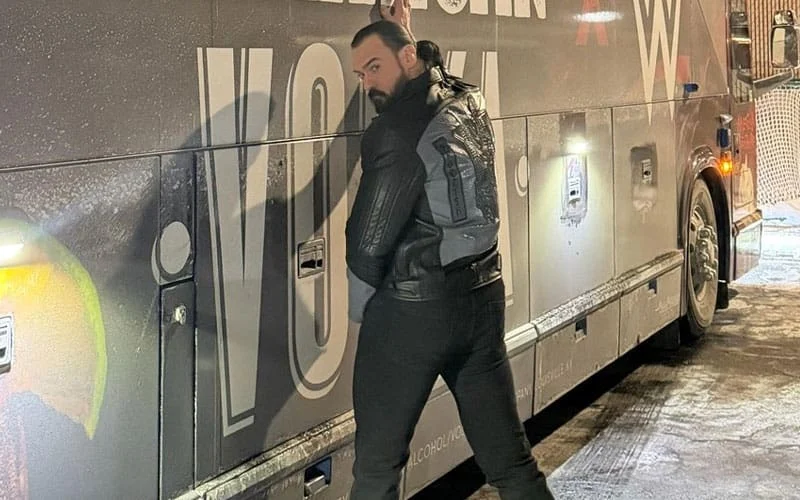
While the burning of the photograph was a calculated strike against Cody’s past, McIntyre’s actions following the conclusion of the television broadcast were a direct assault on the champion’s present-day sanctuary. For a top-tier superstar in the modern era, a tour bus is more than just a vehicle for transportation; it is a home away from home, a private refuge from the grueling schedule of the road and the constant glare of the public eye. Cody Rhodes has long been associated with his custom "Nightmare Express" bus, a rolling symbol of his status as the face of the company. Shortly after the cameras stopped rolling and the live audience began to file out of the arena, McIntyre took to his social media platforms to post a pair of images that instantly went viral for all the wrong reasons. The photos depicted the former champion in the act of urinating on the side of Rhodes’ tour bus, a gesture of such profound puerility and disrespect that it sent shockwaves through the wrestling community.
This act of vandalism, though perhaps less flammable than the literal fire he started in the ring, was in many ways more personal. It represented a total disregard for the professional etiquette that usually governs the behavior of wrestlers outside of the ring. By targeting the "Nightmare Express," McIntyre was telling Rhodes that nowhere is safe—not his locker room, not his family history, and not even his private residence on wheels. The imagery was crude, provocative, and perfectly aligned with the "Social Media Menace" persona that McIntyre has cultivated over the last year. He has mastered the art of using digital platforms to bypass the filters of traditional television, ensuring that his message of hate reaches the champion and the fans 24 hours a day. This wasn’t just about a wrestling match anymore; it was about the total humiliation of a man McIntyre views as a fraudulent idol.
The timing of this escalation is particularly significant given the proximity of the Undisputed WWE Championship match in Berlin. With only a week remaining before they step into the ring in Germany, the psychological advantage appears to have swung heavily in McIntyre’s favor. By forcing Cody into a state of blind rage, Drew may be setting a trap. A champion who fights with his heart and his temper often loses the tactical discipline required to survive a Three Stages of Hell match. This specific match type requires a level of stamina and strategic thinking that is difficult to maintain when one is consumed by the desire for revenge. McIntyre knows this better than anyone. He is a veteran of the squared circle who understands that the greatest battles are often won in the mind long before the opening bell rings. By desecrating the memory of Dusty Rhodes and then defiling Cody’s personal property, he has ensured that the champion will be walking into Berlin with a heavy heart and a clouded mind.
The industry response to these developments has been polarized. Some veterans argue that McIntyre is simply doing what is necessary to build the stakes for a major international event, drawing on the gritty, high-intensity storytelling of the Attitude Era to create "must-see" television. They point to the fact that the buzz surrounding the January 9 title match has reached a fever pitch, with fans around the world debating the ethics of McIntyre’s tactics. Others, however, believe that the Scottish Psychopath has gone too far. There is a feeling among some purists that bringing a wrestler’s deceased father into a storyline and engaging in the kind of juvenile behavior seen with the tour bus incident cheapens the prestige of the Undisputed WWE Championship. Regardless of where one stands on the moral spectrum, there is no denying that the heat between these two men is real, palpable, and dangerous.
As the WWE roster prepares to make the trip across the Atlantic, the pressure on Cody Rhodes has never been higher. He is not just defending a title; he is defending his family’s honor and his own dignity. The "American Nightmare" has spent his career trying to live up to the impossible standard set by his father, and McIntyre has spent the last few weeks methodically tearing that standard down. The burning of the photo was a symbolic end to the reverence Cody demands for his lineage, and the bus incident was a literal staining of his current success. In Berlin, the Three Stages of Hell will provide the ultimate canvas for this animosity to be painted in blood and sweat. It is a match designed to end feuds, but given the level of vitriol displayed by McIntyre on January 2, one has to wonder if any match can truly settle the score between these two.
The evolution of Drew McIntyre from the "Chosen One" to the "Scottish Psychopath" and now to this current iteration of a calculated, social-media-savvy predator is a testament to his versatility as a performer. He has found a way to make himself the most talked-about person in the industry by leaning into the darkest parts of his character’s psyche. He isn’t just looking for a win; he is looking for a complete spiritual breakdown of his opponent. His actions after SmackDown weren’t the result of a momentary lapse in judgment; they were a deliberate choice to further isolate Cody Rhodes and make the champion feel small in the face of McIntyre’s overwhelming cynicism. By the time they reach Germany, McIntyre wants Rhodes to be a shell of himself, a man so distracted by insults and indignities that he forgets the technical prowess that brought him to the top of the mountain.
As we look toward the January 9 showdown, the stakes have transcended the gold belt. This has become a war of ideologies. On one side, you have the traditional heroism and legacy-driven motivation of Cody Rhodes. On the other, you have the modern, nihilistic, and opportunistic aggression of Drew McIntyre. The Three Stages of Hell will test every facet of their abilities, but the psychological scars inflicted on the first Friday of 2026 may prove to be the most decisive factor. Whether McIntyre’s antics will lead him back to the championship or if Rhodes will find a way to channel his fury into a successful defense remains to be seen. What is certain, however, is that the image of McIntyre standing by the "Nightmare Express" and the sight of a burning family legacy have changed the trajectory of this rivalry forever. The road to Berlin is paved with bad blood, and after the events of this week, there is no turning back for either man. The WWE Universe is buckled in for what promises to be one of the most violent and emotionally charged encounters in recent memory, as the fallout from McIntyre’s degenerate tactics continues to ripple through the world of professional wrestling.