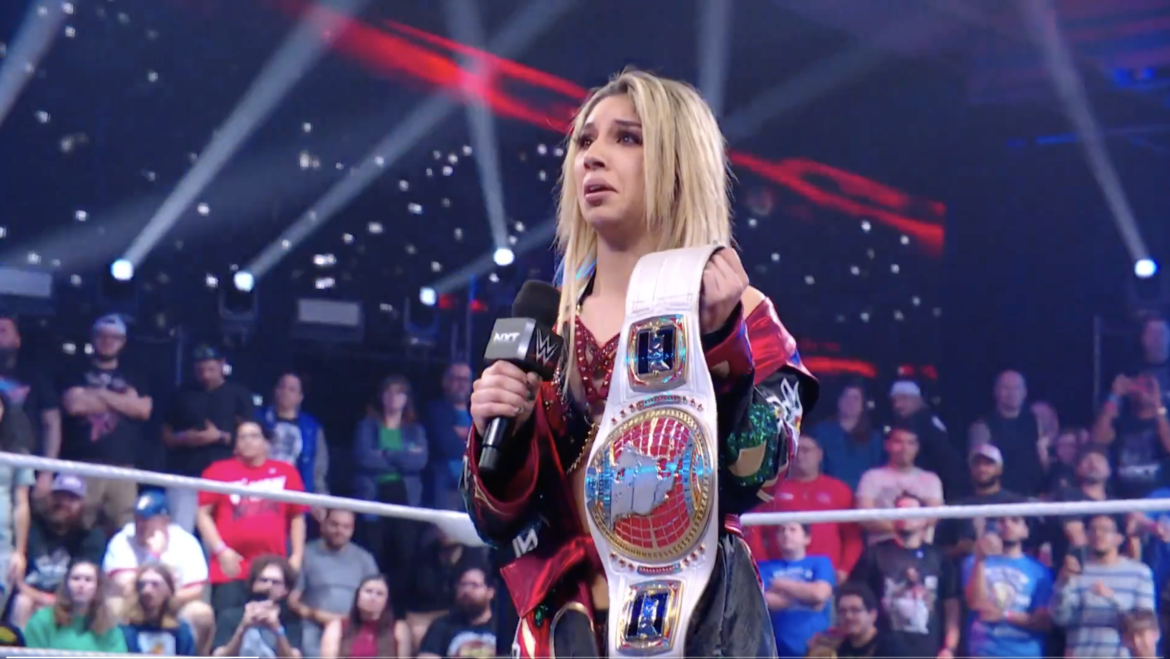
As the calendar turned to 2026, NXT presented its annual New Year’s Evil spectacular, an event traditionally poised to set the tone for the brand’s narrative direction in the months ahead. This year’s iteration, however, left many observers grappling with a complex array of emotions, a mix of thrilling in-ring action juxtaposed with puzzling booking decisions that cast a shadow over some of the evening’s most pivotal moments. While the black and gold (now often multi-colored) brand has always been a proving ground for future main roster talent, and thus subject to constant flux, the creative choices displayed at New Year’s Evil sparked a broader discussion about the consistency and logic underpinning its ongoing storylines, particularly concerning the Women’s North American Championship.
The focal point of much of this discussion revolved around the tumultuous journey of the Women’s North American Championship, a title that has rapidly become a cornerstone of NXT’s female division since its inception. Heading into New Year’s Evil, the highly anticipated rematch between the reigning champion, Thea Hail, and the intensely focused challenger, Blake Monroe, promised to deliver a definitive chapter in their heated rivalry. Monroe had been vocal, even desperate, in her pursuit of another shot at the gold, having expressed profound regret and frustration over her prior loss. Her promos and backstage segments painted a picture of a competitor consumed by the desire for redemption, seemingly willing to do whatever it took to reclaim what she believed was rightfully hers. This narrative of unwavering determination, however, took an abrupt and bewildering turn just moments before the opening bell.
In a move that defied conventional wrestling psychology and undercut her meticulously crafted persona of a wronged contender seeking a fair fight, Blake Monroe launched a brutal and unscheduled assault on Thea Hail backstage. The champion, already preparing for the grueling contest ahead, was left in a compromised state, severely weakening her before she even stepped foot in the squared circle. Monroe’s justification for this unprovoked attack, citing the "unpredictable nature" of her opponent, rang hollow against the backdrop of her previous pleas for a legitimate, sanctioned rematch. The blatant disregard for the rules and her own stated intentions not only cost her the opportunity she had so fervently sought but also raised questions about her judgment and strategic acumen. General Manager Ava, known for her no-nonsense approach to maintaining order, swiftly intervened, ejecting Monroe from the building and signaling an indefinite suspension, effectively removing a key player from the NXT landscape and leaving the Women’s North American Championship match in disarray.
With the scheduled championship contest in tatters, a visibly shaken but resilient Thea Hail, still reeling from Monroe’s assault, made a passionate appeal to General Manager Ava. Despite her compromised physical state, Hail insisted on defending her championship, asserting her unwavering commitment to proving her worth as a fighting titleholder. This display of courageous spirit resonated with many, including veteran presence Jordynne Grace, who offered her endorsement, urging Ava to allow the determined champion to uphold the integrity of the gold. The stage was thus set for an impromptu open challenge, a classic wrestling trope designed to inject immediate excitement and unpredictability into a show. The natural inclination of many viewers was to anticipate Jordynne Grace herself stepping up to answer the call, given her stature and proximity to the champion. However, NXT’s creative team opted for a different path, one that would prove to be a source of considerable narrative complexity.
Earlier in the New Year’s Evil broadcast, before the Women’s North American Championship drama fully unfolded, a separate, but ultimately intertwined, singles contest had taken place. This match pitted Tatum Paxley against Izzi Dame, two competitors with their own burgeoning rivalry and a clear need to establish dominance within the women’s division. In a decisive display, Tatum Paxley secured a clean victory over Izzi Dame, a significant win that seemingly positioned Paxley for future opportunities. Notably, during this initial encounter, Izzi Dame was without the usual presence of her associates, Shawn Spears and Niko Vance, who had been integral to her recent character development. Their absence during her loss underscored the idea that Dame, when left to her own devices, could be overcome. This seemingly straightforward outcome, however, would soon be rendered puzzling by the events that followed later in the evening.
When Thea Hail’s open challenge was finally announced, the expectation was for a fresh, uninjured contender to seize the moment. The situation took another unexpected turn as Tatum Paxley, riding the momentum of her earlier victory, emerged with a chainsaw, theatrically clearing the ring of any potential interlopers from the locker room. This bold entrance signaled her intent to answer the challenge, projecting an image of fierce determination. Yet, in a move that strained credulity, Izzi Dame, the same competitor who had suffered a clean loss to Paxley earlier in the night, managed to slip into the ring undetected. More astonishingly, Dame was now accompanied by Shawn Spears and Niko Vance, the very individuals conspicuously absent during her earlier defeat. The sudden reappearance of Spears and Vance, who had been involved in their own peculiar storyline with Paxley (including a previous incident where Paxley had reportedly taken Vance captive, and Spears had vanished after a confrontation with Paxley’s chainsaw), created an immediate disconnect. Their return, without any prior explanation for their earlier absence or their renewed allegiance, felt less like a cunning strategic maneuver and more like a convenient plot device.
What unfolded next further compounded the narrative inconsistencies. Izzi Dame, despite having competed and lost cleanly earlier in the evening, showed no visible signs of fatigue or injury. She appeared entirely refreshed, as if her earlier grueling encounter with Tatum Paxley had never transpired. This stark contrast to Thea Hail, who was visibly battered and bruised from Blake Monroe’s pre-match assault, made the outcome feel less like a hard-fought championship defense and more like an inevitability. Predictably, Izzi Dame capitalized on Hail’s compromised state, defeating the valiant but weakened champion to capture the Women’s North American Championship. The victory, while a significant career milestone for Dame, was unfortunately overshadowed by the questionable build-up and the perceived undermining of previous segments. The immediate question on the minds of many viewers was why the creative team hadn’t simply booked Izzi Dame to defeat Tatum Paxley earlier in the show, thereby establishing her as a legitimate, strong contender before her championship opportunity. Such a move would have lent far more weight and credibility to her eventual title victory, presenting her as a dominant force rather than a beneficiary of a convoluted series of events. Furthermore, had the creative team opted to portray both Hail and Dame as less than 100 percent, the championship match could have been framed as a grueling test of endurance and heart, adding layers of drama and suspense that were largely absent in the actual presentation.
The Women’s North American Championship saga at New Year’s Evil served as a microcosm of broader creative concerns that have been simmering within the NXT brand. While individual segments and matches often deliver on their own merit, the overarching narrative continuity sometimes appears fragmented. Story threads are introduced with great fanfare, only to be seemingly abandoned or drastically altered without sufficient explanation, leaving audiences struggling to connect the dots. Blake Monroe’s intense pursuit of a rematch, for example, built over several weeks, culminated in an act that nullified her own efforts and resulted in her immediate removal from the picture, negating all the preceding narrative investment. Similarly, Tatum Paxley’s hard-earned victory over Izzi Dame earlier in the show felt devalued by Dame’s subsequent, unearned, and seemingly uninjured championship triumph. The importance of maintaining consistent character motivations and logical progression is paramount in professional wrestling, especially for a developmental brand like NXT, which is tasked with preparing talent for the main roster, where such intricacies are even more scrutinized.
NXT operates in a unique space within the professional wrestling landscape. As a developmental territory, it is inherently designed to be a launching pad, a place where aspiring superstars hone their craft before ascending to the global stage of Raw or SmackDown. This constant rotation of talent, with successful individuals frequently being called up, presents an ongoing challenge for the creative team. Building long-term, intricate storylines becomes a complex endeavor when key characters can depart at any moment. However, this inherent volatility also necessitates an even greater emphasis on foundational storytelling principles: clear motivations, logical consequences, and payoffs that resonate with the investment viewers have made. General Manager Ava herself acknowledged this dynamic, recognizing that the current period represents a significant juncture for the brand, replete with opportunities for the roster to step forward and seize the spotlight. Yet, for these opportunities to truly flourish, the narrative framework must be robust enough to support them, to elevate talent rather than inadvertently hinder their ascent through inconsistent or bewildering booking.
Another example of these lingering creative threads can be seen in the enigmatic figure of "Tony lurking in the shadows." This recurring visual motif, often appearing in the background of various segments, has remained an unresolved subplot for an extended period. While it may be intended as a slow burn, its prolonged ambiguity without any discernible progress or payoff has led to a dwindling interest among the audience. Such instances, where intriguing elements are introduced but left to languish, contribute to the perception of a creative landscape that is not always fully realized or consistently executed. For a brand that thrives on building future stars, ensuring that every character and every storyline contributes meaningfully to the overall tapestry is crucial. Whether it’s the dramatic twists in a championship feud or the subtle developments of a background character, each element should ideally serve a purpose, guiding the audience through a coherent and compelling journey.
Ultimately, New Year’s Evil 2026 was a show that offered moments of excitement and athletic prowess, yet it was also a night that underscored the ongoing creative challenges faced by NXT. The Women’s North American Championship drama, in particular, highlighted a need for greater narrative coherence and a more consistent application of wrestling logic. While the spontaneity of an open challenge and unexpected twists can be thrilling, they must be carefully integrated into the broader narrative to maintain the audience’s suspension of disbelief and the integrity of the characters involved. As NXT continues its mission to develop the next generation of sports entertainers, the emphasis on compelling, consistent storytelling will be paramount. The brand has an abundance of talent and passionate performers, but their potential can only be fully unlocked when supported by a creative vision that prioritizes clarity, logic, and a consistent path forward, ensuring that every step taken, every twist introduced, serves to elevate the product and its stars, rather than to confuse or diminish them. The hope remains that the lessons from this eventful New Year’s Evil will guide NXT toward a more cohesive and impactful narrative future.