
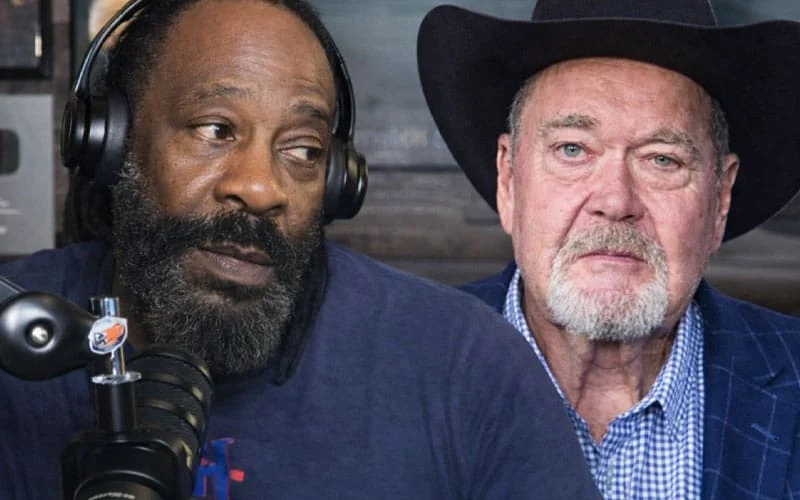
The landscape of professional wrestling is often built upon the foundations of long-standing memories, some of which are celebratory and others that remain deeply uncomfortable for those involved. In recent weeks, a significant dialogue has emerged involving two of the most respected figures in the history of the industry, D-Von Dudley and Jim Ross, concerning allegations of racial insensitivity that date back a quarter of a century. These claims, which center on the period when the Dudley Boyz were establishing their legendary status within the World Wrestling Federation, have sparked a broader conversation about the culture of the locker room during the Attitude Era and the complicated nature of memory, accountability, and forgiveness. At the heart of this unfolding story is a series of accusations made by D-Von Dudley regarding his interactions with Jim Ross, who at the time served not only as the lead play-by-play commentator but also as the influential Executive Vice President of Talent Relations. D-Von has recounted specific instances where he felt marginalized or targeted based on his race, including an allegation that Ross expressed a personal dislike for him to his tag team partner, Bubba Ray Dudley, specifically citing his ethnicity as the reason. Furthermore, D-Von described a tense encounter in the backstage catering area where he felt ignored by Ross, and a subsequent confrontation where he claims Ross doubled down on his stance.
While these allegations are heavy and carry significant weight given the stature of both men, the narrative has been further complicated by the recent perspective offered by another industry icon, Booker T. Speaking on his own platform, the Hall of Famer and current developmental commentator provided a nuanced take on the situation, attempting to bridge the gap between D-Von’s vivid recollections and Jim Ross’s firm denials. Booker T suggested that the discrepancy in their stories might not be a matter of one person lying, but rather a result of the environment and personal habits that existed within the wrestling business decades ago. Specifically, Booker T posited that Jim Ross might genuinely have no memory of the incidents D-Von described, suggesting that the prevalence of alcohol consumption during that era could have clouded Ross’s recollection of specific conversations or interactions. Booker T noted that during those high-pressure years, it was not uncommon for individuals in management or talent positions to indulge in drinks, which could lead to remarks being made that were either intended as poor attempts at humor or were simply forgotten by the speaker shortly thereafter. This perspective does not aim to excuse any potential misconduct, but rather to offer a possible explanation for why a veteran like Ross would vehemently deny something that D-Von remembers with such clarity.
The complexity of this situation is heightened by the professional roles these men occupied during the late 1990s and early 2000s. As the head of talent relations, Jim Ross was essentially the gatekeeper of the company, the man responsible for hiring, firing, and managing the temperaments of a massive roster of superstars. For a talent like D-Von Dudley, who was working to solidify his place in a competitive environment, any perceived animosity from a high-ranking executive would be felt with extreme intensity. D-Von’s account suggests that the weight of these interactions stayed with him for decades, even as he achieved massive success as a multi-time tag team champion and eventually a Hall of Fame inductee. The fact that he mentioned Ross appeared to be under the influence during at least one of these encounters adds a layer of volatility to the historical context. Despite the gravity of the claims, D-Von has been vocal about his personal growth, stating that he has found it within himself to forgive Ross for the past, even in the absence of a formal apology. This stance reflects a desire to move forward rather than remain anchored to the grievances of the past, a sentiment that is increasingly common among veterans who are looking to preserve the legacy of the business.
Jim Ross, for his part, has remained steadfast in his rejection of the accusations. To a man who has spent his entire life championing talent from all walks of life and who has been the voice of many of the greatest moments in wrestling history, the label of being racially insensitive is a direct assault on his character and professional legacy. Ross has maintained that he has absolutely no memory of saying the things attributed to him and has expressed a sense of confusion regarding why these stories are surfacing so many years after the fact. In the high-stakes world of wrestling management, Ross was often the person who had to deliver bad news or engage in difficult negotiations, which frequently led to friction with various performers. However, he has consistently denied that any of his professional decisions or personal interactions were motivated by racial bias. The impasse between D-Von’s memory and Ross’s denial creates a difficult situation for fans and historians alike, as both men are viewed as pillars of the community.
Booker T’s involvement in the discussion provides a crucial third-party perspective from someone who navigated the same era as a prominent Black performer. Booker T acknowledged that his own journey in the industry was different and required him to maintain a high level of self-respect and a willingness to stand his ground, even if it meant risking his employment. He reflected on his own experiences with racism in the business, noting that he has encountered figures who held problematic views in the past but who may have evolved into different people today. Interestingly, Booker T’s personal experience with Jim Ross was starkly different from the one described by D-Von. Booker credited Ross with being the person who signed him to his WWE contract following the acquisition of WCW and praised Ross for helping him navigate the transition by allowing him to tell his authentic life story, including his time spent incarcerated. For Booker, Ross was an instrumental figure in his success and a supporter of his career growth. By sharing this, Booker T highlighted the multifaceted nature of these industry figures; a person can be a mentor and a champion for one individual while simultaneously being perceived as a source of conflict or bias by another.
The suggestion that some things are better left in the past is a recurring theme in Booker T’s commentary. He noted that while some issues are too significant to remain buried, there is a delicate balance to be struck when revisiting events that occurred twenty-five years ago. The wrestling industry of the late 90s was a vastly different world in terms of corporate oversight, social awareness, and professional conduct. Remarks that might have been dismissed as "locker room talk" or "ribbing" in 1999 are viewed through a much more critical and necessary lens in the modern era. Booker T’s observation that Ross might have viewed a comment as a joke while D-Von viewed it as a targeted insult speaks to the frequent disconnect in interpersonal communication within the wrestling bubble. It also touches on the reality that the "drinking culture" of the era often blurred the lines between professional behavior and personal indiscretion.
What remains encouraging in this situation is the apparent willingness of both D-Von Dudley and Jim Ross to find a resolution. Despite the public nature of the disagreement, both parties have indicated an openness to speaking privately and settling their differences. This potential for a "squashing of the beef" suggests that there is still a deep-seated respect for the shared history they have within the industry. In a business that thrives on conflict for the sake of entertainment, the resolution of real-life animosity is often a quiet and dignified process that happens away from the cameras. D-Von’s willingness to forgive and Ross’s openness to reconnecting provide a roadmap for how other veterans might handle historical grievances in an era where the past is constantly being re-examined.
The broader implications of this story touch on the evolution of the professional wrestling roster and the power structures that govern it. In the decades since the Dudley Boyz first entered a WWE ring, the industry has made significant strides in terms of diversity and inclusion, though many would argue there is still work to be done. The stories told by pioneers like D-Von Dudley serve as a reminder of the hurdles that performers of color had to overcome to reach the pinnacle of the sport. At the same time, the defense offered by Booker T reminds us that the history of the business is rarely black and white. It is a tapestry of individual experiences, personal biases, professional pressures, and the slow, often painful process of cultural change.
As this chapter of wrestling history continues to be discussed, it serves as a testament to the enduring impact of the Attitude Era. The personalities of that time were larger than life, and the shadows they cast were equally long. Whether Jim Ross truly forgot the incidents due to the haze of the era’s lifestyle or whether there is a fundamental misunderstanding between the two men, the dialogue itself is a sign of progress. It allows for the acknowledgement of past pain while providing a space for reconciliation. Booker T’s role as a mediator and a storyteller in this instance further cements his status as a wise elder of the industry, someone who can look at a volatile situation with both empathy for the victim and a realistic understanding of the accused.
Ultimately, the story of D-Von Dudley and Jim Ross is one of two legends navigating the complexities of their shared past. It is a narrative that involves the highest levels of success and the most personal of grievances. By bringing these issues to light, D-Von has ensured that his experience is acknowledged, while Jim Ross’s willingness to engage in a conversation shows a desire to maintain the integrity of his long career. As they move toward a potential private resolution, the wrestling world watches with the hope that two men who contributed so much to the business can find common ground, proving that even the deepest rifts can be mended with time, perspective, and a willingness to listen. The industry continues to move forward, but it is the resolution of these historical tensions that truly allows it to grow and learn from the eras that defined it. In the end, the legacy of the Dudley Boyz and the legacy of Jim Ross are both essential to the fabric of professional wrestling, and finding a way to honor both while addressing the harsh realities of the past is the only way to ensure a healthy future for the sport and its participants. Through the lens of Booker T’s commentary, we see a business that is finally learning how to confront its demons without destroying the icons who helped build the house in the first place.