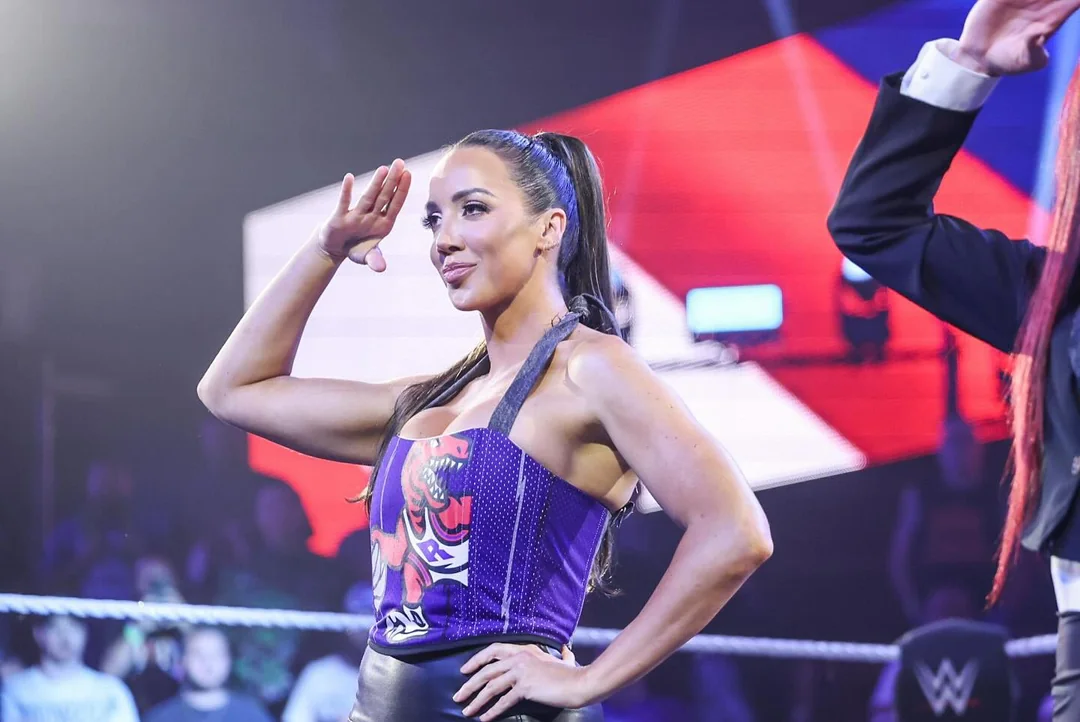
In the vibrant, often theatrical world of professional wrestling, performers craft larger-than-life characters, embodying personas that captivate millions. Yet, for some, the desire to transcend the squared circle and venture into the realm of traditional acting presents a unique, multi-layered challenge. One such luminary grappling with this intricate tightrope walk is Chelsea Green, a WWE Superstar renowned for her captivating in-ring presence and often outlandish character portrayals. Green, who has forged an impressive career across multiple prominent promotions, recently offered a candid glimpse into the complexities of pursuing acting roles while simultaneously maintaining a high-profile identity within the wrestling industry, highlighting the paradoxical nature of fame and perception in Hollywood.
Chelsea Green’s journey to the upper echelons of sports entertainment has been anything but conventional, marked by resilience, reinvention, and an unwavering commitment to her craft. Her career began gaining significant traction on the independent circuit, where she honed her skills and developed a distinct identity. Early on, she made an appearance on WWE’s Tough Enough in 2015, a foundational experience that, while not leading to an immediate contract, undeniably put her on the company’s radar. Following this, Green explored opportunities in other major promotions, notably making a significant impact in IMPACT Wrestling (then TNA), where she performed under the moniker Laurel Van Ness. Her character work there was lauded, particularly her evolution from a jilted bride to a deranged, champagne-swigging villainess, showcasing an impressive range of theatricality that hinted at her broader performance aspirations. This period allowed her to experiment with various facets of character development, from comedic timing to intense dramatic moments, laying the groundwork for the more refined personas she would later adopt.
Her eventual return to WWE in 2018, initially within the NXT brand, saw her further develop her in-ring prowess and character depth. While her initial main roster run was unfortunately marred by injuries, she seized every opportunity to leave an indelible mark, often injecting a unique blend of humor and delusion into her onscreen presence. Her most recent tenure in WWE has seen her truly flourish, establishing herself as a comedic powerhouse alongside tag team partner Piper Niven, capturing the WWE Women’s Tag Team Championship, and crafting a persona that is both irritatingly entitled and undeniably endearing. This character, a self-proclaimed "Karen" of the WWE universe, is a masterclass in modern wrestling villainy, constantly seeking to exploit bureaucratic loopholes and demand preferential treatment, earning her significant fan engagement and critical acclaim. This background is crucial, as it underscores the very essence of the "Chelsea Green" identity – a highly stylized, meticulously crafted performance that is intrinsically linked to her real name.
It is this very connection between her personal identity and her wrestling persona that forms the crux of her challenge in the acting world. During a recent media appearance to promote the second season of "WWE Unreal" on Netflix, a show that blurs the lines between reality and scripted drama within a wrestling context, Green delved into the difficulties she encounters when auditioning for roles outside of the sports entertainment sphere. She explained that her stage name, "Chelsea Green," is also her birth name, creating an inseparable link in the public’s perception. Unlike many performers who adopt distinct stage names for their wrestling careers, allowing for a clearer separation when pursuing other ventures, Green’s identity is inextricably woven into her professional wrestling brand.
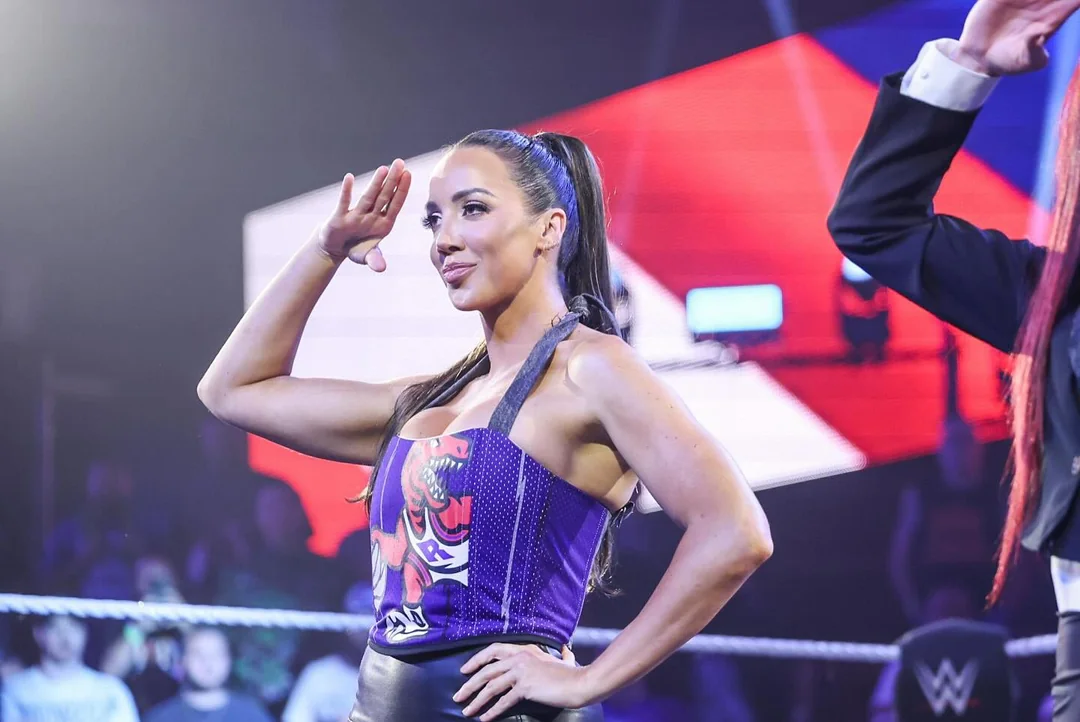
This unique situation creates a peculiar dilemma in Hollywood, an industry that often operates on specific, sometimes contradictory, expectations. On one hand, social media presence and follower counts have become increasingly important metrics for casting directors, serving as a quantifiable measure of an actor’s potential reach and marketability. A performer with a substantial online following can bring a pre-existing audience to a project, a factor that studios and producers undoubtedly consider. Chelsea Green, with her significant engagement across various platforms, certainly fits this criterion, possessing a built-in fanbase cultivated through years in wrestling.
However, Green articulates the flip side of this coin with poignant clarity: while Hollywood may covet the influence and visibility that a wrestling superstar brings, it often simultaneously views the "wrestler" label with a degree of skepticism or even apprehension. There’s an ingrained, albeit often unfair, stereotype that professional wrestlers, despite their undeniable performance skills and athletic prowess, might not possess the nuanced acting capabilities required for more traditional dramatic or comedic roles. This perception creates a frustrating Catch-22 for individuals like Green: their robust public profile, largely built on their wrestling career, is a valuable asset, yet the very source of that profile can become an obstacle. It’s a "weird vibe," as she described it, where the advantage of celebrity clashes with the disadvantage of a perceived professional pigeonhole.
To counteract this ingrained bias and present herself as a versatile actor rather than just a wrestling personality, Green employs a strategic, almost chameleon-like approach to her audition process. She detailed her deliberate efforts to physically de-glamorize herself, shedding the exaggerated aesthetic that is a hallmark of her wrestling character. For a WWE Superstar like Chelsea Green, presentation is paramount. Her wrestling persona often involves intricate hair extensions, elaborate makeup, and meticulously applied nail enhancements – all elements designed to amplify her larger-than-life character and command attention in expansive arenas and on television screens. These are visual cues that contribute to the distinct, often heightened reality of professional wrestling.
Yet, when stepping into an audition room for a film or television role, Green consciously strips away these accoutrements. She opts for a significantly understated appearance, eschewing the long, artificial nails, the voluminous hair extensions, and the heavy makeup. Her goal is to present a blank canvas, to appear as an "everyday" person, a face in the crowd, allowing casting directors to envision her in a multitude of roles beyond the confines of a wrestling ring. This conscious transformation speaks volumes about the differing aesthetic demands of the two industries. While wrestlers are often celebrated for their striking, almost fantastical physical presence, traditional actors are frequently sought for their ability to embody a more grounded, relatable, or even unremarkable aesthetic, allowing the character to shine through without the distraction of an overt "look." Green’s astute observation that many wrestlers possess an "incredible", stage-ready appearance, while actors are often valued for their "real" and "beautifully normal" qualities, encapsulates this fundamental divergence in artistic presentation.
The history of professional wrestlers attempting to cross over into mainstream acting is a mixed bag, offering both cautionary tales and monumental success stories. For every Dwayne "The Rock" Johnson, John Cena, or Dave Bautista who has achieved superstardom in Hollywood, seamlessly transitioning from wrestling titan to leading man, there are countless others who have struggled to break free from the perception of being "just a wrestler." The Rock, arguably the most successful crossover star of all time, meticulously built his acting career by initially embracing action-oriented roles that capitalized on his physical presence and charisma, before gradually expanding into more diverse genres. John Cena followed a similar trajectory, demonstrating comedic timing and dramatic depth that surprised many. Dave Bautista, meanwhile, has carved out a niche as a compelling character actor, often subverting expectations with his nuanced performances in critically acclaimed films. More recently, Mercedes Moné, formerly Sasha Banks in WWE, has also dipped her toes into acting, notably appearing in The Mandalorian, showcasing the continuing allure of Hollywood for wrestling’s top talent.

These success stories, however, often obscure the prevailing challenge: the persistent struggle for many wrestlers to be taken seriously as versatile actors. The very attributes that make a wrestler compelling – exaggerated expressions, booming voices, and a larger-than-life physicality – can sometimes be viewed as detriments in the subtle, often understated world of film and television acting. Casting directors might struggle to see past the persona, to imagine the performer inhabiting a role that doesn’t involve a suplex or a promo. This is the barrier Chelsea Green is actively working to dismantle, not just for herself, but implicitly for others who might follow in her footsteps. Her involvement in "WWE Unreal" on Netflix, a scripted series that explores the dramatic underbelly of professional wrestling, presents another fascinating layer to her pursuit. While it is an acting role, it is one intrinsically linked to her wrestling world, perhaps serving as a bridge or a proving ground, but also potentially reinforcing the very "wrestler" label she seeks to transcend in broader Hollywood contexts.
Despite these unique hurdles in her acting endeavors, Chelsea Green remains an incredibly active and prominent figure within the WWE landscape. Her current tenure has solidified her position as one of the most entertaining and effective characters on the roster. Her recent run as one-half of the WWE Women’s Tag Team Champions alongside Piper Niven was a highlight, showcasing her comedic timing and ability to elevate any segment she’s a part of. Just prior to that, she held the prestigious WWE Women’s United States Championship, a title she eventually relinquished to the formidable Giulia after a 56-day reign. This title run, though relatively brief, further cemented her standing as a credible competitor and a fan favorite. Beyond WWE, Green continues to hold the AAA World Mixed Tag Team Championship with her real-life husband, Ethan Page, a testament to her versatility and demand across different promotions. These ongoing commitments mean that her wrestling identity is not something she can simply shed; it is a continuously evolving, highly visible part of her professional life.
Ultimately, Chelsea Green’s candid reflections illuminate a fascinating and often complex dynamic at the intersection of professional wrestling and traditional acting. She navigates a unique professional tightrope, balancing the demands of a highly visible, character-driven wrestling career with a genuine ambition to make her mark in Hollywood. Her strategic adjustments, from meticulously altering her physical appearance for auditions to grappling with the dual-edged sword of social media influence, underscore the dedication required to bridge these distinct entertainment industries. Green’s journey is a testament to her resilience, her profound understanding of performance, and her unwavering determination to break down barriers, proving that a professional wrestling superstar can indeed be a versatile, compelling actor, provided they can skillfully overcome the paradoxical perceptions that often accompany the transition from the squared circle to the silver screen. Her story is a compelling narrative of ambition, identity, and the relentless pursuit of artistic expression in a world that often struggles to see beyond the initial impression.