As the professional wrestling world gears up for a pivotal moment in TNA Wrestling’s recent history, marked by its highly anticipated return to a major television network with its Impact program debuting on AMC, the spotlight intensifies on the upcoming Genesis pay-per-view event. This landmark show, scheduled for Saturday, January 17, emanating from the renowned Curtis Culwell Center in Dallas, Texas, stands as a critical juncture for the promotion, aiming to solidify its renewed momentum and showcase its vibrant roster. However, even the most meticulously planned events in professional wrestling are sometimes subject to the unpredictable nature of global logistics, a reality that TNA recently confronted head-on as crucial championship bouts for Genesis required swift, creative restructuring due to unforeseen international travel complications affecting key talent.
The modern landscape of professional wrestling is truly global, with promotions like TNA routinely featuring athletes from various corners of the world, enriching their product with diverse styles and personalities. While this international flavor is a significant asset, it also introduces a layer of complexity regarding work permits and travel visas. Such administrative hurdles, often beyond the control of the individual athletes or the wrestling organizations themselves, can regrettably disrupt meticulously crafted storylines and match cards. TNA recently found itself navigating precisely this challenge when two of its rising stars, Leon Slater and Dani Luna, encountered difficulties securing the necessary documentation in time for their scheduled appearances at Genesis. The promotion, demonstrating its adaptability and leveraging its strategic alliances, moved swiftly to implement alternative plans, ensuring that the integrity and excitement of the pay-per-view remained intact, even as the card underwent significant alterations.
One of the most prominent changes directly impacted the prestigious X-Division Championship picture, a division historically synonymous with innovation, high-octane action, and the launching pad for countless future main eventers within TNA. Leon Slater, the reigning X-Division Champion, a young phenom whose dynamic performances have quickly endeared him to the TNA faithful, was slated to defend his title in a highly anticipated three-way contest against the formidable Cedric Alexander and the dominant "Walking Weapon" Moose. Slater’s championship reign has been characterized by his incredible athleticism and fearless approach, embodying the very spirit of the X-Division. His presence on such a significant card as Genesis was not only expected but central to the division’s narrative heading into this new era for TNA. The news of his inability to appear was undoubtedly a blow, prompting the TNA management and creative team to devise an immediate and compelling solution to fill the void.
In a testament to the depth of its roster and the unexpected twists that often define professional wrestling narratives, the solution for the X-Division Championship conundrum materialized in the form of a popular and charismatic figure already scheduled to be part of the Genesis weekend festivities: "The Prestigious One" Joe Hendry. Known for his unique blend of athletic prowess, undeniable charisma, and an uncanny ability to connect with audiences through his viral musical anthems, Hendry’s insertion into the fray provided an immediate shot of energy. While Hendry’s inclusion ensured a compelling three-way contest, the match, as reconfigured, would no longer be for the X-Division Championship. This decision was conveyed by TNA’s on-screen authority figure, Santino Marella, in his characteristic blend of humor and official gravitas. Marella explained that while Slater’s absence necessitated a change, Cedric Alexander, originally slated for a title opportunity, would still receive his guaranteed championship shot at a later date, ensuring fairness within the competitive landscape. Hendry’s appearance, initially hinted at through a technologically-aided "phone call" with Cedric Alexander, solidified his place in the re-imagined non-title triple threat, transforming a potential setback into an intriguing new dynamic for the Dallas audience.
Beyond the X-Division, the Knockouts Championship picture also faced an unexpected shake-up, requiring the TNA creative team to once again demonstrate their agility and resourcefulness. Dani Luna, a powerful and increasingly prominent force within the TNA Knockouts division, had earned herself a coveted championship opportunity, set to challenge the formidable Lei Ying Lee for the Knockouts Championship at Genesis. Luna’s impactful style and growing presence have made her a compelling contender, and her championship clash against Lee was highly anticipated as a clash of styles and strengths. The Knockouts division, long celebrated as one of the most competitive and groundbreaking women’s divisions in professional wrestling, prides itself on delivering high-caliber contests, and the absence of a scheduled title bout would have been a significant void.
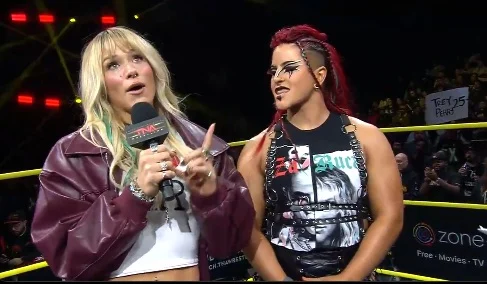
Lei Ying Lee, the reigning Knockouts Champion, has cultivated a reputation as a dominant and fiercely competitive titleholder, one who embraces the challenge of proving herself against all comers. Upon learning of Dani Luna’s unforeseen travel difficulties, Lee, embodying the spirit of a "fighting champion," wasted no time in publicly issuing an open challenge to any worthy competitor on the TNA roster. This bold declaration immediately created an air of anticipation, igniting speculation among fans about who might step forward to seize such a high-stakes opportunity. The answer came in a dramatic fashion, as two distinct and intriguing personalities emerged to accept Lee’s challenge: the enigmatic and powerful Zaria, and the uniquely athletic Sol Ruca. In a twist of events that perfectly encapsulates the unpredictable nature of professional wrestling, it was Sol Ruca who, with an almost mischievous determination, volunteered Zaria to be the challenger, setting the stage for an impromptu, yet undoubtedly captivating, Knockouts Championship encounter. The moment of Zaria’s acceptance, marked by her audacious signing of the contract—a theatrical gesture involving a pen and the back of Santino Marella—further cemented the dramatic tension surrounding this newly formed championship contest.
These swift adjustments underscore the invaluable nature of TNA’s burgeoning partnership with NXT, the developmental brand of WWE. In an industry often characterized by fierce competition, the collaborative spirit fostered by this alliance represents a refreshing and strategically beneficial development for both organizations. While the immediate benefit was the availability of talented athletes like Sol Ruca and Zaria to step into prominent roles at Genesis, the deeper significance lies in the mutual respect and shared vision for elevating professional wrestling talent. This partnership allows for broader exposure for wrestlers across both rosters, offering unique matchups and fresh narratives that would otherwise be impossible. For TNA, it provides an additional pool of high-quality talent to draw upon in unforeseen circumstances, ensuring that major events like Genesis maintain their star power and competitive integrity. For NXT, it offers its performers invaluable experience on a different stage, in front of a different audience, and often in high-pressure, pay-per-view environments. The seamless integration of NXT talent into the Genesis card speaks volumes about the effective communication and planning between the two companies, turning potential crises into opportunities for fresh storytelling and exciting new matchups.
The logistical challenges posed by international travel and visa procurement are a pervasive reality in professional sports and entertainment, affecting not just wrestling but global athletic competitions, music tours, and film productions. For a professional wrestling promotion that actively seeks to feature talent from diverse backgrounds and nationalities, such as TNA, these issues are an occupational hazard. Wrestlers, particularly those traveling from overseas, must navigate complex immigration laws, often requiring specific work visas that can be subject to delays, changes in policy, or unexpected administrative hurdles. These processes are rarely straightforward and can involve extensive paperwork, interviews, and varying processing times that are beyond the control of the talent or the promotion. When a major event like Genesis is on the horizon, with match cards planned months in advance, any last-minute visa complication can send ripples through the entire production, necessitating rapid contingency planning. TNA’s ability to pivot so effectively, especially for key championship matches, highlights the professionalism and experience of its management and creative teams in navigating these real-world complexities while maintaining the illusion and excitement of the wrestling world.
The alterations to the Genesis card, while born out of necessity, have undeniably created new avenues for storytelling and have shone a spotlight on other deserving talents. For Cedric Alexander, the delay in his X-Division Championship opportunity is a test of patience, but TNA’s commitment to his future title shot ensures that his pursuit of gold remains a central narrative thread. His participation in the non-title three-way against Joe Hendry and Moose still promises a high-octane encounter, showcasing his skills against two distinct and powerful opponents. For Joe Hendry, stepping into a prominent position on a major pay-per-view is another chance to further solidify his status as a top-tier performer and a crowd favorite, potentially building new rivalries or alliances within the TNA ecosystem.
On the Knockouts side, the impromptu championship match between Lei Ying Lee, Sol Ruca, and Zaria offers a fascinating clash of styles. Lee’s championship reign has been defined by her calculated aggression and strategic prowess, while Zaria brings an intimidating presence and raw power, making her a compelling, unpredictable challenger. Sol Ruca, known for her astonishing athleticism and innovative offense, adds another layer of unpredictability to the multi-person contest, as her involvement, though indirect, certainly influences the dynamics. This new arrangement not only provides an immediate, high-stakes contest for the Knockouts Championship but also serves as a prime opportunity for Zaria and Ruca to make a significant impact on a major stage, potentially altering their trajectories within the division.
Genesis 2026, despite these last-minute changes, is poised to be a landmark event for TNA Wrestling. The promotion’s resilience in the face of logistical challenges, coupled with its commitment to delivering high-quality professional wrestling, speaks volumes about its renewed vigor. The ability to leverage its strategic partnerships, such as the one with NXT, demonstrates a forward-thinking approach that prioritizes the fan experience and the continued growth of the brand. As TNA embarks on its new television chapter with AMC, the success of Genesis, both creatively and operationally, will be crucial. The Dallas audience and viewers worldwide, tuning in via TNA+ and TrillerTV, are guaranteed an evening of compelling action, dramatic storytelling, and the enduring spirit of professional wrestling, proving that even when plans go awry, the show must, and will, go on with unwavering intensity. The unforeseen adjustments have merely added another layer of intrigue to an already highly anticipated spectacle, ensuring that Genesis will be remembered not just for its planned moments, but for its remarkable adaptability in the face of the unexpected.