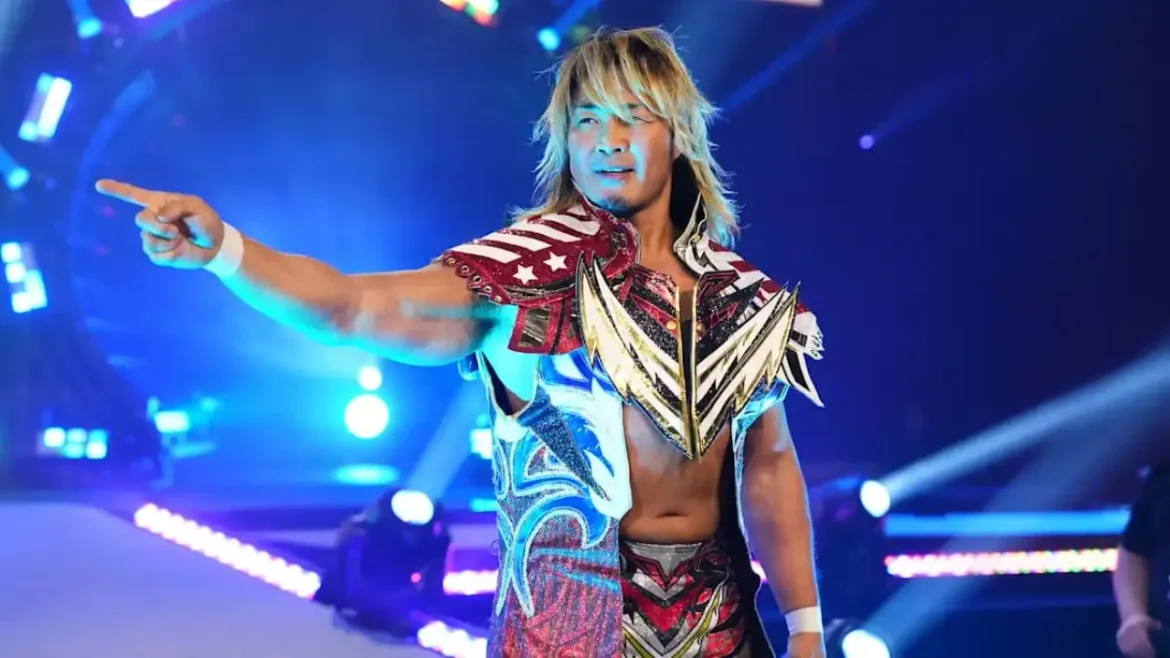
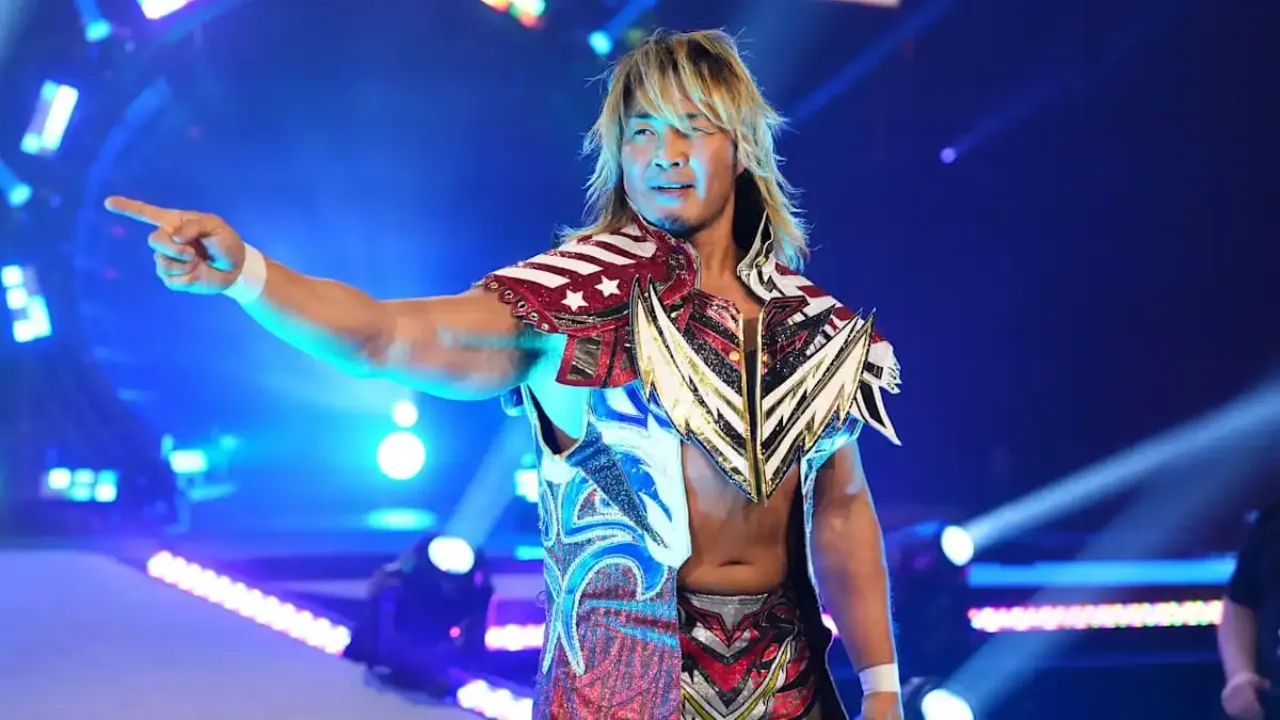
In a development that reverberated through the professional wrestling world, particularly among the devoted legions of New Japan Pro-Wrestling faithful, Hiroshi Tanahashi, the undisputed "Ace" of the promotion for nearly two decades, unveiled a striking transformation this past Saturday. Shedding the long, flowing mane that had become synonymous with his electrifying, rockstar persona, Tanahashi revealed a significantly shorter, more understated haircut. This physical metamorphosis, confirmed through images shared across social media, arrives precisely as Tanahashi transitions from the hallowed squared circle into the demanding corporate boardroom as NJPW’s newly appointed President, marking not just a personal aesthetic change but a profound symbolic demarcation in his storied career and the future trajectory of the company he now leads.
For years, Tanahashi’s distinctive hairstyle was an integral component of his appeal, a visual anchor for his "High-Fly Flow" aerial assaults and his "Go Ace!" rallying cry. It embodied the youthful exuberance and defiant charisma that pulled New Japan Pro-Wrestling back from the brink of obscurity in the mid-2000s. To witness the man often likened to a rock god of the wrestling world opt for a more conventional look sends a clear, unspoken message: the era of the in-ring Ace, at least as we knew him, has definitively concluded. The decision was not made on a whim, as Tanahashi had hinted at this impending change throughout the week, even posting a pre-cut image of himself settled comfortably in a salon chair, a final prelude to the reveal. His subsequent confirmation, succinct and impactful, simply stated: "It’s black. And short," leaving no room for ambiguity. This concise declaration, much like his in-ring style, delivered maximum impact with minimal fuss.
The timing of this dramatic visual alteration is inextricably linked to the culmination of his active wrestling career, which reached its emotional crescendo at Wrestle Kingdom 20. This landmark event, a spiritual home for countless NJPW legends, served as the stage for Tanahashi’s final competitive match, an encounter steeped in history and mutual respect against his greatest rival, Kazuchika Okada. Their feud, often hailed as the defining rivalry of a generation, transcended mere athletic competition, becoming a narrative of generational shifts, leadership struggles, and the very soul of New Japan Pro-Wrestling. From their first major singles bout at Wrestle Kingdom 7 in 2013, where Okada shockingly dethroned Tanahashi, to their numerous epic clashes that followed, their encounters were not merely matches but chapters in a sprawling epic that captivated audiences worldwide.
Their final dance at Wrestle Kingdom 20 was imbued with a unique gravitas, a poignant farewell that echoed with the weight of their shared history. It was a contest where the outcome, while important, felt secondary to the sheer emotion of the moment. The two titans, whose careers had been so intertwined, delivered a clinic in professional wrestling, a back-and-forth struggle that showcased their enduring chemistry and profound understanding of each other’s arsenals. Ultimately, as has been the case in many of their most significant encounters, it was Kazuchika Okada who emerged victorious, sealing the win with his devastating Rainmaker lariat. The immediate aftermath was as memorable as the match itself; as Tanahashi slowly recovered in the center of the ring, Okada, ever the respectful competitor, paused to offer a sincere thank you to his long-time adversary before departing, a gesture that spoke volumes about the bond forged through years of intense rivalry and shared sacrifice. It was a fitting, albeit bittersweet, passing of the torch, a final acknowledgment from the man who inherited the "Ace" mantle from Tanahashi himself.
The emotional resonance of Tanahashi’s retirement was further amplified by a truly star-studded ceremony, an unprecedented gathering of wrestling luminaries from various promotions and eras, all converging to pay tribute to a man who had given his entire adult life to the craft. The Tokyo Dome, a venue that has borne witness to so many of Tanahashi’s triumphs and tribulations, swelled with applause as a who’s who of wrestling royalty stepped out to honor him. Among the distinguished guests were current AEW stalwarts Will Ospreay and Kenny Omega, both of whom had unforgettable feuds with Tanahashi during their NJPW tenures, testament to his influence across the global wrestling landscape. Japanese legends Keiji Muto and Tatsumi Fujinami, pillars of NJPW’s past, stood alongside, symbolizing the unbroken lineage Tanahashi represented. Even Jay White, "The Switchblade," who had often been a thorn in Tanahashi’s side, put aside kayfabe animosity to offer his respects.
Perhaps the most surprising and impactful appearance, however, was that of Tetsuya Naito. Naito, a man whose career trajectory has been so intricately linked with and often defined in opposition to Tanahashi’s "Ace" persona, emerged to a thunderous ovation. Their complex history, oscillating between bitter rivalry and grudging respect, added an extra layer of poignancy to Naito’s presence. It was a powerful statement, signifying a collective acknowledgment of Tanahashi’s monumental contributions across all factions and rivalries within NJPW. Following these heartfelt tributes, Tanahashi embarked on a final, triumphant lap around the Tokyo Dome, perched atop a moving float, his signature air guitar an essential prop. He waved to the adoring masses, soaking in the cheers and gratitude, before finally making his exit, disappearing into a dramatic cloud of smoke at the entrance ramp, a theatrical farewell befitting a performer of his magnitude. It was a moment that simultaneously celebrated his unparalleled career and marked the definitive closing of his in-ring chapter.
Beyond the immediate emotional impact of his retirement, Tanahashi’s new haircut carries immense symbolic weight when viewed through the lens of his recently assumed corporate responsibilities. In December of the previous year, Hiroshi Tanahashi was officially appointed as the new President of New Japan Pro-Wrestling, succeeding Takami Ohbari. This move signaled a significant shift in the company’s leadership structure, entrusting the reins to one of its most beloved and iconic figures. The transition from active competitor to corporate executive is a challenging one, requiring a different mindset, a different public image, and a different set of priorities. The flowing locks of "The Ace" were perfect for a charismatic main eventer, a wrestling idol who inspired millions. The shorter, more business-like cut, therefore, serves as a powerful visual cue for this new professional identity. It’s a deliberate shedding of the performer’s costume, a conscious embracing of the suit-and-tie gravitas required of a company president. It suggests a focus on strategy, management, and the long-term health of the promotion, rather than just delivering spectacular matches in the ring.
Tanahashi’s journey to becoming NJPW’s President is a testament to his enduring legacy and profound impact on the company. He rose to prominence during what is often referred to as NJPW’s "dark ages" in the mid-2000s, a period marked by declining attendance, controversial MMA crossovers, and a general lack of direction. It was Tanahashi, with his unwavering charisma, exceptional in-ring skill, and tireless work ethic, who almost single-handedly carried the company on his back, becoming the beacon of hope that fans desperately needed. His record-setting eight reigns as IWGP Heavyweight Champion, accumulating over 1,350 days with the prestigious title, cemented his status as the cornerstone of the modern NJPW era. He consistently delivered main event quality matches, drawing new fans and rekindling the passion of old ones. He defined what it meant to be the "Ace" – not just a top wrestler, but the heart and soul of the promotion, a standard-bearer for its style and philosophy.
His influence extended beyond championship reigns and match quality. Tanahashi’s persona, an optimistic, high-flying hero, provided a stark contrast to the more traditional, often stoic, strong-style wrestlers of previous generations. He brought a sense of fun, athleticism, and a distinct "rockstar" vibe that appealed to a broader audience, both domestically and internationally. He was instrumental in NJPW’s resurgence on the global stage, leading the charge as the company expanded its reach through international tours, streaming services, and collaborations. Without Tanahashi’s dedication and unparalleled ability to connect with an audience, it is highly debatable whether NJPW would enjoy the global recognition and fervent fanbase it commands today. He didn’t just win titles; he resurrected a dying company and transformed it into a global powerhouse.

Now, as NJPW President, Tanahashi faces a different kind of challenge. The company, while stable, navigates a complex global wrestling landscape, with increasing competition and evolving audience preferences. His role will involve balancing the rich traditions of New Japan Pro-Wrestling with the imperative for innovation and growth. He will be responsible for fostering new talent, expanding market reach, and ensuring the financial health of the promotion. His intimate understanding of the locker room, garnered from decades as a peer and leader, will be invaluable in this new capacity. He understands the sacrifices, the pressures, and the aspirations of the wrestlers, putting him in a unique position to guide the company with empathy and foresight. The symbolic haircut, therefore, can be interpreted as his commitment to fully embrace this new chapter, leaving behind the immediate allure of the spotlight for the demanding responsibilities of leadership.
The transformation is more than just a superficial change; it reflects a profound internal shift, a mental and emotional preparation for the arduous tasks ahead. Tanahashi, the perpetual optimist, now carries the weight of an entire company on his shoulders. The black, short hair suggests a grounded, serious approach, a readiness to tackle the intricate business aspects of running a major wrestling promotion. It’s a statement that he is no longer just the star attraction but the architect, the strategist, the visionary. It signifies a definitive break from the past, a clear boundary drawn between his illustrious in-ring career and his pivotal new role as a corporate leader.
In conclusion, Hiroshi Tanahashi’s decision to cut his iconic hair is far more than a mere cosmetic update. It is a powerful, visual metaphor for the end of an era and the beginning of another. It unequivocally marks the culmination of his unparalleled career as an active wrestler and signals his full embrace of the monumental responsibilities that come with being the President of New Japan Pro-Wrestling. From saving the company from its darkest days to leading it into a new era of global prominence, Tanahashi has consistently demonstrated an uncanny ability to evolve and adapt. The shorter hair, a stark contrast to the flowing locks that defined "The Ace" for so long, represents a shedding of the performer’s skin and a resolute step into the corporate arena. As fans reflect on his incredible legacy in the ring, they now look forward with anticipation to the future direction of NJPW under the guidance of its new, transformed President, Hiroshi Tanahashi, a man whose legend continues to grow, even without the signature mane.