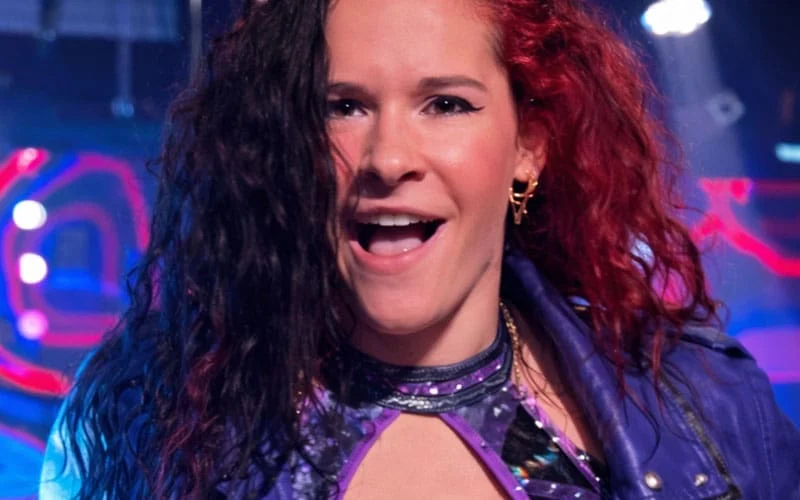
The atmosphere inside the venue was thick with a mixture of anticipation and uncertainty as the metal door of the reinforced structure groaned shut. For the fans in attendance, the sight of Masha Slamovich standing within the confines of a steel cage was familiar, yet the context surrounding her appearance was entirely unprecedented. This was not merely another high-stakes encounter in a career defined by brutality; it was a pivotal moment of professional re-emergence. On January 17, 2026, the wrestling world watched closely as one of its most intense competitors stepped back into the spotlight after a prolonged period of silence and controversy. The event, hosted by the independent powerhouse Circle 6 Wrestling, served as the backdrop for a return that many wondered would ever actually materialize given the heavy circumstances of the preceding months.
Slamovich did not choose a soft landing for her first night back in the squared circle. Instead, she entered into a visceral war against Haley J, an opponent known for her own brand of fearlessness and grit. The choice of a steel cage match was symbolic, perhaps representing the enclosure of her personal life or the hardening of her resolve. From the opening bell, it was clear that the time away had not dulled the edge of the athlete often referred to as the Russian Death Doll. The physicality was immediate and unrelenting, with both women utilizing the cold steel of the cage as a primary weapon. This was not a showcase of technical wrestling in its purest form, but rather a chaotic brawl that pushed the boundaries of what is expected in a modern main event.
Throughout the encounter, the intensity only escalated as various foreign objects were introduced into the fray. The sounds of trash cans colliding with flesh echoed through the arena, punctuated by the splintering of wooden tables that had been positioned to maximize the damage. The fans witnessed a series of high-risk maneuvers that demonstrated Slamovich’s lack of hesitation. At one point, the battle transitioned from the canvas to the very top of the structure, with both competitors teetering on the edge of the cage. The sight of them fighting at such a dangerous height served as a reminder of the sheer athleticism and risk inherent in Slamovich’s style. It was a performance designed to remind the audience of her capabilities, effectively shifting the focus from the headlines of the past to the violence of the present.
The road to this January comeback was paved with significant obstacles that began in the autumn of 2025. In September of that year, the wrestling community was rocked by serious allegations involving Slamovich’s personal life. Her former partner, a fellow competitor known as AKIRA, came forward with public accusations regarding domestic issues. The fallout was immediate and widespread, as the industry began to grapple with the implications of the claims. In the modern era of professional wrestling, where personal conduct is under more scrutiny than ever before, such allegations often lead to an immediate distancing by major promotions and a cooling of a performer’s career trajectory. Slamovich found herself at the center of a storm that transcended the scripted narratives of the ring.
In the wake of these accusations, Slamovich chose to address the situation directly rather than remaining silent. Toward the end of 2025, she issued a public statement that attempted to provide her perspective on the fractured relationship. She described the dynamic between herself and AKIRA as one that had become destructive for both parties involved. Eschewing the typical defensive posture often seen in public relations crises, she acknowledged her own role in the turmoil. She expressed a deep sense of regret and embarrassment over the actions she had taken, admitting that the relationship had reached a point where mutual harm was being inflicted. This admission of fault was a rare move in the industry, signaling a desire to take accountability while also highlighting the complexities of their shared history.
Despite her attempt at transparency, the professional consequences continued to manifest. By December 2025, reports began to circulate regarding her status with TNA Wrestling, a company where she had established herself as a cornerstone of the Knockouts division. It was revealed that Slamovich had been quietly removed from the active roster, leading many to believe that her tenure with the promotion had reached a definitive end. The move by TNA leadership was seen as a cautionary measure, a way to separate the brand from the ongoing controversy while the situation was assessed. For a wrestler who had been a perennial title contender and a dominant force on national television, the sudden absence from the roster was a stark indicator of how quickly a career can be interrupted by external circumstances.
However, the internal word from within TNA suggested that the door had not been permanently slammed shut. While she was no longer an active part of their programming as the year drew to a close, there were indications that the promotion’s executives intended to revisit the situation in 2026. The plan was to allow for a period of cooling off and personal reflection before attempting to regroup and determine if a professional future was still viable. This nuance in her departure suggested that her talent was still highly valued, even if her presence was currently deemed a liability for a major televised product. The wrestling industry has a long history of navigating the fine line between personal redemption and corporate responsibility, and Slamovich’s case appeared to be the latest test of that balance.
The January 17 event with Circle 6 was, therefore, more than just a match; it was a statement of intent. By returning to the independent circuit, Slamovich was demonstrating that she was not content to wait for a corporate green light to continue her craft. The independent scene has often served as a sanctuary for performers looking to rebuild their reputations or simply to stay active when larger doors are closed. Circle 6, with its emphasis on high-intensity and often hardcore-leaning content, provided the perfect environment for a wrestler of Slamovich’s reputation to reassert her dominance. The choice of Haley J as an opponent was also strategic, as it paired Slamovich with a rising star who could match her blow for blow, ensuring that the match would be talked about for its quality rather than just its timing.
As the match reached its conclusion, the physical toll on both women was evident. The use of the steel cage had left its mark, and the various table spots had pushed their bodies to the limit. For Slamovich, the victory was secondary to the fact that she had completed the match without showing any signs of ring rust or hesitation. She moved with the same predatory grace that had initially made her a standout in promotions like GCW and TNA. The performance was a visceral reminder of why she had become such a sought-after talent in the first place. Her ability to blend technical suplexes with raw, unbridled aggression remains a rare commodity in the women’s wrestling landscape.
The reaction from the wrestling community has been predictably divided. Some fans and critics argue that the nature of the allegations should preclude a quick return to the ring, suggesting that more time and demonstrable change should be required. Others point to her public apology and the "toxic" description of the relationship as evidence that the situation was a complex personal failing rather than a career-ending offense. In the court of public opinion, the path to redemption is rarely a straight line, and Slamovich’s return has sparked renewed debates about how the industry should handle domestic disputes and the accountability of its performers.
Looking ahead, the remainder of 2026 poses significant questions for the Russian Death Doll. While her performance in the cage proved she is still physically capable of competing at the highest level, the corporate path remains obscured. If TNA Wrestling does indeed follow through with their plan to regroup and touch base with her, it could signal a return to the national stage. Such a move would likely be met with both support from her loyal fanbase and criticism from those who feel the company is moving too quickly. In the meantime, the independent circuit appears to be her primary domain, where she can continue to ply her trade and perhaps slowly rebuild the trust of the wider wrestling world.
The evolution of Masha Slamovich from a rising star to a controversial figure and now back to an active competitor is a narrative that mirrors the often-chaotic nature of the business itself. Professional wrestling has always been a place where the lines between the persona and the person are blurred, and where the struggle for survival is played out both in front of and behind the curtain. Her match against Haley J was a chapter of resilience, a focused attempt to let her work in the ring speak louder than the headlines that had dominated her life for the previous four months. Whether this return marks the beginning of a successful second act or merely a temporary stay in the independent ranks remains to be seen.
What is certain is that Slamovich remains one of the most compelling and polarizing figures in the sport today. Her willingness to engage in the most dangerous types of matches, such as the steel cage war at Circle 6, suggests that she is not looking for a quiet or easy path back to the top. She is a wrestler who has always thrived in the midst of carnage, and her return was a reflection of that reality. As 2026 unfolds, the industry will continue to watch her every move, analyzing both her matches and her conduct as she navigates the difficult terrain of a professional comeback. The cage may have been opened on January 17, but the journey toward true professional stability is likely just beginning for the woman who has made a career out of surviving the most brutal environments the squared circle has to offer.
In the final moments of that cold January night, as Slamovich stood amidst the wreckage of broken tables and twisted metal, the message was clear. She is a fighter by trade and by nature, and she is not ready to walk away from the life she has built in the ring. The scars from her personal life may take longer to heal than the bruises earned in a steel cage, but for one night, the focus was back where she wanted it to be: on the violence, the struggle, and the undeniable talent of a woman who refuses to be sidelined. The wrestling world is rarely simple, and the story of Masha Slamovich is currently one of its most complex chapters, written in sweat, steel, and a determination to move forward regardless of the weight of the past.