The landscape of professional wrestling in early 2026 continues to evolve at a rapid pace, with the industry finding itself at a fascinating crossroads between traditional television metrics and the burgeoning world of digital consumption. As World Wrestling Entertainment moves deeper into the month of January, the pressure to build significant momentum toward the Royal Rumble is palpable. The January 16 episode of Friday Night SmackDown, broadcast live on the USA Network, served as a pivotal chapter in this journey, offering a mixture of high-stakes storytelling and impressive in-ring performances. However, as the dust settles on the latest episode, the focus for many analysts and industry insiders has shifted toward the television viewership data, which painted a complex picture of the current engagement levels for the blue brand. While the creative direction of the show remains ambitious, the numerical data suggests a slight cooling of the audience’s interest during this particular broadcast window, highlighting the challenges of maintaining a consistent viewership base in an increasingly fragmented media environment.
According to the latest data provided by Programming Insider, the January 16 edition of SmackDown managed to attract an average of 968,000 viewers throughout its two-hour duration on the USA Network. This figure represents a modest but noticeable decline when compared to the performance of the previous week’s episode on January 9, which had successfully pulled in an average of 990,000 viewers. In terms of raw numbers, this equates to a loss of approximately 22,000 viewers, resulting in a week-over-week decrease of roughly 2.2 percent. While a drop of this magnitude is not necessarily cause for alarm in the grand scheme of a long television season, it is a trend that the company likely watches closely, especially as they approach one of the most significant premium live events on the annual calendar. The failure to maintain the near-million viewer mark is a psychological hurdle that often dictates the narrative surrounding a show’s success, and falling just short of that milestone suggests that the lead-in to the Royal Rumble is still finding its footing with the casual television audience.
The data becomes even more intriguing when examining the key demographic of adults aged 18 to 49, which remains the primary metric used by advertisers and network executives to gauge the commercial viability of a program. For the January 16 broadcast, SmackDown posted a 0.21 rating in this crucial category. This was a significant step down from the 0.26 rating achieved during the January 9 episode, marking a sharp decline of 19.2 percent in the demographic. Such a drop in the "demo" is often viewed with more scrutiny than the total viewership numbers, as it reflects the engagement of the younger, more coveted audience segment. There are numerous factors that could contribute to such a fluctuation, ranging from external competition on Friday night to the specific pacing of the show’s narrative arcs. It is also important to remember that these figures specifically track linear television viewership on the USA Network. In the modern era, these numbers do not provide the full picture of a program’s reach, as they exclude the vast audience that consumes the product via the Peacock streaming service or through delayed viewing on various digital platforms. Nonetheless, as a snapshot of traditional broadcast health, the dip in the 18-49 demographic suggests that the January 16 episode struggled to hold onto the momentum generated just seven days prior.
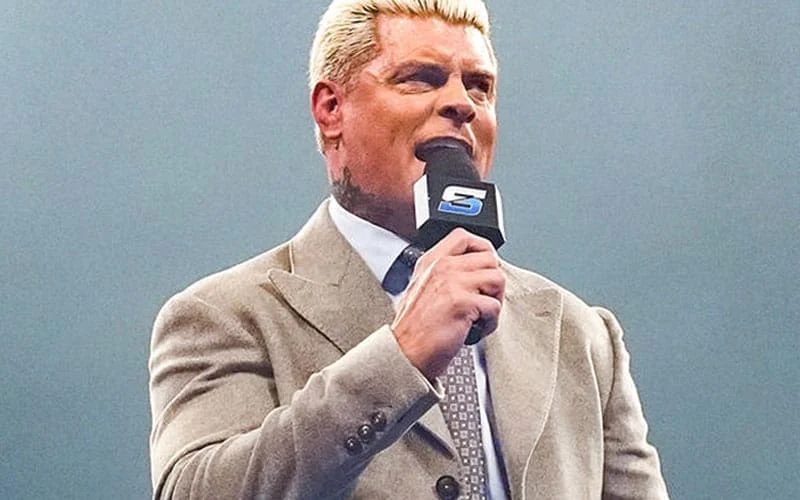
Despite the downward trend in the ratings, the content of the show itself was designed to be a high-impact affair, anchored by one of the most prominent figures in the industry today. Cody Rhodes, who has spent the last several years as the definitive protagonist of the WWE landscape, found himself at the center of the night’s most emotional and consequential segment. The "American Nightmare" took to the ring to address the fallout of his recent loss of the WWE Undisputed Championship, a title change that sent shockwaves through the locker room and the fan base alike. The catalyst for his loss was the brutal interference of Jacob Fatu, the powerhouse of the Bloodline whose presence has become a recurring nightmare for Rhodes. In a scathing and deeply personal promo, Rhodes articulated his frustrations and the weight of the setback he had endured. He did not merely lament his loss, however; he used the platform to pivot his focus toward the future. In a moment that galvanized the live crowd, Rhodes officially declared his entry into the upcoming Royal Rumble match. This declaration serves as a formal beginning to his quest for redemption, signaling his intent to navigate the thirty-man over-the-top-rope challenge to secure a main event spot at WrestleMania. For Rhodes, the Royal Rumble represents the most direct path back to the gold that was taken from him, and his participation immediately elevates the stakes of the January classic.
Beyond the heavy-hitting drama surrounding the former champion, the January 16 episode also showcased the depth of the current roster through a spirited United States Championship open challenge. Carmelo Hayes, who has established himself as a confident and formidable titleholder, put his championship on the line against a surprising and highly capable opponent: Leon Slater. The inclusion of Slater, a dynamic athlete who has been making waves in the industry, provided a fresh and exciting matchup for the SmackDown audience. The two competitors engaged in a high-speed, technically sound encounter that demonstrated the athletic evolution of the modern wrestling style. Hayes continues to solidify his position as a cornerstone of the mid-card scene, using his "HIM" persona to generate significant heat while delivering consistent quality in the ring. Slater’s performance, meanwhile, served as a testament to the "open door" feel that has permeated the industry recently, where talent from various backgrounds are given the opportunity to shine on the largest possible stage. The match was widely praised for its energy and execution, serving as a reminder that while the main event storylines often drive the viewership, the workhorse championships provide the backbone of the weekly television product.
The backdrop for all of these developments is the looming presence of the Royal Rumble and the subsequent Saturday Night’s Main Event. These large-scale productions require a delicate balance of storytelling, where the writers must satisfy the immediate demands of the weekly television audience while simultaneously planting the seeds for the massive spectacles that occur on the weekends. The decline in viewership for the January 16 episode might be seen as a temporary lull in that building process. Historically, the "Road to WrestleMania" is characterized by peaks and valleys in audience engagement, with interest typically surging as the destination becomes clearer. The interference of Jacob Fatu in the title picture and the subsequent fall of Cody Rhodes is a long-term narrative play, designed to build sympathy for the hero and heat for the villain. While such developments can sometimes lead to a short-term dip in numbers—perhaps as fans process the shock of a beloved champion losing—the long-term goal is to create a "must-see" environment for the eventual rematch or the climax of the feud.
The role of the Bloodline, and Jacob Fatu specifically, cannot be overstated in the current SmackDown hierarchy. Fatu has brought a raw, unpredictable intensity to the faction that has revitalized the group’s aura of dominance. By costing Rhodes the Undisputed Title, Fatu has positioned himself as one of the most dangerous obstacles in the company, creating a narrative hurdle that Rhodes must overcome if he ever hopes to reach the mountaintop again. This type of storytelling is the bread and butter of professional wrestling, relying on the classic trope of the hero being pushed to his lowest point before beginning his ascent. The January 16 episode was very much about establishing that "lowest point" for Rhodes, and while the television ratings might reflect a momentary loss of casual viewers, the core audience remains deeply invested in how this particular saga will resolve itself.
Furthermore, the transition of SmackDown to the USA Network has placed the brand under a different set of expectations compared to its previous tenure on network television. On a cable platform, the ceiling for viewership is naturally lower, but the value of a loyal, consistent audience is higher for the network’s overall programming block. A viewership of 968,000 is still a robust performance for cable television on a Friday night, especially when considering the lack of other high-profile live sports or entertainment competition in that specific time slot. The challenge for WWE moving forward will be to stabilize these numbers and prevent the 19.2 percent drop in the demographic from becoming a recurring trend. This will likely involve a combination of high-profile match announcements, guest appearances, and perhaps more crossover elements as the Royal Rumble draws closer.
As the company looks toward the end of January, the focus will undoubtedly remain on the fallout from this episode. The declaration by Cody Rhodes has set the stage for a dramatic Royal Rumble, where he will enter as a favorite but also as a marked man. The tension between the Bloodline and the rest of the roster continues to simmer, and the United States Championship scene remains vibrant with the emergence of challengers like Leon Slater. While the viewership metrics for January 16 may show a slight retreat, the creative engine of SmackDown is firing on all cylinders, weaving a complex web of rivalries and ambitions that will define the early months of 2026. The ebb and flow of television ratings is a constant in the industry, but the true measure of success will be found in the energy of the live crowds and the eventual buy-rates and streaming numbers for the premium live events that these weekly shows are designed to support. For now, the blue brand continues its march toward the Rumble, with Cody Rhodes leading the charge and the shadow of the Bloodline looming larger than ever. The minor dip in the audience figures serves as a reminder of the work yet to be done, but the foundation of the stories being told suggests that the road ahead will be anything but quiet. Each week brings a new opportunity to recapture those lost viewers and to build an even larger audience as the stakes continue to rise in the world of professional wrestling.