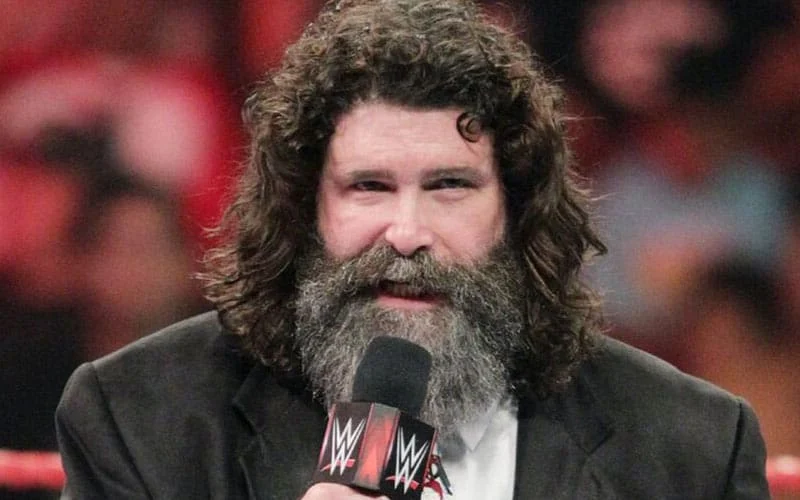
Professional wrestling has always been a medium defined by its larger-than-life characters and its ability to reflect the cultural zeitgeist of the era in which it exists. Among the pantheon of legends who have graced the squared circle, few possess a voice as resonant or a heart as transparent as Mick Foley. Known to millions as the Hardcore Legend, a man who sacrificed his physical well-being in the pursuit of entertaining the masses, Foley has transitioned in his later years into a sort of elder statesman for the industry. However, his influence extends far beyond the ropes of a wrestling ring. Foley has long used his platform to champion social causes, advocate for the vulnerable, and demand accountability from those in power. This commitment to justice was once again on full display following a tragic and controversial incident in Minneapolis involving the death of Alex Pretti, a thirty-seven-year-old intensive care unit nurse. The circumstances surrounding the fatal shooting of Pretti by federal authorities have ignited a firestorm of public outcry, and Foley, never one to remain silent in the face of perceived inequity, has added his significant weight to the growing chorus of those demanding answers.
The incident in question occurred in a climate of heightened national tension in 2026, a year that has seen the intersection of civil liberties and federal law enforcement reach a breaking point. Alex Pretti was not a name known to the public before this tragedy, but his profession as a healthcare worker on the front lines of an ICU immediately cast him as a figure of empathy. The details that emerged from the scene in Minneapolis were chilling. Reports indicated that federal agents, specifically those associated with Border Patrol units operating within the city, were involved in the confrontation that led to Pretti’s death. What transformed this from a standard law enforcement report into a national scandal was the emergence of video footage. This visual evidence appeared to contradict the initial narratives provided by federal agencies. Observers noted that the footage seemed to depict a federal officer successfully disarming Pretti, removing a firearm from his possession, before a separate agent discharged the fatal round. This sequence of events suggested that the threat had been neutralized prior to the use of lethal force, a revelation that sparked immediate and intense backlash from both the local community and national observers.
When Mick Foley viewed this footage, his reaction was not merely one of professional concern, but of profound personal devastation. Taking to social media, a tool he has mastered to connect with his diverse fanbase, the WWE Hall of Famer expressed a level of shock that resonated with many who felt the same way. He did not mince words when describing his perception of the video, suggesting that what he witnessed was an act of extreme violence committed in plain view of the public. Foley’s commentary went beyond the physical act itself; he turned his attention toward the subsequent handling of the event by government officials. He pointedly criticized the way the narrative was being framed by high-level authorities, suggesting that there was a concerted effort to tarnish the reputation of the deceased nurse in order to justify the actions of the agents involved. For Foley, this represented a double tragedy: the loss of a life and the subsequent attempt to strip that life of its dignity through public character assassination.
This isn’t the first time Foley has stepped into the arena of public discourse. Throughout his career, from the bloody wars in Japan to the height of the Attitude Era in WWE, Foley has always worn his emotions on his sleeve. Whether he was playing the deranged Mankind, the fun-loving Dude Love, or the rebellious Cactus Jack, there was always an underlying humanity to his work. That humanity has translated into a post-wrestling career defined by philanthropy and activism. He has spent decades working with organizations like RAINN, providing support for survivors of sexual assault, and has been a frequent visitor to hospitals through the Make-A-Wish Foundation. His willingness to speak on the shooting of Alex Pretti is a natural extension of this lifelong commitment to what he believes is right. He questioned how such an event could take place in the modern United States, framing the situation not as a localized anomaly, but as a symptom of a much larger and more systemic crisis that requires immediate intervention.
The political fallout from the Minneapolis shooting has been swift. Minnesota Governor Tim Walz has been vocal in his disagreement with the federal version of events, publicly rejecting the claim that the agents acted in a manner consistent with self-defense. This rare public friction between state leadership and federal law enforcement has only served to embolden protesters who have taken to the streets of Minneapolis and other major cities. The demand for transparency is at an all-time high, and the involvement of a figure like Foley helps bridge the gap between political activism and mainstream pop culture. In the world of professional wrestling, a "face" is a hero who stands up for the fans, while a "heel" is a villain who disregards the rules. In this real-world scenario, Foley has cast himself in the familiar role of the hero, standing up against what he perceives as a powerful and unjust antagonist.
For many wrestling fans, Foley’s perspective carries more weight than that of a traditional political commentator. There is a perceived authenticity to him that is rare in the modern age. Having survived some of the most brutal matches in the history of the business, including the infamous Hell in a Cell match against The Undertaker, Foley is viewed as a man who understands pain and sacrifice. When he speaks about the "devastation" of watching a life being taken, his audience listens because they know he is not a man of hyperbole when it comes to physical stakes. His involvement also highlights a shifting trend within the wrestling industry. For decades, performers were encouraged to stay "in character" and avoid controversial topics to prevent alienating segments of the audience. However, the modern roster of talent across promotions like WWE and AEW is much more engaged with social issues. Foley, as a veteran and a legend, has paved the way for younger stars to use their platforms for more than just promoting their next pay-per-view match.
The case of Alex Pretti remains a developing story, with investigations ongoing and the public demand for accountability growing louder by the day. The discrepancies between the video evidence and the official statements from federal authorities have created a vacuum of trust that is currently being filled by anger and suspicion. By speaking out, Foley has ensured that this story remains in the spotlight, preventing it from being swept under the rug as just another statistic in a long line of controversial law enforcement encounters. He has challenged his followers to look past the official press releases and to see the human element of the tragedy. He has reminded his audience that behind every headline is a person—in this case, a nurse who spent his life caring for others—and a family left searching for answers.
As the wrestling world continues to evolve, the line between the entertainer and the advocate continues to blur. Mick Foley’s reaction to the Minneapolis shooting is a testament to the idea that one’s responsibility to their fellow man does not end when they hang up their boots. His career was built on the foundation of taking hits so that others didn’t have to, and in a metaphorical sense, he is doing the same here. He is willing to take the "heat" from those who believe celebrities should remain silent on political matters because he believes the moral cost of silence is too high. The story of Alex Pretti is a somber reminder of the volatility of the current era, but the response from figures like Foley provides a glimmer of hope that the pursuit of truth and justice remains a priority for those with the power to be heard.
The broader implications of this incident touch upon the very nature of federal oversight and the rights of citizens within their own communities. When a Border Patrol agent operates deep within the interior of the country and becomes involved in a fatal shooting of a local civilian, it raises significant legal and ethical questions. Foley’s frustration mirrors that of the legal experts and civil rights advocates who are currently dissecting the legality of the federal presence in Minneapolis. By calling for the violence to stop and for the narrative to be corrected, Foley is engaging in a form of storytelling that is far more consequential than any feud he ever had in the ring. This is a battle for the soul of the country, and the Hardcore Legend is once again proving that he is a formidable opponent for anyone standing on the wrong side of history.
In the coming weeks, as more details regarding the Alex Pretti investigation are made public, the wrestling community will likely continue to look to Foley for guidance on how to process these events. His ability to articulate complex emotions and his refusal to back down from his convictions make him a unique and necessary voice in a crowded media landscape. Whether one agrees with his assessment of the video or his critique of the government, it is impossible to deny the sincerity of his intent. Mick Foley has always been a man of the people, and in his defense of a fallen nurse in Minneapolis, he has shown that his commitment to the people is as strong as it was when he was winning world championships. The tragedy of Alex Pretti is a dark chapter in the history of Minneapolis, but the advocacy of those like Foley ensures that the light of scrutiny will continue to shine on the actions of those in power until justice is served.