The sprawling, ever-evolving universe of professional wrestling is a constant theatre of both meticulously crafted narratives and the unpredictable currents of real-world events. In an industry where the line between legitimate news and calculated kayfabe is often deliberately blurred, the rumor mill operates at a relentless pace, churning out whispers that captivate audiences and shape expectations. As January 2026 draws to a close, the air is thick with anticipation for major events on the horizon, yet beneath the surface, significant questions linger about the futures of some of the most prominent figures across the wrestling landscape. From the potential twilight of a legendary career to the mysterious disappearance of a key faction member and the persistent health concerns plaguing a technical wizard, the landscape is ripe with conjecture, prompting fans and pundits alike to ponder what lies ahead for these integral performers and the promotions they represent.
Among the most discussed topics currently resonating through the wrestling community are the ongoing health challenges faced by All Elite Wrestling’s esteemed Bryan Danielson. The "American Dragon," a moniker he earned through years of unparalleled intensity and technical prowess, has carved out a storied career marked by both incredible triumphs and harrowing physical setbacks. His journey back from a forced retirement in 2016 due to a litany of concussion issues was nothing short of miraculous, a testament to his unwavering determination and the advancements in medical understanding. However, the relentless, high-impact style that defines Danielson’s in-ring work, coupled with his willingness to push the boundaries of physicality, inevitably takes a toll. Whispers circulating in late January 2026 suggest that Danielson may once again be grappling with issues related to his neck, a particularly vulnerable area for any professional athlete, let alone one who regularly executes and absorbs maneuvers designed to simulate extreme force.
Danielson’s history with neck problems is well-documented, extending even before his WWE retirement, having undergone cervical fusion surgery in 2014. For a performer known for his head-dropping suplexes, diving headbutts, and stiff strikes, any recurrence of neck discomfort is cause for immediate and serious concern. Sources close to the situation, while unofficial, indicate that his current status might be more delicate than publicly acknowledged, potentially leading to a period of absence or a significant re-evaluation of his future in the ring. This speculation arises at a critical juncture for AEW, where Danielson is not merely a top-tier competitor but also a respected mentor and an integral part of the company’s creative fabric. His presence elevates any match, and his ability to connect with an audience, whether as a beloved hero or a ferocious villain, is unparalleled. Should these neck issues prove to be substantial, it would force Danielson, AEW management, and the medical staff to confront difficult decisions regarding his long-term health versus his passion for performing. The wrestling world collectively holds its breath, hoping that one of its most beloved and influential figures can navigate this latest challenge without further jeopardizing his well-being. The conversation extends beyond just Danielson; it highlights the inherent risks of the wrestling profession and the ongoing responsibility of promotions to prioritize the health of their talent, especially those with extensive injury histories. For a man who has already overcome so much, another serious setback would be a cruel twist of fate, but also a stark reminder of the ultimate sacrifices made in the pursuit of athletic and artistic excellence within the squared circle.
Shifting gears to the dramatic, dynastic saga unfolding in World Wrestling Entertainment, the extended absence of Jimmy Uso from The Bloodline storyline has become a glaring question mark, fueling a torrent of speculation among the WWE Universe. As of late January 2026, Jimmy’s visible presence alongside Roman Reigns, Solo Sikoa, and Paul Heyman has been conspicuously absent for a notable period, leaving fans to wonder about his whereabouts and the future of his pivotal role within arguably the most compelling narrative in modern wrestling history. The Bloodline, a faction built on familial bonds, power, and betrayal, has captivated audiences for years, with Jimmy Uso’s character arc being particularly complex and central to its development.
Jimmy, alongside his twin brother Jey, initially served as the loyal enforcers for the "Tribal Chief," Roman Reigns. Their journey, marked by reluctant allegiance, eventual submission, and then a gradual re-embracing of their heritage, saw them reach the pinnacle of the tag team division. However, the internal strife, the manipulation by Reigns, and the introduction of Solo Sikoa created rifts that eventually led to Jey Uso’s dramatic departure from the group, seemingly unable to reconcile his conscience with Roman’s ruthless demands. Jimmy, in contrast, chose to remain, a decision that often placed him in morally ambiguous positions, serving as Reigns’ sometimes-reluctant, sometimes-enthusiastic lieutenant. His character became a fascinating study in loyalty, family obligation, and the corrupting influence of power. His often-conflicted expressions and actions added layers to the already rich tapestry of The Bloodline.
Therefore, his sudden, unaddressed disappearance from television broadcasts and live events has sent ripples through the fanbase. Is this a strategic move within the storyline, designed to build suspense for a dramatic return? Could it be a legitimate personal matter or an undisclosed injury preventing him from performing? Or, in the most dramatic interpretation, is it a signal of a more permanent split from The Bloodline, potentially setting up a seismic reunion with Jey Uso, or even a challenge to Roman Reigns himself? The possibilities are endless, and each holds significant implications for the ongoing narrative. If Jimmy’s absence is a creative decision, it speaks volumes about the long-term planning of WWE’s creative team, potentially setting the stage for an explosive return at a major event, perhaps even the Royal Rumble or on the Road to WrestleMania. His re-emergence could tip the scales in any ongoing Bloodline conflict, or perhaps initiate a new chapter entirely.
Conversely, if the reason for his hiatus is non-kayfabe, it underscores the fragility of even the most dominant storylines when faced with real-world circumstances. Regardless of the underlying cause, Jimmy Uso’s absence creates a void. Solo Sikoa has stepped up as Roman’s primary muscle, but he lacks the deep-seated history and emotional connection that Jimmy brought to the dynamic. The Bloodline, without Jimmy, feels subtly incomplete, a testament to his integral role. Fans are eager for an update, hoping for clarity on whether this is merely a pause in his journey with the "Tribal Chief" or a definitive turning point in his storied career within the WWE. The ongoing mystery surrounding Jimmy Uso serves as a powerful reminder of how individual characters, even when temporarily off-screen, can continue to shape and influence the grand narratives of professional wrestling.

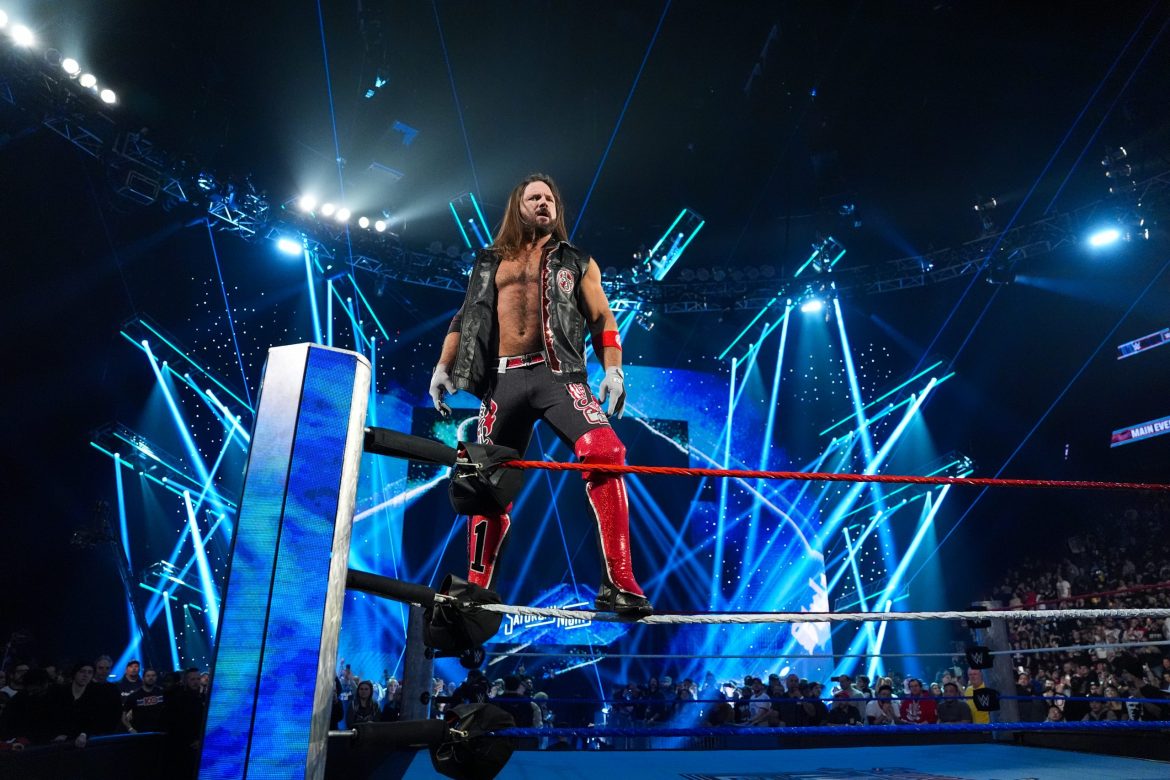
Perhaps the most poignant and significant rumor circulating at the close of January 2026 pertains to the potential impending retirement of "The Phenomenal" AJ Styles. A legend in every sense of the word, Styles has graced wrestling rings across the globe for over two decades, delivering performances that consistently defy expectations and solidify his status as one of the greatest to ever lace up a pair of boots. From his groundbreaking work in TNA/Impact Wrestling, where he was the cornerstone of the company for years, to his celebrated run in New Japan Pro-Wrestling as the leader of the Bullet Club, and ultimately his phenomenal debut and subsequent championship reigns in WWE, Styles has conquered every major stage in professional wrestling. His arrival in WWE at the 2016 Royal Rumble was a moment that sent shockwaves through the industry, proving that talent, regardless of their prior affiliations, could thrive at the highest level.
However, the relentless schedule and punishing style of professional wrestling take an undeniable toll on the human body, particularly as performers enter their mid-to-late forties. Styles, known for his acrobatic offense, high-flying maneuvers, and willingness to take incredible risks, has pushed his physical limits for an extended period. Whispers emanating from various corners of the wrestling world suggest that the 48-year-old veteran might be contemplating the final chapter of his illustrious career. While no official announcement has been made, and the nature of these discussions remains speculative, the sentiment indicates that Styles could be considering a gradual winding down or a specific timeframe for his retirement from full-time competition. This isn’t an uncommon consideration for performers of his vintage, especially those who have given so much of themselves to the art form.
The potential departure of AJ Styles would leave an immense void on the WWE roster, particularly on SmackDown, where he has consistently been a main event player and a standard-bearer for in-ring excellence. His ability to have a compelling match with virtually anyone, regardless of their experience level, is a rare gift, and his presence lends instant credibility to any storyline or championship pursuit. A retirement would not just be the loss of a performer, but the loss of a living legend who continues to inspire current and future generations of wrestlers. The timing of these rumors, leading into WrestleMania season, naturally prompts contemplation about a potential "farewell tour" or a dream match scenario that could serve as a fitting send-off for such an iconic figure. Imagine Styles facing off against a new generation star, or a long-awaited rematch against a storied rival, with the emotional weight of his impending retirement adding an unparalleled layer of drama.
The decision to step away from the ring is deeply personal, often influenced by a complex interplay of physical health, family considerations, and the desire to transition to the next phase of life. For Styles, who has dedicated his life to perfecting his craft, this moment would undoubtedly be bittersweet. His legacy is already secure, defined by countless classic matches, numerous championship accolades, and an undeniable impact on the global wrestling landscape. Should these rumors solidify into reality, the wrestling world will undoubtedly pause to celebrate the career of a man who truly lived up to his "Phenomenal" moniker, leaving behind a blueprint for success and a catalog of moments that will be replayed and cherished for generations. The mere contemplation of his retirement underscores the cyclical nature of professional wrestling, where even the greatest stars eventually pass the torch, but their influence endures forever.
These circulating discussions about Bryan Danielson’s health, Jimmy Uso’s ambiguous status, and AJ Styles’ potential retirement collectively paint a vivid picture of an industry in perpetual motion. Each piece of speculation, while unconfirmed, reflects the inherent drama and unpredictability that define professional wrestling beyond the confines of scripted narratives. It’s a world where physical endurance is constantly tested, where character developments take unexpected turns, and where the careers of even the most legendary figures are subject to the passage of time and the demands of the unforgiving schedule.
The interconnectedness of these rumors also highlights broader trends within the industry. The health concerns surrounding Bryan Danielson serve as a stark reminder of the long-term physical toll exacted on athletes who dedicate their lives to this profession. It reignites conversations about wrestler safety, post-career care, and the balance between delivering thrilling performances and preserving one’s well-being. For veteran performers like Danielson and Styles, who have pushed their bodies to the absolute limit for decades, these considerations become increasingly pressing. Their decisions, whether to continue or to step away, resonate not just with their individual fan bases but with the entire wrestling community, prompting reflection on the sacrifices made for the entertainment of millions.
Jimmy Uso’s mysterious absence, on the other hand, underscores the intricate and often manipulative nature of professional wrestling storytelling. In an era dominated by long-form narrative arcs, particularly with The Bloodline saga, every disappearance, every silence, is scrutinized for its potential deeper meaning. It’s a testament to the power of compelling characters and well-crafted storylines that a wrestler’s simple absence can generate such intense discussion and theory-crafting. It speaks to the audience’s investment in these characters and their desire to see the narrative threads expertly woven to their conclusion, or to their next dramatic twist.
Ultimately, these whispers and conjectures are more than just idle gossip; they are vital components of the wrestling experience, fueling anticipation, debate, and emotional investment. They remind us that behind the larger-than-life personas and explosive in-ring action, there are real individuals navigating their careers, their health, and their personal lives under the intense scrutiny of a global audience. As January 2026 fades into February, the wrestling world remains captivated, eagerly awaiting official confirmations or dramatic reveals that will undoubtedly shape the narrative landscape for months, if not years, to come. The only constant in professional wrestling is change, and these latest discussions are a testament to that enduring truth, proving that even outside the ropes, the drama never truly ends.