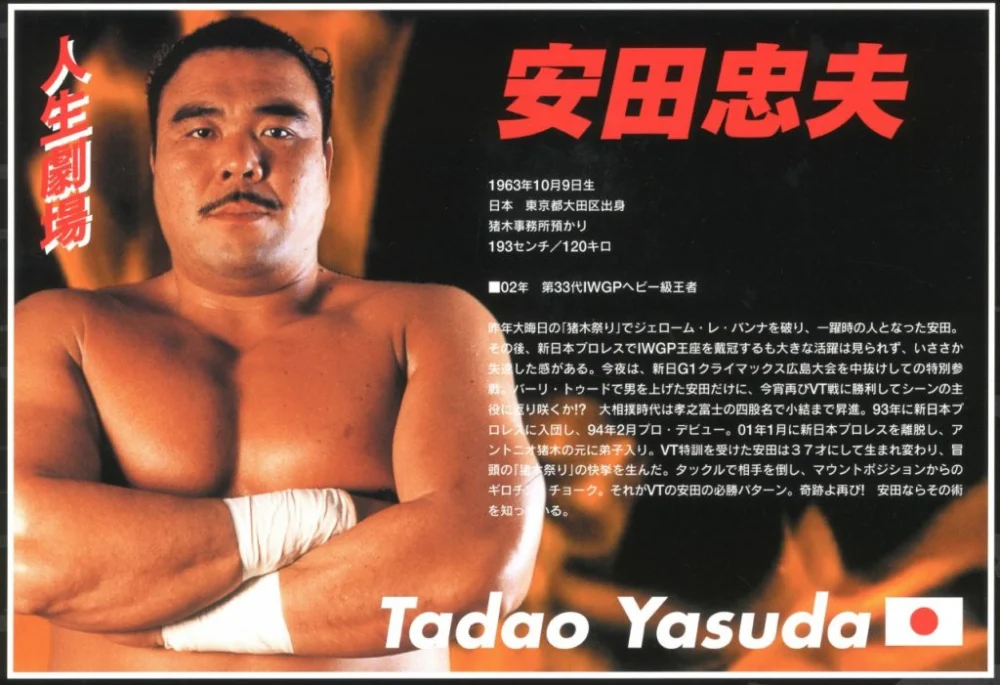
The professional wrestling world, particularly the landscape of Japanese strong style, is mourning the loss of a truly unique figure, Tadao Yasuda, who passed away recently at the age of 62. Reports from Tokyo indicate that Yasuda was found deceased at his residence in Tokyo, bringing a somber close to a life marked by remarkable career shifts, moments of unexpected glory, and a journey that blurred the lines between sports entertainment and legitimate combat. His story is one of unwavering commitment, from the disciplined world of sumo to the unforgiving squared circle and the brutal cage, culminating in a short but unforgettable reign atop New Japan Pro-Wrestling.
Yasuda’s path into the grappling arts was far from typical, beginning not in a wrestling dojo but within the hallowed traditions of sumo. The ancient Japanese sport, revered for its power, discipline, and ritual, served as his initial training ground. Though specific details of his sumo career are less widely publicized in wrestling circles, the foundation it provided – immense physical strength, mental fortitude, and a deep understanding of leverage and balance – would prove invaluable in his later endeavors. The transition from sumo to professional wrestling is a well-trodden path for many Japanese heavyweights, offering a natural progression for athletes seeking to leverage their formidable physiques and competitive spirit in a different arena. It was this foundation that ultimately led him to the gates of New Japan Pro-Wrestling in 1993, a pivotal moment that would redefine his athletic destiny.
Upon joining NJPW, Yasuda embarked on the rigorous journey typical of aspiring professional wrestlers within the promotion’s esteemed dojo system. This era, characterized by its strict discipline and arduous training, forged some of the toughest competitors in the world. He made his official in-ring debut the following year, in 1994, stepping into a world where performance, athleticism, and storytelling converged. For the better part of the 1990s, Yasuda found himself in the challenging position of an undercard wrestler, often gracing the opening matches of cards. This role, while crucial for developing foundational skills and understanding crowd dynamics, often meant limited spotlight and the arduous grind of constant touring with little mainstream recognition. He was a reliable hand, a solid competitor, but not yet a star, seemingly destined to remain in the periphery of NJPW’s star-studded roster.
However, the turn of the millennium brought with it a seismic shift in New Japan Pro-Wrestling, largely driven by the controversial vision of its founder, Antonio Inoki. Known as "Inoki-ism," this philosophy sought to re-emphasize the "strong style" roots of NJPW by integrating legitimate mixed martial arts into the professional wrestling product. Inoki believed that true strength and legitimacy came from facing real fighters in real contests, and that his wrestlers should be capable of excelling in both realms. This bold, often divisive, strategy would dramatically alter the trajectories of several NJPW talents, and Tadao Yasuda was among those hand-picked for this radical experiment. In 2000, Yasuda, alongside the formidable Kazuyuki Fujita, was dispatched to the United States to immerse himself in the world of mixed martial arts, a move that would fundamentally reshape his career and reputation.
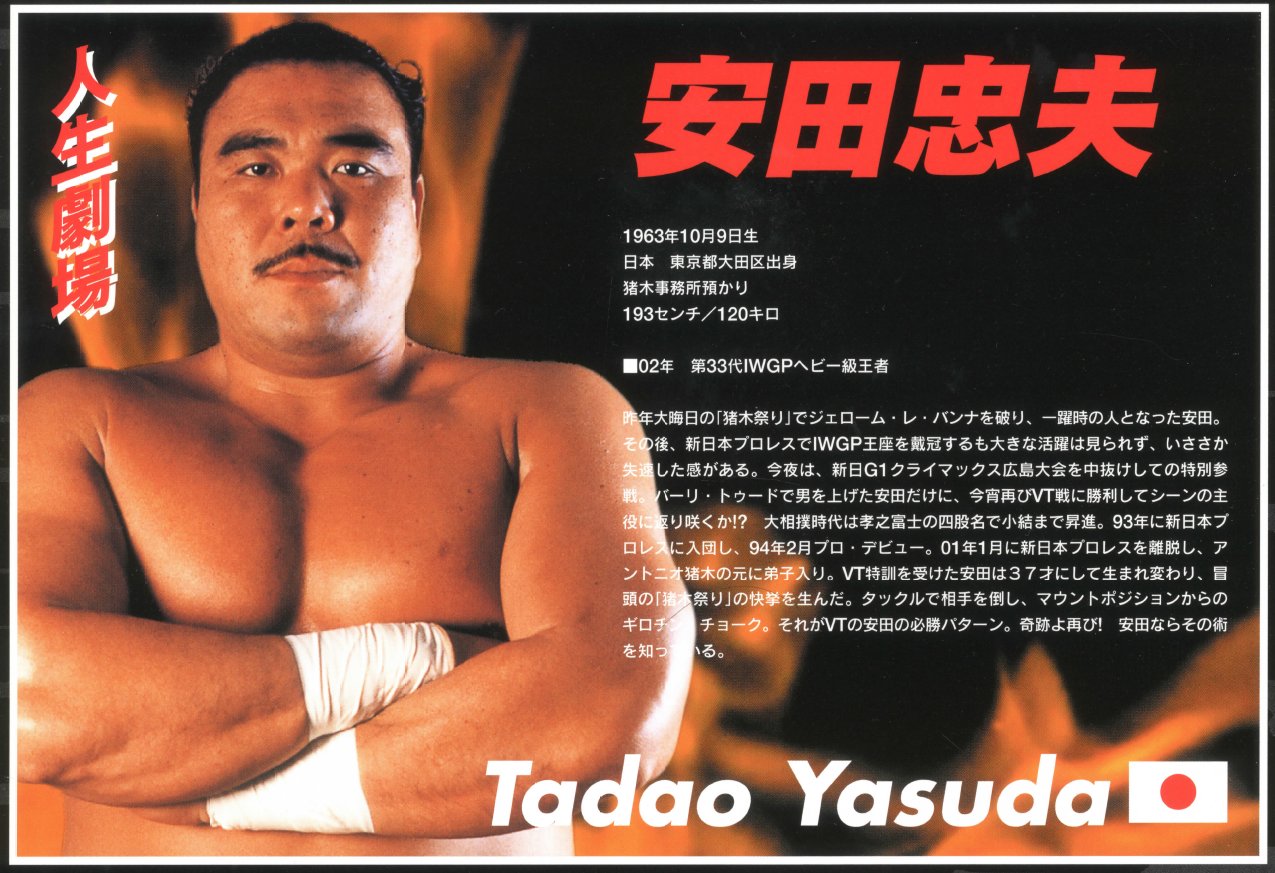
The decision to send Yasuda to train in MMA was a calculated gamble by Inoki, aiming to inject raw, legitimate fighting prowess back into the NJPW product. It was a departure from the traditional wrestling focus, forcing talents to adapt to a new, unforgiving environment. Yasuda embraced this challenge, honing his skills in a discipline far removed from the choreographed intricacies of professional wrestling. This intensive training quickly bore fruit, leading to his highly anticipated debut in Pride Fighting Championships, arguably the most prestigious MMA promotion in the world at the time. Stepping into the Pride ring was not merely a career move; it was a statement, a testament to the "Inoki-ism" ethos that professional wrestlers could indeed stand toe-to-toe with elite mixed martial artists.
Yasuda’s Pride debut was nothing short of a revelation. Against expectations, he emerged victorious in his first professional MMA fight. This legitimate triumph in such a high-profile combat sports organization instantly catapulted his credibility and status within NJPW. No longer just an undercard wrestler, Yasuda now possessed a tangible, undeniable fighting pedigree that resonated deeply with the Japanese audience, who held legitimate combat sports in high regard. His success validated Inoki’s controversial vision and positioned Yasuda as a legitimate threat, a man who could seamlessly transition between the squared circle and the fight cage. The "renewed push" he received upon his return to NJPW was not merely a storyline; it was a reflection of his newfound, hard-earned legitimacy.
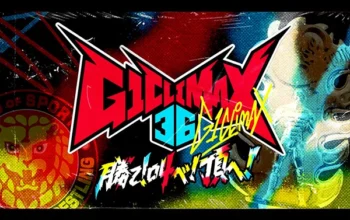
This elevated status was immediately apparent in his performance during the 2001 G1 Climax tournament, New Japan’s premier annual heavyweight competition. The G1 is a grueling round-robin tournament that tests the endurance, skill, and spirit of its participants, often considered a benchmark for future main eventers. For a wrestler who had spent years in the undercard, making a significant impact in the G1 was a monumental achievement. Yasuda, riding the wave of his MMA success, surprised many by making a deep run into the tournament, reaching the semi-finals. This impressive showing against the promotion’s top stars solidified his position as a legitimate contender, proving that his MMA skills were not just for show but translated into a heightened intensity and effectiveness in the professional wrestling ring. He had transcended his previous role, transforming into a formidable force within the heavyweight division.
The culmination of Yasuda’s MMA journey, and perhaps the single most impactful moment of his combat sports career, arrived in December 2001. In a stunning upset that reverberated across the combat sports world, Tadao Yasuda defeated the formidable kickboxing legend Jerome Le Banner. Le Banner was a terrifying figure, renowned for his devastating striking power and knockout ability, having faced some of the greatest heavyweights in K-1 and Pride. For Yasuda, a professional wrestler with limited MMA experience, to secure a victory over such an esteemed and dangerous opponent was nothing short of extraordinary. It was a career-defining moment, erasing any lingering doubts about his legitimacy as a fighter and etching his name into the annals of combat sports history. This victory cemented his status as a unique crossover athlete, a man capable of truly walking the walk.
Riding the incredible momentum from his victory over Le Banner, Yasuda was positioned for his ultimate professional wrestling triumph. Shortly after his shocking MMA win, he entered a tournament for the vacant IWGP Heavyweight Championship, the most prestigious prize in Japanese professional wrestling. The title had been vacated under controversial circumstances, further intensifying the competition. In a series of hard-fought matches, Yasuda battled his way through the bracket, ultimately facing one of NJPW’s most revered and respected figures, Yuji Nagata, in the finals. Nagata, a paragon of strong style and a future multi-time IWGP Champion, represented the pinnacle of traditional NJPW excellence. Against all odds, and in a testament to his incredible journey, Tadao Yasuda defeated Yuji Nagata to capture the IWGP Heavyweight Championship.

This victory was a monumental moment, not just for Yasuda, but for the entire "Inoki-ism" era. It signified the ultimate triumph of the controversial philosophy, demonstrating that a wrestler forged in the fires of legitimate combat could indeed ascend to the very top of the professional wrestling mountain. His reign, however, was brief, lasting a mere 48 days. Such a short tenure with the company’s top prize often sparks debate among fans and historians, reflecting the tumultuous nature of the period. While some viewed it as a deserved reward for his unique accomplishments, others saw it as a temporary measure, a byproduct of Inoki’s experimental vision that prioritized legitimate fighting over traditional wrestling narratives. Regardless of its duration, Yasuda’s time as IWGP Champion remains a significant chapter, a symbol of a radical moment in NJPW history where the lines between reality and spectacle were purposefully blurred.
Yasuda’s journey through the world of mixed martial arts concluded in 2003, with a professional record of two wins and four losses. While his overall MMA record might appear modest on paper, the significance of his two victories, particularly the one over Jerome Le Banner, far outweighed the numerical balance. He had proven his mettle in a legitimate fighting environment, showcasing a rare ability to compete at a high level in both professional wrestling and mixed martial arts. After his foray into MMA, he continued to compete in professional wrestling for several more years, albeit without reaching the same championship heights. He eventually retired from professional wrestling entirely in 2011, closing the book on an extraordinary in-ring career that defied conventional expectations.
Life after the bright lights of the wrestling arena and the fight cage often presents a different set of challenges for former athletes. For Tadao Yasuda, his post-wrestling career saw him working for a security company, a stark contrast to the fame and intensity of his past endeavors. It speaks to the often-humbling reality that many former professional athletes face in adapting to civilian life. His later years were not without their difficulties, including a reported incident in 2007 where he was said to have attempted suicide via carbon monoxide poisoning. Yasuda, however, publicly denied these claims, asserting that the situation was an accident. This tragic event, regardless of its true nature, underscored the personal struggles that can follow a life lived in the public eye and the immense pressures associated with a career that constantly demands physical and mental resilience.
The passing of Tadao Yasuda closes a chapter on one of professional wrestling’s most unconventional and compelling careers. He was a man who embodied the spirit of a transitional era in New Japan Pro-Wrestling, an athlete who bravely stepped into the unknown, fusing the discipline of sumo, the spectacle of professional wrestling, and the harsh realities of mixed martial arts. His journey from an undercard fixture to a legitimate MMA victor, and ultimately to the pinnacle of Japanese professional wrestling as an IWGP Heavyweight Champion, is a testament to his unique determination and the profound impact of Antonio Inoki’s vision. He may not have been the most technically gifted wrestler, nor the most dominant champion, but his story is undeniably one of courage, transformation, and an unwavering commitment to a path less traveled. As the wrestling world remembers Tadao Yasuda, it reflects on a warrior who dared to be different, leaving behind a legacy that continues to spark conversation and admiration for his audacious and truly inimitable career.