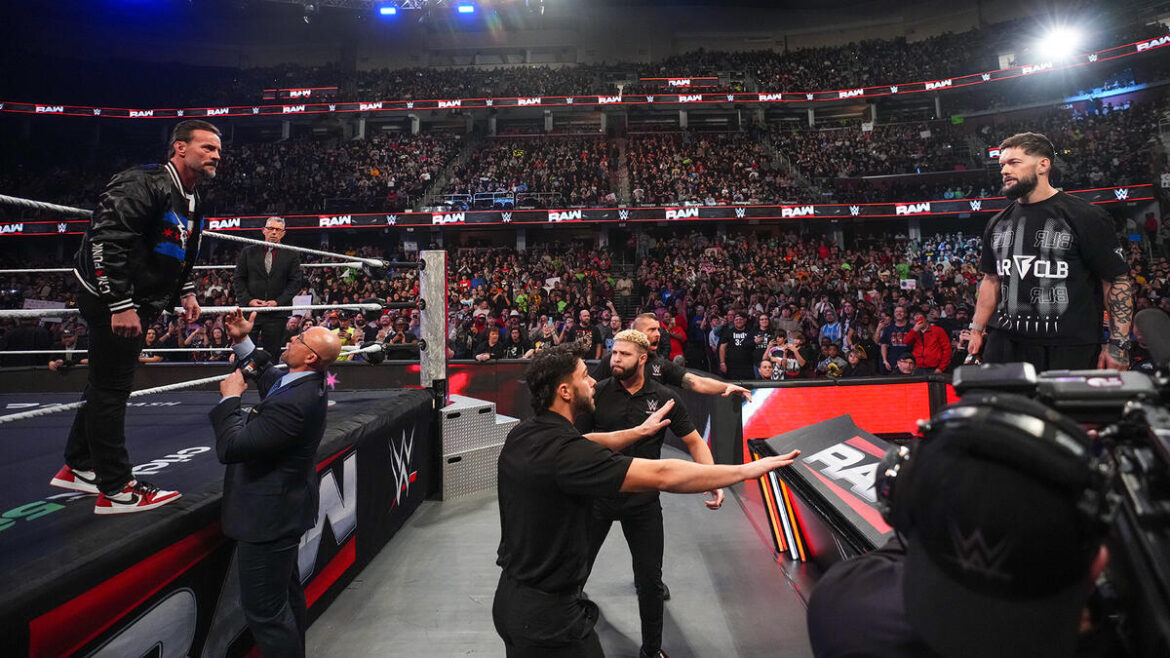
The relentless grind of the Road to WrestleMania presents a unique challenge for World Wrestling Entertainment’s weekly programming. Each episode of Monday Night Raw must not only deliver immediate entertainment but also meticulously construct the intricate narratives that culminate at the industry’s grandest spectacle. The February 9, 2026, edition of Raw, however, found itself at a peculiar crossroads, grappling with the absence of its biggest draw while attempting to forge compelling storylines. While flashes of brilliance from seasoned veterans and glimpses of potential from rising stars offered moments of engagement, the overall sentiment was one of an uneven affair, struggling to sustain the momentum established in preceding weeks as the calendar inches closer to April.
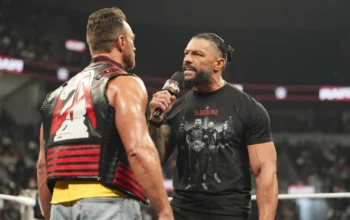
Central to this narrative tightrope walk is the colossal shadow cast by Roman Reigns. The Tribal Chief, a figure whose presence has dominated WWE programming for years, was conspicuously absent from the February 9th broadcast, a detail confirmed by the official announcement of his limited schedule, notably devoid of any February appearances. This pre-planned hiatus, while perhaps unsurprising given Reigns’ established part-time status, nonetheless dealt a palpable blow to the ongoing build for what many anticipate to be a generational clash against CM Punk at WrestleMania. The preceding week had ignited the embers of this potential rivalry with an electrifying exchange, a true "opening salvo" that promised a monumental build. To then have one half of that equation disappear from television for an entire month inevitably curtails the narrative’s organic flow and leaves audiences yearning for the continued intensity that such a high-stakes feud demands. The challenge for WWE creative becomes immense: how do you maintain the white-hot anticipation for a feud when one of its protagonists is not physically present to advance the storyline, leaving the other to carry the promotional burden in solo segments?
CM Punk, the self-proclaimed "Best in the World," found himself in precisely that predicament. Despite the absence of his potential WrestleMania adversary, Punk delivered a masterclass on the microphone, showcasing the sharp wit and searing intensity that have defined his career. His ability to command the ring and articulate his motivations, even in isolation, is undeniable, a testament to his unparalleled connection with the audience. Punk’s segment on the February 9th Raw revolved around the upcoming Elimination Chamber event, where he is scheduled to face Finn Balor. In typical Punk fashion, he leveraged his considerable influence and cunning, effectively "blackmailing" General Manager Adam Pearce into officially sanctioning the match. Punk’s rationale was rooted in a desire for retribution, emphasizing his belief that Balor deserved an "ass whipping" far more than a championship opportunity. This interaction further solidified Punk’s nuanced character — a hero to some, an antagonist to others, but always compelling. He is a performer in a zone, meticulously crafting his words and actions as the Road to WrestleMania intensifies, yet even his considerable talents struggled to fully compensate for the missing piece of the main event puzzle.
Finn Balor, a formidable competitor in his own right, finds himself in a challenging position within this overarching narrative. A former Universal Champion and a consistent presence in the upper echelons of WWE, Balor possesses a unique blend of athleticism, charisma, and a dark mystique when he taps into his "Demon" persona. His match against CM Punk at Elimination Chamber should, by all accounts, be a marquee encounter. However, the prevailing sentiment surrounding this clash is that it serves as a temporary diversion, a "placeholder" encounter before Punk inevitably moves on to his much-anticipated showdown with Roman Reigns. Balor himself acknowledged this unfortunate reality, publicly stating his desire to prove he is not an "afterthought." This statement, while highlighting his character’s resolve, inadvertently underscored the perception that he is, regrettably, positioned as such in the broader scheme of things. It’s a difficult tightrope for any performer to walk: delivering a high-quality performance in a match where the audience, and perhaps even the creative team, views the outcome as a foregone conclusion, merely a stepping stone to a larger, more significant angle. The challenge for Balor is to make this journey compelling, to demonstrate his worth and perhaps even sow seeds of doubt in the audience’s mind, despite the widely held belief that Punk will emerge victorious and continue his march towards the Undisputed WWE Universal Championship.
The comparison to WrestleMania XL, which unfolded just a couple of years prior, inevitably looms large over the current build. WrestleMania XL was a masterclass in long-term storytelling, delivering a crescendo of anticipation that captivated the wrestling world. The intricate web of rivalries, the emotional depth of the character arcs, and the consistent on-screen presence of all key players combined to create a truly unforgettable Road to WrestleMania. This benchmark, while perhaps an unfair comparison for every subsequent year, nonetheless sets a high expectation for the company’s ability to craft narratives of similar magnitude. When faced with the logistical challenges of a part-time champion and the perceived "holding pattern" of a significant feud, it becomes difficult for fans to envision how the current trajectory will reach the same stratospheric heights. This isn’t to say it’s impossible, but the creative team is undeniably operating with one hand tied behind its back, forced to compensate for star absences and maintain interest in storylines that might otherwise struggle to resonate deeply without their primary catalysts.
Beyond the main event implications, the February 9th Raw also featured several other segments and matches, contributing to the overall "uneven" nature of the broadcast. While the show as a whole struggled to maintain a consistent level of engagement, individual performances and emerging storylines offered glimpses of promise. The debut of Natalya on the Raw brand, for instance, provided a much-needed shot of veteran experience and credibility to the women’s division. Natalya, a multi-time champion and a cornerstone of women’s wrestling for over a decade, brings a wealth of knowledge and a strong in-ring presence. Her arrival is likely to elevate the competitive landscape and provide fresh matchups, solidifying her role as a respected figure capable of challenging the division’s top stars or mentoring its newer additions. Her immediate impact on the red brand offers a positive note amidst the show’s struggles.
Another bright spot was the continued ascent of Je’Von Evans. This young, dynamic performer has been steadily building momentum, showcasing an impressive athletic ability and an innate connection with the audience. His ongoing development is a testament to WWE’s commitment to cultivating new talent and providing opportunities for fresh faces to break through. Each appearance by Evans reinforces his potential to become a significant player on the roster, and his "ascent" is a storyline that fans can genuinely invest in, watching a talent grow and evolve before their eyes. These narratives, while not main event caliber, are crucial for the long-term health and depth of the roster, providing exciting prospects for future championship chases and compelling rivalries.
The women’s division also saw "fun and violence" in the ongoing rivalry involving AJ Lee and Becky Lynch. Both women are established titans of the industry, known for their fierce competitive spirits and their ability to deliver captivating matches and promos. Their dynamic on the February 9th Raw underscored their star power and their capacity to inject energy into any segment. The potential for a tag team match, pitting Becky Lynch and Natalya against Maxxine Dupri and AJ Lee, suggests a fascinating blend of veteran prowess and evolving character work. Becky and AJ’s established rivalry would add a personal layer, while the inclusion of Natalya brings her experience and Maxxine Dupri continues to hone her in-ring skills and character alongside seasoned professionals. Such matchups, even if not directly tied to a world championship, are vital for providing diverse entertainment and showcasing the depth of the women’s roster, keeping various storylines bubbling beneath the surface of the main event picture. Maxxine Dupri, in particular, continues to grow into her role, demonstrating improvement and a willingness to step into the ring with some of the best, which is essential for her continued development as a performer.
Ultimately, the February 9, 2026, episode of Monday Night Raw served as a stark reminder of the delicate balance WWE must strike between immediate weekly impact and the intricate, long-form storytelling required for WrestleMania. While individual performances, notably CM Punk’s exceptional mic work, and the promising trajectories of talents like Natalya and Je’Von Evans offered moments of genuine quality, the overarching narrative felt somewhat stalled. The predictable nature of the upcoming Elimination Chamber match between Punk and Balor, coupled with the absence of Roman Reigns, created a sense of anticipation being deferred rather than amplified. As the Road to WrestleMania continues its relentless march, the onus is on WWE creative to find innovative ways to build intensity and generate genuine investment, even when key players are off-screen or when immediate outcomes seem predetermined. The challenge is not merely to get to WrestleMania, but to make every step of that journey as compelling and unpredictable as the grand spectacle itself. The coming weeks will be crucial in determining whether Raw can regain its footing and deliver the kind of captivating build that fans have come to expect from the biggest wrestling event of the year.