The world of professional wrestling, ever a fascinating blend of athletic spectacle and dramatic storytelling, finds itself once again grappling with the blurred lines between reality and performance, particularly concerning the recent health status of WWE’s notoriously outspoken personality, Chelsea Green. Reports emerged in early February 2026, stemming directly from Green herself, suggesting a significant ankle injury sustained during a recent SmackDown appearance. However, the subsequent narrative, meticulously crafted and disseminated by Green through her prolific social media channels, has introduced a layer of theatrical ambiguity, leaving fans, pundits, and even her professional colleagues to ponder the true extent of her physical setback versus the strategic deployment of her well-established, character-driven histrionics. This developing saga not only impacts Green’s immediate in-ring future but also serves as a compelling case study in modern wrestling’s evolving relationship with social media, where personal updates often serve as extensions of on-screen personas, designed to captivate and confound in equal measure.
The initial tremors of concern rippled through the wrestling community following a Friday night SmackDown broadcast, preceding a pivotal AAA Lucha Libre event in Mexico. Green, a prominent figure in both WWE and the international circuit, was slated for a crucial defense of the AAA Mixed Tag Team Championship alongside her partner, the equally charismatic Ethan Page. It was during this period that word, delivered personally by Green, reached Page, informing him of her incapacitation. The nature of the communication itself – a telephone call conveying the urgent need for a replacement partner – immediately lent a dramatic flair to the unfolding situation. In the high-stakes world of championship wrestling, such last-minute changes are rare and almost always indicative of a serious, unavoidable impediment.
With Green sidelined, the AAA Mixed Tag Team Championship defense proceeded with a modified lineup. Ethan Page, often referred to as "All Ego," found himself paired with La Hiedra, a respected luchadora, to face the formidable duo of Mr. Iguana and Lola Vice. The makeshift pairing, despite their individual talents, proved insufficient against the cohesive challenge of their opponents. In a hard-fought contest, Page and La Hiedra ultimately fell short, resulting in the AAA Mixed Tag Team Championship changing hands. This outcome underscored the immediate, tangible consequence of Green’s alleged injury, disrupting a championship reign and forcing an unexpected turn in the title’s lineage, all while Chelsea Green herself remained conspicuously absent from the action she had been scheduled to headline.
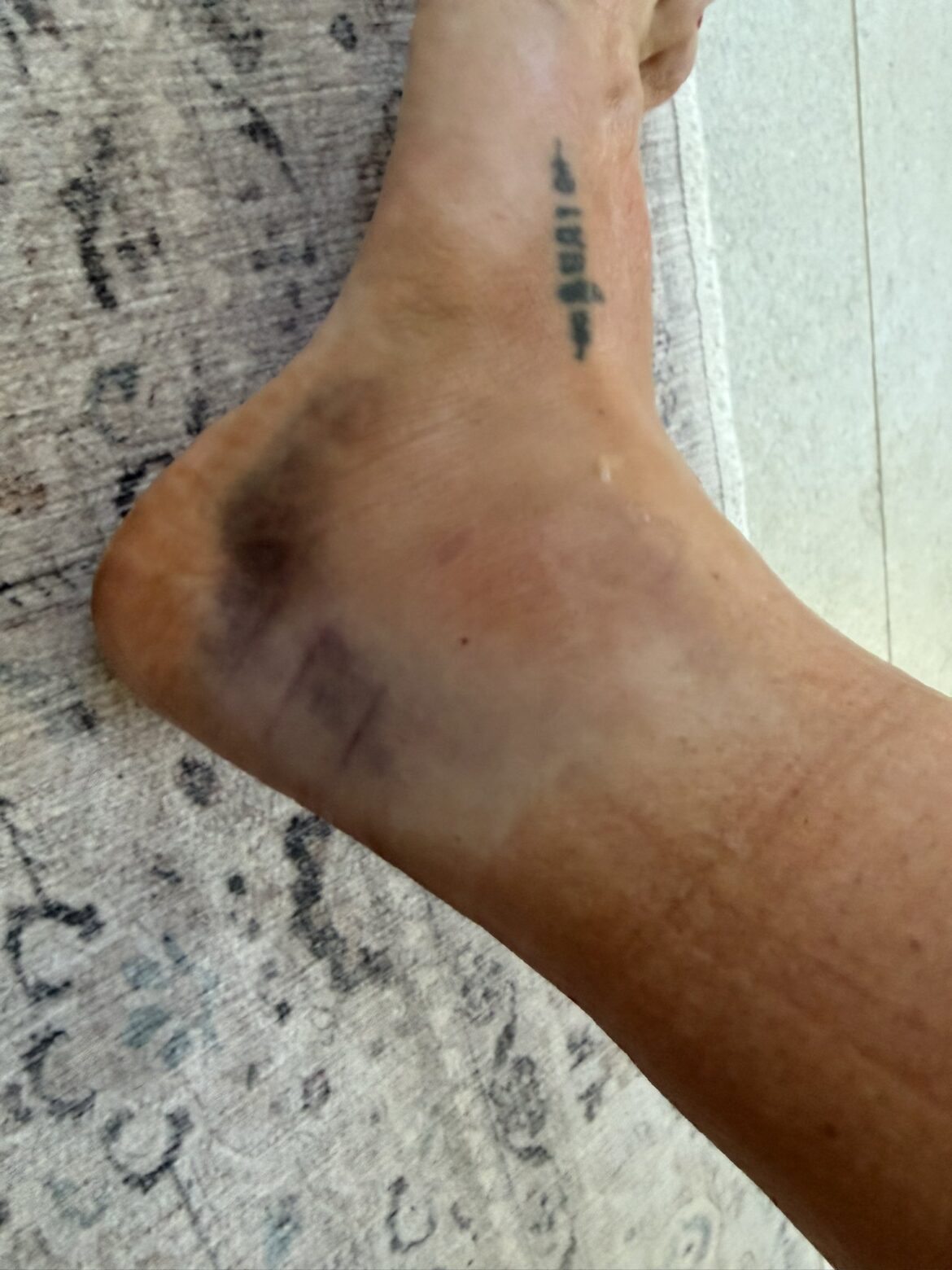
The plot thickened significantly in the days following the AAA title change, as Chelsea Green, known for her candid and often self-aggrandizing online presence, began to share what she presented as irrefutable evidence of her plight. Her initial social media posts displayed her foot encased in a walking boot, a common sight for athletes recovering from lower limb injuries. These images were quickly followed by photographs showcasing a visibly discolored and swollen ankle, purportedly the site of her injury. The visual documentation, while compelling, still left room for interpretation, as bruises and swelling, while painful, do not inherently confirm a fracture. Green’s narrative, however, was unequivocal: she was suffering from a substantial injury.
Yet, almost concurrently with Green’s own declarations, a contrasting report emerged from within the wrestling news sphere. This alternative account suggested a less severe prognosis: a significant bruise to the ankle, certainly painful and requiring time off, but crucially, not a fracture. The report optimistically posited that Green’s time away from the ring would be relatively brief, implying a quicker return to action than a broken bone would necessitate. This direct contradiction between Green’s public statements and an insider report instantly fueled speculation, drawing attention to Green’s well-documented penchant for theatricality and her character’s tendency to exaggerate circumstances for dramatic effect.
The crescendo of this injury saga arrived with Green’s subsequent social media post: an image purporting to be an X-ray, ostensibly confirming a broken ankle. This visual, intended to be the definitive proof, instead became the focal point of even greater scrutiny. Without accompanying medical documentation, official statements from WWE, or a clear, identifiable marker on the image itself, the X-ray’s provenance and its direct relation to Green’s ankle remained unconfirmed to the general public. While a trained medical professional might discern specifics, for the lay observer, the image served more as a provocative puzzle piece than conclusive evidence, perfectly aligning with the enigmatic persona Green has meticulously cultivated.

Indeed, Chelsea Green’s wrestling career has been defined by a captivating blend of undeniable talent and a masterclass in character work, often blurring the lines between her real self and her on-screen alter ego. Known for her "Hot Mess" persona and more recently, her "Karen"-inspired entitlement, Green excels at eliciting strong reactions from audiences. Her character frequently employs hyperbole, self-pity, and an unwavering belief in her own victimhood or superiority, depending on the situation. This established pattern of dramatic embellishment is precisely why the wrestling world remains divided on the veracity of her latest injury claims. When a performer consistently plays a character that manipulates perceptions, even genuine misfortunes can be viewed through a skeptical lens, a testament to the effectiveness of her portrayal.
It’s also worth noting that Chelsea Green has faced genuine, career-threatening injuries in the past, demonstrating remarkable resilience and determination to return to the ring. Her history includes multiple wrist fractures, notably one suffered during her official SmackDown debut in November 2020, and another shortly after her return in 2023. These were legitimate setbacks that required surgical intervention and extended recovery periods. Such real-life tribulations highlight her toughness and commitment to her craft. However, this history also provides a canvas upon which her character can now paint new narratives, leveraging the understanding of what a serious injury entails, even if the current situation is less severe than portrayed. Her ability to bounce back from legitimate trauma makes her current, potentially exaggerated, claims all the more intriguing, as it begs the question of motive. Is it a genuine injury, or a meticulously crafted storyline designed to generate sympathy, attention, or an advantageous position upon her return?
The landscape of modern professional wrestling is inextricably linked with social media. Platforms like X (formerly Twitter) and Instagram are no longer just tools for personal updates but vital extensions of a wrestler’s narrative. Performers like Chelsea Green expertly utilize these channels to further their storylines, engage with fans, and even control the flow of information. An injury, whether real or part of an angle, becomes a narrative opportunity. Posting images of a walking boot, a bruised limb, or even a seemingly ambiguous X-ray, can serve multiple purposes: to explain an absence, to build anticipation for a return, to garner sympathy, or to simply keep the performer relevant in the public consciousness. In Green’s case, her consistent output of "evidence," despite its questionable clarity, keeps her character in the spotlight, perfectly in line with her self-proclaimed "It Girl" status. It maintains her presence even when physically unable to compete, ensuring that the "Hot Mess" continues to be a topic of discussion.
From a kayfabe perspective, the situation also presents an intriguing challenge for WWE management, particularly for SmackDown General Manager Nick Aldis. Aldis, portrayed as a no-nonsense, authoritative figure, is tasked with maintaining order and fairness within the blue brand’s roster. An injury claim from a prominent superstar, especially one accompanied by conflicting reports and ambiguous evidence, falls squarely within his purview. How will Aldis respond to Green’s public declarations? Will he demand concrete medical verification from WWE’s own doctors? Will he view her social media antics as a breach of professional conduct or merely a superstar engaging with her character? The resolution of this "injury" will undoubtedly play out on WWE programming, with Aldis potentially forced to "get to the bottom of it," adding another layer of kayfabe drama to an already convoluted situation. This intertwining of real-world information dissemination and on-screen authority figures highlights the sophisticated storytelling potential that exists when the lines between reality and fiction are deliberately blurred.
The implications of Green’s status extend beyond her immediate health. Should the injury indeed be a fracture, her recovery timeline would be significant, potentially impacting her trajectory within WWE. Prior to this alleged setback, Green had been building momentum as one half of a highly entertaining tag team, frequently vying for the WWE Women’s Tag Team Championships. Her distinctive character, combined with her in-ring prowess, made her a valuable asset to the roster. A prolonged absence would undoubtedly halt this momentum, forcing a reset upon her return. Conversely, if the injury proves to be less severe – merely a bruise, as some reports suggested – then her rapid return could be framed within a storyline context, perhaps with her character dramatically "overcoming" a fabricated grave injury, further cementing her "Hot Mess" persona as a master manipulator.
The wrestling world thrives on uncertainty and narrative twists. The story of Chelsea Green’s alleged broken ankle is a quintessential example of this dynamic. It encapsulates the physical demands of the sport, the dramatic flair of its performers, and the pervasive influence of social media in shaping public perception. Whether this saga concludes with a genuine medical recovery or a grand reveal of character-driven deceit, one thing remains certain: Chelsea Green has once again managed to capture the wrestling world’s attention, proving that in the realm of sports entertainment, a well-crafted mystery can be just as compelling as any championship match. As fans eagerly await definitive clarity, they are reminded that with Chelsea Green, the truth is often as elusive and entertaining as the persona itself, constantly evolving within the captivating theater of the squared circle. This ongoing narrative underscores the unique appeal of professional wrestling, where every twist of fate, real or imagined, becomes another chapter in a performer’s enduring story.