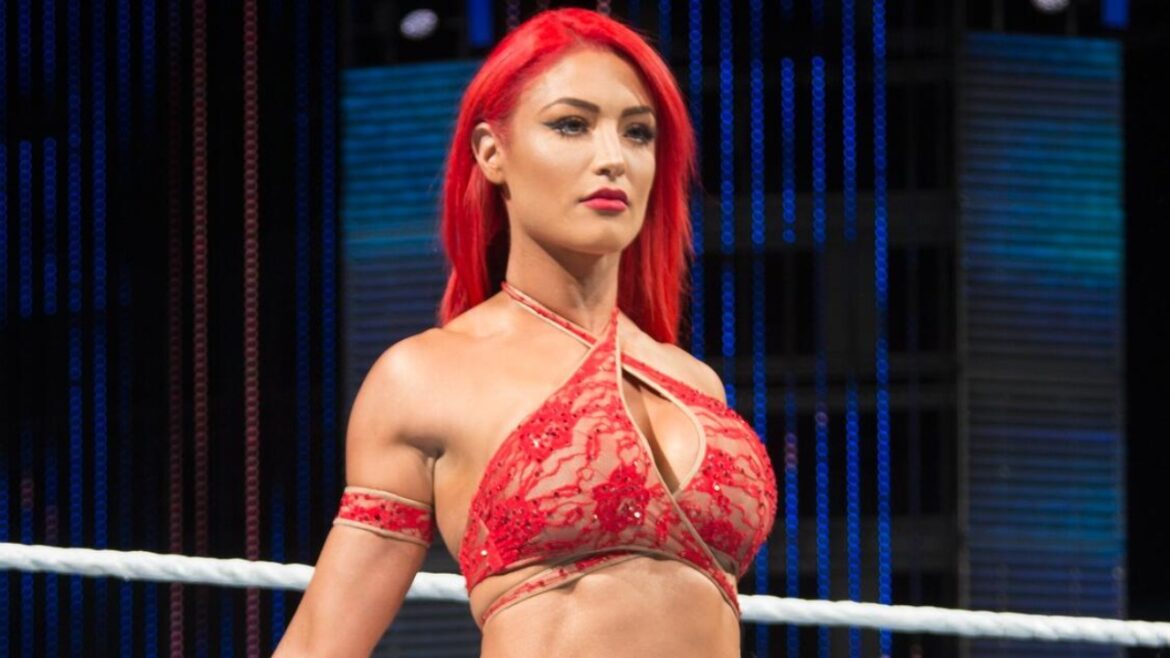
From the moment she burst onto the scene with her unmistakable fiery aesthetic, Natalie Eva Marie carved a niche within the sprawling universe of World Wrestling Entertainment that few could ignore, whether for adoration or exasperation. Her journey through the hallowed halls of sports entertainment was always distinct, often polarizing, and ultimately marked by two separate, yet equally unconventional, exits from the company. A recent reflection by Marie herself has cast a new light on these departures, describing both as profoundly unusual, prompting a deeper dive into the unique career trajectory of the woman known to millions as "All Red Everything." Her tenure, spanning two distinct periods, offers a fascinating case study in character presentation, fan engagement, and the often-opaque nature of a performer’s relationship with the world’s foremost wrestling promotion.
Eva Marie’s initial foray into professional wrestling was anything but traditional. Discovered through a talent search that prioritized striking looks and magnetic personality over extensive in-ring experience, she was signed by WWE in 2013. This era was a transitional one for the women’s division, still largely defined by the "Diva" moniker and a focus on presentation rather than athletic prowess. Marie’s background as a fitness model and actress perfectly aligned with the company’s approach at the time, positioning her for a quick ascent to the main roster. Almost immediately, she became a prominent fixture on Total Divas, E!’s reality television series that offered a glimpse into the lives of WWE’s female performers. This platform undeniably accelerated her recognition, making her a household name among wrestling and reality TV audiences alike, even as it sometimes blurred the lines between her on-screen character and her real-life persona.
The "All Red Everything" gimmick was a masterstroke of branding, visually captivating and instantly memorable. Marie’s striking appearance and confident demeanor ensured she stood out, but this rapid push came with its own set of challenges. Critics, particularly a segment of the hardcore wrestling fanbase, were quick to point out her relative inexperience in the squared circle. While she spent time in NXT, WWE’s developmental territory, the demands of main roster television and the scrutiny of a global audience were immense. She was often thrust into segments and matches where her wrestling fundamentals were still developing, leading to a sometimes frosty reception from live crowds. Despite the boos and the online discourse, Eva Marie remained steadfast, embodying her character with unwavering conviction. She was undeniably a presence, a catalyst for reactions, and in the world of professional wrestling, drawing a reaction – any reaction – is often considered a victory.
Her first departure from WWE in 2017 was, by her own admission, shrouded in a peculiar ambiguity. As she recounted in a recent interview with Chris Van Vliet on the Insight podcast, the timing felt less like a definitive end and more like a pause, one influenced by an unexpected opportunity outside the wrestling realm. Marie had secured a role in the feature film Inconceivable, a thriller starring Nicolas Cage and Faye Dunaway. This acting venture required her to step away from her wrestling commitments, a decision that, while seemingly blessed by the company at the time, she now suspects may have subtly impacted her standing within the organization. While WWE has historically encouraged its performers to explore outside opportunities that bring broader visibility to the brand, there can sometimes be an underlying tension, particularly if a performer’s absence disrupts ongoing storylines or future plans. The perception, real or imagined, that pursuing external projects might "hurt internally" is a sentiment not uncommon among talent navigating the intricate balance between personal ambition and corporate loyalty. Inconceivable remains available on streaming platforms, a tangible marker of this pivotal moment in her career, yet the question lingered for Marie: what if she hadn’t taken that cinematic leap? Could her initial WWE run have unfolded differently, perhaps leading to the "solid storyline" or "title run" she felt she never truly attained?
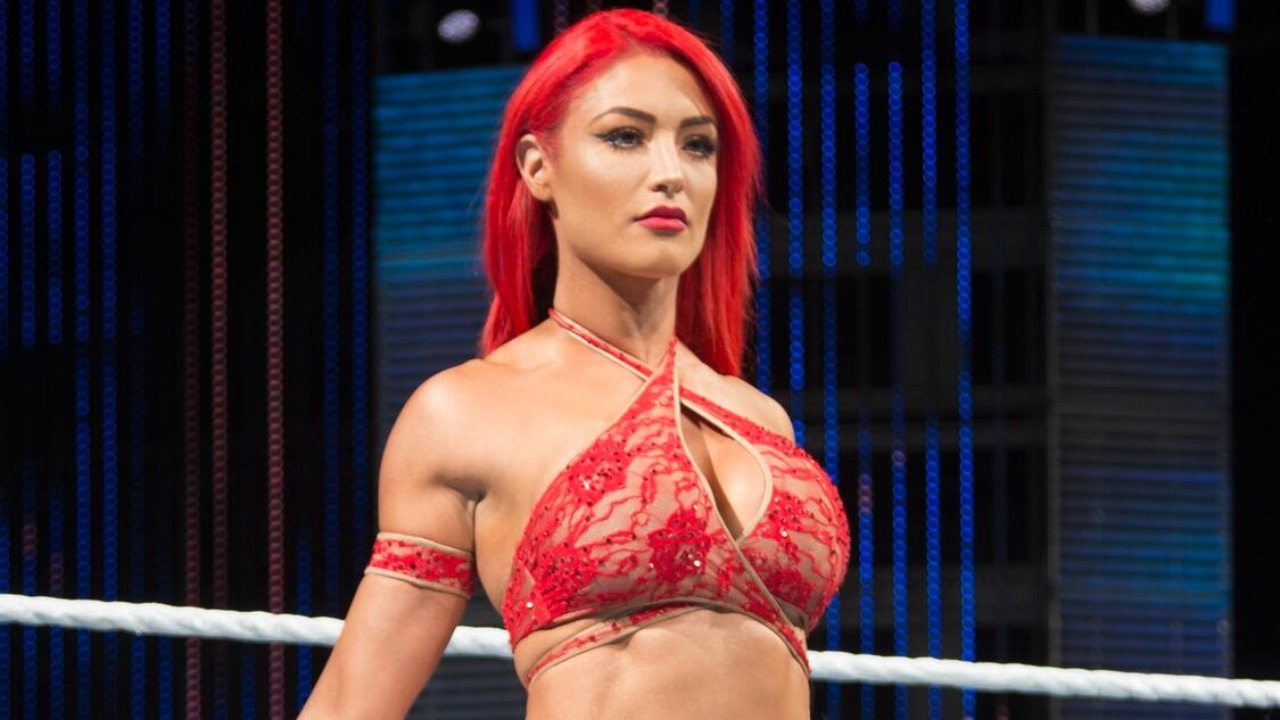
Indeed, a recurring theme in Marie’s reflections is a sense of unfulfilled potential within WWE. Despite her significant visibility, her main roster run from 2013 to 2017 didn’t feature a sustained, prominent championship chase or a long-term narrative arc that fully capitalized on her unique ability to provoke a response from the audience. She challenged for the NXT Women’s Championship during her developmental tenure, but a major title reign on Raw or SmackDown eluded her. This sentiment of not getting a "fair shot" or a compelling narrative is a common lament among performers who feel their character or in-ring abilities were never fully explored or appreciated by creative teams. For someone who generated as much buzz and controversy as Eva Marie, the absence of a definitive, defining feud or championship reign left a void in her WWE resumé.
However, the allure of the squared circle proved too strong to resist. Despite the perplexing nature of her first exit and the perceived lack of a substantial push, Marie’s profound affection for the wrestling business never waned. She publicly expressed her enduring love for the industry, acknowledging the immense personal growth she experienced during her time with WWE and attributing much of her development as an individual to the company. This deep-seated passion ultimately paved the way for her highly anticipated return in 2021. The landscape of WWE had significantly shifted in the intervening years. The "Divas Revolution" had transitioned into the "Women’s Evolution," with a greater emphasis on athletic contests, diverse characters, and legitimate championship pursuits. Performers like Becky Lynch, Charlotte Flair, and Sasha Banks had elevated women’s wrestling to unprecedented heights, regularly headlining pay-per-views and main eventing television shows. The expectation for in-ring competence had grown exponentially, yet there remained a space for compelling personalities who could draw attention.
Marie’s 2021 comeback was preceded by a series of enigmatic vignettes promoting the "Eva-Lution." These segments, which showcased a more refined, almost guru-like persona, promised a transformative new chapter. The implication was that Eva Marie was returning not just as a performer, but as a mentor, an inspiration, a figure who could elevate others while reclaiming her own spotlight. This creative direction generated considerable anticipation, playing into the mystique she had cultivated. When she finally reappeared on Monday Night Raw, she was paired with Piper Niven, a formidable Scottish powerhouse from NXT UK. Niven, later rebranded as Doudrop, was introduced as Marie’s protégé, initially serving as her enforcer and carrying out her bidding. The dynamic was clear: Marie would be the calculating mastermind, the charismatic mouthpiece, while Doudrop would be the dominant force in the ring.
This pairing sparked immediate interest. The contrast between Marie’s glamorous, assertive persona and Doudrop’s powerful, yet initially subservient, role offered rich storytelling potential. Their alliance led to several memorable segments and a brief run of matches. The storyline saw Marie attempting to take credit for Doudrop’s victories, subtly undermining her partner while maintaining her own "Eva-Lution" narrative. The eventual dissolution of their partnership was inevitable, culminating in a series of matches where Doudrop asserted her independence, culminating in a decisive victory over Marie on the September 20th, 2021 episode of Raw. This defeat effectively marked the end of Eva Marie’s second run, as she was released from her contract shortly thereafter.
Her second departure, much like the first, struck Marie as profoundly puzzling. As she candidly revealed during her conversation with Chris Van Vliet, the brevity of this second stint was unexpected, as her contract was initially envisioned to be for a longer duration. She attributed the sudden termination to broader organizational shifts within WWE, specifically referencing potential changes in management that impacted communication and contract fulfillment. This period in WWE was indeed characterized by significant backstage flux, with various executive changes, roster adjustments, and the looming shadow of corporate restructuring. While Marie did not delve into specifics, her comments hint at the often-unpredictable nature of talent management in a large, publicly traded entertainment company, where internal dynamics can sometimes supersede immediate creative plans for individual performers. The fact that her second run encompassed only seven matches, culminating with the loss to Doudrop, underscores the abruptness of its conclusion and the potential for larger corporate decisions to influence on-screen narratives.

The story of Eva Marie in WWE is a microcosm of the challenges faced by many performers who are not products of the traditional independent wrestling circuit. She entered the company as a raw talent, armed with undeniable charisma and a strong visual presentation. While some fans struggled to embrace her, particularly during her earlier tenure, her ability to elicit a strong reaction was undeniable. Her career highlights include being a cornerstone of Total Divas, a reality show that significantly boosted WWE’s mainstream appeal, and consistently presenting a memorable character. However, her journey also highlights the difficulty of translating mainstream appeal into sustained in-ring success and championship gold without a bedrock of traditional wrestling experience, especially as the women’s division evolved.
Marie’s own reflections on her "love-hate relationship" with WWE, stemming from the feeling that she never truly received a "solid shot" or a championship reign, resonate deeply. It speaks to the competitive drive of a performer who, despite external perceptions, genuinely dedicated herself to the craft and desired to achieve the highest accolades. The "odd" nature of both her releases further compounds this feeling, leaving unanswered questions about what might have been had circumstances, or perhaps internal politics, aligned differently. Her career serves as a reminder that the path to success in professional wrestling is rarely linear, and that even the most visually striking and polarizing characters can find themselves at the mercy of factors beyond their control, from Hollywood opportunities to corporate restructuring.
Ultimately, Eva Marie’s WWE story is one of a striking personality who consistently made an impact, even if that impact was often divisive. Her "All Red Everything" persona transcended mere aesthetics, becoming a symbol of a particular era in women’s wrestling and a testament to the power of pure character work. The peculiar circumstances surrounding her two departures, as she describes them, underscore the inherent unpredictability of the professional wrestling industry, where talent, timing, and backstage dynamics intertwine to shape careers in often enigmatic ways. While her tenure may not have been defined by a championship legacy, it was undeniably memorable, leaving fans and the performer herself to ponder the curious case of the crimson enigma and the pathways not taken.