The latest installment of Friday Night SmackDown emanating from Fort Lauderdale, Florida, presented an evening that felt less like a standalone spectacle and more like a carefully constructed chapter in an unfolding epic, replete with unexpected turns and deeply personal confrontations. As the grandest stage of them all, WrestleMania, looms ever closer on the horizon, the blue brand delivered a broadcast that skillfully intertwined emerging threats with established rivalries, creating a tapestry of narrative threads that left the discerning viewer contemplating the true motivations and allegiances of WWE’s biggest stars. This particular episode served as a crucial waypoint, subtly hinting at seismic shifts within the company’s landscape and setting the stage for the dramatic confrontations that define the road to professional wrestling’s most iconic event.
Central to the night’s drama was Cody Rhodes, the self-proclaimed American Nightmare, whose pursuit of a world championship has become the focal point of WWE programming. His appearance to kick off the show, a customary opening for the company’s top babyface, was swiftly disrupted by the imposing presence of Jacob Fatu. The newest member of The Bloodline, whose raw intensity and familial ties have immediately positioned him as a formidable force, wasted no time in asserting his claim to a grievance against Drew McIntyre. Fatu contended that McIntyre’s interference in a prior encounter had denied him a victory, and his immediate focus was on confronting the reigning WWE Champion directly. However, the meticulously crafted plans of SmackDown General Manager Nick Aldis, who had reportedly granted McIntyre the night off to circumvent any potential chaos, were dramatically upended when the Scottish Psychopath made his entrance not through the usual ramp, but from a private suite within the arena. Armed with a microphone, McIntyre provocatively engaged Fatu, his words laced with the disdain of a champion confident in his power. Officials quickly intervened, preventing a physical altercation, a scene that portrayed Fatu as a volatile, misunderstood antihero, eager to unleash his aggression. Amidst this brewing storm, Cody Rhodes stood in the center of the ring, a somewhat passive observer in a conflict that, for a fleeting moment, seemed to eclipse his own narrative. His eventual retort, labeling McIntyre an "asshole," felt almost like an afterthought, a quick attempt to reclaim a modicum of the spotlight in a segment that starkly highlighted the burgeoning rivalry between Fatu and McIntyre, leading many to ponder Rhodes’ immediate relevance in this escalating scenario. Aldis later sought to pacify Fatu backstage, offering words of encouragement and assuring him that a future encounter with McIntyre was inevitable, a promise that did little to quell the underlying tension.
The Bloodline saga, arguably the most compelling narrative in recent wrestling history, continued its evolution throughout the evening, with Jacob Fatu’s official main roster debut adding a fresh, unpredictable dimension. His immediate impact, combined with the continued push of Tama Tonga, underscores the company’s commitment to revitalizing the dominant faction. Tonga’s in-ring performance against Ilja Dragunov, while meeting the expectations for a weekly television match, did little to ignite widespread enthusiasm for his trajectory as a singles competitor. Yet, the persistent narrative surrounding him suggests a deeper commitment from the creative team. Later, Solo Sikoa, the enforcer of the updated Bloodline, now seemingly operating under the moniker "MFTs," delivered a forceful promo, asserting the group’s dominance. This verbal assault was met with a brave, albeit ill-fated, ambush by Dragunov, who was swiftly overwhelmed by the numbers advantage of Sikoa and Tonga. The subsequent attempts by Matt Cardona and Apollo Crews to intervene, though commendable, were met with the same brutal efficiency, serving only to underscore the MFTs’ destructive power and further establish them as a force to be reckoned with, capable of dispatching a parade of less-established competitors with ease. Shinsuke Nakamura’s role in this unfolding drama is also notable; he appears to be positioned as a guiding influence for Tama Tonga, a voice of reason attempting to shape the character’s growth, a dynamic that subtly adds layers to the faction’s internal workings.
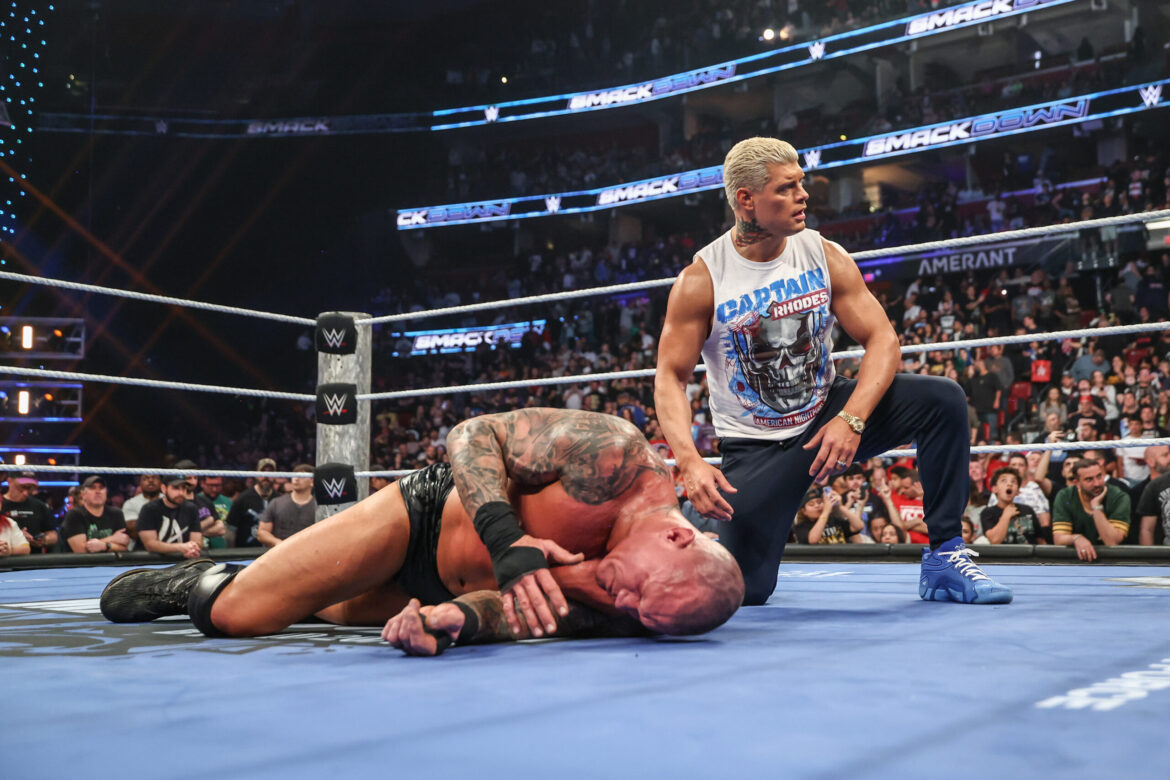
The evening also delivered a poignant narrative surrounding Randy Orton, a legend whose return from a career-threatening injury has been met with universal acclaim. In a backstage interview, an attempt was made to reignite his long-standing issue with Cody Rhodes, a rivalry with deep roots in their shared history. However, this conversation was abruptly interrupted by Zelina Vega and Aleister Black, who provocatively reminded Orton of his darker, more ruthless past – specifically, his penchant for delivering devastating skull kicks to his opponents. Black’s cryptic remarks about delving into Orton’s psyche set the stage for a challenge, which Orton, ever the competitor, readily accepted, proposing a match for later in the evening. Black’s continued, almost philosophical monologue directed at Orton even after the Viper had walked away to make the match official, highlighted the inherent theatricality of professional wrestling, a peculiar blend of intense drama and occasional absurdity. The main event pitted Orton against Black, a match that began with an unusual display of respect, or perhaps cunning, as Black remained in his corner, allowing Orton his full, customary entrance ritual, soaking in the thunderous ovation from the Fort Lauderdale crowd. This seemingly benevolent gesture, however, belied the strategic mind of Black, who aimed to lull Orton into a false sense of security. The pace of the match was deliberate, allowing Orton ample time to engage with the audience, while Black effectively conveyed pain and struggle. The climax arrived with a shocking interference from Drew McIntyre, who, still smarting from his earlier confrontation and perhaps seeking to assert his dominance over the entire roster, blindsided Orton with a vicious strike using the WWE Championship belt. Cody Rhodes, observing from the crowd, attempted to intervene, chasing McIntyre away, but the harm had already been inflicted. Seizing the opportune moment, Aleister Black capitalized on the chaos, delivering his devastating Black Mass finisher to a disoriented Orton, securing a significant pinfall victory. Rhodes, watching from too far removed from the action to prevent the outcome, could only bear witness to the unfolding events, a moment that will undoubtedly serve as material to collect for a potential antagonistic transformation in his own future.
The women’s division showcased its formidable talent and evolving storylines, with Jade Cargill, the reigning Women’s Champion, taking center stage. Her commanding presence during a promo segment reinforced her status as an undeniable force within the company. Cargill announced her impending appearance on Monday Night Raw to hear Liv Morgan’s much-anticipated decision regarding WrestleMania 42, a choice that could profoundly impact the women’s title picture. She then meticulously ran down the participants in the upcoming Elimination Chamber match, hinting at the myriad possibilities for her own championship defense at the year’s biggest show. The audience’s reactions to the named competitors clearly indicated a hierarchy of popularity, with certain stars garnering a significantly louder response. As Cargill concluded her address, Charlotte Flair, the undisputed Queen of WWE, made her entrance, attempting to diminish Cargill with her customary aura of superiority. However, Cargill was having none of it, swiftly returning to the frame to confront Flair, their faces inches apart in a heated exchange. This brief, electrifying interaction instantly built instantaneous chemistry and a palpable sense of rivalry, hinting at a future clash between two of the company’s most dominant female athletes. The evening then transitioned to a crucial Elimination Chamber qualifying match, a triple threat encounter featuring Charlotte Flair, Nia Jax, and Kiana James. Despite Flair’s status as the most decorated competitor in the match, and her impressive performance, she surprisingly did not emerge victorious. In a cunning maneuver, Kiana James, arguably the least expected contender, capitalized on a moment of opportunity, pinning Flair after the Queen had locked Nia Jax in her signature Figure Eight submission. James’s unexpected victory, while strategically brilliant, generated minimal anticipation for her inclusion in a star-studded Elimination Chamber lineup, yet it undeniably added a layer of unpredictability to the tournament.
The future of WWE was also on full display, with several rising stars making significant impacts. Oba Femi, the colossal athlete from NXT, demonstrated his burgeoning popularity with the Florida faithful, resonating strongly with the audience. His segment with Kit Wilson, though played for comedic effect, served to further solidify Femi’s charismatic appeal. Wilson, eager for more television exposure, presented Femi with a poem, humorously describing him as a champion of gender equality and a gentle giant. Femi, in turn, encouraged Wilson to recite another poem, which, to Wilson’s chagrin, consisted of "nine things he hates about men." The segment culminated in Femi decisively overpowering Kit after a subtle jab, an undeniably charming, albeit absurd, piece of entertainment that further endeared Femi to the audience. Similarly, Trick Williams, another breakout star from NXT, continued his impressive ascension onto the main roster. While some might have wished for a more direct emphasis on his recently concluded rivalry with Carmelo Hayes from their developmental days, his performance suggested a promising trajectory. Williams secured a significant victory in a triple threat match against Hayes and the formidable Damian Priest, a win that, despite a somewhat awkward execution in its final moments, elicited a tremendous reaction from the crowd. This win, against two established talents, underscored Williams’ undeniable charisma and main event potential, solidifying the optimism surrounding his future.
Beyond the immediate rivalries, the evening also offered glimpses into the more enigmatic corners of WWE’s storytelling. A pre-taped promo from the Wyatt Sicks, characterized by a haunting score, continued to build anticipation for their imminent arrival, though for some, the cryptic nature of their appearances has yet to fully captivate. The mysterious crate, destined to be opened at the Elimination Chamber event, made a brief, comedic appearance on SmackDown, with R-Truth mistakenly claiming it as an award. Aldis, recognizing its true origin, promptly directed the delivery back to Raw for Adam Pearce to handle, a segment that, while lacking significant developments, served as a simple reminder of the upcoming reveal in Chicago. In another women’s division contest, Tiffany Stratton secured a victory over Alba Fyre, a straightforward piece of booking designed to build crucial impetus for Stratton as she heads into her prominent role in the Elimination Chamber match. Chelsea Green, appearing ringside in an elaborately adorned wheelchair complete with a protective boot due to injury, added a touch of her unique personality to the proceedings.
Perhaps one of the most psychologically compelling interactions of the night occurred between Cody Rhodes and Sami Zayn. Zayn confronted Rhodes, expressing his belief that Rhodes had arguably undermined his ambitions, declaring that Cody had "stabbed him in the back." Rhodes’ response, suggesting that Zayn’s interpretation of events differed from his own, carried a manipulative rhetorical tactic, subtly shifting the blame. Rhodes went on to criticize Zayn, stating that he had failed to seize the moments presented to him, implying that Zayn’s career stagnation was his own fault. Zayn, in turn, retorted with a familiar accusation, asserting that Rhodes was favored by the establishment, with the company’s full support, an argument that, while resonant with a segment of the audience, is notoriously difficult to win against a perceived "chosen one." Rhodes coolly advised Zayn to engage in self-reflection, further distancing himself from any perceived wrongdoing. The arrival of Trick Williams, who further antagonized Zayn, added another layer of tension to the encounter, underscoring Williams’ radiating charisma. The segment then took an unexpected turn: before Rhodes could depart, Zayn rushed back, offering a heartfelt apology. He accepted responsibility for his perceived shortcomings, bearing the brunt of the accusation, and asked for forgiveness. Rhodes, in a moment of apparent grace, acknowledged Zayn’s past assistance, stating he wouldn’t forget the help he received. This complex exchange, brimming with layered dialogue and shifting power dynamics, undeniably laid foundational moments for compelling cinematic storytelling, perhaps even setting the stage for Zayn’s eventual title triumph and Rhodes’ long-speculated antagonistic transformation.
The evening culminated as a mixed bag of emotions for the discerning viewer. It delivered moments of undeniable excitement, particularly in the women’s division and the continued evolution of The Bloodline narrative. The dramatic main event, with Drew McIntyre’s calculated interference, injected fresh fuel into multiple feuds, while the rise of NXT talents like Trick Williams and Oba Femi offered a glimpse into a promising future. However, some segments, such as the Rhea Ripley versus Giulia match, which was prematurely ended by a disqualification caused by The Irresistible Forces and swiftly overshadowed by Iyo Sky’s subsequent intervention, felt like a squandered opportunity for two exceptional talents who could easily headline a major spectacle. The episode deftly navigated the intricate web of current storylines, propelling several key rivalries forward while simultaneously introducing new elements that promise to shape the landscape of WWE in the coming weeks. As the road to WrestleMania intensifies, the true allegiances and ultimate destinies of these interwoven narratives remain tantalizingly uncertain, leaving fans eager for the next chapter in this unfolding drama.