The announcement of any new class for the WWE Hall of Fame always serves as a bridge between the present and the storied history of the professional wrestling industry. When the news broke regarding the upcoming 2026 induction ceremony, the list of names immediately sparked a wave of nostalgia and debate across the global wrestling community. Among the legendary figures slated for induction, one name stands out as a lightning rod for mainstream attention and historical significance: Dennis Rodman. While the inclusion of a celebrity can sometimes be a point of contention for purists, the reaction from those who actually shared the squared circle with the NBA icon tells a much different story. Perhaps the most poignant and meaningful endorsement came from Diamond Dallas Page, a man who knows better than almost anyone exactly what the basketball legend brought to the industry during its most volatile and successful era.
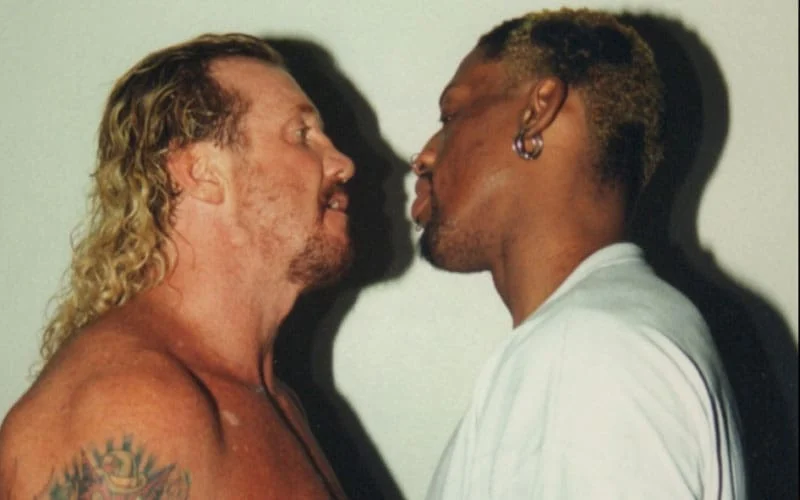
On March 21, 2026, the man affectionately known as DDP took to social media to celebrate the news of Rodman’s impending induction. This was not merely a formal acknowledgment of a colleague; it was a heartfelt tribute from a former rival who helped navigate Rodman through some of the most high-profile moments in the history of World Championship Wrestling. To underscore the depth of their history, Page shared a striking image from their past, a photograph that captured the two men locked in a tense, nose-to-nose confrontation. The visual served as a powerful reminder of the late 1990s, a time when the Monday Night Wars were at their peak and the lines between professional sports and sports entertainment were being blurred in ways never before imagined. In his public message, Page offered his sincere congratulations, describing the multi-time NBA champion as a truly exciting and worthy adversary. He emphasized that Rodman’s place in the Hall of Fame was well-earned, citing his athletic prowess on the basketball court and his surprisingly seamless transition into the world of professional wrestling.
To understand why Page’s endorsement carries such immense weight, one must look back at the cultural landscape of 1997 and 1998. At that time, WCW was locked in a bitter ratings battle with the World Wrestling Federation. Eric Bischoff, the mastermind behind WCW’s rise, understood that mainstream celebrity involvement was a key weapon in gaining the upper hand. Dennis Rodman, then a cornerstone of the Chicago Bulls’ legendary dynasty, was the perfect fit for the rebellious and "cool" aesthetic that WCW was projecting. Unlike many celebrities who make brief, safe appearances for a quick paycheck, Rodman fully immersed himself in the chaos of the wrestling business. He didn’t just stand on the sidelines; he became a core member of the New World Order, the most influential faction in the history of the sport. Aligning himself with "Hollywood" Hulk Hogan, Rodman transformed from a basketball star into a genuine heel character who fans loved to hate.
The rivalry between Diamond Dallas Page and Dennis Rodman was not just a side story; it was a main-event attraction that captivated audiences far beyond the traditional wrestling demographic. The peak of this crossover phenomenon occurred in 1998, centering around the Bash at the Beach pay-per-view. This era was defined by the intersection of the NBA Finals and WCW’s programming schedule. In a move that became one of the most talked-about scandals in sports history, Rodman actually skipped a mandatory practice during the NBA Finals to fly to a WCW event and appear alongside Hogan. This decision sent shockwaves through the sports world, drawing the ire of basketball analysts and the fascination of wrestling fans. It proved that Rodman was not just playing a part; he was living the rock-star lifestyle that the nWo represented.
The match that followed at Bash at the Beach featured Hogan and Rodman taking on the team of Diamond Dallas Page and another NBA legend, Karl Malone. This tag team encounter was a masterclass in mainstream marketing. Malone and Rodman were the two premier power forwards in basketball, and their real-life rivalry on the court was perfectly transplanted into the wrestling ring. For DDP, working with two non-wrestlers in such a high-pressure environment was a monumental task, yet it was one he handled with professional grace. Page has often spoken about the challenges and the thrills of that period, noting that Rodman had a natural instinct for the theatricality of the business. He wasn’t afraid to get physical, and he understood the importance of selling the intensity of the moment. The photograph Page shared recently was a testament to that intensity—a snapshot of a time when a basketball player and a blue-collar wrestling hero stood on equal footing under the bright lights of the arena.
The 2026 Hall of Fame class is shaping up to be one of the most diverse and prestigious in recent memory. Alongside Rodman, the class includes AJ Styles, a man widely considered one of the greatest in-ring performers of his generation. The induction of Styles represents the acknowledgment of a career spent perfecting the craft of professional wrestling across multiple continents and promotions. Also joining the ranks is Stephanie McMahon, whose contributions to the business, both as an on-screen character and a high-ranking executive, have been instrumental in transforming WWE into a global media powerhouse. Furthermore, the legendary tag team Demolition—Ax and Smash—will finally receive their long-awaited honors, recognizing their dominance during the golden age of the 1980s. In the company of such icons, Rodman’s induction might seem like an outlier to some, but Page’s comments highlight why the "Celebrity Wing" of the Hall of Fame exists. It is a place to honor those who used their external fame to shine a brighter spotlight on the industry and who treated the business with the respect it deserves.
Rodman’s commitment to his wrestling appearances was a far cry from the "hit and run" nature of many celebrity cameos. He participated in multiple matches, traveled with the roster, and was involved in complex storylines that spanned months. He understood the nuances of the "bad boy" persona he cultivated in the NBA and realized that it was perfectly suited for the heel-heavy environment of WCW. When Page refers to him as a "worthy opponent," he is speaking from the perspective of a veteran who had to trust Rodman with his physical safety and the quality of the show. That trust was not misplaced. Rodman’s presence helped elevate WCW to new heights of pop-culture relevance, making the promotion feel like the center of the universe for a brief, shining moment in the late 90s.
The legacy of Dennis Rodman in wrestling is also a story of the "what if" scenarios that fans love to discuss. While his career in the ring was relatively short compared to a full-time professional, the impact he made was lasting. He proved that an athlete from a different discipline could bring a unique energy to the ring if they were willing to embrace the culture of the locker room. DDP’s public praise serves as a validation of that effort. In the years since they faced off, Page has become a respected elder statesman of the industry, known for his revolutionary DDP Yoga program and his dedication to helping former wrestlers reclaim their health. When a man of Page’s integrity and standing gives his blessing to a Hall of Fame induction, the rest of the industry tends to listen.
As the wrestling world prepares for the ceremony in March 2026, the focus will undoubtedly be on the stories of these inductees. We will hear about AJ Styles’ journey from the independent circuit to the main event of WrestleMania. We will hear about the foundational work Stephanie McMahon did to empower women in the industry. We will hear about the painted faces and clanking chains of Demolition. But we will also remember the chaos and the excitement of the 1990s, a time when a man with colorful hair and a rebellious spirit decided to step out of the NBA and into the fire of the Monday Night Wars.
Dennis Rodman’s induction is a celebration of a specific moment in time when wrestling was the coolest thing on television. It was an era of unpredictability, where you never knew who might show up on Nitro or Raw. By honoring Rodman, the WWE is acknowledging the vital role that mainstream stars played in building the foundation of the modern entertainment landscape. Page’s decision to share that throwback photo was more than just a trip down memory lane; it was a bridge connecting the grit of the past with the prestige of the present. It reminded fans that beneath the spectacle and the celebrity status, there was a genuine respect between competitors.
The journey to the Hall of Fame is different for everyone. For some, it is a decades-long grind through small towns and high school gyms. For others, it is a meteoric rise fueled by natural charisma and a world-famous name. Dennis Rodman’s path was the latter, but he didn’t take the easy way out. He took the bumps, he did the promos, and he stood toe-to-toe with the best in the business. Diamond Dallas Page was there to see it all, and his public salute to "The Worm" ensures that Rodman’s contributions will be remembered not just as a footnote, but as a significant chapter in the grand narrative of professional wrestling. As 2026 approaches, the anticipation for this induction ceremony continues to grow, promising a night of reflection, gratitude, and a final, well-deserved curtain call for one of the most unique figures to ever step through the ropes.