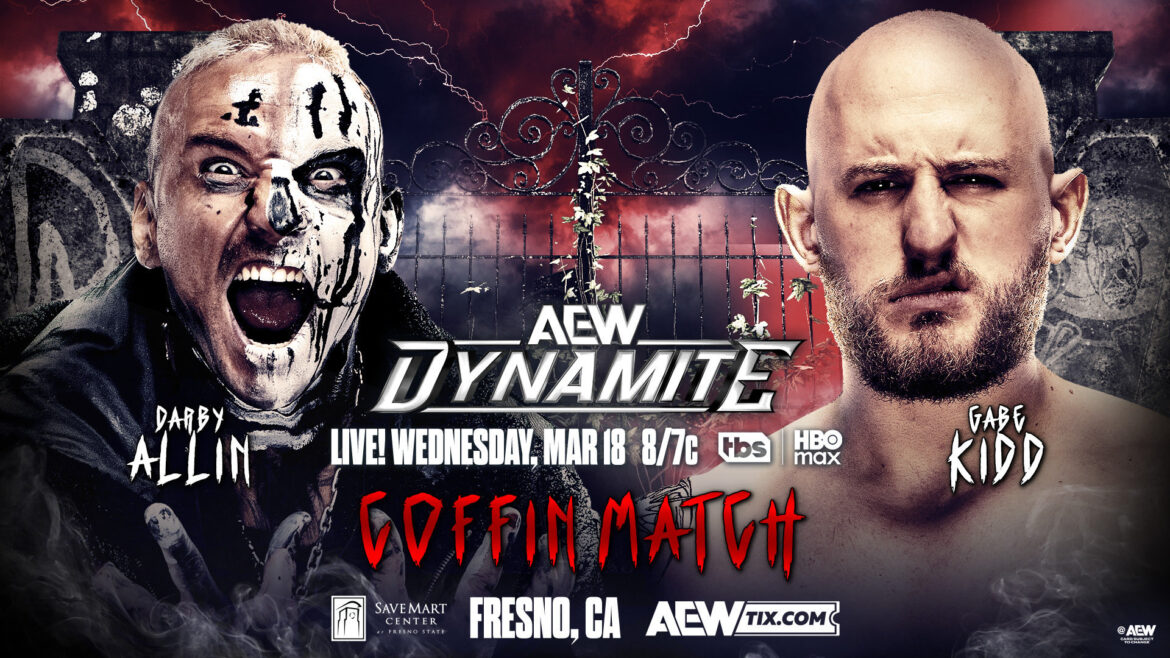
As the dust settled on All Elite Wrestling’s Revolution pay-per-view, a sense of finality, often elusive in the world of professional wrestling, began to crystallize around one of its most intense rivalries. The aftermath of a major event frequently serves as a crucible for new narratives, but rarely does it precipitate a challenge as stark and uncompromising as the one issued recently. An upcoming edition of AEW Dynamite is poised to host a confrontation steeped in a dark tradition, a match type synonymous with ultimate closure and the symbolic end of a career: the Coffin Match. This specialized stipulation pits two of AEW’s most volatile competitors, Darby Allin and Gabe Kidd, against each other in what promises to be a brutal, no-holds-barred struggle where the only path to victory is to seal your adversary within a wooden casket. The announcement, borne from a moment of raw, unbridled fury following Revolution, has ignited fervent discussion among the wrestling faithful, promising an unforgettable spectacle on the horizon.
The genesis of this grim contest unfolded during the official post-show media scrum for AEW Revolution, an event typically reserved for reflection, strategic insights, and triumphant declarations from the company’s executive and its top stars. However, the proceedings were dramatically interrupted by the sudden, aggressive arrival of Gabe Kidd. Bursting into the interview space with palpable rage, the "Death Rider" unleashed a vitriolic, expletive-laden verbal assault, targeting not only his immediate nemesis, Darby Allin, but also extending his disdain to the venerable institution of New Japan Pro-Wrestling and its legendary figure, Hiroshi Tanahashi. Kidd, a man whose persona is built upon a foundation of disrespect and unbridled aggression, left no doubt about his intentions, declaring that the only resolution to his protracted feud with Allin would come when the daredevil was literally pushing up daisies. With a chilling resolve, he directly confronted AEW CEO Tony Khan, demanding an unsanctioned Coffin Match for the impending Wednesday night broadcast, asserting that this extreme stipulation was the sole method by which their bitter rivalry could be definitively concluded.
Tony Khan, ever attuned to the pulse of his roster and the desires of the audience, absorbed Kidd’s impassioned, albeit profane, plea. Recognizing the genuine animosity and the potential for a truly compelling narrative, Khan signaled his approval of the radical proposition. In the hours that followed Kidd’s departure from the scrum, the company moved swiftly, officially sanctioning the Coffin Match and confirming its place on the upcoming Dynamite card across its various digital platforms. The "unsanctioned" element of Kidd’s challenge, while a common narrative device in wrestling to imply heightened danger and a disregard for typical rules, further underscored the gravity of the impending clash. It suggested that this encounter would transcend mere sport, delving into the realm of personal vendetta, where the traditional boundaries of competition would be utterly obliterated.
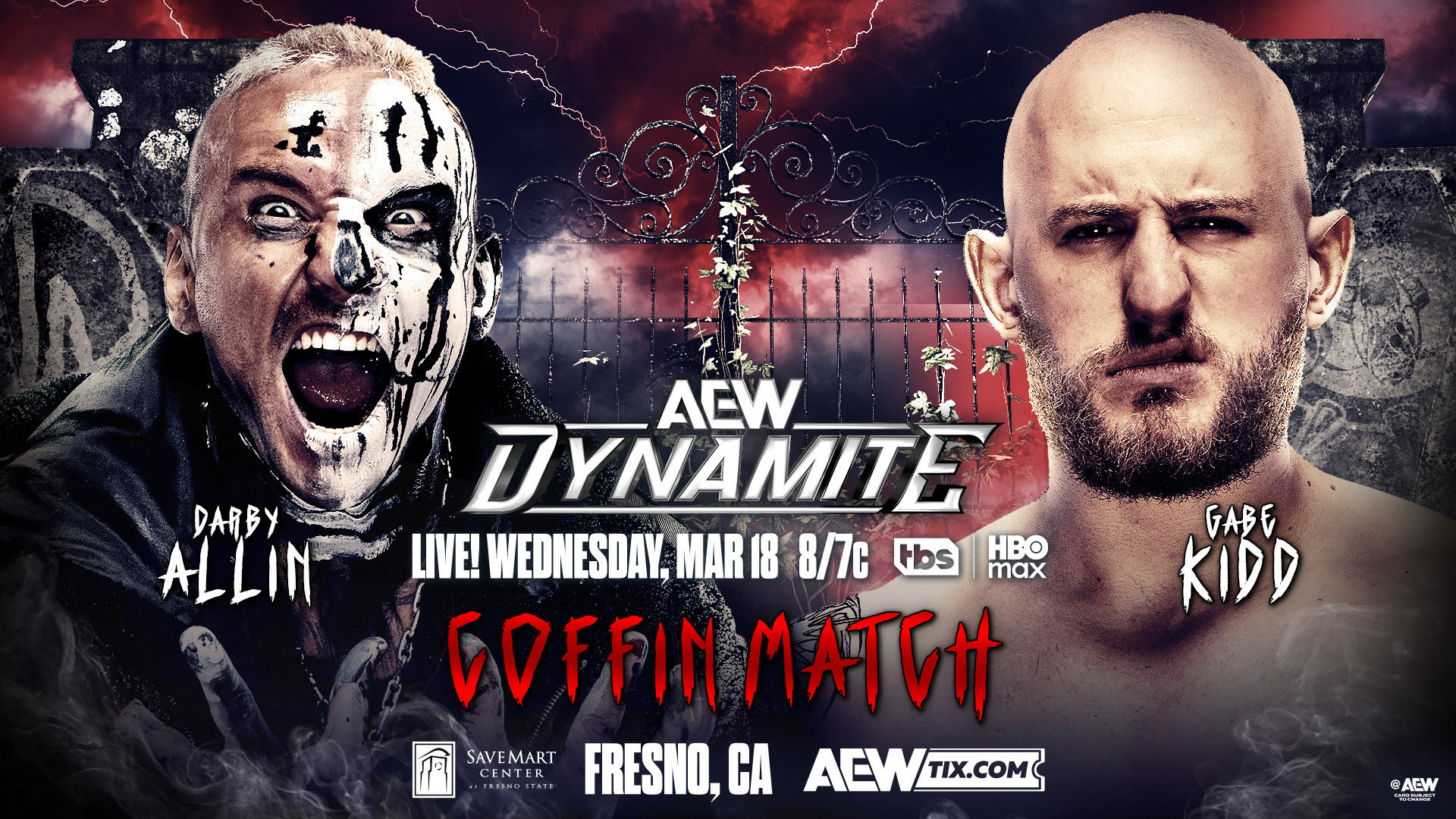
The Coffin Match itself is a stipulation laden with historical weight and macabre allure, a concept that rarely graces mainstream wrestling programming due to its inherent brutality and the grim symbolism it carries. Its lineage can be traced back through various promotions, most notably finding a prominent place within World Wrestling Entertainment (WWE) where it was famously popularized by "The Phenom," The Undertaker. For decades, the sight of the dark, wooden casket at ringside has signaled the ultimate conclusion to a blood feud, a match where victory is achieved not by pinfall or submission, but by forcibly locking an opponent inside the coffin and closing the lid. Unlike a standard no-disqualification match, which merely removes conventional rules, the Coffin Match elevates the stakes by introducing a literal instrument of interment, transforming the wrestling ring into a battleground for a symbolic burial. While figures like The Undertaker and later, Sting in his cinematic "Coffin Drop" match, have lent their iconic presence to this stipulation, its essence remains the same: it is a final, definitive statement in a rivalry, signifying the vanquished’s absolute demise, at least in a kayfabe sense. Its infrequent appearance only serves to amplify its significance, ensuring that when a Coffin Match is announced, it carries an almost sacred, terrifying weight.
At the heart of this impending struggle stands Darby Allin, an individual who embodies defiance, resilience, and an almost masochistic willingness to put his body on the line. Since his arrival in AEW, Allin has cultivated a unique identity as a daredevil, a risk-taker whose signature "Coffin Drop" finisher—a breathtaking diving senton—is both a testament to his aerial prowess and a nod to his morbid aesthetic. His connection with the audience is profound, built on a foundation of authenticity and an unwavering refusal to back down, no matter the odds or the physical toll. Allin’s career has been punctuated by extreme stipulations, from Falls Count Anywhere matches to Tornado Tag Team encounters, each serving to further solidify his reputation as one of professional wrestling’s most fearless competitors. His small stature belies an immense inner fortitude, and his dark, brooding presentation resonates deeply with fans who appreciate his anti-establishment ethos. For Allin, a Coffin Match is not just another contest; it is an existential challenge, a direct assault on his very being, and a stage perfectly suited for his brand of high-stakes, high-impact combat. He has faced and overcome immense physical punishment throughout his career, making him a fitting participant in a match where survival is paramount.
Opposing Allin is Gabe Kidd, a force of nature whose wrestling style is as raw and unrefined as his personality. As a key enforcer within New Japan Pro-Wrestling’s notorious Bullet Club War Dogs faction, Kidd has carved out a reputation as a merciless brawler, a man seemingly devoid of fear or remorse. His "Death Rider" moniker is not merely a catchy nickname; it’s a descriptor of his approach to the sport—a relentless, violent pursuit of victory, often achieved through illicit means. Kidd’s background in the rugged Japanese wrestling landscape has imbued him with a stiff, impactful style, characterized by brutal strikes, suplexes, and an almost gleeful disregard for rules or opponent safety. His recent excursions into AEW have been marked by a trail of chaos, and his alliance with other members of the Bullet Club War Dogs, such as Clark Connors and the recently joined David Finlay, has only amplified his destructive capabilities. Kidd thrives on inflicting pain and asserting dominance, making the symbolic act of burying an opponent in a Coffin Match a natural extension of his violent ideology. His contempt for tradition, evident in his public disparagement of Tanahashi and NJPW, underscores his persona as an agent of chaos, someone who seeks to tear down established orders and replace them with his own brand of brutal efficiency.
The animosity between Darby Allin and Gabe Kidd did not materialize overnight; it has been simmering and escalating over a protracted period, blossoming into one of AEW’s most intensely personal rivalries. The initial sparks of their conflict ignited several weeks prior, slowly building in intensity through backstage assaults, confrontational promos, and the general disruptive presence of Kidd and his Bullet Club cohorts. A particularly heinous act that solidified the bitterness of this feud involved Kidd, alongside his faction mate Clark Connors, orchestrating a disturbing abduction of Allin. In a move designed to not only physically harm but also psychologically terrorize the former TNT Champion, Kidd and Connors kidnapped Allin and subsequently abandoned him in the desolate, unforgiving expanse of the Las Vegas desert. This act of extreme cruelty went far beyond the usual boundaries of professional wrestling storytelling, painting Kidd as a truly villainous and unpredictable character. It left an indelible mark on Allin, transforming what might have been a standard wrestling rivalry into a deeply personal quest for retribution, forging a bond of animosity that could only be severed through the most extreme of measures. The desert incident was a clear declaration of intent from Kidd, signaling that he was willing to go to unprecedented lengths to dismantle his opponent, both physically and mentally.

The culmination of this burgeoning hatred prior to the Coffin Match challenge came at AEW Revolution, where Darby Allin found himself embroiled in a high-stakes six-man tag team contest. Allin, partnering with the charismatic Orange Cassidy and the technically proficient Roderick Strong, faced off against a formidable trio from the Bullet Club War Dogs: Gabe Kidd, Clark Connors, and the recent, impactful addition to their ranks, David Finlay. The match itself was a chaotic affair, showcasing the distinct styles and escalating tensions between the two factions. In a memorable visual that encapsulated Kidd’s aggressive persona and his penchant for causing havoc, he was physically restrained at ringside, bound to the entrance stage with industrial zip ties, preventing his direct interference during parts of the bout. Despite this unusual handicap, Kidd’s presence loomed large, his frustrated shouts and visible anger underscoring the simmering rage within him. Ultimately, Allin’s team emerged victorious, delivering a significant blow to the Bullet Club War Dogs. For Kidd, this defeat, particularly while being forcibly sidelined, only intensified his fury and humiliation. It was this simmering resentment, this inability to exert his will directly in the match, that boiled over in the immediate aftermath at the press conference, driving him to issue the ultimate challenge—a Coffin Match—as the only conceivable way to truly bury his tormentor and restore his faction’s dominance. The loss at Revolution, rather than quelling his aggression, simply redirected it into a demand for a final, decisive encounter.
As the wrestling world looks towards the upcoming Dynamite, the stakes for this Coffin Match are immeasurable, particularly for the careers and trajectories of both Darby Allin and Gabe Kidd. For Allin, this match represents another opportunity to cement his legend as AEW’s ultimate underdog and a true connoisseur of extreme combat. His ability to endure and overcome the most brutal of stipulations has endeared him to a massive fanbase, and walking out of the Coffin Match victorious would not only avenge the heinous acts committed against him but also further solidify his reputation as an unbreakable force. Conversely, a defeat would carry significant implications, potentially sidelining him or forcing a re-evaluation of his daredevil approach. For Gabe Kidd, this is his moment to assert himself unequivocally as a top-tier villain and a legitimate threat within AEW. Delivering on his promise to "bury" Allin would send a resounding message to the entire roster, establishing the Bullet Club War Dogs as an even more dominant and dangerous force. It would validate his aggressive tactics and elevate his status as a premier antagonist. Failure, however, would be a major setback, potentially undermining the aura of invincibility he and his faction have meticulously cultivated. The outcome of this contest will undoubtedly reverberate through both men’s careers, shaping their immediate futures and potentially impacting the power dynamics within AEW.
While the Coffin Match between Allin and Kidd undeniably commands the spotlight, the upcoming Dynamite also features another compelling and violent encounter that speaks to the night’s overall tone of brutality. The card is set to host a No Holds Barred match pitting the formidable Marina Shafir against the reigning AEW Women’s World Champion, "Timeless" Toni Storm. This contest, stripped of conventional rules, promises to be a stark contrast to the Coffin Match’s symbolic finality, offering a different flavor of unbridled aggression. Shafir, with her legitimate martial arts background, brings a legitimate toughness to the ring, while Storm, despite her elegant persona, has proven herself capable of extreme measures when her championship is on the line. The inclusion of two such intensely physical, stipulation-laden matches on the same program underscores AEW’s commitment to delivering high-impact, emotionally charged wrestling, ensuring that the viewing audience will be treated to a night of unforgiving competition from start to finish.
The stage is now set for a confrontation that transcends mere athleticism, delving into the raw, visceral core of professional wrestling. On the upcoming Wednesday night, in what promises to be a chilling spectacle in Fresno, California, Darby Allin and Gabe Kidd will step into the ring with a wooden casket awaiting its occupant. This Coffin Match is more than just another bout; it is the culmination of a deeply personal and increasingly violent rivalry, a definitive chapter written in blood and animosity. The question isn’t simply who will win, but who will emerge from the encounter still capable of standing, and who will be symbolically, perhaps even literally, consigned to a grim end. The wrestling world braces itself for a macabre reckoning, an unforgettable clash where the only escape is through victory, and the alternative is a chilling, permanent silence.