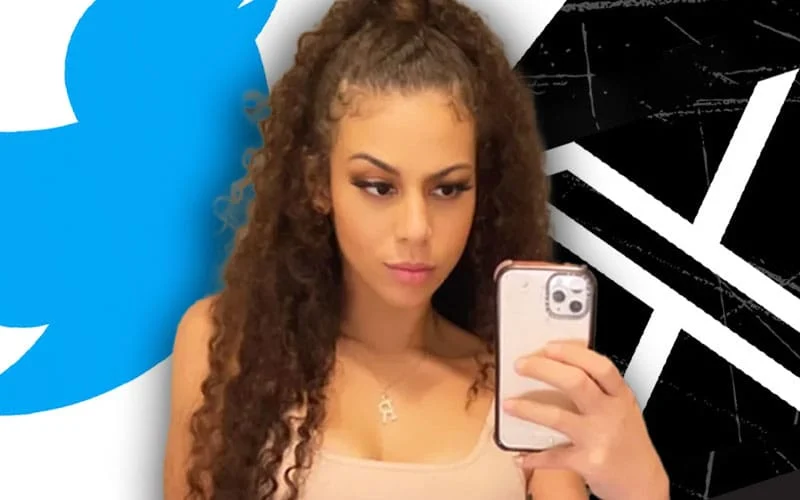
The modern landscape of professional wrestling is one defined as much by the action inside the squared circle as it is by the digital discourse that surrounds it. In an era where every athlete is a brand and every brand is accessible twenty-four hours a day, the line between personal expression and professional liability has become increasingly thin. This reality was starkly illustrated recently when the wrestling world was jolted by a series of events involving All Elite Wrestling standout Ricochet and his wife, the immensely popular announcer Samantha Irvin. What began as a heated exchange between a performer and a critic quickly spiraled into a widespread controversy, ultimately leading to Irvin making the choice to sever her ties with the social media platform X, formerly known as Twitter. This move highlights the intense pressure placed on public figures when the actions of those closest to them ignite the fervor of the online community.
To understand the weight of this situation, one must look at the trajectory of the individuals involved. Ricochet has long been celebrated as one of the most gifted aerialists in the history of the industry, a man whose physical capabilities seem to defy the laws of gravity. From his legendary runs on the independent circuit and Japan to his high-profile tenure in World Wrestling Entertainment, he has garnered a reputation for being a consummate professional and a spectacular entertainer. His recent transition to All Elite Wrestling was viewed by many as a fresh start, a chance to showcase his world-class athleticism in a promotion known for prioritizing in-ring work. However, the goodwill he built over a decade of performance was put to a severe test following a digital interaction that many deemed inexcusable.
The controversy took root during a standard back-and-forth on social media, a common occurrence for wrestlers who often engage with fans to build their personas or defend their work. In this instance, however, the tone shifted from competitive banter to something far more personal and damaging. When faced with criticism from a specific user, Ricochet responded with a remark regarding Multiple Sclerosis that immediately sent shockwaves through the fan base. By expressing a sentiment that appeared to weaponize a serious and debilitating autoimmune disease against a detractor, the wrestler crossed a boundary that exists far beyond the realm of kayfabe or heel theatrics. Multiple Sclerosis is a condition that affects millions of families worldwide, characterized by its unpredictable nature and the physical toll it takes on those diagnosed. To see such a condition used as a punchline or a tool for an insult was met with swift and overwhelming condemnation from both fans and observers of the industry.
The fallout was instantaneous. Within hours, the exchange had been screencapped and circulated across every major wrestling forum and news outlet. The backlash was not merely limited to standard trolling; it involved a genuine sense of betrayal from supporters who had previously viewed the high-flyer as a hero. As the pressure mounted, the AEW star attempted to mitigate the damage by issuing a public statement of regret. In this retraction, he acknowledged that his frustration with the often-toxic nature of the Internet Wrestling Community had clouded his judgment. He admitted that his choice of words was poor and that he had unfairly targeted individuals who deal with the daily realities of MS. While some were willing to accept this as a momentary lapse in judgment fueled by online harassment, a significant portion of the audience felt that the apology was insufficient given the gravity of the initial comment.
This is where the story took an even more distressing turn for those involved. In the digital age, the concept of collective accountability often means that the family members of a controversial figure are subjected to the same vitriol as the person who committed the perceived offense. Samantha Irvin, who has established herself as one of the most distinct and beloved voices in the industry through her work as a ring announcer, found herself caught in the crossfire. Irvin has spent years building a connection with fans based on her passion for the business and her undeniable talent. Her recent departure from WWE and her subsequent ventures had kept her at the forefront of the wrestling conversation, usually for positive reasons. However, the toxicity surrounding her husband’s remarks began to bleed into her own digital space, leading to a barrage of mentions and messages that likely made the platform untenable.
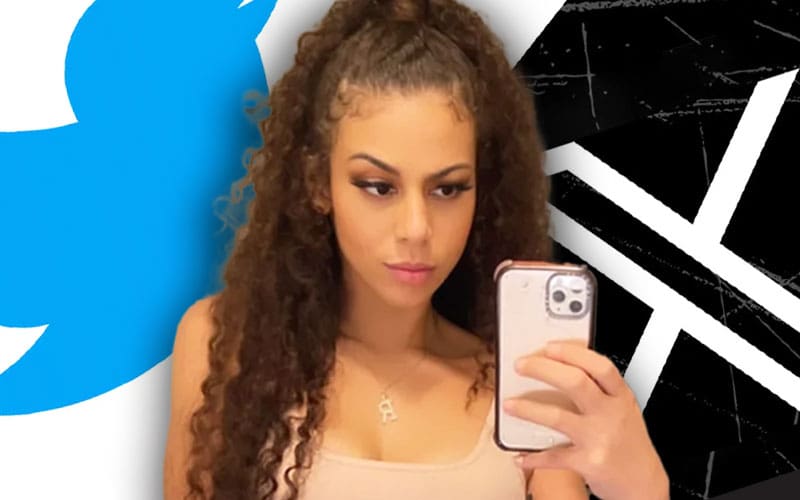
The decision to deactivate a social media account is rarely a casual one for a public figure. For someone like Irvin, these platforms serve as vital tools for professional networking, fan engagement, and personal branding. By choosing to disappear from the platform entirely, she sent a silent but powerful message about the state of the discourse. It served as a stark reminder that behind the screens and the handles are real human beings who are often forced to endure the consequences of a mob mentality. Her exit from the platform was not just a reaction to the controversy itself, but a necessary step for self-preservation in an environment that had become increasingly hostile. It remains to be seen if this absence is a temporary measure to let the storm pass or a more permanent shift in how she chooses to interact with the public.
While the social media drama continued to unfold, whispers began to circulate regarding the potential professional repercussions for Ricochet within All Elite Wrestling. The company, led by Tony Khan, has historically been a place that prides itself on being an alternative to the traditional corporate structure of the industry, yet it is not immune to the demands of sponsors and the expectations of a global audience. The wrestling media began to analyze the situation through a corporate lens, with prominent voices suggesting that the wrestler’s standing within the locker room and his future with the promotion could be in jeopardy. The reality of modern entertainment is that talent is often held to a morality clause, and remarks that alienate a specific demographic or mock a medical condition can be grounds for disciplinary action or, in extreme cases, termination.
The commentary provided by industry insiders like Bryan Alvarez added another layer of urgency to the story. When a respected journalist suggests that an athlete might be hoping to maintain their employment by the week’s end, it indicates that the conversations happening behind closed doors are far more serious than a simple social media apology might suggest. All Elite Wrestling is currently in a pivotal position as it continues to negotiate television deals and expand its global footprint. In such a high-stakes environment, any individual who becomes a public relations liability risks being distanced from the brand. The promotion must balance the undeniable talent of the performer against the potential damage his presence might cause to their reputation as an inclusive and forward-thinking organization.
This incident also shines a light on the broader relationship between professional wrestlers and the Internet Wrestling Community. For years, there has been a growing tension between those who step inside the ring and those who critique them from behind a keyboard. Wrestlers often feel that they are subjected to an unfair level of scrutiny and personal attacks, leading some to adopt a defensive or even aggressive posture online. However, the Ricochet situation serves as a cautionary tale about the limits of that aggression. There is a fundamental difference between defending one’s craft and punching down at a vulnerable segment of the population. When a performer loses that distinction, they risk destroying a career that took decades to build in a matter of seconds.
The silence from Samantha Irvin’s camp and the ongoing uncertainty surrounding Ricochet’s status have left the wrestling world in a state of flux. Fans are divided on whether the apology should be the end of the matter or if a more substantial consequence is required to set a precedent. In many ways, this story is about more than just a single tweet; it is about the evolving standards of accountability in a world that never forgets and rarely forgives. As the dust begins to settle, the focus will inevitably shift toward the leadership at AEW and how they choose to handle one of their high-profile signings. Will they view this as an isolated incident of poor judgment, or will it be seen as a breach of the values the company strives to uphold?
Furthermore, the impact on Samantha Irvin’s career cannot be ignored. As one of the most talented announcers in the business, her presence on social media was a gateway for fans to appreciate her work and her personality. Her forced retreat from that space is a loss for the community, illustrating how the actions of one person can diminish the experience of many. It also raises questions about the responsibility of fans to maintain a level of civility, even when they are rightfully angered by a performer’s behavior. The "guilt by association" tactic that drove Irvin off the platform is a recurring theme in digital controversies, often hurting innocent parties who are simply trying to navigate their own lives and careers.
As we move forward, the wrestling industry must grapple with these digital-age dilemmas. The power of social media to elevate a star is undeniable, but its power to dismantle a reputation is equally potent. For Ricochet, the path to redemption will likely be long and require more than just words on a screen. It will require a demonstrated understanding of why his remarks were so hurtful and a commitment to rebuilding the trust he lost. For the fans, it is a moment to reflect on the nature of online criticism and the human cost of these public firestorms. The squared circle may be a place of scripted conflict and choreographed violence, but the consequences of the words spoken outside of it are very real and often permanent.
The story of Samantha Irvin’s deactivation and the controversy surrounding her husband is still being written. Every day brings new speculation and new opinions from every corner of the globe. What remains clear is that the intersection of professional wrestling and social media remains a volatile and unpredictable landscape. Whether Ricochet can weather this storm and remain a fixture in AEW, or if this marks the beginning of a significant decline in his professional standing, is a question that only time will answer. For now, the silence on Samantha Irvin’s timeline speaks volumes about the current state of the industry and the heavy price of public life in the twenty-first century. The wrestling world watches and waits, hoping for a resolution that brings clarity to a situation that has become a dark cloud over one of the sport’s most talented couples.