The tapestry of WrestleMania, professional wrestling’s grandest spectacle, is woven with threads of unforgettable moments, legendary rivalries, and the indelible mark of its most enduring icons. Among these titans, The Undertaker stands supreme, his undefeated streak at the event a phenomenon that transcended mere wins and losses, becoming a sacred testament to longevity and dominance. For over two decades, "The Deadman" marched through the roster of wrestling’s elite, vanquishing all challengers on "The Grandest Stage of Them All." Yet, within this storied undefeated run, certain adversaries etched their names into the narrative with a ferocity that amplified the legend. One such rivalry, culminating in a series of visceral encounters, was that between The Undertaker and Triple H, a feud that delivered not one, but three profoundly impactful WrestleMania showdowns, with their second and third bouts, in particular, resonating as classics that defined an era.
The initial chapter of their WrestleMania saga unfolded at WrestleMania X-Seven in 2001. This encounter saw The Undertaker, then at 8-0 on his legendary streak, facing a formidable "The Game," Triple H. While this match was a solid contest that added another victory to Undertaker’s burgeoning streak, it was the subsequent meetings that truly elevated their rivalry into the realm of wrestling immortality. The narrative took a significant turn years later, setting the stage for a clash of titans at WrestleMania 27. Undertaker’s return to WWE programming in early 2011, following a mysterious series of vignettes, sent shockwaves through the WWE Universe. His reappearance on Monday Night Raw was swiftly interrupted by the imposing presence of Triple H. In that charged atmosphere, with the looming WrestleMania sign as a silent witness, the seeds of their next epic encounter were sown. The intensity of their staredown suggested a confrontation of monumental proportions.
The ensuing weeks saw the build-up to their WrestleMania 27 clash become a masterclass in psychological warfare and escalating animosity. Triple H, a man who had conquered every major championship and achieved nearly every accolade in WWE, declared that the only thing missing from his illustrious resume was the scalp of The Undertaker’s undefeated WrestleMania streak. This bold proclamation set a dangerous precedent, not just for Undertaker’s legacy, but for the very fabric of the streak. The stakes were undeniably high. Adding another layer of intrigue and emotional depth to the narrative was the involvement of Shawn Michaels, Undertaker’s legendary opponent from WrestleMania XXVI. Michaels, who had famously lost his career to The Undertaker in a career-versus-streak stipulation the previous year, found himself in a unique position. He confronted Triple H, his long-time friend and D-Generation X comrade, questioning his friend’s resolve and ability to achieve what he himself could not. Michaels’ skepticism, born from his own devastating loss, served as a stark reminder of the insurmountable challenge that lay before Triple H. This dynamic between the three icons—Undertaker, Triple H, and Michaels—created a palpable tension, a sense that history was being made not just by the participants, but by the weight of their collective legacies. The animosity between Undertaker and Triple H escalated to a point where the two men nearly came to blows in the ring on multiple occasions, further amplifying the anticipation for their battle.
Finally, on April 3, 2011, live from the raucous Georgia Dome in Atlanta, the stage was set for a collision that would be etched in wrestling lore. The match was officially declared a No Holds Barred contest, a stipulation that promised unadulterated brutality and removed any limitations on the violence that could unfold. This was not going to be a technical wrestling clinic; this was going to be a war. From the opening bell, the intensity was palpable. Undertaker, despite his imposing presence, was met with an aggressive onslaught from Triple H. "The Game" wasted no time, unleashing a barrage of right hands that immediately put "The Phenom" on the defensive. The battle quickly spilled to the outside, where the unforgiving arena floor became an extension of their brutal canvas. The early stages saw Triple H gain a significant advantage, driving Undertaker through the unforgiving plexiglass of the infamous "Cole Mine," a commentary setup that had become a signature element of WrestleMania events. The impact was visceral, a testament to the sheer power being unleashed.
As the match continued its relentless pace, the brutality only intensified. Undertaker, demonstrating his incredible resilience, managed to counter a potential Pedigree on the arena floor with a devastating back body drop, sending Triple H crashing down. Seizing the moment, Undertaker launched himself over the top rope, a high-flying maneuver that defied his imposing physique, to take out his battered opponent. The action then returned to the squared circle, where the ebb and flow of the contest kept the audience on the edge of their seats. Undertaker delivered a thunderous Chokeslam, but to the shock of many, Triple H kicked out. The stakes were raised even higher when Undertaker retrieved a steel chair, intending to inflict further damage. However, Triple H, displaying incredible awareness and toughness, countered with a powerful boot to the face, momentarily stunning "The Deadman."
In a display of sheer determination, Triple H rallied, hitting Undertaker with a Pedigree, a move that had ended countless matches. Yet, the streak remained intact as Undertaker remarkably kicked out. The near-falls became increasingly dramatic, each one met with a collective gasp from the crowd. Undertaker responded with his own signature maneuver, the Last Ride, only for Triple H to again defy the odds. The patented Tombstone Piledriver, a move synonymous with Undertaker’s dominance, was then delivered by "The Phenom," but somehow, Triple H’s shoulder was up before the three-count. The sheer impossibility of it all began to dawn on "The Game."
Driven by an almost desperate resolve, Triple H shifted tactics. He utilized the steel chair with vicious intent, battering Undertaker and screaming at him to "stay down." In a moment of sheer audacity, Triple H then executed his own Tombstone Piledriver on Undertaker, even mimicking "The Deadman’s" signature pose during the pinfall attempt. The crowd roared, sensing a monumental upset, but once again, Undertaker’s shoulder rose off the mat. The disbelief on Triple H’s face was palpable; he had thrown everything he had at The Undertaker, and the streak remained unbroken.
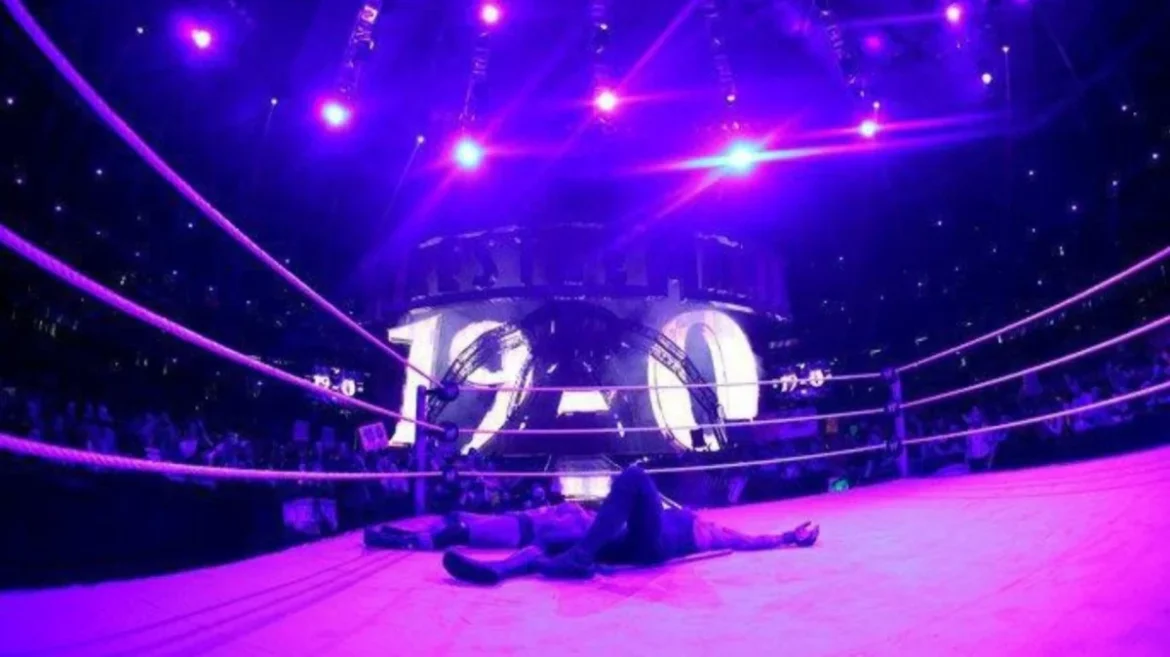
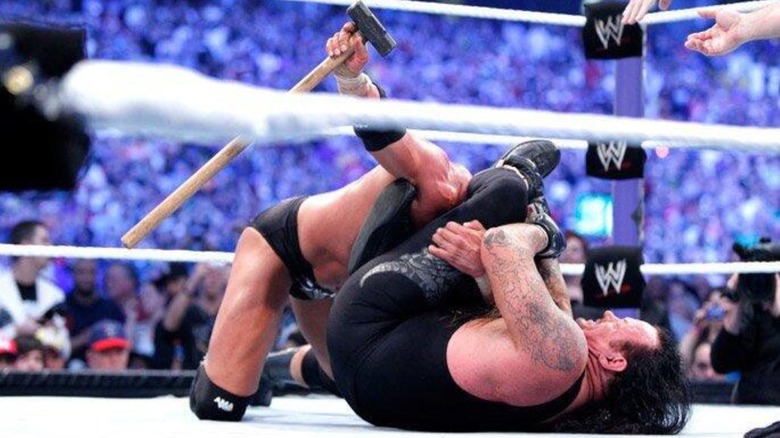
The climax of the match saw Triple H retrieve his iconic sledgehammer, a symbol of his power and destructive capability. As he prepared to deliver a potentially match-ending blow, Undertaker, with his legendary submission hold, the Hell’s Gate, locked it in. The hammer clattered from Triple H’s grasp, the fight draining from his body. Despite a final, desperate attempt to reach for the weapon, the sheer exhaustion and the agonizing pressure of the submission hold proved too much. Triple H was forced to tap out, a rare occurrence for the resilient "The Game." As the bell rang, signaling the end of an epic battle, The Undertaker’s WrestleMania streak stood at an astonishing 19-0.
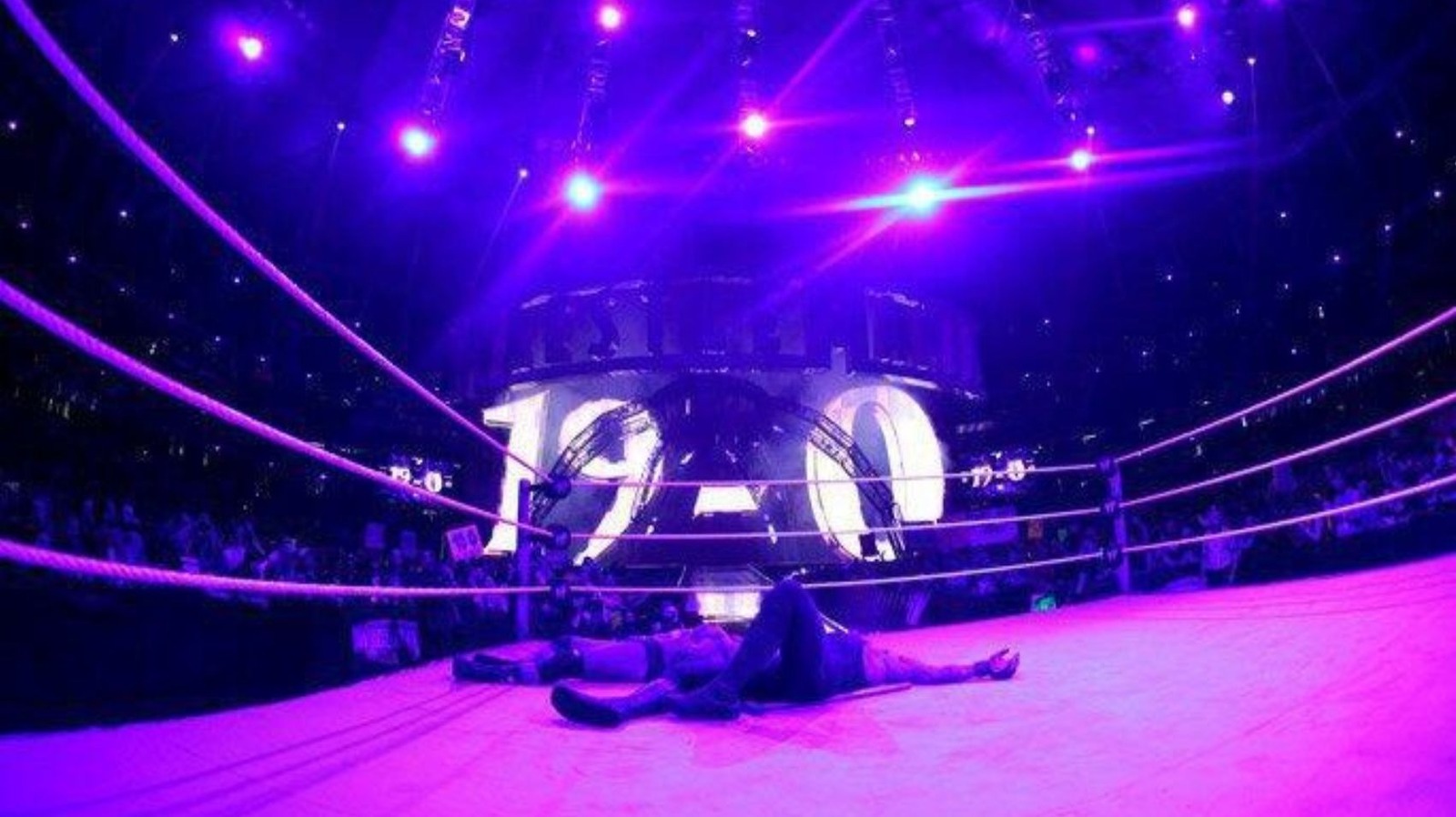
The aftermath of the contest was as dramatic as the match itself. Both warriors, battered and broken, struggled to rise. Medical personnel attended to Undertaker as the "19-0" graphic was displayed across every screen in the Georgia Dome, a stark visual confirmation of the ongoing legend. Triple H, defeated but not broken, slowly made his way up the ramp, a solitary figure of immense effort. Undertaker, however, collapsed at ringside, requiring assistance and eventually being stretchered away, unable to leave the arena under his own power. The sight of "The Deadman" being carted away left the audience in a state of stunned silence, a stark contrast to the cheers that had accompanied his victories.
This grueling encounter at WrestleMania 27 had a profound impact on Undertaker’s subsequent appearances. He would remain absent from WWE television for approximately ten months, his physical state requiring significant recovery. His return in late January 2012 on Monday Night Raw was met with a mixture of relief and renewed anticipation. The confrontation with Triple H reignited the rivalry, fueled by Undertaker’s desire to be able to walk out of WrestleMania on his own terms. This led to their highly anticipated rematch at WrestleMania 28, this time in a Hell in a Cell match, with Shawn Michaels serving as the special guest referee. In that brutal confines of the cell, The Undertaker once again emerged victorious, extending his streak to an immaculate 20-0, further solidifying his place in wrestling history.
The WrestleMania 27 encounter between The Undertaker and Triple H was not only a physical war but also a critical success. Wrestling critics and fans alike lauded the match for its intensity, storytelling, and the sheer heart displayed by both competitors. Dave Meltzer of the Wrestling Observer Newsletter awarded the match a remarkable 4.5 stars, a testament to its quality. On the fan-driven Cagematch website, the match garnered an average rating of 8.93 out of 10 in 2011 and continues to hold a strong rating of 8.50 out of 10, based on hundreds of votes. The overwhelming consensus points to the match being a defining moment in both men’s careers and a pivotal chapter in the unparalleled legacy of The Undertaker’s WrestleMania streak. It was a contest that transcended mere athleticism, becoming a deeply personal and emotionally charged saga that resonated with audiences worldwide.