The journey of a professional wrestler is often paved with triumphs and tribulations, but few narratives resonate with such candid introspection as the recent reflections shared by Sareee, the formidable Japanese competitor known to many as "The Sun God." Her tenure within World Wrestling Entertainment, specifically its NXT brand, spanning from 2020 to 2023, has emerged as a deeply personal and professionally challenging chapter, one she has now chosen to illuminate with striking honesty. Her insights, initially conveyed through a Japanese publication, offer a rare glimpse into the often-glamorous, yet frequently arduous, path many international talents navigate when pursuing the global spotlight offered by the world’s largest wrestling promotion. Sareee’s account is not merely a chronicle of events, but a testament to resilience, the unwavering pursuit of one’s artistic vision, and the profound lessons gleaned from an experience that, while difficult, ultimately forged a stronger, more resolute individual dedicated to the essence of pure professional wrestling.
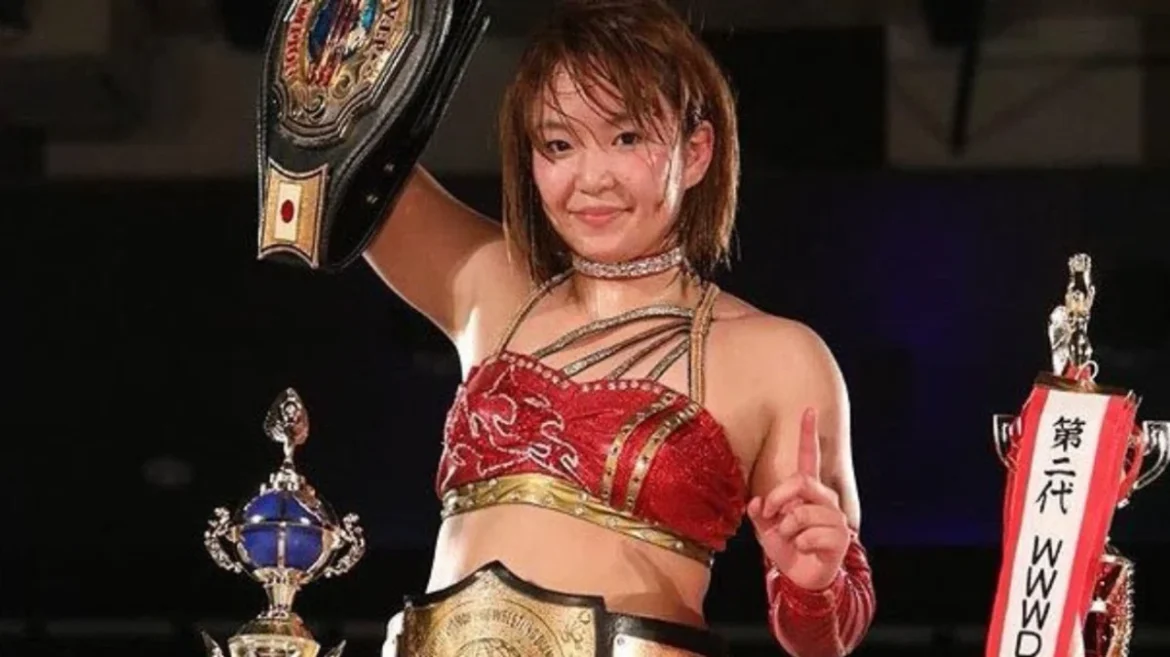
Before embarking on her American odyssey, Sareee had already carved out an impressive and hard-hitting legacy in the vibrant landscape of Japanese women’s wrestling, known as joshi puroresu. A product of World Woman Pro-Wrestling Diana, she debuted in 2011, quickly establishing herself as a fierce, no-nonsense competitor whose style blended technical precision with an unyielding intensity. Her matches were characterized by stiff strikes, impactful suplexes, and a palpable fighting spirit that earned her the moniker "The Sun God," a descriptor that perfectly encapsulated her radiant presence and formidable in-ring prowess. Sareee held championships across various esteemed Japanese promotions, including Diana and Seadlinnng, facing off against and often besting some of the most respected names in the joshi world. Her reputation was that of an athlete who embodied the raw, physical integrity of professional wrestling, a performer who commanded respect through her skill and grit. This background is crucial to understanding the context of her move to WWE; she wasn’t an unproven rookie, but a seasoned veteran with a clear identity and a well-defined vision for her craft.
The allure of WWE, with its immense global reach and unparalleled resources, often proves irresistible for talents seeking to elevate their careers to an international stage. For Japanese wrestlers in particular, WWE has historically offered a pathway to broader recognition, though not without its own unique set of challenges. Stars like Asuka, Io Shirai (now IYO SKY), and Kairi Sane have achieved significant success within the company, demonstrating the potential for joshi talent to thrive. It was this promise of a grander platform that likely drew Sareee to sign with WWE in 2020, envisioning an opportunity to showcase the distinctive power and artistry of Japanese women’s wrestling to an entirely new audience. Her intent was clear: to bring the formidable spirit and authentic competitiveness she had cultivated in Japan to the biggest stage in sports entertainment, believing her established persona and in-ring philosophy would translate effectively.

However, the reality of her transition proved far more complex than anticipated, immediately complicated by unforeseen global circumstances. Sareee’s arrival in the United States coincided with the nascent stages of the COVID-19 pandemic, a period that dramatically reshaped the wrestling industry and daily life worldwide. For an international talent relocating to a new country, navigating a new culture, and adapting to a new wrestling system, the pandemic introduced an unprecedented layer of difficulty. Travel restrictions, visa complications, and the general uncertainty of the times severely limited opportunities for new talent, particularly those who relied on the immersive training and consistent match experience typically offered by WWE’s developmental system. The closure of training facilities, the shift to empty arena shows, and the reduced number of live events meant that the anticipated ramp-up period for Sareee was significantly curtailed, stifling her ability to integrate and gain vital ring time.
Adding to the professional hurdles was a creative divergence that Sareee found particularly challenging. Upon her eventual debut on NXT television, she was repackaged as "Sarray" and presented with a character that starkly contrasted with her established "Sun God" persona. The creative direction saw her adopt a "high school girl" persona, initially presented with a briefcase that supposedly contained her "fighting spirit," a concept that felt abstract and at odds with the tangible, hard-hitting style she was known for. While the character eventually evolved to include a more aggressive "Warrior" mode, the initial presentation was a significant departure from the fierce, mature competitor fans in Japan had come to admire. This assigned identity, designed by WWE’s creative team, seemingly sought to introduce her as a fresh face to a new audience, but for Sareee, it represented a fundamental disconnect from her core identity as a professional wrestler. Her goal was to embody the formidable strength of Japanese women’s wrestling; instead, she found herself portraying a character that, in her view, didn’t fully align with the powerful, authentic expression of her craft.
The struggle to reconcile her artistic vision with the demands of the WWE system was compounded by the sheer depth of the NXT roster. WWE’s developmental brand is a melting pot of talent from around the globe, all vying for limited television time and opportunities to impress management. Even without a global pandemic, securing a consistent spot on a weekly program is a monumental task. For Sareee, who arrived with a clear expectation of showcasing her established style, the competition was immense, and the opportunities to demonstrate her true capabilities were scarce. The internal hierarchy, the constant influx of new recruits, and the company’s specific creative preferences meant that even highly accomplished international stars could find themselves on the periphery, struggling to gain traction. This environment, coupled with a character that she felt didn’t fully resonate with her, made it incredibly difficult to break through and achieve the impact she had envisioned.
Beyond the professional wrestling ring, Sareee also contended with the profound personal toll of relocating to a foreign country, a challenge exacerbated by the unprecedented circumstances of the pandemic. Living in the United States, away from her support system and familiar cultural environment, proved to be an isolating experience. The stress of adapting to a new lifestyle, the language barrier, the creative frustrations, and the constant pressure to perform took a significant toll on her well-being. She candidly revealed that the immense stress led her to seek comfort in sweets, recounting instances of consuming large, American-sized desserts, like a parfait after lunch, followed by a substantial serving of ice cream. This shift in dietary habits, a common coping mechanism for individuals under immense pressure, manifested physically, causing skin issues like acne. Her account paints a vivid picture of a human being grappling with intense emotional and psychological strain, striving to adapt and persevere in a high-pressure, unfamiliar environment, all while battling personal demons stemming from the professional challenges she faced.

As her contract approached its conclusion in 2023, Sareee faced a critical juncture. The decision to return to Japan was not made lightly; she openly admitted to questioning whether it was acceptable to leave the United States without having achieved the grand successes she had initially envisioned. This internal conflict is a common struggle for many athletes who depart a major promotion without reaching the very top. However, through deep introspection, she arrived at a profound realization. Her true calling, she concluded, was to engage in the style of professional wrestling she believed in most fervently, to dedicate herself fully to the craft that had defined her career. The desire to showcase her authentic self, to perform without creative constraints that felt alien to her core identity, ultimately outweighed the pursuit of a perceived "accomplishment" within a system that didn’t fully align with her artistic values.
Her return to Japan marked not an end, but a powerful recommitment to her roots and her unwavering passion for joshi puroresu. It was a conscious decision to return to the source of her inspiration, to the environment where the strength and spirit of Japanese women’s wrestling are celebrated in their purest form. Since her departure from WWE, Sareee has wasted no time in re-establishing her formidable presence within the Japanese wrestling scene. She has continued to compete for various promotions, including the newly formed Marigold, where she quickly captured the Marigold World Championship, solidifying her status as a top-tier performer. This championship reign underscores her immediate impact and the respect she commands within her home country. Her recent activities further exemplify this renewed focus. She was prominently featured in a tag team encounter at SSPW Vol. 38, an event commemorating the 45th Anniversary of the legendary First Generation Tiger Mask, where she teamed with Miku Kanae to secure a decisive victory over the duo of Kaoru Ito and Uta Shima. These engagements are not merely matches; they are statements of purpose, demonstrations of her commitment to the wrestling she loves.
In reflecting on her entire WWE experience, Sareee views it not as a failure, but as an invaluable educational chapter. She acknowledged that despite the profound difficulties, every moment, every challenge, served as a crucial learning experience. This perspective is a hallmark of truly dedicated professionals who understand that growth often stems from adversity. Her time in the American system, though fraught with stress and creative clashes, provided her with a unique perspective, broadening her understanding of different wrestling philosophies and production styles. It allowed her to refine her own beliefs about what professional wrestling means to her and what kind of legacy she wishes to forge. Her ultimate goal remains clear and unwavering: to be recognized as the strongest force in Japanese women’s professional wrestling, a journey that began long before WWE and continues with renewed vigor and conviction today. Sareee’s narrative is a compelling reminder that success in professional wrestling is not solely defined by the accolades accumulated in the largest promotions, but by the integrity, passion, and unwavering dedication one brings to the art form, both inside and outside the squared circle. Her story is one of a true warrior, a Sun God who, having weathered the storms, shines brighter than ever before on her chosen path.