Professional wrestling is a business built on the foundation of suspension of disbelief, where the lines between reality and fiction are often blurred for the sake of entertainment. However, some of the most unbelievable stories in the industry take place far away from the bright lights of the arena and the roar of the crowd. These behind-the-scenes tales usually involve locker room politics, travel mishaps, or eccentric promoters, but a recent revelation from a beloved international star has introduced a brand-new category of absurdity to the annals of wrestling history. Grado, a man who rose to fame as the charismatic underdog of the Scottish independent circuit before making a significant splash on the American stage, has come forward with a narrative that sounds more like a plot point from a surrealist comedy than a legitimate corporate interaction. According to the man himself, his time working for TNA Wrestling included an incident where his compensation was provided not in the form of legal tender or a valid bank draft, but rather as a hand-drawn illustration of a check.
To understand the magnitude of this bizarre situation, one must first look at the career of the man at the center of the story. Grado became a household name in the United Kingdom through his work with Insane Championship Wrestling, where his infectious personality and his use of a certain Madonna classic for his entrance music made him an instant folk hero. When TNA Wrestling, then looking to expand its global reach and capitalize on the booming British wrestling scene, launched the second season of their reality competition series, British Boot Camp, Grado was the breakout star. His journey from the small halls of Scotland to the grand stages of Orlando, Florida, was a true "Cinderella story" that resonated with fans worldwide. He eventually became a staple of the roster, often involved in comedic storylines that utilized his natural timing and likability. Yet, behind the scenes, the logistical realities of being an international talent working for a major American promotion proved to be a persistent headache.
The financial infrastructure of professional wrestling has long been a point of contention and confusion. For decades, wrestlers have operated as independent contractors, responsible for their own taxes, insurance, and often their own travel. In the United States, the traditional method of payment for many years remained the physical paper check. While much of the modern world has transitioned to direct electronic transfers, the wrestling industry—and American business culture at large during that era—frequently stuck to the old-fashioned way of doing things. For a wrestler living in Scotland, this created a recurring logistical nightmare. Every time a payment was issued from the corporate offices in Nashville, it had to travel across the Atlantic Ocean, arrive at a residence in the United Kingdom, and then be taken to a local financial institution for processing.
During a candid appearance on the Mic Check podcast, hosted by fellow wrestling veteran and former TNA World Heavyweight Champion Mr. Anderson, Grado delved into the specifics of this grueling process. He painted a vivid picture of his local Bank of Scotland branch in Falkirk, where he became a regular, albeit unwelcome, visitor. The banking staff there were unaccustomed to the complexities of American financial documents. Every time Grado approached the counter with a check from the United States, it triggered a lengthy administrative ordeal. He recalled the visible frustration of a specific bank teller who dreaded his arrival, knowing that his presence meant forty-five minutes of complicated paperwork and system entries just to facilitate a simple deposit. This tension became a recurring theme in his professional life, as the bank staff questioned why his American employers couldn’t simply utilize modern digital banking methods rather than relying on antiquated paper slips.
The situation reached a breaking point during a period when the wrestler was approximately two years into his tenure with the promotion. Like many performers in the industry, Grado relied on the timely arrival of his pay to maintain his livelihood. When a particular payment failed to materialize on schedule, he did what any concerned employee would do: he reached out to the company’s administrative department to inquire about the status of his funds. The response he received was a classic trope in the world of independent contracting. He was assured that the payment had already been processed and was currently in transit via an express courier service. He was told to expect the package within a matter of days, providing a temporary sense of relief that the financial hiccup was merely a shipping delay.
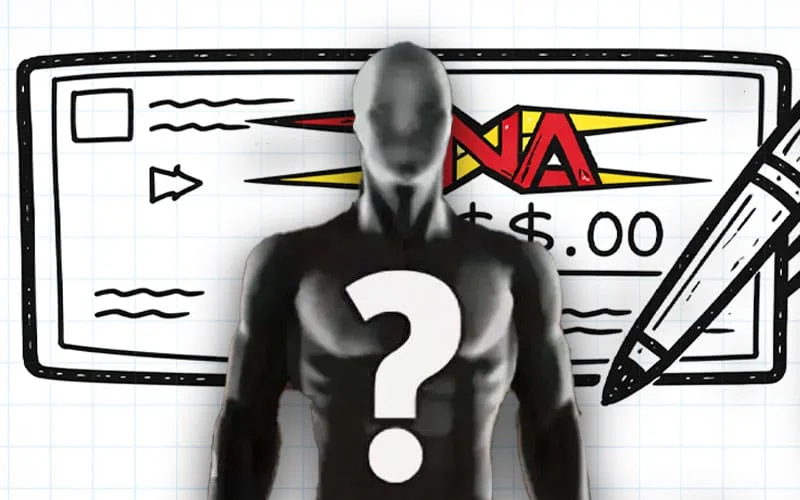
When the FedEx envelope finally arrived at his doorstep, Grado opened it with the expectation of finding the standard American check that he had grown accustomed to battling over at the bank. Instead, he was greeted by a sight that left him questioning his own eyes. Inside the envelope was a standard piece of paper, but it was not a printed document from a payroll department. It was a manual recreation of a check. He described a piece of paper where someone had taken the time to hand-draw the essential components of a financial instrument. The routing numbers at the top, the account details along the side, and the specific amount—in this case, twenty-five hundred dollars—had all been scrawled in pen by a human hand. It was, quite literally, a drawing of a check rather than an actual check.
Initially, the wrestler harbored a sliver of hope that this might be some obscure American banking custom he was simply unaware of. In the high-pressure world of international business, perhaps there was a legal precedent for a hand-inked promissory note to be treated as a valid deposit. Driven by this desperate optimism and the need to secure his earnings, he made the familiar trek to the Bank of Scotland in Falkirk. When he reached the counter and presented the hand-drawn document to the staff, the reaction was exactly what one might expect. The bank employees looked at him with a mixture of confusion and disbelief, unable to comprehend why a professional athlete would present a piece of notebook-style art as a request for a cash deposit. They made it abundantly clear that the document held no financial value and that there was absolutely nothing they could do to process it.
The resulting embarrassment was profound. Grado described the feeling of standing in a public space, a well-known figure in his community, trying to explain to a skeptical bank teller that his multi-million dollar American employers had sent him a doodle instead of a salary. The humiliation of being looked at as if he had "two heads" stayed with him, serving as a stark reminder of the chaotic nature of the wrestling business during that particular era. While he eventually managed to resolve his pay issues, the story of the hand-drawn check became a legendary anecdote among those who have navigated the often-turbulent waters of the professional wrestling industry.
This incident does not exist in a vacuum; it serves as a microcosm of the broader reputational struggles that TNA Wrestling faced for many years. During the mid-2010s, the promotion was frequently the subject of internet rumors and "dirt sheet" reports regarding financial instability, late payments to talent, and administrative disarray. While the company featured some of the best in-ring performers in the world—including the likes of AJ Styles, Samoa Joe, and Kurt Angle—the corporate side of the operation often struggled to maintain a sense of professional consistency. Stories of production crews nearly striking over unpaid wages or talent receiving their checks weeks or months late were common, but the "hand-drawn check" story occupies a tier of its own in terms of sheer absurdity.
The wrestling world is often referred to as the "Wild West" of entertainment, a place where the rules of traditional business are frequently ignored or rewritten on the fly. In the territories of the 1970s and 80s, it was not uncommon for promoters to pay wrestlers in cash out of a brown paper bag in the back of a smoky arena. However, by the time Grado was competing on a national television program in the 21st century, the expectation was that the industry had moved toward a more corporate and standardized model. The fact that a talent could still be subjected to such a primitive and nonsensical payment error highlights the lingering "outlaw" spirit that sometimes haunts even the largest organizations in the sport.
Mr. Anderson, who listened to the story during the podcast, was no stranger to the inner workings of the company himself. Having spent years in both WWE and TNA, he provided a sympathetic ear to the tale of international banking woes. The conversation between the two veterans underscored a shared understanding of the hurdles that wrestlers must clear just to receive the compensation they have earned through physical sacrifice. The physical toll of the squared circle is demanding enough, but the added stress of financial uncertainty can be just as draining for a performer trying to build a career and a life.
Today, the landscape of professional wrestling has changed significantly. TNA has rebranded and evolved into Impact Wrestling (and later back to TNA), now operating under a different ownership group that has worked hard to shed the "lolTNA" stigma of the past. Modern wrestlers are more likely to receive their pay via direct deposit, and the rise of digital banking has made the life of an international "fly-in" talent much more manageable. The days of waiting for a FedEx envelope and hoping it contains a valid piece of paper are largely a thing of the past, but the stories from that era remain as a testament to the resilience of the performers who endured them.
Grado’s story is more than just a funny anecdote; it is a piece of wrestling folklore that captures a specific moment in time. It reflects the intersection of a rising global superstar’s career and the administrative growing pains of a promotion trying to find its footing. It also serves as a reminder of the unique challenges faced by non-American wrestlers who help build the industry in the United States. For Grado, who continues to be a massive draw and a beloved personality in the UK and beyond, the "hand-drawn check" is a badge of honor of sorts—a ridiculous obstacle he overcame on his way to becoming a legend in his own right.
In the end, the image of a world-famous wrestler standing in a Falkirk bank branch, holding a pen-and-paper recreation of a twenty-five hundred dollar check, remains one of the most vivid and hilarious images in modern wrestling history. It is a story that reminds us that no matter how much the industry evolves, there will always be a touch of the bizarre waiting just behind the curtain. Grado’s ability to find the humor in such a mortifying situation is a testament to the character that made him a star in the first place, ensuring that while the check may have been fake, his impact on the business—and the laughter he provides to fans and colleagues alike—is entirely genuine.