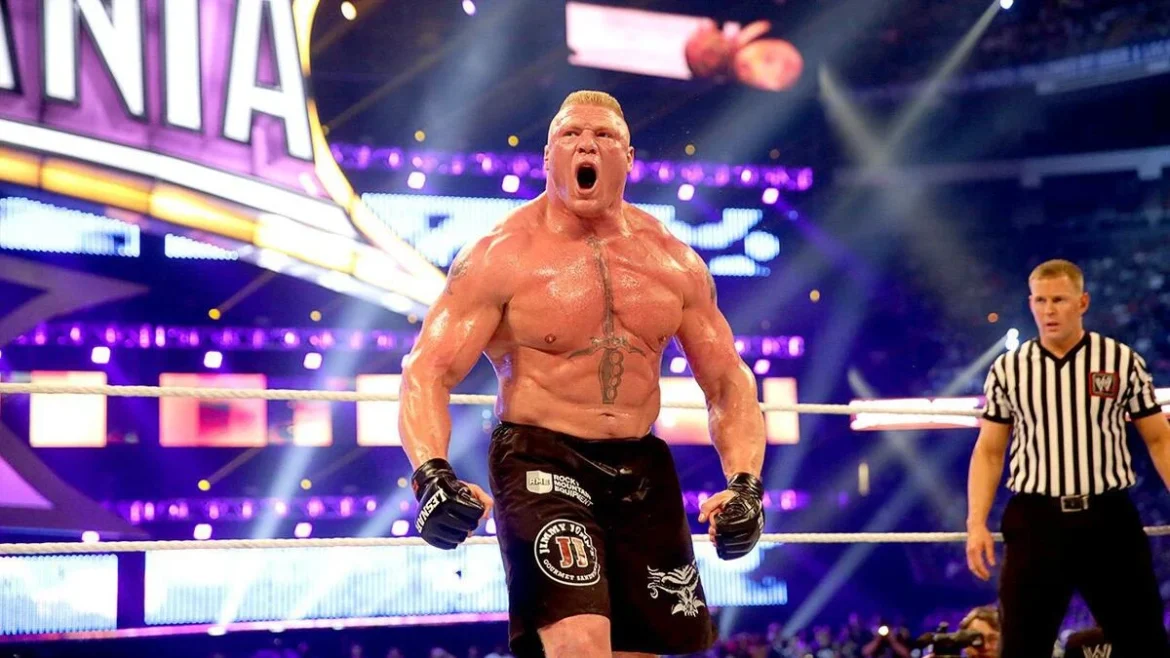
The very fabric of professional wrestling was irrevocably altered on April 6, 2014, inside the Mercedes-Benz Superdome in New Orleans. It was WrestleMania XXX, a landmark event designed to celebrate three decades of sports entertainment’s grandest spectacle, yet it became the setting for a moment so profoundly shocking that it momentarily silenced a capacity crowd of over 75,000 and sent ripples of disbelief across the globe. That night, Brock Lesnar, the self-proclaimed Beast Incarnate, achieved the seemingly impossible: he defeated The Undertaker, shattering the Deadman’s legendary undefeated streak at WrestleMania, which had stood at an astonishing 21 victories and zero losses. The aftermath of that monumental upset, and Lesnar’s recent reflections on the decision, continue to resonate through the annals of wrestling history, offering a rare glimpse into the psyche of the man tasked with delivering the ultimate blow to an iconic legacy.
For years, The Undertaker’s WrestleMania Streak wasn’t just a statistic; it was an annual pilgrimage for fans, a narrative cornerstone that elevated the show of shows to mythological heights. It began modestly enough, a victory over Jimmy Snuka at WrestleMania VII in 1991, and slowly, organically, transformed into the most revered accomplishment in wrestling. Each year, as the calendar turned to spring, the question wasn’t if Undertaker would win, but who he would defeat next, and how he would overcome their challenge. From battling giants like Jake "The Snake" Roberts and King Kong Bundy, to technical marvels such as Ric Flair and Randy Orton, to epic sagas against Batista, Edge, and particularly the immortal clashes with Shawn Michaels and Triple H, the Streak became synonymous with the grandeur and unpredictability of WrestleMania itself. It was the one constant, the one absolute certainty in a world built on surprises and swerves. The Undertaker, with his supernatural aura and unparalleled longevity, had forged a legend that transcended mere wins and losses; it was about the embodiment of WrestleMania spirit.
By the time WrestleMania XXX rolled around, the Streak was 21-0, an almost sacred entity that many believed would never, could never, be broken. It was speculated that The Undertaker would simply retire with the Streak intact, perhaps going out on his 25th or 30th victory, or even simply fading into legend without ever suffering a defeat on the biggest stage. The opponent chosen to challenge this seemingly unbreakable barrier was Brock Lesnar, a man whose legitimate combat sports background and ruthless, mercenary persona made him perhaps the only credible threat to Undertaker’s dominance. Lesnar had returned to WWE in 2012 after a successful career in mixed martial arts, bringing with him an air of legitimate danger that few professional wrestlers could match. He was a former WWE Champion, a UFC Heavyweight Champion, and a legitimate force of nature who operated with a "business-first" mentality, seeing professional wrestling as a means to an end, a lucrative endeavor rather than a lifelong passion in the traditional sense. This detached, pragmatic approach, as Lesnar himself has often articulated, set him apart and, in the eyes of the decision-makers, made him the ideal candidate for such a controversial undertaking.
The build-up to their WrestleMania XXX encounter was intense, focusing on the sheer brutality Lesnar promised to unleash and the stoic resilience of The Undertaker. Fans were divided: some dared to believe Lesnar could do it, while most held onto the comforting belief that the Streak would endure, as it always had. The match itself, however, proved to be a difficult watch. What unfolded was a surprisingly sluggish and disjointed affair, a stark contrast to the high-octane classics Undertaker had delivered in previous years. It later emerged that The Undertaker had suffered a severe concussion early in the bout, an unfortunate circumstance that undoubtedly impacted the quality of the contest and his ability to perform at his usual legendary standard. This critical injury not only affected the flow of the match but also, as Lesnar would later reveal, created a challenging dynamic for both competitors, forcing them to improvise and navigate through unforeseen complications in the squared circle.
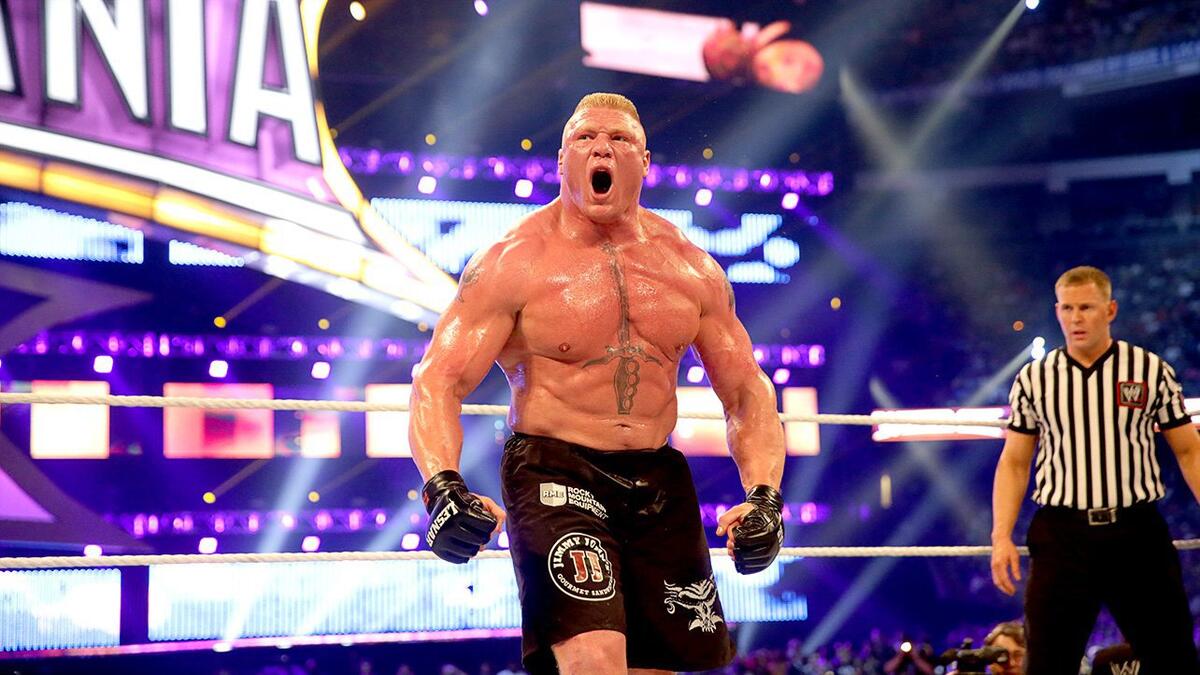
Then came the finish. Brock Lesnar delivered a third F-5, an impactful maneuver that had felled countless opponents. The referee, Chad Patton, counted three. The bell rang. And then, silence. An eerie, profound, suffocating silence descended upon the Superdome. The crowd, initially in disbelief, slowly began to grasp the reality of what had just transpired. The Undertaker, the Deadman, the Phenom, lay vanquished. The Streak was over. The number 21-1 flashed on the screen, a chilling testament to the end of an era. Grown men and women in the audience openly wept. Children stared in wide-eyed confusion. It was, without hyperbole, the most shocking moment in modern wrestling history, an event that transcended the bounds of a mere athletic contest and became a cultural phenomenon, debated and dissected for years to come.
In reflecting on that seismic event, Lesnar recently shared his perspective, underscoring his characteristic pragmatic approach to the wrestling business. He articulated that for him, the decision was straightforward: "This is a business. It’s a business." This philosophy, which has defined much of Lesnar’s career, explains his detachment from the emotional gravitas surrounding such a pivotal moment. He acknowledged that while many performers "live and breathe the lifestyle," his own relationship with the industry is more transactional. Lesnar clarified that the choice to end the Streak was not his to make, but rather the directive of Vince McMahon, the architect of WWE. McMahon, in his strategic vision, sought someone with a "legitimate background" whose victory over the Undertaker would be believable to the audience, and Lesnar, with his unparalleled credibility as a legitimate fighter, fit that description perfectly.
Lesnar recognized the deep emotional investment fans had in the Streak and the potential backlash for being the one to end it. He conceded, "There’s a lot of people that are pissed that it’s me, but it’s not my call." This candid admission highlights the unique position he found himself in, caught between the company’s creative directive and the fervent passion of the wrestling fanbase. Despite the controversy, Lesnar maintained a profound respect for The Undertaker, acknowledging him as a "great guy" and a mentor with whom he had worked for many years. He framed the event as a fundamental aspect of the wrestling business, a "give and take" scenario where "it was time for Taker to give – and it was a time for Brock Lesnar to take it." This cold, hard truth, while jarring to some, perfectly encapsulates Lesnar’s persona and his understanding of the industry’s often brutal necessities.
The revelation that The Undertaker himself was reportedly informed of the decision only a couple of hours before the match adds another layer of drama and emotional complexity to the narrative. Lesnar recounted the challenging situation, noting that Undertaker was "coming to his [22nd] WrestleMania thinking that he’s going to win and then two hours before we go on, the rug gets pulled on him." This eleventh-hour change of plans undoubtedly created "a lot of different emotions" for the legendary performer, who had likely prepared mentally and physically for a different outcome. For Lesnar, the emotions were also mixed; he admitted feeling "excited" to be chosen as "the guy" to accomplish such a historic feat, but simultaneously "felt bad" for his respected peer. This dichotomy of excitement and empathy paints a more nuanced picture of Lesnar, often perceived as an unfeeling destroyer, revealing a human element beneath the "Beast Incarnate" facade.
The physical toll of the match, particularly The Undertaker’s concussion, further underscored the challenging circumstances of that night. Lesnar recalled that during the match, "Taker is not being Taker," indicating that the injury clearly hampered the Deadman’s performance and ability to execute their planned sequence. In professional wrestling, matches are often described as a "dance," a choreographed performance requiring both participants to be fully present and responsive. When one competitor is compromised, as Undertaker was, it requires immense adaptability from the other. Lesnar navigated this difficult situation, ensuring they "did [their] best to get through it." His concern for Undertaker extended beyond the ring; out of profound respect for a man who had guided him earlier in his career, Lesnar made sure to accompany him to the hospital after the match to ensure his well-being. This act of genuine care, rarely seen from the often-aloof Lesnar, speaks volumes about the bond and mutual respect shared between these two titans of the industry, transcending the storyline animosity.

The immediate aftermath of WrestleMania XXX saw Brock Lesnar ascend to an even higher plane of villainy and dominance. The destruction of the Streak solidified his status as the most dangerous and credible force in WWE, a monster who could accomplish the impossible. This monumental victory paved the way for Lesnar’s subsequent reign of terror, including his infamous decimation of John Cena at SummerSlam later that year to capture the WWE World Heavyweight Championship, a brutal squash match that further cemented his reputation as an unstoppable entity. The breaking of the Streak became the ultimate feather in Lesnar’s cap, a talking point that would forever be associated with his career.
For The Undertaker, the end of the Streak did not signal the end of his career, though many had anticipated it might. Despite the emotional and physical toll of WrestleMania XXX, he continued to compete on the grandest stage for several more years. He returned to WrestleMania 31 to defeat Bray Wyatt, showcasing his enduring presence. He faced Lesnar again in a memorable series of matches, seeking redemption and reigniting their bitter rivalry. His final WrestleMania appearances included a contest against Roman Reigns at WrestleMania 33, a dominant win over John Cena at WrestleMania 34, and ultimately, a critically acclaimed Boneyard Match against AJ Styles at WrestleMania 36. This cinematic masterpiece, hailed as one of the best matches of his later career, allowed The Undertaker to go out on his own terms, delivering a captivating performance that perfectly blended his mystical character with a modern presentation. When he finally drew the curtain on his legendary in-ring career, The Undertaker’s final WrestleMania record stood at an astounding 25 victories and only 2 losses, a testament to his unparalleled dominance and longevity. While the 21-0 was broken, the legacy of The Undertaker at WrestleMania remains unmatched, a benchmark against which all future legends will be measured.
The decision to end the Streak remains one of the most polarizing and fiercely debated topics in professional wrestling. Some argue that it was a mistake, a sacrilege that robbed WrestleMania of its most unique attraction and undermined years of storytelling. Others contend that it was a brilliant, necessary move, a shock to the system that injected new life into the product, elevated a top-tier heel in Lesnar, and created an unforgettable moment that will be discussed for generations. Regardless of individual opinion, there is no denying the profound impact of that night. It was a moment that transcended the scripted nature of wrestling, eliciting genuine, raw emotion from millions worldwide. Brock Lesnar’s recent insights provide a valuable, if dispassionate, look into the mindset of the man who delivered the ultimate shock, reminding us that behind the larger-than-life characters and epic sagas, professional wrestling is, at its core, a business built on calculated decisions, often made for the greater good of the spectacle, even if it means sacrificing a cherished legend along the way. The reverberations of WrestleMania XXX’s main event continue to echo, serving as a permanent reminder of the night the unthinkable became reality.