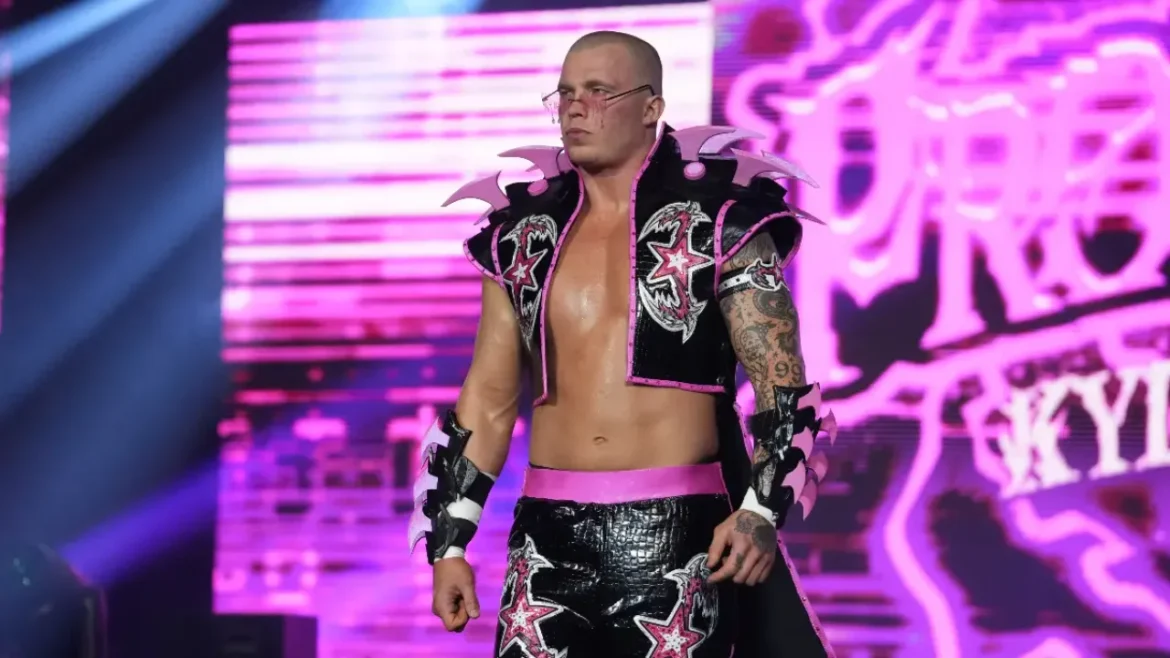
The unforgiving spotlight of professional wrestling often casts a harsh glare, illuminating not just triumphs and spectacles, but also the raw, often painful, human drama that unfolds behind the curtain and within the squared circle. Few understand this better than Kyle Fletcher, the formidable Australian competitor, who recently found himself navigating a tempest of public scrutiny and profound personal regret. His candid reflections on the events surrounding AEW’s monumental All In Texas pay-per-view in 2025, and specifically the devastating injury suffered by Adam Cole, have offered a rare glimpse into the complex emotional landscape of a wrestler grappling with an unforeseen tragedy and the heavy burden of consequence. Fletcher’s initial, terse comments, describing the day as among the most difficult of his existence, garnered attention, prompting him to offer a more nuanced and heartfelt clarification, revealing the depth of his empathy and the immense psychological toll of the incident.
The roots of this profound emotional struggle trace back to a fateful night on July 10, 2025, during an episode of AEW Collision. The air was thick with anticipation, as Fletcher, a rising star known for his technical prowess and hard-hitting offense, was embroiled in a high-stakes encounter. The match was not just another contest; it was a pivotal moment in the build-up to All In Texas, where Fletcher was slated to challenge Adam Cole for the prestigious TNT Championship. This was a dream scenario for Fletcher, a chance to etch his name into the annals of AEW history by capturing a coveted singles title from a universally respected veteran. However, the trajectory of that night, and indeed, the immediate future of both men’s careers, veered sharply off course. During the intense back-and-forth, a misstep, an unfortunate landing, or perhaps an unavoidable consequence of the physically demanding nature of professional wrestling, led to Adam Cole sustaining a severe injury. The specific mechanics of the incident remain largely undisclosed, but the outcome was undeniably catastrophic, sidelining Cole indefinitely and casting a long, dark shadow over the impending championship clash.
The immediate aftermath of Cole’s injury was a maelstrom of uncertainty and concern. As the weeks progressed, the wrestling world held its breath, awaiting updates on the condition of the beloved "Bay Bay." The TNT Championship match at All In Texas, once a cornerstone of the event’s card, hung in limbo. Then came the devastating confirmation: Adam Cole would be unable to compete. The grandeur of All In, envisioned as a colossal spectacle, suddenly bore a somber undertone for many. While the show undoubtedly went on, the absence of one of its marquee talents, particularly under such heartbreaking circumstances, was palpable. It was at this monumental event, held in the vastness of a Texas stadium, that Adam Cole himself addressed the fervent crowd. His appearance was emotionally charged, a raw and vulnerable moment where he spoke candidly about his injury. In a moment that sent chills down the spines of fans worldwide, Cole alluded to the grim possibility of retirement, his voice thick with emotion, his eyes conveying a struggle far greater than any in-ring battle. He has not stepped foot in a wrestling ring as a competitor since that poignant night.
For Kyle Fletcher, the impact of Cole’s injury and subsequent revelation transcended the professional disappointment of a forfeited championship opportunity. He had gone into the Collision match with the singular focus of proving himself against one of the industry’s best, only for it to culminate in an outcome that no competitor ever desires. In a subsequent interview with Soundscape Magazine, Fletcher, reflecting on the tumultuous period, characterized All In Texas as "one of the worst days of my life." This stark declaration, while seemingly focused on his personal experience, inadvertently sparked discussion and, for some, raised questions about the empathy of a competitor whose opponent’s career hung by a thread. The wrestling community, ever attuned to the nuances of performer statements, began to dissect the phrasing, prompting Fletcher to later seek a platform to elaborate on his true sentiments.
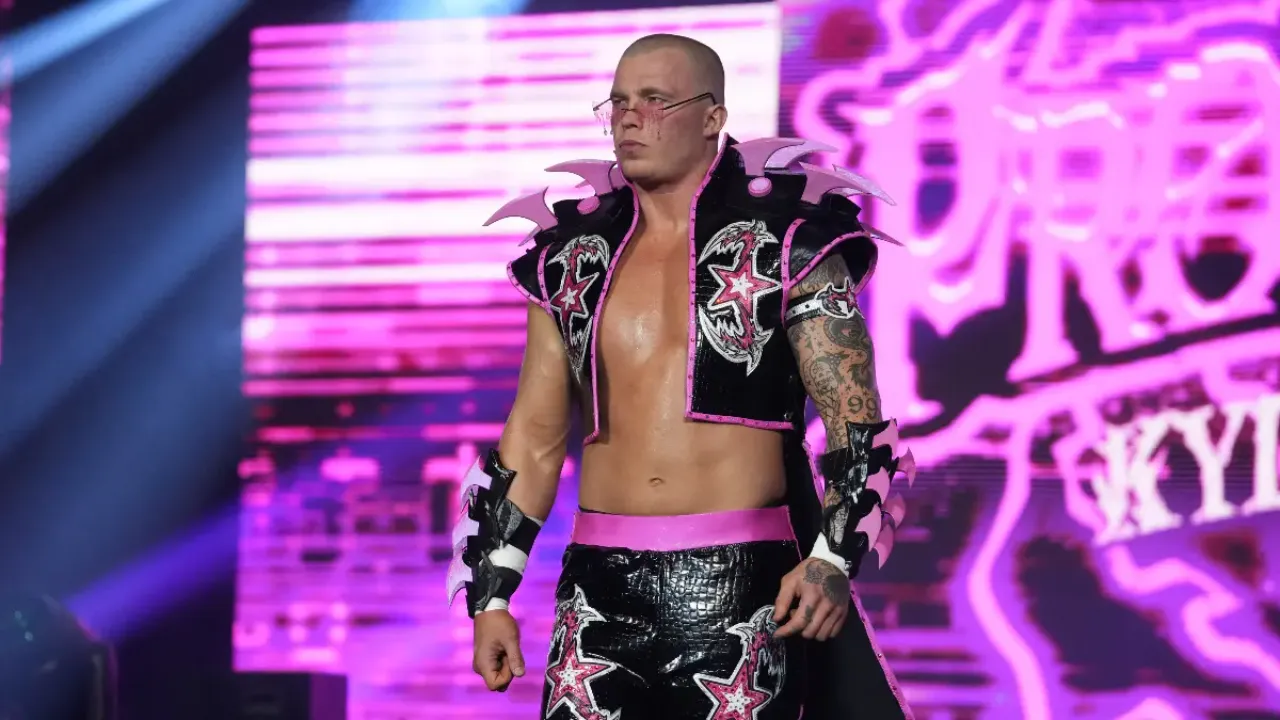
In a recent interview published by Adrian Hernandez, Fletcher took the opportunity to address his previous remarks head-on, offering a detailed and emotionally resonant clarification. He expressed profound regret over the original choice of words, acknowledging that they might have been perceived as "insensitive" given the gravity of Adam Cole’s situation. Fletcher conveyed a deep sense of remorse, stating unequivocally that he was "very upset with myself for the way I worded it," and extended an apology for the "words that I used." This public act of contrition was not merely a damage control exercise; it was an earnest attempt to convey the genuine empathy and internal conflict he had been experiencing.
Fletcher meticulously explained the mental framework he adopted when discussing the incident. He revealed that his primary intention, when questioned about that day, was to avoid usurping Adam Cole’s narrative. The story of Cole’s injury, his recovery, and his potential return or retirement, Fletcher firmly believes, belongs solely to Cole. He resisted the temptation, common in the wrestling world, to exploit such a real-life tragedy for storyline purposes. "I never want to talk about somebody else’s story," Fletcher articulated, emphasizing that "that whole situation, a lot of it is Adam’s story to tell." This professional courtesy and respect for a fellow performer’s journey speak volumes about Fletcher’s character, particularly in an industry often characterized by the aggressive appropriation of real-life events for dramatic effect. He recounted how he had been advised by others to leverage Cole’s injury in promos, to use it to generate "heat" as a villainous character. Yet, he consistently felt an inherent discomfort with such a proposition, admitting, "I never felt good about that, so I’ve tried my best to stay away from talking about it."
Delving deeper into the reasons behind his initial "worst days" remark, Fletcher painted a vivid picture of the emotional turmoil he endured. His personal anguish stemmed not from the loss of a championship opportunity, but from the agonizing spectacle of witnessing a colleague, a man he deeply admired and looked up to, confront such a devastating career setback. He recounted the harrowing experience of watching Cole stand in the ring at All In Texas, tears streaming down his face, openly contemplating an end to his illustrious career. "I had to watch someone that I admire very much and I look up to stand in the ring and cry and basically say that he might never wrestle again," Fletcher confessed, his words heavy with the weight of that memory.
The immediate follow-up to this heart-wrenching scene was Fletcher’s own obligation to perform. He had to walk out into that same arena, into the same spotlight, with the crushing realization that he might have been responsible for Cole’s predicament. The knowledge that "everybody in the arena knew it was my fault" created an almost unbearable headspace, a suffocating mixture of guilt, responsibility, and the profound pressure to deliver a performance despite his internal turmoil. This confluence of factors, the public spectacle of Cole’s pain intertwined with his own perceived culpability, is what truly made All In Texas such an agonizing day for Fletcher. It was a day where the line between professional duty and personal anguish blurred irrevocably.
Despite the profound emotional impact on him, Fletcher maintains a clear perspective on the hierarchy of suffering. He firmly believes that his own feelings, however intense, pale in comparison to the immense physical, emotional, and professional ordeal Adam Cole has been enduring. "I really don’t feel like I have the right to complain about any of it because what Adam is going through and has gone through, my feelings pale in comparison to it," he stated, showcasing a humility and empathy that resonated deeply. This acknowledgement underscores a fundamental truth in professional wrestling: while injuries are an unfortunate byproduct of the business, the mental burden on the performer who is perceived to be responsible can be nearly as crippling as the physical trauma itself.

The career trajectory of Adam Cole, a perennial main eventer across multiple promotions, adds significant gravity to Fletcher’s remorse. Cole’s history is marked by incredible highs – championship reigns, iconic factions, and unforgettable matches – but also by periods of severe injury. His previous battles with concussions, which sidelined him for an extended period prior to his return to AEW, highlight his resilience and dedication. To see him once again face a potentially career-ending injury, especially after such a hard-fought comeback, amplifies the tragedy. For Fletcher, an aspiring top-tier talent, the thought of being even indirectly involved in ending such a storied career would be a heavy cross to bear. Cole is not just another competitor; he is a respected figure, a mentor to many, and a benchmark for excellence.
For Kyle Fletcher, this incident represents a crucible moment. As a relatively younger talent in AEW, he is navigating the complex landscape of a major wrestling promotion, striving to establish his identity and climb the ranks. His partnership with Mark Davis as Aussie Open, and their subsequent inclusion in the Undisputed Kingdom, had positioned him for significant opportunities. The TNT Championship match was supposed to be a breakout moment for him as a singles competitor. Instead, it became a moment defined by unforeseen adversity and profound personal introspection. How this experience will shape his character, both in and out of the ring, remains to be seen. While he has admirably chosen not to exploit Cole’s injury for storyline purposes, the real-life weight of the situation will undoubtedly inform his future performances, lending a layer of gravitas and realism to his persona.
The wrestling industry, for all its dazzling spectacle and larger-than-life characters, is fundamentally a human endeavor. Performers push their bodies to their limits, blurring the lines between athletic performance and theatrical narrative. Injuries, though never intentional, are an inherent risk. What Fletcher’s candid confession brings to light is the often-overlooked psychological aftermath of such incidents. It’s not just about the physical recovery of the injured party; it’s also about the mental and emotional burden carried by those involved, particularly when the injury occurs during a competitive encounter. The pressure to "keep kayfabe," to maintain a character, often clashes with the raw, unfiltered emotions of real-life events. Fletcher’s struggle to reconcile his personal feelings with the expectations of his profession underscores this delicate balance.
As the wrestling world continues to await news on Adam Cole’s potential return, the shadow of All In Texas 2025 lingers. For Kyle Fletcher, the memory of that day, and the profound empathy he feels for his injured colleague, will undoubtedly remain a defining moment in his career. His willingness to express vulnerability, to apologize for perceived insensitivity, and to articulate the genuine pain he experienced, offers a compelling testament to the human element at the heart of professional wrestling. It serves as a powerful reminder that beneath the bravado and the athletic prowess, wrestlers are individuals navigating complex emotions, grappling not just with opponents in the ring, but with the unforeseen consequences and moral dilemmas that inevitably arise in a high-impact, high-stakes profession. The story of Adam Cole’s injury is his to tell, but the indelible mark it left on Kyle Fletcher’s conscience is a testament to the profound interconnectedness of every performer within the intricate tapestry of the squared circle.