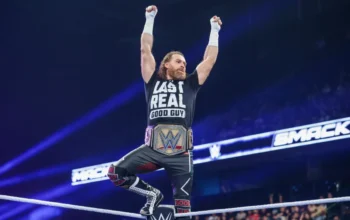
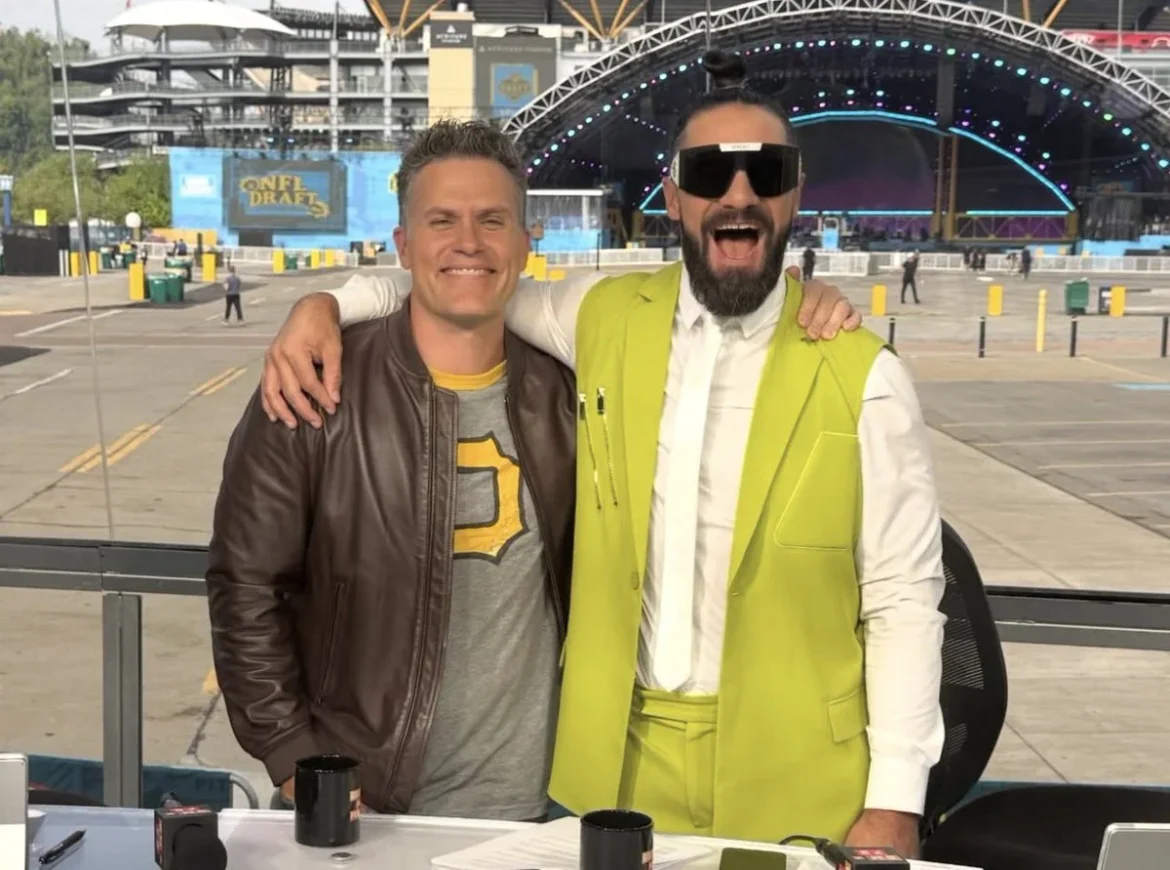
The digital ether crackled with bewilderment and outrage on April 23rd, as clips of WWE superstar Seth "Freakin’" Rollins abruptly departing the set of NFL Network’s Good Morning Football proliferated across social media. What initially appeared to be a genuine, unscripted moment of professional tension between Rollins and GMFB co-host Kyle Brandt quickly became the day’s most talked-about sports entertainment incident, igniting fervent debate among wrestling aficionados and casual viewers alike. The visual was striking: a visibly agitated Rollins, clad in his signature flamboyant attire, taking umbrage with Brandt’s pointed remarks about professional wrestling’s "pre-determined" nature and a personal jab concerning his wife, Becky Lynch. He rose, removed his microphone, and exited the frame, leaving Brandt and the other hosts in a palpable, albeit performative, state of discomfort. For a fleeting 24 hours, the internet dissected every nuance, questioning the authenticity of the exchange and speculating on the implications for both Rollins and WWE’s relationship with mainstream media. However, the true masterstroke, a classic "work" orchestrated with precision and a keen understanding of the modern media landscape, was revealed the very next day, pulling back the curtain on a carefully constructed narrative designed to capture eyeballs and remind everyone of wrestling’s enduring power of illusion.
The drama unfolded with cinematic flair. Brandt, known for his high-octane energy and theatrical delivery, initiated the verbal volley with a series of provocations directed at Rollins. He playfully, yet pointedly, questioned the legitimacy of professional wrestling, a well-worn trope that often riles talent. But it was the seemingly innocuous comment about Rollins’ wife, the esteemed "The Man" Becky Lynch, suggesting she was the true breadwinner or the more dominant figure in their household, that appeared to push Rollins over the edge. The "Visionary" persona, known for its volatile confidence and grandiosity, seemed to shatter under the weight of these perceived insults. His facial expressions transitioned from feigned amusement to genuine fury, culminating in the dramatic mic drop and subsequent exit. The segment ended with an awkward silence, leaving viewers to ponder if a real-life confrontation had just spilled onto live television. The immediate aftermath was precisely what Brandt and Rollins had likely hoped for: an explosion of online discussion, with clips being shared, analyzed, and debated across every platform, far eclipsing the usual NFL Draft chatter that might otherwise dominate the sports media cycle.
The following morning, the curtain was drawn back on the elaborate ruse during Good Morning Football. Rollins returned to the set, not with an apology or a continuation of the previous day’s animosity, but with a grin that betrayed his true intentions. Alongside a triumphant Kyle Brandt, he confessed that the entire explosive interaction had been a meticulously planned "work," a term in professional wrestling used to describe a staged event designed to appear genuine. Brandt, beaming, proudly claimed authorship of the idea, revealing that the two had conspired to execute the deception without informing their fellow GMFB co-hosts, Jamie Erdahl and Manti Te’o, leaving them genuinely surprised by Rollins’ "storm-off." The revelation added another layer to the performance, highlighting the commitment of both men to selling the illusion. Rollins even recounted receiving a call from a high-ranking executive within WWE or TKO Group Holdings, inquiring about the situation and offering to intervene if necessary, a testament to how convincingly the act was performed and how widespread the confusion had become. An NFL Hall of Famer, presumably a friend or colleague, also reportedly reached out to Brandt, curious about the on-air tension. The primary objective, as Rollins and Brandt implicitly confirmed, was to generate buzz, to "grab some eyeballs" during a period when the NFL Draft dominated the sporting conversation, demonstrating a shrewd understanding of cross-promotional marketing and viral content creation.
Seth Rollins, the architect behind this particular illusion, is no stranger to such theatrical maneuvers. His entire career has been a masterclass in evolving personas and manipulating audience perception. From his early days as the cunning architect of The Shield to his controversial turn as "The Architect" who betrayed his brethren, then transitioning into the maniacal "Monday Night Messiah," and currently embracing the flamboyant, unhinged "Freakin’" Visionary, Rollins has consistently showcased a profound understanding of character work. His current persona, with its outlandish fashion, cackling laugh, and often self-aggrandizing promos, thrives on theatricality and an unpredictable edge. This makes him an ideal candidate for blurring the lines between fiction and reality, as his character is inherently designed to push boundaries and elicit strong reactions.
Indeed, this isn’t Rollins’ first foray into public deception for the sake of a storyline. Fans with long memories will recall a particularly ingenious "ruse" he executed years prior. Leading up to a significant SummerSlam event, Rollins seemingly suffered a legitimate knee injury. The wrestling world held its breath, fearing a lengthy absence for one of its top stars. However, the injury turned out to be a cleverly orchestrated fabrication, allowing Rollins to capture a major championship at the subsequent pay-per-view, amplifying the emotional impact of his victory. This historical precedent firmly establishes Rollins as a performer capable of maintaining kayfabe outside the confines of the squared circle, meticulously crafting narratives that extend beyond weekly television programming and premium live events. His commitment to the bit, whether it’s feigning an injury or storming off a talk show set, underscores his status as one of professional wrestling’s most compelling and dedicated performers.
Kyle Brandt, the other principal player in this GMFB saga, provided the perfect foil and catalyst. As a long-time host of Good Morning Football, Brandt has cultivated a reputation for his high-energy, often over-the-top, and highly opinionated broadcasting style. He brings a unique blend of sports knowledge and entertainment sensibility to the program, often engaging in playful theatrics and passionate debates. Crucially, Brandt is also a well-known and vocal fan of professional wrestling, frequently incorporating wrestling references and discussions into the show. This genuine fandom makes his participation in such a "work" incredibly believable. His knowledge of wrestling vernacular and history allows him to deliver the specific, pointed jabs that would realistically provoke a wrestling personality like Rollins. The synergy between Brandt’s animated on-air persona and Rollins’ theatrical character created a fertile ground for their planned deception.
The choice of Good Morning Football as the stage for this spectacle was also strategic. NFL Network, a prominent sports media entity, offers a massive, largely mainstream audience that might not regularly tune into WWE programming. By creating a viral moment on GMFB, Rollins and WWE effectively leveraged Brandt’s platform to reach new demographics and pique the interest of casual sports fans. The timing, coinciding with the eve of the NFL Draft, was particularly astute. While the Draft is a major event for football enthusiasts, it also represents a saturation point for football-related news. A dramatic, unexpected incident involving a WWE superstar on a major NFL program provided a refreshing, off-kilter narrative that stood out amidst the deluge of draft analysis, capturing attention and generating water cooler conversations across different fan bases. It was a masterclass in cross-promotional marketing, demonstrating how professional wrestling can inject itself into broader pop culture conversations with calculated theatricality.

The concept of the "work" is deeply embedded in the very fabric of professional wrestling, a fundamental principle that dates back to its carnival roots. Before the internet and widespread media scrutiny, maintaining "kayfabe"—the illusion that all characters and storylines were real—was paramount. Wrestlers lived their gimmicks, both inside and outside the ring, to preserve the suspension of disbelief for their audience. Classic "works" were often designed to generate genuine animosity, sell tickets, and create a buzz that transcended the typical sporting event. The gold standard for external "works," often cited as the pinnacle of blurring lines, remains the legendary feud between comedian Andy Kaufman and Memphis wrestling icon Jerry "The King" Lawler in the early 1980s. Kaufman, a legitimate celebrity, openly mocked wrestling and its fans, leading to a series of confrontations with Lawler that culminated in a notorious incident on Late Night with David Letterman. On that show, Kaufman deliberately provoked Lawler, who then slapped Kaufman out of his chair, creating a moment of raw, shocking television that transcended wrestling and became a pop culture phenomenon. The brilliance of the Kaufman-Lawler angle lay in its seamless integration of a mainstream personality into the wrestling world, making even seasoned observers question where the performance ended and reality began. It was audacious, groundbreaking, and wildly successful in drawing national attention to Memphis wrestling.
In the modern era, where kayfabe is largely acknowledged as a performance art, the "work" has evolved. It’s less about convincing the audience that wrestling is "real" in the traditional sense, and more about crafting narratives that play with the audience’s understanding of reality, creating moments of genuine doubt and speculation. The GMFB incident with Rollins and Brandt fits squarely into this contemporary approach. It wasn’t about deceiving fans into believing Rollins was genuinely angry about a pre-determined sport; it was about creating a compelling, viral narrative that tapped into the inherent drama of professional wrestling and leveraged the power of social media to amplify its reach. The goal was engagement, not necessarily pure belief in the reality of the conflict.
This incident also comes at a time when WWE has increasingly embraced the "worked shoot" as a storytelling device. Just prior to the Rollins-Brandt stunt, fans witnessed similar blurred-line angles involving other prominent figures. The popular Pat McAfee, for instance, has been involved in several high-profile worked-shoot scenarios within WWE, often playing off his legitimate sports broadcasting career and his genuine passion for wrestling. More recently, there was the brewing "feud" between Jey Uso and hip-hop artist Cam’ron, which began with testy podcast interviews and spilled into social media exchanges, seemingly setting the stage for a potential SummerSlam angle. While these angles aim to generate buzz, they also invite scrutiny, particularly from a sophisticated wrestling audience that has become adept at discerning genuine moments from fabricated ones.
The proliferation of these external "works" presents a fascinating dichotomy for professional wrestling. On one hand, they are undeniably effective in generating immediate media attention and drawing new eyes to the product. The Rollins-Brandt incident, by all accounts, successfully created a viral moment that transcended the wrestling bubble. It showcased Rollins’ unparalleled ability as a performer and Brandt’s willingness to commit to the bit, proving that wrestling’s unique brand of theatricality can still capture mainstream imagination. Such stunts can serve as powerful cross-promotional tools, introducing WWE talent and storylines to audiences who might not otherwise engage with wrestling content. In a crowded entertainment landscape, standing out and creating memorable, shareable moments is invaluable.
However, there’s a delicate balance to strike, and an increasing number of these "works" can lead to what some veteran observers call "diminishing returns." The original article hinted at this concern, suggesting that if every external interaction becomes a "work," the impact of any single one lessens. When audiences become conditioned to expect a "reveal" after every public altercation involving a wrestler, the ability to genuinely surprise or shock them diminishes. The suspension of disbelief, while different in modern wrestling than in the kayfabe era, still plays a crucial role. If the line between fact and fiction becomes too blurred, or if the audience feels constantly manipulated, there’s a risk of alienating those who appreciate the narrative structure of wrestling rather than just the viral moments. The commentary referencing Phil Schneider and David Shoemaker’s point about the Andy Kaufman work succeeding because it wasn’t happening alongside multiple other similar angles simultaneously is particularly salient here. Too many "works" might dilute the potency of each individual deception, turning genuine public interest into jaded skepticism.
Furthermore, there’s the nuanced argument about how such widespread blurring of lines impacts the perception of professional wrestling itself. While some argue it elevates wrestling by proving its performers are dedicated actors capable of intricate storytelling, others worry it might reinforce the very stereotype Brandt initially invoked: that wrestling is "fake" and merely a pre-determined spectacle. For die-hard fans, the acknowledgment of wrestling as a performance art is well-established, but for casual viewers, a constant stream of "it was all a work" reveals might prevent them from investing emotionally in the characters and storylines. The magic of professional wrestling has always been its ability to make you feel the emotion, regardless of whether you intellectually understand its staged nature. Over-explanation or too many "reveals" risk stripping away that emotional investment.
Ultimately, the Seth Rollins and Kyle Brandt GMFB incident stands as a compelling case study in modern wrestling’s evolving relationship with reality and media. It was undeniably a successful maneuver in its immediate goal: generating massive buzz, creating a viral moment, and showcasing the talent and commitment of both individuals involved. Rollins once again demonstrated his mastery of character and his willingness to go the extra mile to sell a story, while Brandt proved to be a natural collaborator in wrestling’s unique brand of theatrical deception. Yet, as the industry continues to navigate the treacherous waters of authenticity in an era of constant scrutiny and social media amplification, the question remains: how many times can the trick be pulled before the audience stops being amazed, or worse, stops caring altogether? For now, the "Visionary" continues to see the future, and it appears to be one filled with even more elaborately crafted illusions.