The grand spectacle of WrestleMania, World Wrestling Entertainment’s flagship annual event, typically conjures images of electrifying matches, iconic moments, and a global celebration of sports entertainment. Yet, beneath the dazzling lights and fervent roar of the crowd at WrestleMania 42 in Allegiant Stadium, a subtle undercurrent of tension simmered, manifesting in two seemingly disparate incidents that collectively illuminate the complex relationship between a colossal media empire, traditional journalism, and the burgeoning world of independent digital content creation. The ejection of a prominent online influencer, known for his unique brand of venue exploration, and the alleged denial of credentials to a respected ESPN journalist, both without clear public explanation, have sparked considerable discussion within the wrestling community, prompting a closer examination of WWE’s evolving strategies for managing its public image and controlling its narrative in an increasingly fragmented media landscape.
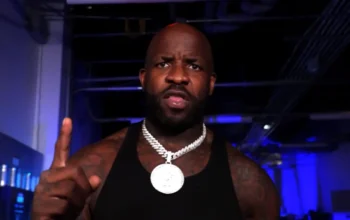
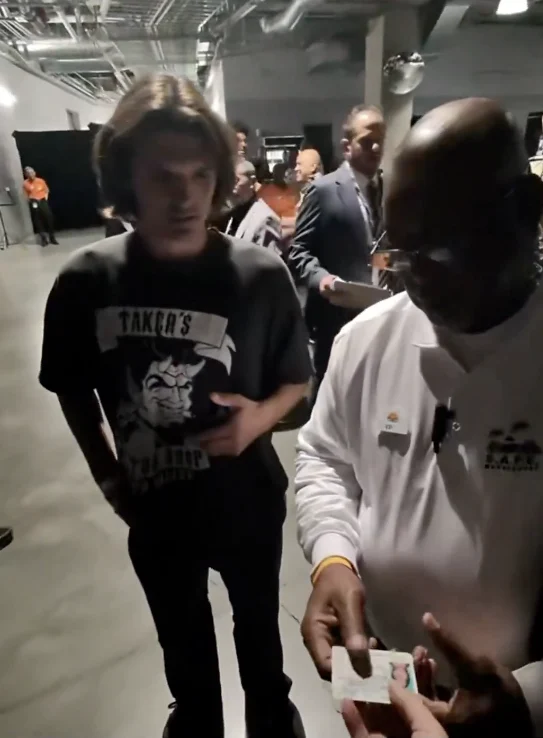
One of the more visible controversies unfolded on the opening night of WrestleMania 42, when content creator GFed, widely recognized by his online handle "gfedgocrazy," was escorted out of Allegiant Stadium. GFed has carved out a niche for himself by producing videos that document his extended stays and attempts to access various sections of major sports arenas and entertainment venues, often billing himself as "The Internet’s Stadium Tour Guide." His online presence, spanning YouTube, Instagram, Twitter, and TikTok, commands a substantial following exceeding 700,000 subscribers and followers, a testament to the popularity of his unique brand of adventurous, behind-the-scenes content. He even famously boasts of being "banned from NFL" events, an acknowledgment of the often-transgressive nature of his content, which frequently tests the boundaries of venue security and access protocols.
On April 19, the first night of WrestleMania 42, GFed and an associate, having purchased legitimate floor seats for several hundred dollars, gained entry to Allegiant Stadium. However, their presence was short-lived. A video shared by GFed subsequently captured the moment stadium security officials approached them in their seats, explaining that World Wrestling Entertainment’s own security team had specifically requested their removal from the premises. The stadium personnel, keen to emphasize that the decision originated solely with WWE, stated they were merely following instructions. When pressed for a reason, the security representative offered a vague allusion to "something that might have happened on social media," providing no further clarification. This lack of transparency, coupled with the refusal to issue a refund for the now-invalidated tickets, became a significant point of contention for GFed, who publicly voiced his frustration over WWE accepting payment for his attendance only to eject him without cause after he had already scanned his ticket and settled into his seat. He highlighted the apparent contradiction of a company claiming security concerns while simultaneously allowing individuals to purchase high-value tickets and publicize their attendance days in advance.
GFed’s modus operandi, which often involves seeking out and filming restricted areas or simply lingering in venues long after events conclude, naturally raises questions about compliance with venue policies and intellectual property rights. While his content is primarily focused on the physical spaces themselves, the act of unauthorized filming within a heavily produced live event like WrestleMania—an event meticulously crafted and tightly controlled for broadcast—could easily be perceived as a breach of contract by the promoting entity. WWE, a global media powerhouse, maintains stringent control over its visual content, which forms the bedrock of its multi-billion-dollar business. Every angle, every camera shot, every piece of footage is carefully managed, not just for quality but for intellectual property protection and commercial exploitation. The proliferation of fan-shot, high-quality video from within an event, particularly if it deviates from approved content or captures elements WWE prefers to keep under wraps, presents a legitimate concern for the company. This isn’t an isolated issue for WWE; the company recently reportedly fined one of its own contracted talents for filming backstage without authorization, underscoring their commitment to controlling the narrative and visual output surrounding their events, even from within their own roster.
The incident with GFed, while seemingly minor in the grand scheme of a WrestleMania weekend, points to a larger, ongoing struggle between traditional corporate entities and the decentralized, often boundary-pushing world of digital content creators. For WWE, ensuring the integrity of its live production and protecting its valuable intellectual property is paramount, especially when billions are at stake in media rights deals. For creators like GFed, pushing the limits of access and documenting unique perspectives is the essence of their brand and business model. The friction arises when these two objectives collide. The lack of a clear, publicly stated reason for GFed’s ejection, beyond the cryptic reference to "social media," allowed for speculation and fueled a narrative of corporate overreach and a disregard for paying customers, particularly among segments of the fanbase already critical of WWE’s increasingly corporate image under TKO Group Holdings.
This individual incident, however, cannot be viewed in isolation. It occurred against a backdrop of wider speculation regarding WWE’s relationship with its major media partners, specifically ESPN, a relationship that has come under scrutiny in recent months. Less than a year into a monumental five-year, $1.6 billion media rights deal between WWE (now part of TKO Group Holdings) and ESPN (a division of Disney), signs of potential friction have reportedly emerged. This massive agreement, which sees WWE’s premium live events broadcast exclusively on ESPN+, represents a cornerstone of WWE’s financial strategy and a significant investment for ESPN. Such a deal underscores the immense value placed on WWE’s content and live events within the broader sports and entertainment landscape.
Central to this speculation has been the experience of Andreas Hale, a highly respected journalist for ESPN known for his insightful coverage of combat sports, including professional wrestling. Earlier reports indicated that WWE had expressed dissatisfaction with Hale’s review of Wrestlepalooza, an event that occurred shortly after the ESPN partnership commenced. Hale’s review, which included a critical "grade" for the event, allegedly prompted pressure from WWE on their new media partner to discontinue the practice of grading future WWE premium live events in his coverage. This alleged intervention, if true, suggested an unusual level of sensitivity from WWE towards critical journalism, particularly coming from a partner as significant as ESPN.
The situation escalated when Andreas Hale himself reportedly encountered issues securing credentials or entry to WrestleMania 42, the very event where GFed was ejected. Hale’s social media posts detailing these difficulties added another layer to the ongoing narrative, suggesting a potential pattern of perceived retaliatory actions by WWE against critical voices, even those operating within their primary media ecosystem. While the exact reasons for Hale’s credential issues were not publicly detailed by either party, the timing and context immediately drew parallels to the earlier Wrestlepalooza controversy. For a major sports journalism outlet like ESPN to potentially face hurdles in covering a key partner’s flagship event raises significant questions about editorial independence and the boundaries of corporate influence over media coverage.
The confluence of these two incidents—the ejection of GFed and the alleged credentialing issues faced by Andreas Hale—paints a picture of a company increasingly focused on controlling its image and narrative, perhaps even at the expense of potential public relations missteps. In the case of GFed, while his methods may be unconventional and sometimes challenge established norms, the decision to eject a paying customer without a clear, stated reason and without offering a refund carries a risk of alienating segments of the fanbase. Many fans, particularly in the digital age, appreciate transparency and direct communication from their favorite promotions. The perception of arbitrary enforcement or a lack of accountability can breed cynicism and contribute to a broader narrative of corporate detachment.
Similarly, the reported friction with ESPN’s Andreas Hale touches upon a more fundamental tension between journalism and public relations. In a multi-billion-dollar partnership, both parties have vested interests. ESPN wants to provide comprehensive and credible coverage to its audience, which often includes critical analysis. WWE, conversely, desires positive exposure and a narrative that aligns with its brand objectives. When a journalist’s critical assessment is perceived as detrimental, the line between constructive feedback and unwanted negativity can become blurred, especially for a company as brand-conscious as WWE. The alleged pressure on ESPN regarding Hale’s grading system, and subsequently his reported difficulties with WrestleMania 42 credentials, suggests a strong desire by WWE to shape how its product is perceived, even from within the established sports media framework. This approach, while understandable from a business perspective, risks undermining the credibility of the very journalism that helps legitimize professional wrestling as a mainstream sport.
The implications of these events extend beyond the individual circumstances of GFed and Andreas Hale. They reflect broader shifts in the media landscape and the evolving relationship between major entertainment properties and their audience. The rise of independent content creators like GFed means that the traditional gatekeepers of media no longer hold exclusive sway over information dissemination. Fans now engage with wrestling through a myriad of channels, from official broadcasts to social media clips, fan podcasts, and influencer-driven content. For WWE, navigating this complex ecosystem requires a delicate balance: protecting its core intellectual property and brand image while also embracing the organic, often raw, enthusiasm generated by its diverse fanbase and content creators. Alienating influential figures, whether traditional journalists or digital influencers, can have ripple effects, potentially dampening enthusiasm or fostering negative sentiment among their respective audiences.
Furthermore, these incidents highlight the inherent power dynamics at play. WWE, as a dominant force in sports entertainment and now part of the formidable TKO Group Holdings, wields significant influence. Its decisions regarding access, credentials, and content control carry substantial weight, not just for individuals but for broader media relations. When such decisions are perceived as arbitrary or punitive, they can generate headlines that detract from the primary focus of the event itself—the wrestling. For a company that thrives on controlling its narrative, allowing these external stories to gain traction can be counterproductive, particularly when the explanations provided are sparse or non-existent.
The WrestleMania 42 weekend, an event designed to showcase the pinnacle of professional wrestling, inadvertently became a microcosm for these larger tensions. The spectacle of Cody Rhodes finally "finishing the story" or Logan Paul engaging in celebrity antics with IShowSpeed in the opening match was undeniably the main draw. Yet, the off-camera drama surrounding GFed’s ejection and Andreas Hale’s alleged credential issues injected a different kind of narrative into the wrestling bubble—one that questioned the boundaries of access, the nature of media independence, and the extent of corporate control. These incidents, though perhaps minor in the grand tapestry of WrestleMania, served as stark reminders that even in the most meticulously produced live events, unforeseen frictions can emerge, revealing the intricate and sometimes uneasy relationships that define the modern sports entertainment industry.
Ultimately, the lack of transparency surrounding both situations leaves many questions unanswered. Why was GFed specifically targeted after gaining entry? What exactly constituted the "social media" issue? What were the precise reasons for Andreas Hale’s credentialing difficulties, if any? Without clear explanations from WWE, the vacuum is inevitably filled with speculation, fueling narratives that may not always align with the company’s best interests. In an era where information travels at lightning speed and public perception can be shaped by a single viral post, the manner in which major entities like WWE manage these delicate situations becomes increasingly crucial. The incidents at WrestleMania 42, therefore, stand as potent case studies in the ongoing challenge of balancing corporate control, media relations, and fan engagement in the ever-evolving landscape of sports and entertainment.