
The landscape of professional wrestling is often defined by its ability to stir deep emotional responses from its global audience, but the most recent installment of the iconic Saturday Night’s Main Event seems to have touched a particularly sensitive nerve. When the cameras rolled on May 23, 2026, the atmosphere was electric with the anticipation of a generational clash between the established cornerstone of the women’s division, Becky Lynch, and the rapidly ascending athletic marvel, Sol Ruca. However, what was expected to be a showcase of technical prowess and competitive spirit instead devolved into a whirlwind of controversy that has left the digital wrestling community in a state of absolute uproar. The fallout from this encounter has transcended the typical post-show chatter, evolving into a broader debate about the creative direction of the Women’s Intercontinental Championship and the narrative choices made by the current administration.
The tension began long before the opening bell. Since the introduction of the Women’s Intercontinental Championship, Becky Lynch has carried the title with a mixture of veteran pride and an increasingly paranoid edge. Her reign has been characterized by a willingness to do whatever is necessary to remain at the summit, a trait that was on full display during this non-title affair. On the other side of the ring stood Sol Ruca, a performer whose transition from the developmental ranks to the main roster has been nothing short of meteoric. Known for her gravity-defying maneuvers and a finishing move that has become a viral sensation, Ruca represented the most significant threat to Lynch’s psychological dominance. The stage was set for a classic encounter, yet the execution of the match left many feeling that the potential of the pairing was squandered in favor of a cheap shock.
As the match commenced, it was clear that the speed and agility of the challenger were posing significant problems for the champion. Ruca’s ability to navigate the ring with gymnastic precision forced Lynch to rely on her ring generalship and a more cynical style of offense. However, the match never truly found its rhythm, lasting less than five minutes before the chaotic conclusion unfolded. The brevity of the contest was the first point of contention for many viewers who had tuned in specifically to see these two athletes compete at a high level. In an era where "work rate" is often used as a metric for quality, a high-profile match on a major platform ending so abruptly is almost always a recipe for fan frustration. This sense of being short-changed was only amplified by the nature of the finish itself.
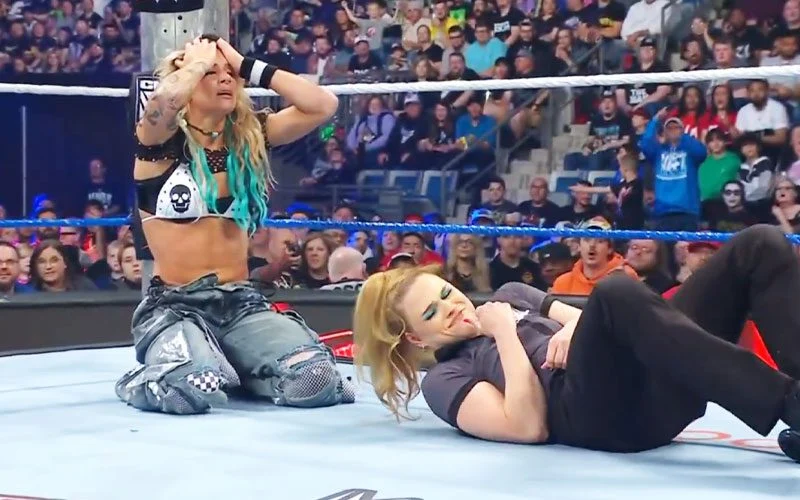
The climax of the bout saw Ruca preparing for her signature maneuver, the Sol Snatcher. This move, which requires incredible timing and athleticism as the performer springs off the ropes into a backflip cutter, is usually a guaranteed crowd-pleaser. However, as Ruca took flight, Lynch demonstrated the darker side of her veteran experience. In a moment of pure desperation, the champion grabbed the nearest person available to use as a human barrier: the referee, Jessika Carr. The result was a disaster for the officiating crew. Instead of Ruca connecting with her opponent, she inadvertently drove Carr into the canvas with the full force of her finisher. The impact was immediate and jarring, leaving the referee incapacitated and the match in a state of total disarray.
With the official unable to continue, the match was brought to a screeching halt. While Sol Ruca was technically awarded the victory via disqualification, the hollow nature of the win did little to satisfy the fans in attendance or those watching at home. The disqualification ruling felt like a procedural necessity rather than a satisfying narrative beat, leading to a wave of criticism directed at the creative team. Many observers argued that such a finish was a relic of an older era of booking that felt out of place in the modern product. The frustration was palpable on social media, where fans dissected every second of the short bout, questioning why a non-title match between two top-tier stars needed to end in such a convoluted and messy fashion.
The criticism was not limited to the finish alone. A significant portion of the audience expressed bewilderment at the decision to make the match a non-title contest in the first place. Given the prestige that WWE has attempted to build around the Women’s Intercontinental Championship, seeing the champion lose—even by disqualification—in a match where the gold was not on the line felt counterproductive to some. Critics of the booking suggested that this approach devalued the title and made the champion look weak, despite Lynch’s attempt to frame her actions as a calculated survival tactic. The backlash grew so intense that even the executive leadership of the company found themselves in the crosshairs of frustrated fans who felt the product was veering into "tone-deaf" territory.
In the aftermath of the physical confrontation, the battle shifted to the digital arena. Becky Lynch, ever the master of character work, did not shy away from the controversy. Instead, she leaned heavily into her persona, taking to social media to offer a delusional justification for her actions. Lynch’s public statements were a masterclass in gaslighting, as she attempted to paint herself as the hero of the story. She accused Jessika Carr of being intoxicated by the power of her position, suggesting that the referee had somehow forced her hand. In Lynch’s twisted logic, using the official as a shield was not an act of cowardice, but an act of protection for the fans. She claimed that the audience was actually cheering for her to stop Ruca’s "sadistic" offense, effectively trying to rewrite the history of the night to suit her own narrative.

This psychological warfare has added a layer of intrigue to the upcoming rematch, but it has not silenced the critics who feel the initial match was a waste of valuable television time. The argument from the disgruntled side of the fanbase is that the talent involved deserved a platform to tell a complete story in the ring, rather than being used as pawns for a controversial "heat-seeking" angle. For many, the joy of professional wrestling comes from the athletic competition, and when that competition is sacrificed for the sake of a convoluted storyline beat, it can lead to a sense of alienation among the core audience.
Despite the heavy criticism, there is a clear goal in sight for the WWE creative team. The chaos at Saturday Night’s Main Event was designed to bridge the gap toward the next major milestone on the calendar: Clash in Italy. Scheduled for May 31, 2026, in Turin, this international event will now feature a high-stakes rematch where the Women’s Intercontinental Championship will finally be at stake. By giving Ruca a disqualification victory, the company has provided her with a legitimate claim to a title shot, ensuring that the rivalry continues with a renewed sense of urgency. The hope is likely that the quality of the championship match in Italy will overshadow the disappointment of the encounter in May, but the bridge to get there has been anything but smooth.
The role of Jessika Carr in this narrative also warrants discussion. As one of the most prominent and respected officials in the industry, her involvement in the finish adds a layer of "realism" to the drama. However, by making the referee a central figure in the physical outcome of the match, the company risks overshadowing the athletes themselves. The "ref bump" is a classic trope in the wrestling business, but its frequency and execution can often lead to diminishing returns. In this instance, the sheer spectacle of a referee taking a move as impactful as the Sol Snatcher was enough to spark conversation, but it also served as a distraction from what should have been a breakout moment for Sol Ruca.
Ruca herself finds herself in a precarious position. While she is being positioned as a top-tier babyface challenger to Lynch’s throne, the nature of her "win" at Saturday Night’s Main Event did little to build her momentum in the eyes of some fans. Winning by disqualification after accidentally taking out a referee is a difficult outcome to celebrate. However, her performance prior to the finish showed glimpses of why the office has such high hopes for her future. Her poise and physical presence suggested that she belongs on the big stage, even if the booking of her first major televised encounter with a legend like Lynch was flawed.
As the road to Turin continues, the pressure is on both performers to deliver a match that justifies the controversial buildup. The international audience in Italy will be expecting a spectacle, and the shadow of the May 23 incident will loom large over the proceedings. For Becky Lynch, the challenge will be to maintain her status as the premier heel in the division while proving that she can still go the distance in a high-pressure title defense. For Sol Ruca, the goal is even more significant: she must prove that she is more than just a highlight reel and that she has the grit to overcome the veteran tricks of a champion who has seen and done it all.
The broader conversation about this match also touches on the philosophy of modern wrestling television. With so many hours of content to fill across various platforms, the temptation to use "non-finishes" to extend feuds is constant. However, the visceral reaction to the Lynch vs. Ruca finish serves as a reminder that the audience still craves definitive endings and meaningful competition. When a match is hyped as a major event, the expectation is that it will deliver a satisfying conclusion, regardless of whether it serves a larger storyline purpose. The "waste of time" sentiment expressed by many fans is a reflection of a desire for the product to respect the investment of the viewer.
Ultimately, the controversy surrounding Saturday Night’s Main Event is a testament to the passion of the wrestling fanbase. While the anger is real, it is also a sign that people are deeply invested in the characters and the stakes involved. If the fans didn’t care about Sol Ruca’s ascent or Becky Lynch’s title reign, the reaction would be one of apathy rather than fury. As the company moves toward Clash in Italy, the creative team has the opportunity to turn this negative energy into a positive by delivering a championship match that exceeds all expectations. Whether they can successfully navigate the fallout of the Jessika Carr incident remains to be seen, but the eyes of the wrestling world will undoubtedly be on Turin this May. The narrative arc of the Women’s Intercontinental Championship has taken a turbulent turn, but in the world of professional wrestling, sometimes the most contested paths lead to the most memorable destinations. Only time will tell if this controversial chapter was a necessary evil or a missed opportunity in the storied career of Becky Lynch and the promising future of Sol Ruca.