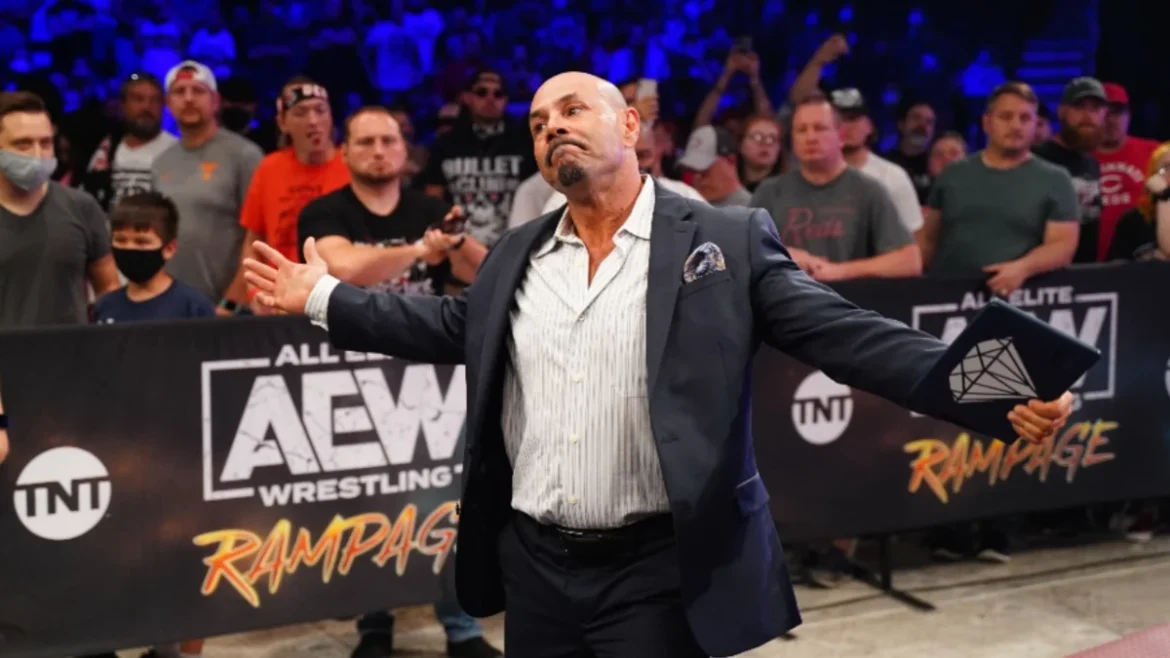
In the dynamic and often passionate world of professional wrestling, the lines between fervent support and outright animosity can blur, leading to a phenomenon commonly referred to as fan tribalism. This pervasive issue, where devotees of one promotion express disdain for another, has become a significant talking point, particularly in the age of omnipresent social media. Stepping into this contentious arena, the respected veteran of the squared circle, Chavo Guerrero, recently offered his seasoned perspective on the matter, advocating for a universal appreciation of quality wrestling, irrespective of the banner under which it is performed. His insights, shared during a conversation on the Gabby AF platform, underscored a sentiment increasingly voiced by those within the industry: that the art form itself should transcend corporate allegiances.
Chavo Guerrero, at 55 years young, brings an unparalleled depth of experience and an illustrious lineage to any discussion about the wrestling business. As a scion of the legendary Guerrero family, his roots run deep, intertwining with the very fabric of lucha libre and American professional wrestling. His career has spanned decades and continents, featuring prominent runs in World Championship Wrestling (WCW), World Wrestling Entertainment (WWE), Total Nonstop Action (TNA), Lucha Underground, and various independent promotions, cementing his reputation as a versatile and skilled performer. Currently serving as a producer for Lucha Libre AAA Worldwide, Guerrero’s vantage point is unique; he has witnessed the evolution of the industry from multiple angles, both as an active competitor and now as an influential figure behind the scenes, giving his commentary on fan dynamics considerable weight and credibility.
Guerrero’s core argument is disarmingly simple yet profoundly impactful: "wrestling’s wrestling." He expressed bewilderment at the rationale behind fans criticizing talent or matches solely because they belong to a rival brand. For him, the quality of a bout is paramount, overriding any promotional loyalties. Whether a match unfolds under the bright lights of WWE, in the burgeoning landscape of All Elite Wrestling (AEW), within the innovative confines of TNA (now IMPACT Wrestling), across the traditional canvas of New Japan Pro-Wrestling (NJPW), or amidst the high-flying spectacle of AAA, a genuinely excellent contest stands on its own merit. This perspective challenges the prevailing notion that allegiance to a single entity dictates one’s capacity to appreciate the broader spectrum of the sport.
The conversation that sparked Guerrero’s observations revolved around the tantalizing, albeit largely hypothetical, prospect of a cross-promotional dream match—specifically, a clash between the reigning WWE Champion and the AEW World Champion. Such a scenario, while generating immense excitement among a significant portion of the fanbase, immediately triggers the inherent friction of tribalism. The very idea of the two biggest American promotions collaborating seems almost impossible to some, not merely due to corporate politics and logistical hurdles, but because of the deeply entrenched divisions among their respective fanbases. This fan-driven animosity, Guerrero lamented, would likely prevent such a monumental event from ever truly being embraced universally, regardless of its potential to deliver an unforgettable spectacle.
To illustrate his point, Guerrero invoked the career trajectories of several prominent figures, highlighting how fan perception is often skewed by promotional affiliation rather than pure talent. John Cena, a man synonymous with WWE for over two decades, served as a prime example. Cena’s ascent to superstardom within WWE was meteoric, transforming him from a controversial rapper into the company’s undisputed face for an era. His unprecedented 16 world championships, his tireless work ethic, and his unparalleled connection with the younger demographic solidified his legacy as a titan of the industry. However, for a segment of fans who preferred other organizations, or even those within WWE’s own audience who yearned for a change, Cena became a lightning rod for criticism. Guerrero noted that fans of rival promotions often expressed dislike for Cena simply because he was perceived as an exclusively "WWE guy" who never ventured outside the company in his prime. This aversion, Guerrero contended, disregards the undeniable quality of many of Cena’s performances and his significant contributions to the art form. The argument often overlooks the high-profile matches Cena delivered against a diverse range of opponents, from CM Punk and Daniel Bryan to AJ Styles, all of which showcased his ability to elevate his game when the moment demanded it.
In stark contrast to Cena’s perceived insularity, Rey Mysterio’s career arc offers a different narrative that, according to Guerrero, garners him widespread adoration. Mysterio, a contemporary and frequent rival of Chavo himself, is celebrated for having competed in virtually every major wrestling promotion across the globe. His groundbreaking work in ECW and WCW introduced the American mainstream to high-flying, innovative lucha libre, forever changing the landscape of cruiserweight wrestling. His subsequent tenure in WWE saw him reach the pinnacle of the industry, capturing world championships despite his smaller stature, and captivating audiences with his unique style. Beyond WWE, Mysterio continued to ply his craft in AAA, Lucha Underground, and various independent shows, demonstrating a willingness to adapt and thrill audiences wherever he went. Guerrero posited that Mysterio’s extensive travels and appearances in diverse promotions contributed significantly to his universal appeal and the affection he receives from a broad spectrum of fans, irrespective of their primary allegiance. His journey epitomizes the idea of a performer whose talent transcends any single brand.
Bringing the discussion to the contemporary landscape, Chavo Guerrero turned his attention to Maxwell Jacob Friedman, better known as MJF, the self-proclaimed "Salt of the Earth" and a cornerstone of AEW. MJF represents the new guard, a talent who has risen to prominence almost exclusively within the AEW ecosystem. His unparalleled charisma, razor-sharp mic skills, and compelling character work have quickly established him as one of professional wrestling’s most compelling figures. Yet, Guerrero observed that some WWE loyalists might harbor a dislike for MJF simply because he is an "AEW guy." This, Guerrero argued, is an irrational stance. He stressed that MJF is "pretty damn good" and "great," urging fans not to let brand affiliation overshadow genuine talent.
It’s worth noting that the issue of tribalism, as articulated by Chavo Guerrero, primarily pertains to the fanbase. Interestingly, a counter-narrative has emerged from within the wrestling community itself, suggesting that tribalism among the wrestlers themselves is far less prevalent, if it exists at all. MJF, for instance, has publicly stated that professional respect often transcends company lines, and that performers generally appreciate good work regardless of where it’s being done. This disparity between the professional camaraderie backstage and the fervent, often toxic, divisions among fans online highlights a curious disconnect. Wrestlers, united by their shared passion for the craft and the inherent risks involved, frequently maintain friendships and professional admiration for their peers, even those signed to rival companies. They understand the grind, the sacrifice, and the dedication required to perform at an elite level, fostering a mutual respect that often eludes a segment of the audience.
The roots of wrestling fan tribalism are complex and multi-layered, evolving significantly with the advent of the internet and social media. While brand loyalty has always been a component of sports fandom, the intensity and often vitriolic nature of contemporary wrestling tribalism feel distinctly modern. During the famed "Monday Night Wars" between WWE (then WWF) and WCW in the late 1990s, fans certainly picked sides, and passionate arguments ensued. However, the discourse was largely confined to water coolers, fan conventions, and early online message boards. Today, platforms like Twitter/X, Reddit, and various wrestling forums provide an immediate, global stage for fans to express their opinions, often leading to echo chambers where extreme views are amplified and nuanced discussions are drowned out. This constant stream of online engagement, fueled by anonymous profiles and instant gratification, can transform healthy competition into bitter rivalries, not just between promotions, but among their respective supporters.

The impact of this tribalism extends beyond mere online bickering. It shapes narratives, influences perceptions, and can, in some cases, even deter potential collaborative efforts that could otherwise elevate the entire industry. The hypothetical WWE Champion vs. AEW Champion match, while a tantalizing prospect, remains a distant dream, partly because the political and business obstacles are compounded by the vocal negativity that such a venture would inevitably face from certain corners of the fanbase. While AEW has shown a willingness to engage in cross-promotional endeavors with companies like NJPW, AAA, and IMPACT Wrestling, a partnership with WWE, given its dominant market position and historical self-reliance, presents a unique set of challenges. The fan discourse surrounding such a possibility, often dominated by brand-first loyalties, only adds another layer of complexity to an already intricate negotiation.
Chavo Guerrero’s call for unity is not merely an appeal for politeness; it’s an advocacy for a more enriching experience for every wrestling fan. By limiting one’s appreciation to a single promotion, fans inadvertently deny themselves the opportunity to witness incredible athleticism, captivating storytelling, and groundbreaking innovation from across the wrestling landscape. The world of professional wrestling is vast and diverse, offering a myriad of styles, characters, and narratives. From the technical mastery of Japanese strong style to the high-flying spectacle of Mexican lucha libre, from the character-driven drama of American sports entertainment to the gritty realism of independent circuits, there is something for everyone. To close oneself off to these experiences based on a brand label is to miss out on the beauty and breadth of the art form.
Ultimately, Guerrero’s message is a plea for critical discernment over blind allegiance. He encourages fans to view wrestling through the lens of quality, skill, and entertainment value, rather than through the narrow prism of corporate branding. In an era where wrestling is experiencing a global resurgence, with multiple promotions thriving and new talent emerging constantly, fostering an environment of mutual respect and appreciation among fans is more crucial than ever. The collective energy and passion of the fanbase are vital to the industry’s continued growth and success. By celebrating good wrestling wherever it occurs, fans contribute to a healthier, more vibrant ecosystem that ultimately benefits everyone involved—the performers, the promotions, and the fans themselves. Chavo Guerrero, a man who has dedicated his life to this unique blend of sport and spectacle, is simply asking fans to remember what truly matters: a damn good match.