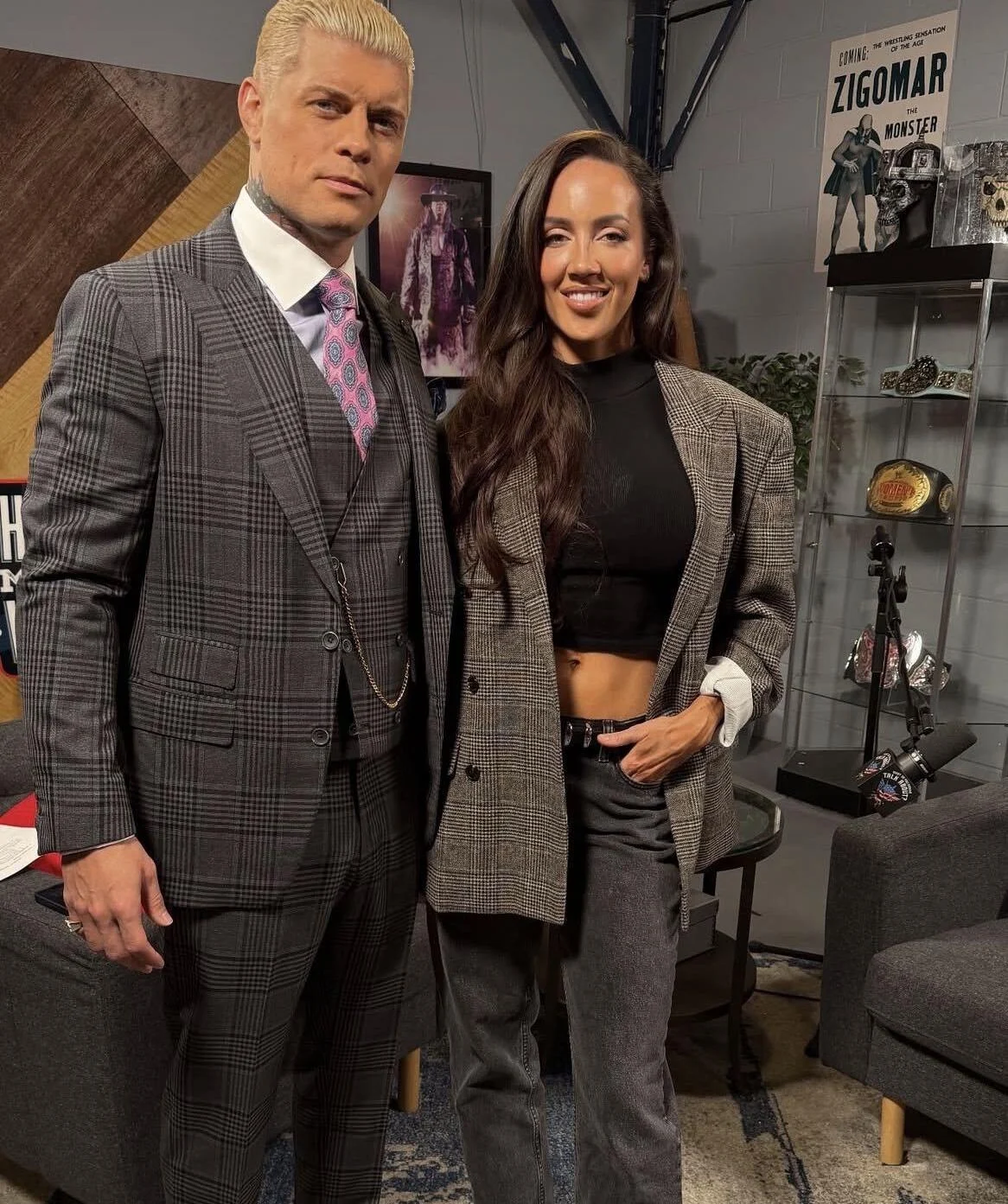
The world of professional wrestling, often characterized by its larger-than-life characters and dramatic narratives, frequently spills over into the personal lives of its stars, particularly in the age of omnipresent social media and fan interaction. While feuds and rivalries are typically confined to the squared circle, sometimes real-world injustices emerge, drawing the attention and advocacy of wrestling’s most prominent figures. Such is the case with Chelsea Green, a dynamic presence on the WWE roster, whose past distressing encounter with a prestigious New York City hotel has recently been brought back into the spotlight, championed by none other than "The American Nightmare" Cody Rhodes on his popular podcast, What Do You Wanna Talk About? This incident, deeply personal and publicly humiliating, has resurfaced as a stark reminder that even those who command global stages can be vulnerable to mistreatment, and it now carries the considerable weight of Rhodes’s influential voice demanding proper restitution.
Chelsea Green has carved out a distinct niche for herself in WWE, known for her sharp wit, her often-demanding "Karen"-esque persona, and her memorable tag team partnership with Piper Niven, which culminated in a run as Women’s Tag Team Champions. Her career journey has been a testament to resilience, having made significant impacts across various promotions before finding her current footing. From her time in Impact Wrestling, where she held the Knockouts Championship, to her multiple stints within WWE, Green has consistently demonstrated a captivating ability to connect with audiences, albeit often in a villainous capacity. Her on-screen character frequently embodies an expectation of preferential treatment and meticulous attention to detail, making the real-life situation where she was subjected to profound disrespect and a broken promise all the more poignant and ironic. The disparity between her demanding, high-status wrestling persona and the personal indignity she faced at the hands of hotel staff highlights the human element beneath the theatrical façade.
The distressing episode itself unfolded during one of professional wrestling’s most significant periods: WrestleMania 40 week in 2024. New York City, a global hub, transforms into a wrestling mecca during this time, drawing fans, media, and performers from across the globe. The city buzzes with energy, hosting numerous events, appearances, and the flagship WrestleMania itself. For WWE Superstars, it’s a week of high visibility, intense activity, and immense pride, representing the culmination of months of storylines and training. It is against this backdrop of celebration and heightened public scrutiny that Chelsea Green, alongside fellow WWE talent Maxxine Dupri, experienced an utterly unwarranted and deeply embarrassing incident at the iconic Plaza Hotel. The grandeur of the setting, a Fairmont property renowned for its luxury and history, only amplified the shock and public nature of what transpired.
According to Green’s accounts, security personnel at the Plaza Hotel, without proper cause or investigation, wrongly accused her of being a sex worker. This baseless and offensive accusation led to her and Dupri being forcibly removed from the premises. The sheer unprofessionalism and judgmental nature of the hotel staff’s actions, especially directed at a prominent public figure during such a high-profile week, are difficult to fathom. For any individual, such an accusation is profoundly insulting and degrading, but for a public figure like Green, whose image and reputation are intrinsically linked to her career, the implications are even more severe. The incident quickly transcended typical wrestling news, garnering widespread media attention as Green bravely shared her experience on social media, bringing the hotel’s egregious behavior to light for a global audience. Her decision to speak out, rather than suffer in silence, turned a personal affront into a public discourse on respect, dignity, and corporate accountability.
The immediate aftermath saw the story explode across news outlets, both within the wrestling sphere and mainstream media. The sheer audacity of the accusation and the public nature of the ejection created a firestorm. In an apparent attempt to mitigate the significant reputational damage, management representatives from the Plaza Hotel eventually reached out to Chelsea Green. They offered what seemed, on the surface, to be a generous gesture of reconciliation: a complimentary stay at any of their properties worldwide. This offer, presented as a definitive resolution, conveyed an acknowledgment of their error and a commitment to making amends for the distress caused. It provided a glimmer of hope that the hotel recognized the gravity of its mistake and was prepared to genuinely rectify the situation.
However, the promised resolution turned out to be nothing more than an illusion. As Chelsea Green revealed on Cody Rhodes’s podcast, when she later attempted to redeem the supposed "free stay," she discovered that the offer simply did not exist. The assurances given by the hotel representative, whom she initially described as "the sweetest man," proved to be hollow. This revelation adds another layer of betrayal to an already deeply unpleasant experience. Not only was she subjected to an unjust accusation and public humiliation, but she was then misled by the very institution that claimed to be seeking her forgiveness. This failure to honor a commitment, particularly one made to address a prior injustice, transforms the initial error into a pattern of disregard and deception, fueling a renewed call for accountability.
It was this lingering injustice that prompted Cody Rhodes to raise the issue on his podcast. Rhodes, currently one of WWE’s most revered figures and the reigning Undisputed WWE Champion, carries immense influence. His own narrative of "finishing the story" – a quest for championship glory that captivated millions – has cemented his status as a champion not just in the ring, but for what is right. His podcast provides a platform where he often delves into topics beyond the typical wrestling discourse, offering insights into the industry and life outside of it. When he inquired whether the situation with the Plaza Hotel had been definitively resolved, Green’s candid response about the non-existent offer clearly struck a chord with "The American Nightmare."
Rhodes, known for his integrity and his passionate advocacy, immediately took up Green’s cause. He directly addressed the hotel chain through his podcast, asserting that they owed Chelsea Green a legitimate, free stay. His insistence that the hotel group, specifically Fairmont, which operates the Plaza, must "make it right" resonates with his on-screen persona as a crusader for justice. The champion’s demand extends beyond a simple apology; it calls for tangible action that aligns with the initial promise. Green herself enthusiastically echoed Rhodes’s sentiment, emphasizing the "anywhere in the world" aspect of the original, unfulfilled offer, highlighting the scope of the reconciliation she was led to believe was hers. This collective voice, amplified by Rhodes’s platform, puts renewed pressure on the Plaza to finally deliver on its word.
The incident and its protracted, unresolved nature also touch upon broader themes within the wrestling community and public perception. Professional wrestlers, particularly female athletes, often navigate a complex landscape where their public image can be misconstrued or unfairly judged. The accusation leveled against Chelsea Green speaks to antiquated stereotypes and a disturbing lack of discernment on the part of the hotel staff. The support shown by fellow performers, initially through social media and now through Cody Rhodes’s public backing, underscores the tight-knit nature of the wrestling family. When one of their own faces injustice, the community often rallies, using its collective voice and platforms to seek redress. This communal support system is a powerful force in an industry that demands both immense physical and emotional fortitude.
Moreover, the situation serves as a critical case study in corporate responsibility and customer service, particularly for luxury establishments. A hotel like the Plaza prides itself on providing an unparalleled experience, yet this incident reveals a significant lapse in judgment, followed by a failure to genuinely correct the mistake. The initial damage control effort, while seemingly appropriate, ultimately exacerbated the problem by being disingenuous. For high-end brands, reputation is paramount, and a broken promise, especially one made to rectify a prior error, can inflict lasting harm. The spotlight now shone on the Plaza by a global superstar like Cody Rhodes ensures that this issue will not fade quietly into the background, demanding a genuine and public resolution.
Intriguingly, despite the deeply negative experience, Chelsea Green expressed a desire to revisit the Plaza Hotel. She mentioned wanting to stay there during the Christmas season, articulating a need to "make peace with it" because, at her core, she loves the iconic establishment. This sentiment adds a layer of complexity to her plea; it’s not simply about vengeance or financial compensation, but about reclaiming a positive experience from a place that once caused her profound distress. Her desire to transform a painful memory into a positive one speaks to a resilience often seen in wrestling personalities, who frequently turn real-life adversities into motivational forces. It is a testament to her character that she seeks not to condemn the hotel entirely, but to see it live up to its own standards and rectify a wrong in a way that allows her personal closure.
The unfolding narrative of Chelsea Green’s hotel ordeal, championed by Cody Rhodes, underscores several vital points. It highlights the power of advocacy, particularly when wielded by figures of significant influence. It reveals the often-unseen personal battles faced by public figures, even during celebratory periods like WrestleMania. It exposes the critical importance of corporate integrity and the devastating impact of broken promises. As the wrestling world and beyond watch closely, the ball is now firmly in the Plaza Hotel’s court. The demand from "The American Nightmare" and Chelsea Green is clear: fulfill the original promise of a free stay, anywhere in the world. It is a call for justice, not just for a wrestling superstar, but for anyone who has been wronged and deserves to see a commitment honored. The wrestling community, and indeed the broader public, eagerly awaits to see if this story, like Cody Rhodes’s own, will finally be finished with the proper resolution it deserves.