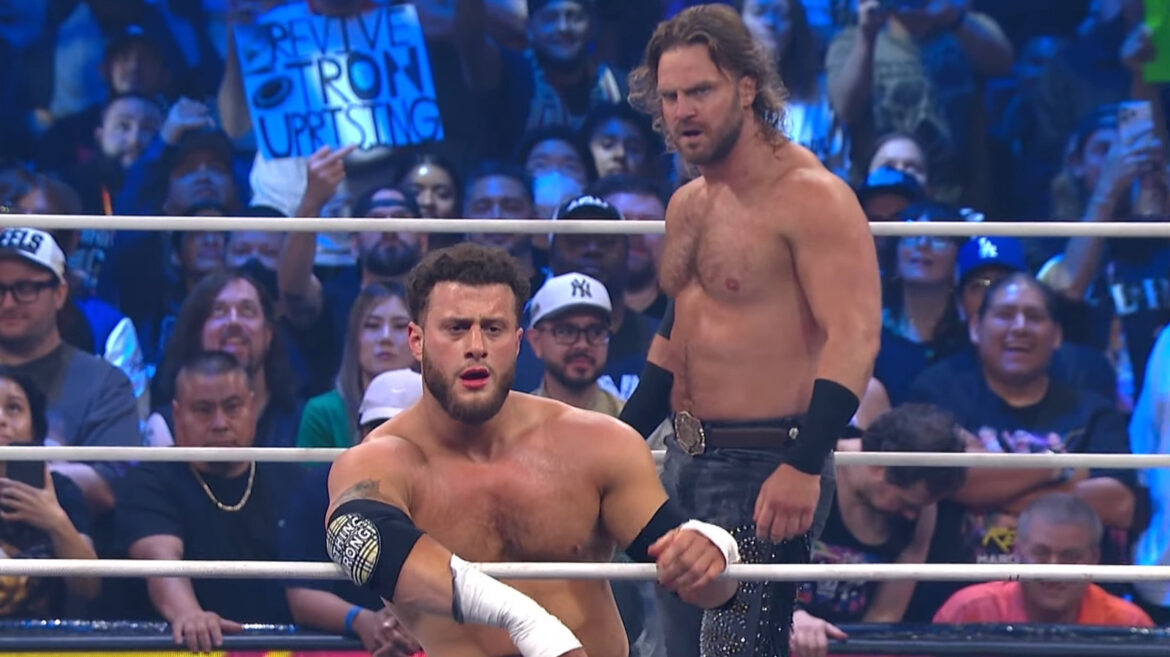
All Elite Wrestling’s annual flagship event, Revolution, once again delivered a sprawling spectacle of athleticism, drama, and the unpredictable nature that has become synonymous with the promotion. Held in the vibrant city of Los Angeles, this year’s installment, the seventh in its history, stretched well beyond the five-hour mark, offering a marathon of professional wrestling that provided both exhilarating highs and moments that left the discerning viewer questioning creative decisions. As the dust settles on a night packed with surprises and hard-hitting contests, it’s time to dissect the key takeaways from AEW Revolution 2026, examining the elements that resonated most profoundly and those that fell short of expectations, all while considering the broader landscape of AEW’s ongoing narrative.
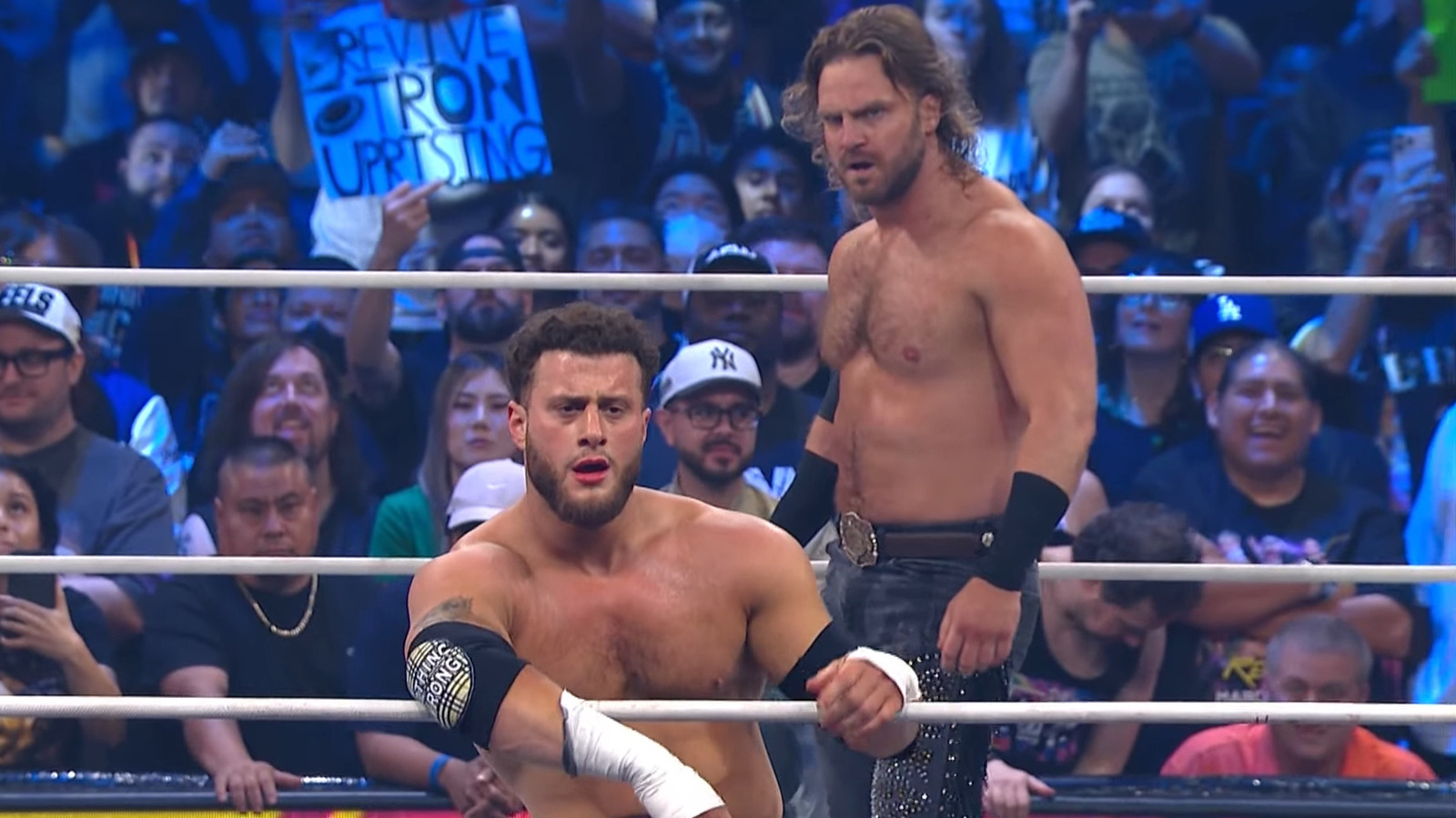
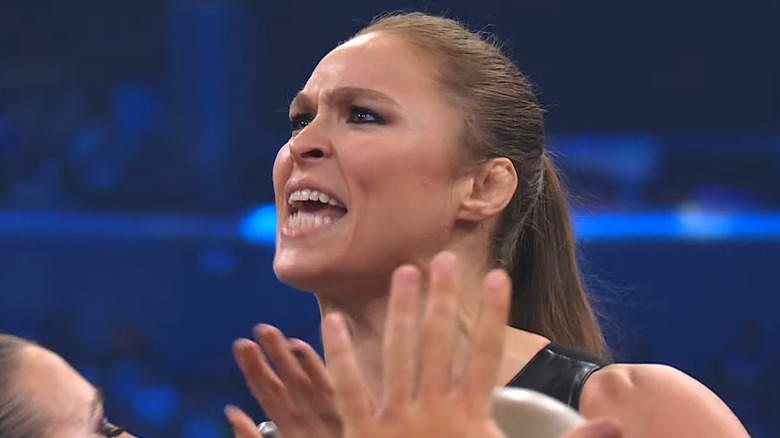
The night kicked off with a series of significant comings and goings, setting a tone of immediate impact. The return of Adam Copeland and Christian Cage to AEW was a well-received surprise, immediately inserting them into the ongoing narrative surrounding the World Tag Team Championship. Their confrontation with the reigning champions, FTR, and the recently defeated Young Bucks, who had just emerged from a grueling, blood-soaked encounter, immediately established a high-stakes dynamic. This veteran pairing, known for their extensive championship pedigrees and storied careers, felt like a natural fit to challenge the established order, and their reappearance injected a fresh surge of energy into the tag team division. Similarly, the unexpected appearance of Ronda Rousey, particularly in the lead-up to her highly publicized crossover bout on Netflix, generated significant buzz. While her presence might have been a strategic move to capitalize on her name recognition and draw mainstream attention, its long-term implications within AEW’s roster remained a point of contention. The initial reaction to her appearance, particularly her interaction with "Timeless" Toni Storm, was met with a mixed reception, leaving many to ponder the intended purpose and potential impact of her involvement beyond a fleeting promotional tie-in.
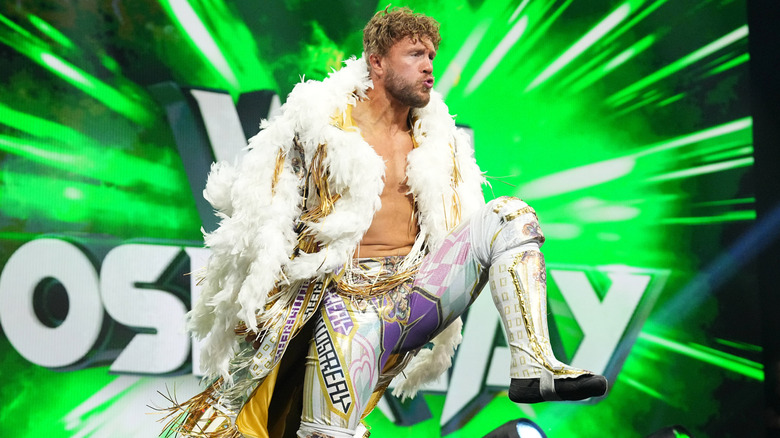
However, the undisputed highlight of the evening’s influx of talent was the thunderous return of Will Ospreay. After a tantalizing video package teaser, the "Aerial Assassin" made his grand entrance, seemingly targeting the Continental Champion, Jon Moxley, and his formidable stable, the Death Riders. The anticipation for Ospreay’s return had been building, with many speculating a return at a later date or a direct entry into the world title picture. His appearance immediately following Moxley’s successful defense created a palpable sense of excitement, promising a blockbuster clash that could define a new era for the Continental Championship. The strategic placement of these significant returns in the early part of the card ensured that Revolution began with a bang, effectively capturing the audience’s attention and setting a high bar for the remainder of the event. Even Kenny Omega’s brief reappearance, stepping in to protect Brody King from Swerve Strickland’s post-match assault, served to subtly advance an existing storyline and provided a welcome sight for fans of the former AEW World Champion. This concentrated burst of significant personnel movements undeniably amplified the overall excitement and significance of Revolution, especially after a hiatus from major AEW pay-per-view events.
Despite the electrifying returns, the segment involving Ronda Rousey and Toni Storm emerged as a notable point of contention. While the business rationale behind Rousey’s appearance, especially with her impending high-profile MMA fight on the horizon, is undeniable, its artistic integration into AEW programming felt less assured. The prospect of Rousey, whose in-ring performances have often been critiqued for relying heavily on her established reputation rather than consistent in-ring excellence, becoming a focal point, particularly in the lead-up to a scheduled "Dynamite" encounter between Storm and Marina Shafir, raised concerns. Furthermore, Rousey’s public statements on various issues have, at times, alienated a portion of the fanbase. While her name undeniably carries significant drawing power and promises to generate valuable media attention for AEW, the concern is that her involvement might not translate into the high-quality storytelling or consistently compelling match performances that have become hallmarks of AEW’s premier events. The hope remains that she will prove these reservations unfounded and elevate the existing narratives, but the initial impression left a degree of apprehension.
Conversely, the Continental Championship bout between Jon Moxley and Konosuke Takeshita stood out as a masterclass in professional wrestling. Moxley, a perennial powerhouse, once again demonstrated why he remains one of the most formidable forces in the industry. Takeshita, a rising star whose potential has been evident for some time, proved to be an ideal adversary, pushing Moxley to his absolute limits. The narrative of this match was intricately built, stemming from Moxley’s somewhat serendipitous path to winning the Continental Classic, which included surprising victories and previous draws, most notably against Takeshita himself. The stipulation of a no-time-limit encounter for their Revolution clash amplified the stakes, promising an extended battle where both competitors would leave it all in the ring. Takeshita’s resilience was astonishing, kicking out of Moxley’s most devastating offense, including the Raging Fire and the Paradigm Shift, moves that have consistently put away opponents. Moxley’s own resilience was equally impressive, weathering Takeshita’s onslaught and ultimately finding a way to secure victory through sheer grit and determination, locking in a decisive rear chokehold that forced Takeshita to submit. This match served as a potent reminder of Moxley’s enduring championship caliber and provided an exceptional advertisement for a potential future encounter with the newly returned Will Ospreay, positioning the Continental Championship as a focal point for future high-profile rivalries. The contest transcended mere physical exertion; it was a compelling display of desperation, determination, and the unwavering will of a champion to retain his title against a fiercely capable challenger.
The placement of the six-man tornado tag team match featuring "The Elite Hunter" Darby Allin and his allies against the faction known as The Undisputed Kingdom, spearheaded by Roderick Strong, also drew scrutiny. The inclusion of this match on what was already a densely packed card, especially in the coveted semi-main event slot, felt questionable. With other high-stakes contests, including the aforementioned Continental Championship bout and the World Championship main event, vying for attention, the decision to allocate such a prominent position to this particular matchup raised eyebrows. The expectation was that The Undisputed Kingdom, making their significant pay-per-view debut as a unit, would emerge victorious, perhaps with a surprising cameo or turn. However, the outcome saw them fall, a decision that seemed counterintuitive for a faction intended to make a significant statement. While the in-ring action itself was competently executed and tornado tag matches often deliver a chaotic energy, the ongoing feud between Allin and Gabe Kidd, which formed the core of this contest, had begun to feel somewhat repetitive. Even the addition of Clark Connors and David Finlay for The Undisputed Kingdom, and the continued presence of Orange Cassidy and Roderick Strong, did little to reignite the intrigue. A particularly awkward visual involved Allin seemingly zip-tying Kidd to a road case after a particularly nasty spot involving a skateboard, which looked less impactful and more contrived. The overall booking of this match, its placement on the card, and the decision to have the debuting faction lose cast a shadow over what should have been a triumphant introduction for The Undisputed Kingdom.
In stark contrast, the prevailing narrative of the main event, the AEW World Championship Texas Deathmatch between Maxwell Jacob Friedman and "Hangman" Adam Page, offered a compelling argument for the "bad guy" winning. The stipulation that Page would be barred from ever challenging for the AEW World Championship again should he lose added an immense layer of consequence to an already deeply personal rivalry that has spanned since AEW’s inception. Many had anticipated Page, often portrayed as the company’s reluctant hero, to finally overcome the enigmatic MJF and ascend to the pinnacle of the AEW hierarchy. The Texas Deathmatch format itself is often associated with Page’s more primal and hardcore style, making him a seemingly natural fit for such a brutal encounter. The match delivered on its promise of violence, with both competitors enduring a significant amount of punishment. MJF, despite being portrayed as the villain, found himself on the receiving end of Page’s most ferocious attacks, painting a picture of a champion pushed to his absolute breaking point. The spectacle was undeniably captivating, filled with moments that pushed the boundaries of acceptability for some, yet perfectly aligned with the visceral desires of others. From the utilization of barbed wire, light tubes, and a pyro-laden table that sparked with every impact, the match embraced its extreme nature. The dog collar stipulation, a clear nod to CM Punk’s history, further intensified the animosity. Yet, in a twist that defied pre-match predictions, MJF, through a combination of cunning and sheer resilience, managed to secure the victory. His ability to overcome the odds, even when seemingly outmatched and battered, cemented his status as a truly formidable champion. The visual of him hanging Page over the ropes and subsequently dropping him onto broken glass before the final count was a brutal punctuation mark on a hard-fought contest. MJF’s triumph, in this instance, served as a powerful narrative device, demonstrating that sometimes the most compelling stories are not those where the hero always prevails, but where the most compelling villain continues to reign supreme through sheer force of will and an unwavering commitment to their antagonistic persona.
However, the fallout from MJF’s victory, specifically the stipulation imposed upon "Hangman" Adam Page, presents a significant creative challenge. By declaring he would never again challenge for the AEW World Championship if he lost, Page has effectively written himself out of the top title picture for the foreseeable future. This mirrors a similar narrative arc involving Cody Rhodes in the early days of AEW, where a similar stipulation ultimately proved to be a substantial hurdle for Rhodes’ championship aspirations and, arguably, contributed to his eventual departure. While the intention behind such a stipulation is to imbue the match with the highest possible stakes, the execution raises questions about long-term planning. The wrestling landscape is dynamic, and the desire to see Page, a popular and talented performer, back in the world championship contention is almost a certainty. The challenge for AEW management, particularly Tony Khan, will be to navigate this self-imposed restriction with creative ingenuity. While a heel turn from Page could offer a way out of this predicament, it risks undermining the heroic narrative that has defined much of his AEW tenure. The company will need to tread carefully to ensure that Page’s eventual re-entry into the world title picture feels earned and avoids appearing as a lazy retcon or a cheap narrative device. The immediate aftermath of this decision leaves a compelling question mark over Page’s future trajectory, forcing a reevaluation of his role within the promotion and the potential for him to pursue other championship opportunities to fill the void left by this significant stipulation.