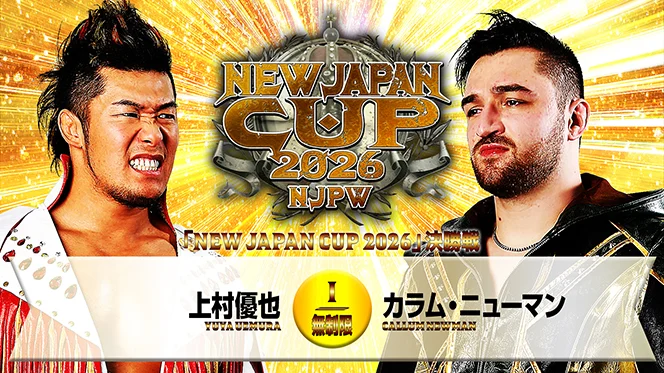
The landscape of New Japan Pro-Wrestling has been irrevocably altered following a seismic weekend, as a new generation seized the spotlight and declared its dominion. In a stunning display of youthful exuberance, raw talent, and undeniable ambition, Callum Newman etched his name into the annals of NJPW history, capturing the coveted New Japan Cup and setting the stage for a monumental championship showdown. His victory, achieved against a field of formidable competitors and culminating in a hard-fought final, wasn’t merely a tournament win; it was a bold statement, a harbinger of a future he intends to shape entirely in his image. The 23-year-old, a dynamic force within the United Empire, not only secured the prestigious trophy but also earned the right to challenge for the most prized possession in professional wrestling, the IWGP World Heavyweight Championship, at the venerable Sakura Genesis event.
The climax of the tournament unfolded on a Saturday morning, a date now synonymous with Newman’s meteoric rise. Across the ring from him stood Yuya Uemura, another prodigious talent whose own journey to the final had been equally compelling. The atmosphere was charged with the anticipation of a clash between two athletes widely regarded as the vanguard of NJPW’s next era. What transpired was a grueling encounter, a testament to both men’s resilience and technical prowess. Uemura, known for his relentless fighting spirit, weathered an onslaught that included two devastating brainbusters, a move that would typically fell lesser competitors. Each time, the young lion dug deep, refusing to yield, showcasing the indomitable will that had carried him through the bracket. However, Newman, with a predatory focus, capitalized on a moment of vulnerability, unleashing a powerful lariat that connected with bone-jarring force. As Uemura reeled, Newman executed his signature maneuver, "Make Way," a decisive finisher that secured the pinfall victory and the New Japan Cup.
This triumph is not merely significant for its immediate implications, but also for its profound historical weight. At just 23 years of age, Callum Newman now holds the distinction of being the youngest competitor ever to hoist the New Japan Cup. This achievement places him in an exclusive pantheon of tournament winners, many of whom have gone on to define eras and ascend to the very pinnacle of the sport. The New Japan Cup, inaugurated in 2005, has consistently served as a crucial proving ground, a crucible where rising stars forge their legacies and established veterans reaffirm their dominance. Past winners like Hirooki Goto, Kazuchika Okada, Tetsuya Naito, and Shingo Takagi have leveraged their Cup victories into IWGP Heavyweight or World Heavyweight Championship reigns, cementing the tournament’s status as a direct path to glory. Newman’s youth adds an unprecedented layer to this narrative, suggesting a potential reign of terror that could span decades, challenging the very hierarchy of a promotion built on seniority and hard-earned respect.
Newman’s path to the final was a gauntlet of diverse challenges, each victory a testament to his burgeoning skill set and strategic acumen. His opening round saw him dispatch OSKAR, a formidable opponent who tested his early resolve. He then navigated past Hartley Jackson, showcasing his versatility and ability to adapt to different styles. The quarter-finals presented a significant hurdle in the form of Hirooki Goto, a seasoned veteran and two-time New Japan Cup winner himself. Goto, a pillar of the NJPW roster, brought years of experience and a relentless fighting style to the bout, pushing Newman to his limits. Overcoming such an established figure was a clear statement of intent. In the semi-finals, Newman faced off against Shota Umino, another highly touted prospect and a peer in the emerging generation. This encounter was a glimpse into the future of NJPW, a high-octane battle that saw Newman emerge victorious, solidifying his status as a legitimate main event contender. Each step of his journey was a masterclass in overcoming adversity, demonstrating that his youthful ambition was matched by his in-ring prowess.
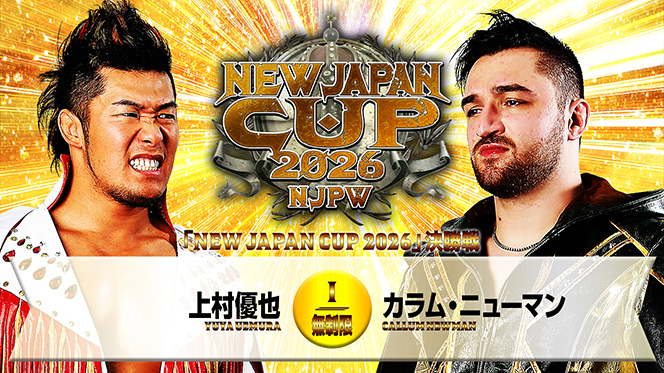
Yuya Uemura’s tournament run, though ultimately ending in defeat, was no less impressive and serves as a powerful indicator of his own immense potential. His journey commenced with a challenging encounter against Great-O-Khan, a prominent member of the United Empire known for his unique, impactful offense. Uemura navigated this initial test with characteristic tenacity. He then faced Drilla Moloney, a hard-hitting junior heavyweight, showcasing his ability to compete across weight classes and styles. The quarter-finals presented Uemura with arguably his toughest challenge: Shingo Takagi, a former IWGP World Heavyweight Champion and one of the most physically dominant wrestlers in the world. Defeating "The Dragon" was a monumental achievement, a clear signal that Uemura had arrived as a legitimate threat to anyone on the roster. His semi-final opponent, Boltin Oleg, another powerful up-and-comer, pushed Uemura to his physical limits, but he persevered, earning his rightful place in the final. Uemura’s performance throughout the tournament, especially his victory over Takagi, firmly establishes him as a future cornerstone of NJPW, promising that his time at the top is merely a matter of when, not if.
Following his monumental victory, Callum Newman seized the microphone, not with humility, but with an audacious declaration that reverberated throughout the arena and across the wrestling world. His promo was a stark reflection of his persona and his faction’s ethos: unbridled ambition and an unwavering belief in his own superiority. He asserted with absolute conviction that no one within the company desired the victory more intensely than he did, transforming the traditional post-match interview into a coronation speech. "This is my domain," he proclaimed, his voice dripping with certainty, "this company now belongs to me." He then boldly declared himself the undeniable leading star of New Japan, a claim rarely made by a competitor so early in their career, particularly in a promotion that values a gradual, earned ascent to the top. This audacious pronouncement, coming from a 23-year-old, was a direct challenge to the established order, a testament to his self-belief and his vision for NJPW’s future under his guidance. He presented himself not just as a champion, but as a monarch-in-waiting, ready to reshape the promotion in his own image.
As Newman reveled in his momentous victory and continued his provocative address, the atmosphere intensified with the sudden appearance of the IWGP World Heavyweight Champion, Yota Tsuji. Tsuji, the very man whose title Newman had earned the right to challenge, strode purposefully to the ring, his gaze locked onto the new Cup winner. The champion’s presence was a palpable statement, a silent acknowledgment of the threat Newman now represented. The two young titans, representing the present and potentially the immediate future of NJPW, engaged in an electrifying staredown, a tableau of escalating tension. It was a moment pregnant with significance, a preview of the epic confrontation that awaited them. Adding to the drama, the rest of the United Empire, Newman’s formidable faction, emerged from the back, encircling Tsuji like a protective phalanx. The situation threatened to erupt into chaos, a pre-Sakura Genesis brawl. However, Newman, displaying a newfound authority that belied his age, issued a clear, decisive command to his stablemates, instructing them to back down. This act not only demonstrated his growing leadership within the United Empire but also underscored his desire to face Tsuji one-on-one, on his own terms, without external interference. Respecting Newman’s directive, the United Empire members receded, allowing Tsuji to retreat to the backstage area, the championship belt still firmly around his waist, but now with a clear target painted on his back. Newman then concluded his impassioned speech, looking out at the fervent crowd, declaring that they would all soon acknowledge his reign and pay homage to his ultimate triumph.
The stage is now impeccably set for Sakura Genesis on April 4th, an event traditionally held at the iconic Sumo Hall, a venue steeped in the rich history of Japanese professional wrestling. This pay-per-view is renowned for hosting pivotal title matches and defining moments, and this year promises to deliver one of its most anticipated main events. Callum Newman, with the momentum of his historic New Japan Cup victory propelling him forward, will challenge Yota Tsuji for the IWGP World Heavyweight Championship. Tsuji, himself a product of NJPW’s rigorous Young Lion system, has carved out an impressive reign as champion, showcasing a blend of power, agility, and a growing strategic mind. His journey to the top has been marked by dedication and hard work, solidifying his status as a legitimate, fighting champion. He has successfully defended the championship against a variety of contenders, demonstrating his ability to adapt and overcome.
The clash between Newman and Tsuji represents more than just a title match; it embodies a generational shift, a battle for the very soul of New Japan Pro-Wrestling. Both men are at the forefront of the company’s youth movement, possessing the charisma and in-ring talent to carry the promotion into its next era. Newman, with his aggressive style, unwavering confidence, and the backing of the United Empire, poses a unique threat. His “Prince” persona is not merely a gimmick; it’s a reflection of his perceived destiny, a belief that he is born to rule. Tsuji, on the other hand, carries the weight of the IWGP World Heavyweight Championship, a title that demands respect and validates one’s place at the pinnacle of the industry. He represents the established, albeit still young, guard, defending the honor of the championship against a challenger who openly seeks to dismantle the existing order.

The stakes at Sumo Hall could not be higher. For Newman, this is the culmination of his accelerated rise, an opportunity to validate his audacious claims and solidify his position as the undisputed top star. Capturing the IWGP World Heavyweight Championship at such a young age would not only be a historical milestone but would also cement his declaration of being the "ace" of New Japan. It would be the ultimate statement, transforming his "Prince" moniker from an aspiration into a tangible reality, with the company literally making way for his reign. For Tsuji, it is a chance to prove that his championship reign is not merely a fleeting moment but a sustained period of dominance. Defeating a red-hot challenger like Newman would add another significant notch to his championship resume, further establishing his legacy and silencing any doubters. The match itself promises to be a high-octane affair, a clash of styles and wills. Newman’s dynamic offense and psychological warfare against Tsuji’s powerful strikes and resilient spirit will undoubtedly create a memorable spectacle.
Callum Newman’s association with the United Empire provides an intriguing layer to this championship pursuit. The United Empire, a faction known for its dominant and often ruthless approach, has served as the perfect platform for Newman to hone his craft and amplify his presence. His command to his stablemates to stand down during the confrontation with Tsuji was a subtle yet powerful display of his growing influence within the group. It highlighted his individual ambition, demonstrating that while he is part of a collective, his ultimate goal is personal glory, achieved on his own merit. This dynamic adds a fascinating dimension to his "Prince" persona – he is a prince leading an empire, yet also seemingly destined to conquer it for himself. The faction’s presence, though restrained, will undoubtedly loom large over the Sakura Genesis main event, a constant threat of potential interference that Tsuji will have to contend with.
The implications of Newman’s victory extend far beyond a single title match. This New Japan Cup triumph signals a seismic shift in the company’s internal dynamics. It is a clear indication that New Japan Pro-Wrestling is actively investing in and pushing its younger talent to the forefront, embracing a future where established veterans may increasingly share the spotlight, or even pass the torch, to a new generation. Both Newman and Uemura, through their respective performances in the tournament, have emphatically proven that the future of NJPW is bright and teeming with talent. While Uemura fell short in the final, his impressive run, particularly his victory over Shingo Takagi, solidifies his standing as a future main eventer. His resilience and fighting spirit ensure that his journey to a major championship is merely delayed, not derailed. For Newman, the path is clear: win the IWGP World Heavyweight Championship and usher in an era defined by his audacious claims and undeniable talent. The wrestling world watches with bated breath, eager to witness whether the "Prince" will truly become the king at Sakura Genesis, commanding all to acknowledge his crown. The stage is set for a historic night, a potential changing of the guard, and the dawn of what Callum Newman firmly believes will be his empire.