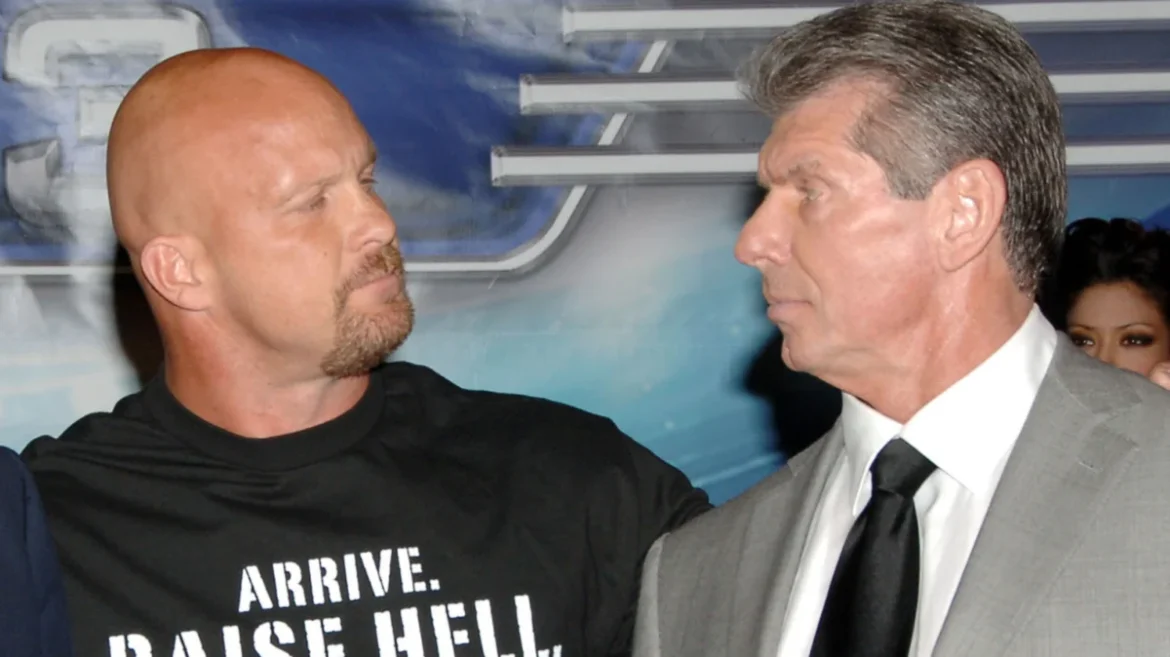
The squared circle has witnessed countless compelling narratives, but few have resonated with the visceral intensity of the one between "Stone Cold" Steve Austin and Vince McMahon. More than just a wrestling feud, their antagonism became a cultural phenomenon, a microcosm of the rebellious spirit clashing with the corporate establishment that defined WWE’s seismic shift into the Attitude Era. While the on-screen animosity was palpable, with Austin famously flipping the bird to his boss and delivering Stunners with gleeful abandon, the underlying motivations for Austin’s perpetual ire during their in-ring encounters were, perhaps surprisingly, rooted in a peculiar form of professional jealousy. Austin, the blue-collar brawler who embodied the everyman’s rage, found himself consistently irked by the fact that his on-screen antagonist, the billionaire CEO of World Wrestling Entertainment, often appeared more physically imposing and "jacked up" than he did. This seemingly trivial point, however, speaks volumes about the complex dynamic between the two men and the carefully constructed personas that made their clashes appointment television.
Steve Austin, whose persona as the beer-drinking, rule-breaking anti-hero became the bedrock of WWE’s most commercially successful period, was intrinsically linked to Vince McMahon. As the embodiment of rebellion against McMahon’s tyrannical control, their feud was the central pillar of the Attitude Era. Their confrontations, whether brief skirmishes or full-blown matches, were always charged with an electrifying tension. Austin, the ultimate underdog fighting against the system, found his ultimate adversary in the man who controlled that system. It was a narrative that resonated deeply with a burgeoning audience eager for authenticity and a departure from the more theatrical wrestling of previous generations. The brilliance of this storyline lay in its simplicity: the common man versus the powerful overlord. Yet, behind the scripted drama and the larger-than-life characters, Austin has revealed a surprisingly personal undercurrent to their interactions.
Speaking in retrospective interviews, Austin has often pointed to a specific, recurring source of his frustration when sharing the ring with McMahon. It wasn’t the physical demands of the matches themselves, nor the pressure of carrying the main event spotlight. Instead, it was a peculiar observation about McMahon’s physical conditioning. Austin, a man who lived and breathed the physicality of professional wrestling, whose body bore the scars of countless battles, admitted to being "always mad" that McMahon, who was not a traditional, full-time wrestler in the same vein, often seemed to possess a more impressive physique. This sentiment, while perhaps sounding petty on the surface, highlights a profound understanding of character and performance within the wrestling landscape. For Austin, the visual presentation of his adversary was as crucial as any verbal barb or physical maneuver. McMahon, in his role as the arrogant, wealthy owner, needed to project an image of power and control, and a formidable physical presence contributed significantly to that.
The narrative of McMahon as a physically capable entity, even if he wasn’t a seasoned ring veteran, was crucial to selling the legitimacy of their conflict. Austin’s frustration, therefore, wasn’t about a genuine threat to his own physical prowess, but rather a commentary on the effectiveness of McMahon’s on-screen persona. It was a testament to McMahon’s dedication to portraying the character of the powerful CEO who, despite his business acumen, was also a man who could command respect in the ring. Austin, a master of portraying his own character, understood the importance of his opponent’s credibility. If McMahon looked weak or out of shape, it would have diminished the impact of Austin’s victories and the perceived struggle against him.
Furthermore, Austin’s observations underscore McMahon’s unique approach to his role as a performer within his own company. While the vast majority of his in-ring appearances were limited and strategically booked, McMahon possessed an innate understanding of how to command attention and generate heat from the audience. He was not a technician in the traditional sense, but he was a master manipulator of crowd psychology. Austin acknowledged this, noting that McMahon had a "vast knowledge of some of the greatest heels and some of the greatest babyfaces," and that he drew inspiration from these legendary figures. This suggests a deep-seated appreciation for wrestling history and an ability to adapt elements of past greatness into his own presentation.
The chemistry between Austin and McMahon in the ring was undeniable, a testament to their shared understanding of how to craft compelling drama. Austin described their working relationship as having "strong in-ring chemistry" and never experienced "nervousness about working with him." This confidence stemmed from McMahon’s surprisingly quick grasp of the business and his ability to perform his role effectively. Austin characterized McMahon’s in-ring style as "slow and methodical during his heat," a deliberate pacing that allowed the narrative to build and the audience to invest in the unfolding conflict. This deliberate approach was not about showcasing technical wrestling prowess, but about maximizing the emotional impact of their encounters.
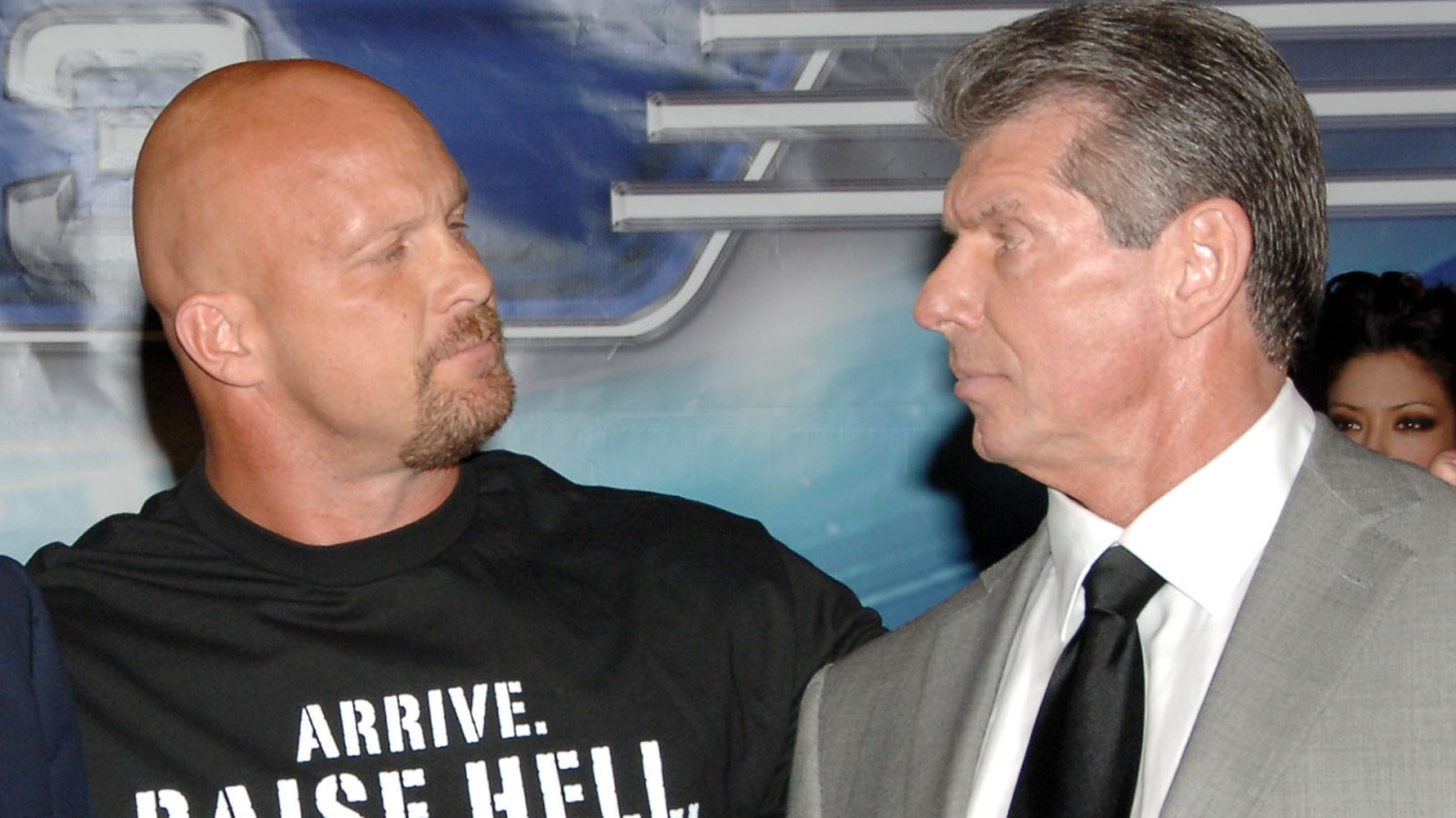
Austin also speculated on the specific influences that shaped McMahon’s larger-than-life ring persona. He believed that McMahon drew significant inspiration from the iconic "Superstar" Billy Graham, a wrestler renowned for his flamboyant personality and imposing physique. Austin noted that McMahon had "interviewed him several times and worked together with him many times," suggesting a direct mentorship or at least a profound admiration that manifested in McMahon’s own presentation. This connection to Graham, a pioneer of the charismatic heel character, further illustrates McMahon’s commitment to creating a memorable and impactful on-screen antagonist for Austin. The visual and psychological echoes of Graham’s presence in McMahon’s persona would have undoubtedly contributed to the overall effectiveness of their feud.
The genesis of this rivalry can be traced back to Austin’s pivotal moment of rebellion against McMahon’s authority. Upon his return from injury in 1998, Austin, having been stripped of his WWE Championship by McMahon, found himself once again at odds with his boss. This time, however, the stakes were higher, and the animosity was more deeply entrenched. The infamous segment where Austin, in his signature beer-drinking fashion, drove a monster truck to the ring and proceeded to spray McMahon and his stooges with the beverage, became an iconic image of the Attitude Era, symbolizing Austin’s defiance and McMahon’s inability to control him. This was not just a wrestling storyline; it was a reflection of a broader cultural shift, where the underdog was celebrated and the corrupt authority figure was dethroned.
Their matches, though often not technically dazzling affairs, were spectacles of raw emotion and narrative progression. The primary goal was not to execute intricate holds or high-flying maneuvers, but to tell a story of power, rebellion, and retribution. McMahon, despite his limitations as a wrestler, understood this implicitly. He knew how to absorb punishment, how to sell Austin’s offense, and how to elicit boos from the audience. His role was to be the ultimate obstacle, the embodiment of everything Austin was fighting against. And when Austin finally overcame him, whether through a Stone Cold Stunner or a decisive pinfall, the satisfaction for the audience was immense.
The "Mania X-Seven" encounter between Austin and McMahon at WrestleMania X-Seven in April 2001 stands as a pivotal moment. While the match itself was a brutal affair, the true controversy and lasting impact came from the post-match events. In a shocking turn of events, Austin, having lost the match to The Rock, shockingly embraced McMahon, aligning himself with his former nemesis. This heel turn, orchestrated by McMahon, was a masterstroke of storytelling, creating immense shock and dismay among the audience who had so vehemently supported Austin’s rebellion. It demonstrated the depth of their collaborative genius, their willingness to push boundaries, and their understanding of how to manipulate audience expectations for maximum impact.
Austin’s feelings about McMahon’s physique were not merely about vanity; they were about the integrity of the performance. He understood that for the narrative to work, McMahon needed to appear as a credible threat, or at least a formidable presence. The fact that McMahon, a non-wrestler, could achieve this through dedication to his persona and a keen understanding of presentation, was something Austin, a man who dedicated his life to the craft, could both respect and, in a competitive sense, be slightly irked by. It was the ultimate testament to McMahon’s multifaceted genius – not just as a promoter and businessman, but as a performer who could shape himself into the villain the world loved to hate.
The legacy of Stone Cold Steve Austin and Vince McMahon’s rivalry extends far beyond the confines of the wrestling ring. It represents a period of unprecedented success for WWE, a time when professional wrestling transcended its niche audience and became a mainstream cultural force. Their story, with its themes of rebellion, corporate greed, and the ultimate triumph of the common man, resonated with millions. And while Austin may have been "always mad" about the state of McMahon’s biceps, it was this complex interplay of animosity, respect, and a shared commitment to compelling storytelling that forged one of the most enduring and impactful rivalries in sports entertainment history. The "madness" Austin felt was, in essence, a testament to the power of their performance, a subtle acknowledgment of McMahon’s ability to inhabit his role with such conviction that it even stirred a competitive spirit within the Texas Rattlesnake himself.