The dust has barely settled from the monumental spectacle of WrestleMania 42, an event that saw "The American Nightmare" Cody Rhodes finally complete his storied quest, dethroning the formidable Randy Orton to claim the Undisputed WWE Championship. It was a victory steeped in narrative resonance, a moment years in the making that resonated deeply with the WWE Universe. Yet, in the immediate afterglow of such a defining achievement, an unexpected question has begun to echo through the halls of sports entertainment: who truly stands next in line for the man who finished his story? This isn’t merely a speculative query from the fervent fanbase; it has escalated to a point where even WWE’s broadcast partners are publicly musing about the champion’s future, a development that speaks volumes about the current landscape surrounding the most prestigious prize in professional wrestling.
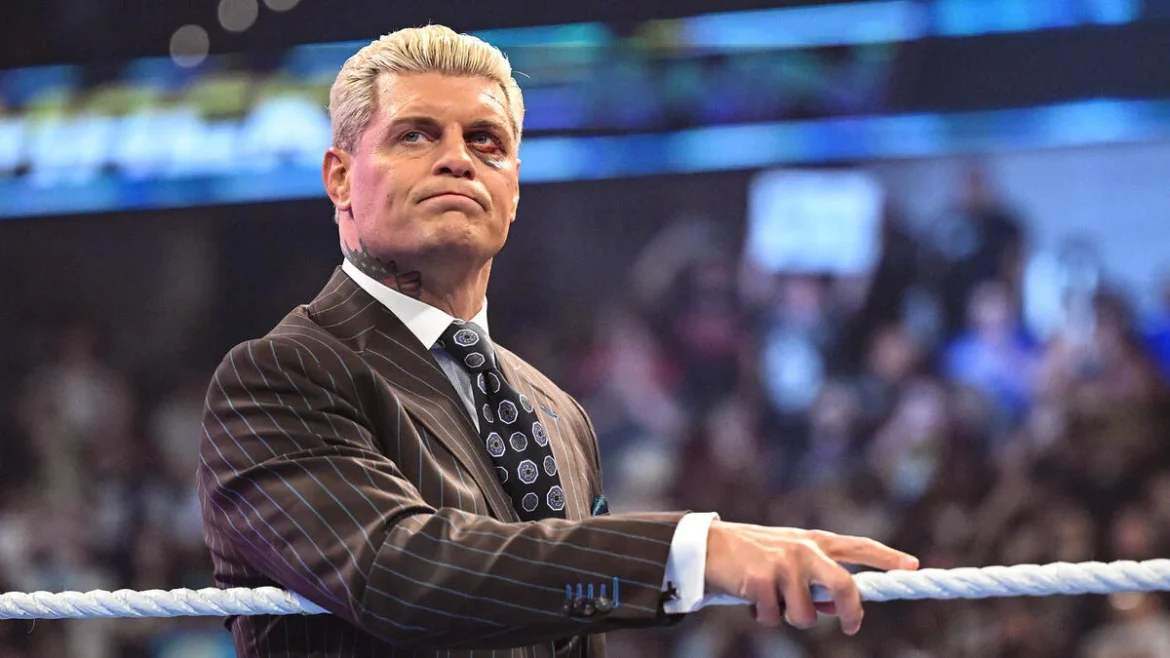
The USA Network, the long-standing television home of Friday Night SmackDown, the very show where Rhodes now proudly carries the Undisputed WWE Championship, recently took to social media to openly pose this very question. Accompanying an image of the newly crowned champion, their official account prompted fans with a direct inquiry: "After WrestleMania, anybody could want a chance at the belt. Who is next for Cody Rhodes?" While such posts often serve as standard promotional fare, designed to generate buzz and engagement for upcoming programming, the timing and context of this particular message carry a deeper, more intriguing undertone. In an era where the lines between kayfabe and reality are increasingly blurred, and the wrestling world frequently engages in meticulously crafted "worked shoots" to drive narratives, this public solicitation from a key broadcast partner can be interpreted in multiple ways. It could be seen as a clever promotional tactic, inviting collective speculation. However, it also strongly suggests a subtle, yet unmistakable, nudge from USA Network executives to WWE itself, implicitly urging clarity and direction for their flagship program’s top attraction. The very act of a network asking "what’s next" for the company’s premier champion implies a perceived lack of immediate, compelling challengers, raising questions about the creative roadmap following the biggest show of the year.
The path to WrestleMania 42 for Cody Rhodes was a narrative masterpiece, a carefully constructed odyssey of triumph over adversity, legacy, and the pursuit of a dream. His victory over Randy Orton was meant to be the capstone, the triumphant conclusion. But the nature of professional wrestling dictates that one story’s end is merely the beginning of another. The match itself, while a spectacle of athleticism and drama, left a few lingering uncertainties. Reports prior to the event indicated that Randy Orton was grappling with pre-existing back issues, a common affliction for veterans of his punishing profession. These concerns were even woven into the commentary during the championship encounter, adding a layer of realism and vulnerability to the "Legend Killer’s" performance. Post-match, in a move that typically signals the continuation of a heated rivalry, Orton delivered a brutal kick to Rhodes’ face, leaving the new champion with a visibly nasty black eye. This moment, designed to inject further animosity into their feud, now exists in a state of suspended animation. With Orton’s reported physical condition and the severity of Rhodes’ immediate injury remaining somewhat ambiguous, a direct, immediate rematch, while narratively compelling, appears to be on an indefinite hold. This leaves the Undisputed WWE Champion without a clear, immediate, and credible challenger stemming directly from his WrestleMania triumph, forcing the creative team to pivot and search for fresh adversaries.
In the wake of his historic victory and the lingering question marks surrounding his first post-WrestleMania title defense, Cody Rhodes, ever the fighting champion, stepped forward on Friday Night SmackDown to address the uncertainty head-on. With the Undisputed WWE Championship gleaming on his shoulder, he issued a bold declaration, an open challenge to any superstar willing to step up. His words were unequivocal: he was "easy to find, but hard to beat." This proclamation, while embodying the spirit of a true champion, also inadvertently underscored the very dilemma currently facing WWE’s creative team. A champion issuing an open challenge is a classic wrestling trope, often used by dominant titleholders eager to prove their mettle against all comers. However, it can also be a booking mechanism to fill a void when a clear number one contender has not organically emerged. For a champion who has just completed the most significant storyline in modern wrestling, this immediate need for an open challenge might suggest a creative vacuum rather than an abundance of top-tier threats.
Delving into the current roster of Friday Night SmackDown, the options for a challenger with sufficient momentum and storyline readiness to genuinely threaten Cody Rhodes appear remarkably thin. The blue brand, despite boasting an impressive array of talent, seems to have its top-tier stars either occupied with other feuds or not yet positioned for a main event championship opportunity of this magnitude. Sami Zayn, a perennial fan favorite and former world title contender, is currently embroiled in a deeply personal and physically demanding rivalry. His focus, along with that of the charismatic United States Champion Trick Williams, is firmly locked on their ongoing competition for the secondary singles title on SmackDown. Their captivating storyline, while entertaining and vital for the mid-card, effectively removes them from the immediate Undisputed Championship picture. Beyond these two, the immediate horizon for credible, main event-ready challengers for Cody Rhodes on SmackDown looks surprisingly barren. The roster, while deep, lacks a superstar who has been consistently built up as a world title threat in the period leading up to and immediately following WrestleMania 42. This situation forces a critical examination of WWE’s long-term talent development and booking strategies for its top championship.
The perceived dearth of ready-made contenders on SmackDown takes on an even more complex dimension when examining the landscape of WWE’s sister show, Monday Night Raw. Curiously, a similar narrative of a champion seeking challengers has emerged on the red brand, albeit with a different set of implications. The imposing Oba Femi, a rising powerhouse and dominant force, recently issued his own open challenge on Raw. Femi, a physically imposing and articulate competitor, boldly asserted that WWE’s top champions were either too busy with other obligations or, more provocatively, actively avoiding open challenges. This statement, while ostensibly directed at the champions on Raw, inadvertently casts a shadow of perceived unavailability over the entire main event scene, including Cody Rhodes’ Undisputed Championship.
On the surface, the idea of two champions, or at least two dominant forces, actively seeking competition might suggest an easy solution: a champion versus champion showdown, or a cross-brand challenge. However, the intricacies of WWE’s brand split and the specific storylines at play make such a simple resolution highly improbable, if not entirely illogical. Oba Femi’s trajectory, for instance, has been heavily hinted at involving a confrontation with Roman Reigns. During the WrestleMania post-show, Femi conspicuously teased a future encounter with the "Tribal Chief," setting the stage for a potentially epic clash. This deliberate foreshadowing positions Femi as a future challenger for the Undisputed WWE Championship, but specifically against Reigns, not Rhodes. This pre-established narrative thread complicates any immediate cross-brand challenge involving Femi and Rhodes, making it feel less like a natural progression and more like a forced creative detour.
Adding another layer of complexity to the intertwined narratives of Raw and SmackDown is the intriguing development surrounding Jacob Fatu. Just a day after WrestleMania 42, reports indicated that Fatu, a highly anticipated talent with deep ties to one of wrestling’s most storied families, had made a decisive move to Monday Night Raw. His stated intention: to pursue "bigger stakes against the OTC." While the "OTC" remains somewhat enigmatic in its precise definition, the implication is clear. Fatu, a performer with immense potential and a lineage that commands respect, is targeting a top-tier championship or a significant, high-profile program on the red brand, presumably the World Heavyweight Championship. This migration of a significant talent to Raw further depletes the pool of potential main event challengers for Cody Rhodes on SmackDown. If a star of Fatu’s caliber is immediately earmarked for a top program on the opposing brand, it only accentuates the perceived lack of ready-made, main event-level threats on the blue brand. The situation creates an interesting dynamic where Raw appears to be actively bolstering its main event scene, while SmackDown struggles to identify its next top challenger for the Undisputed WWE Champion.
The sum of these individual circumstances creates a rather unsettling perception for Cody Rhodes as the Undisputed WWE Champion. Despite achieving his life-long dream at WrestleMania 42, the immediate aftermath has painted a picture of a champion almost desperately searching for a credible adversary. The image, intentional or not, is one of a champion who, in essence, is holding up a metaphorical sign proclaiming, "Will Defend Title For Fans!" This scenario, while showcasing Rhodes’ fighting spirit, subtly diminishes the aura of the championship itself. The most prestigious title in the industry should, ideally, have a line of hungry, deserving contenders clamoring for a shot, each with a compelling narrative arc positioning them as a legitimate threat. When the champion needs to issue open challenges and broadcast partners are publicly questioning the creative direction, it suggests a disconnect. It implies that the creative architects might not have had a robust, immediate plan for the Undisputed WWE Championship following its climactic defense at WrestleMania. This is a critical period for any world champion; the momentum gained from a major victory must be immediately capitalized upon with a compelling, high-stakes feud to solidify their reign and maintain fan investment.
The repercussions of this perceived uncertainty extend beyond just Cody Rhodes’ individual narrative. It impacts the prestige of the Undisputed WWE Championship, the overall health of the SmackDown brand, and indeed, the relationship with key broadcast partners like USA Network. The investment made by networks in WWE programming is substantial, and they expect their top-tier talent and championships to be at the forefront of captivating, forward-moving storylines. A champion without a clear direction, or without an obvious, formidable opponent, risks stagnating the product and, in turn, potentially affecting viewership and advertising revenue. The "Road to WrestleMania" is a grueling, exhilarating journey that culminates in the biggest event of the year. But the weeks and months immediately following WrestleMania are equally crucial for setting the tone for the rest of the year. This period is meant to introduce new feuds, elevate rising stars, and cement the legacy of the champion. If WWE struggles to present a compelling narrative for its Undisputed Champion, it risks losing the incredible momentum generated by Rhodes’ WrestleMania triumph.
To navigate this intricate situation, WWE’s creative team faces a multi-faceted challenge. They must rapidly identify and elevate a credible challenger for Cody Rhodes on SmackDown, or ingeniously craft a cross-brand narrative that feels organic and impactful. This could involve a surprise return from an injured superstar, a sudden, dramatic heel turn from an established fan favorite, or an accelerated push for a talent who might not have been initially slated for a world title program. The need for a fresh, compelling rivalry is paramount to ensure that Rhodes’ reign is defined by thrilling competition, not by a search for opponents. The broadcast partner’s public query, regardless of its underlying intention, serves as a clear indicator that the wrestling world, from the most casual viewer to the most invested executive, is eagerly awaiting the next chapter. For Cody Rhodes, the challenge is no longer just about completing his story; it’s about defining the legacy of his reign and ensuring the Undisputed WWE Championship remains at the undisputed forefront of sports entertainment. The answer to "who’s next" must come swiftly and decisively, not just for the fans, but for the continued narrative strength of WWE’s premier champion and its flagship programs.