The landscape of professional wrestling is often shaped by unexpected alliances and the sheer force of individual will. While the titans of the squared circle are typically the ones dictating the narrative, sometimes it takes an outside force, a proven competitor from another arena, to nudge the established order in a new direction. Such was the case with Ronda Rousey and her indelible impact on Stephanie McMahon’s solitary in-ring appearance at WWE’s grandest spectacle, WrestleMania. It was Rousey, a pioneering figure in mixed martial arts, whose personal conviction and strategic vision directly led to McMahon stepping into the ring at WrestleMania 34, a moment that might otherwise have remained a hypothetical scenario.
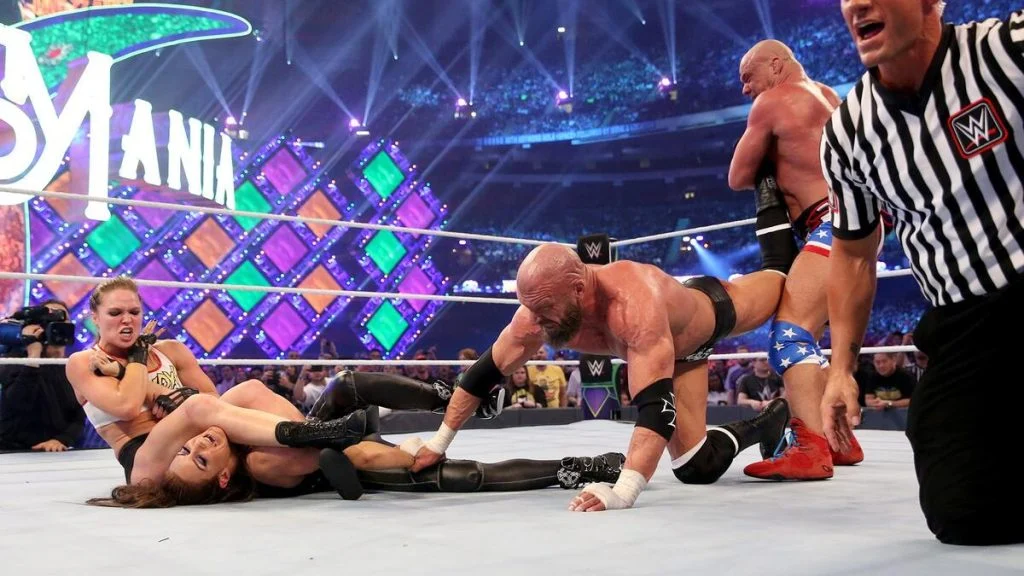
Stephanie McMahon, a prominent figure in WWE for decades, a business executive, and a performer, had a unique role within the company. While she had been involved in numerous on-screen confrontations and storylines throughout her career, her active in-ring participation was remarkably limited. The sole instance of her competing at WrestleMania, the pinnacle of WWE’s annual calendar, was in a mixed-tag team match in 2018. In this pivotal bout, she partnered with her husband, Triple H, to face the formidable team of Ronda Rousey and Kurt Angle. This match, a highly anticipated clash that blended WWE’s established drama with Rousey’s raw, undeniable star power, was more than just a wrestling contest; it was a carefully constructed narrative that ultimately owed its existence to Rousey’s direct initiative.
McMahon, in a reflective discussion on the "What’s Your Story?" podcast, spoke candidly about her appreciation for Rousey. She articulated a deep admiration for Rousey’s strength, not just physically, but also her resilience in overcoming significant life challenges. McMahon detailed how Rousey’s personal journey, marked by profound adversity, resonated with her. She cited Rousey’s autobiography as a particularly impactful read, highlighting the early struggles, including the profound loss of her father at a young age and developmental delays in her early speech. These deeply personal aspects of Rousey’s life painted a picture of a woman forged in the fires of hardship, a trait McMahon found compelling. This understanding of Rousey’s inner fortitude fostered a genuine fan in McMahon, a sentiment that transcended the kayfabe world of wrestling.
The genesis of the WrestleMania 34 match, as revealed by McMahon, was not a top-down decision but a grassroots request originating from Rousey herself. The seeds of this confrontation had been planted at WrestleMania 31, three years prior, during an initial on-screen interaction. It was Rousey’s desire to revisit and definitively conclude that storyline that drove the booking of their eventual WrestleMania encounter. She envisioned a narrative arc that required her to finish what she had started with Stephanie McMahon. This proactive approach from Rousey was instrumental in bringing about McMahon’s singular WrestleMania in-ring performance. While there were initial plans for Rousey’s WWE debut to occur earlier, external commitments, such as film projects, caused delays. However, once she was officially signed, Rousey was insistent on fulfilling the "unfinished business" with McMahon. Her conviction was the direct impetus for McMahon’s participation in such a high-profile match on the WrestleMania stage.
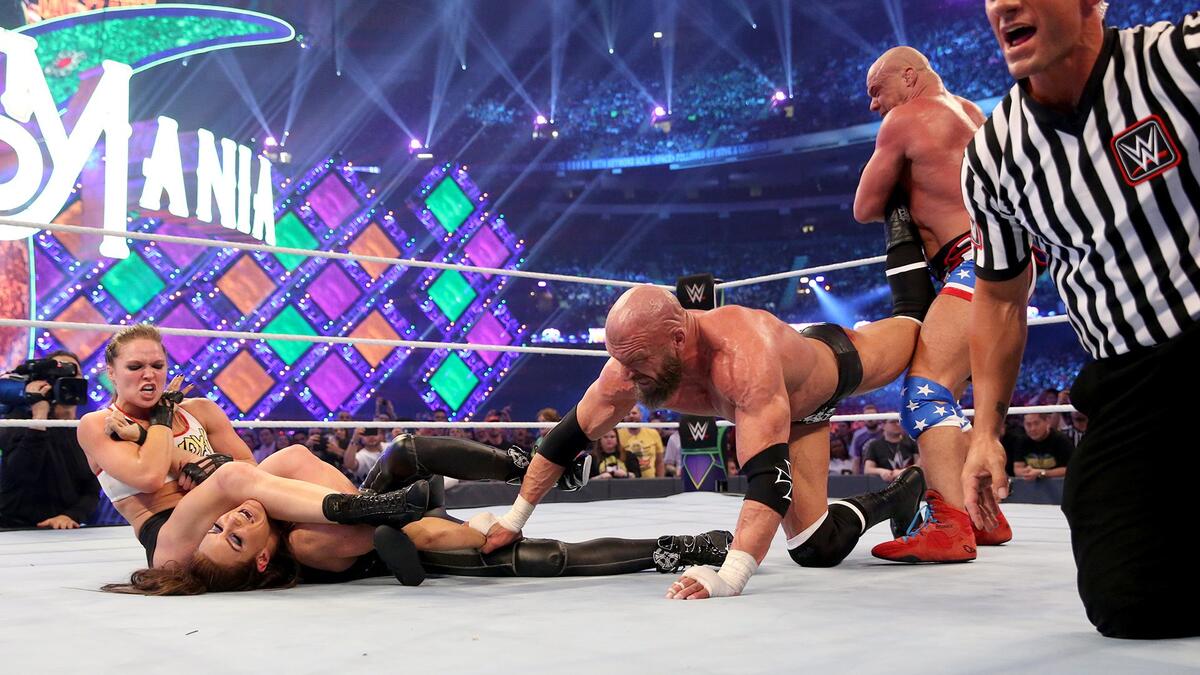
The preparation for this unique contest involved a collaborative effort, drawing on the expertise of various individuals within WWE. McMahon acknowledged the contributions of talents like Dakota Kai and Lacey Evans, as well as NXT coach Sara Amato, who played a crucial role in ensuring the match was both safe and impactful. The outcome saw Rousey and Angle emerge victorious, a testament to Rousey’s ability to translate her combat sports prowess into the theatrical environment of professional wrestling. This match marked Rousey’s official professional wrestling debut, a significant moment that signaled her transition into a new athletic arena. Her subsequent tenure with WWE saw two distinct periods of engagement, concluding in August 2023, during which she established herself as a formidable force within the women’s division, capturing championships and engaging in memorable feuds.
Rousey’s foray into professional wrestling was a calculated move that leveraged her existing global recognition. Her career in MMA was nothing short of revolutionary, shattering glass ceilings and becoming a household name for her unparalleled dominance in the bantamweight division. Her transition to WWE was met with immense anticipation, and she largely delivered on the hype, bringing an intensity and legitimacy to the women’s division that was palpable. Her ability to adapt to the unique demands of sports entertainment, while retaining the grit and intensity that defined her MMA career, was a remarkable feat. She quickly became one of WWE’s most prominent female stars, her matches often headlining events and drawing significant attention.
The journey from MMA octagon to WWE ring is a path few have successfully navigated with the same level of impact as Ronda Rousey. Her decision to step into the world of professional wrestling was not merely a career change; it was a deliberate choice to embrace a new form of performance art that still demanded peak physical conditioning, mental fortitude, and the ability to connect with a massive audience. Her background in Judo, an Olympic sport, provided her with a strong foundation in grappling and physicality, which translated effectively into the choreographed, yet physically demanding, world of WWE. Her innate charisma and no-nonsense persona, honed through years of media scrutiny and public appearances as an MMA superstar, made her a natural fit for the larger-than-life characters that populate WWE.
The initial confrontation at WrestleMania 31 served as a critical narrative building block. It was a brief but impactful encounter that teased a potential future rivalry. This moment was designed to create intrigue and plant the seeds for a storyline that could be revisited at a later date. Rousey’s subsequent return to WWE, following her initial hiatus, saw her actively pushing for the continuation of this narrative. This demonstrates a level of creative agency that is not always common for performers, highlighting Rousey’s understanding of storytelling and her commitment to delivering compelling content for the WWE Universe. Her focus on “finishing the story” with Stephanie McMahon underscores a desire to create a definitive chapter in her WWE career, one that would be etched into the company’s history.
McMahon’s acknowledgement of the "broken pieces" within herself and all individuals is a significant insight into her perspective. It suggests a recognition of shared human vulnerability, even from someone in a position of immense power and authority within the wrestling industry. This empathetic view likely contributed to her ability to connect with Rousey on a deeper level, fostering a mutual respect that transcended the performer-executive dynamic. Her willingness to step into the ring, especially for a match that was initiated by another performer, speaks volumes about her dedication to the creative vision of WWE and her understanding of how to craft memorable moments that resonate with fans.

The training process for the mixed-tag team match was reportedly rigorous. While the match itself was designed to showcase Rousey’s athletic prowess and McMahon’s ability to hold her own, the execution required careful planning and execution. The involvement of experienced wrestlers and coaches like Sara Amato was crucial in ensuring the safety of all participants, particularly given the physical nature of both Rousey’s background and the demands of a WWE match. The description of the match as "safe but stiff" suggests a performance that was executed with a high degree of professionalism, where the physicality was evident but controlled to prevent serious injury. This balance is a hallmark of well-executed professional wrestling matches, especially those involving performers with varied levels of in-ring experience.
Rousey’s eventual departure from WWE in 2023 marked the end of a significant chapter in her wrestling career. Her impact, however, continues to be felt. She brought a unique blend of legitimate athletic credentials and undeniable star power, elevating the profile of the women’s division and inspiring a new generation of athletes to consider professional wrestling as a viable career path. Her journey is a testament to the power of cross-disciplinary athletic success and the ability of charismatic individuals to transcend their original fields and make a profound impact in new ones.
The recent reports of Ronda Rousey’s return to mixed martial arts for a fight against Gina Carano on Netflix, and a subsequent one-off appearance for All Elite Wrestling at Revolution 2026, further illustrate her enduring appeal and her ability to remain a significant figure in the combat sports and professional wrestling spheres. Her continued presence in these high-profile arenas, even after her primary WWE run has concluded, underscores her status as a captivating personality capable of drawing attention and generating interest across different platforms. This demonstrates a strategic career management, where she continues to leverage her brand and expertise in ways that remain relevant and impactful. The story of Stephanie McMahon’s WrestleMania match, therefore, is not just an anecdote about a single bout; it is a narrative that highlights the interconnectedness of talent, vision, and the often-unforeseen ways in which careers can be shaped and defined by the drive and determination of individuals, both within and outside the established confines of the wrestling world. Ronda Rousey’s assertive vision directly facilitated a WrestleMania moment for Stephanie McMahon, a testament to the former’s impact and influence.