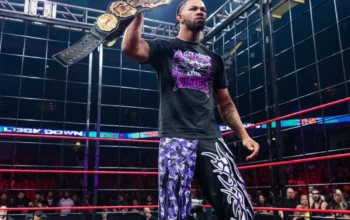
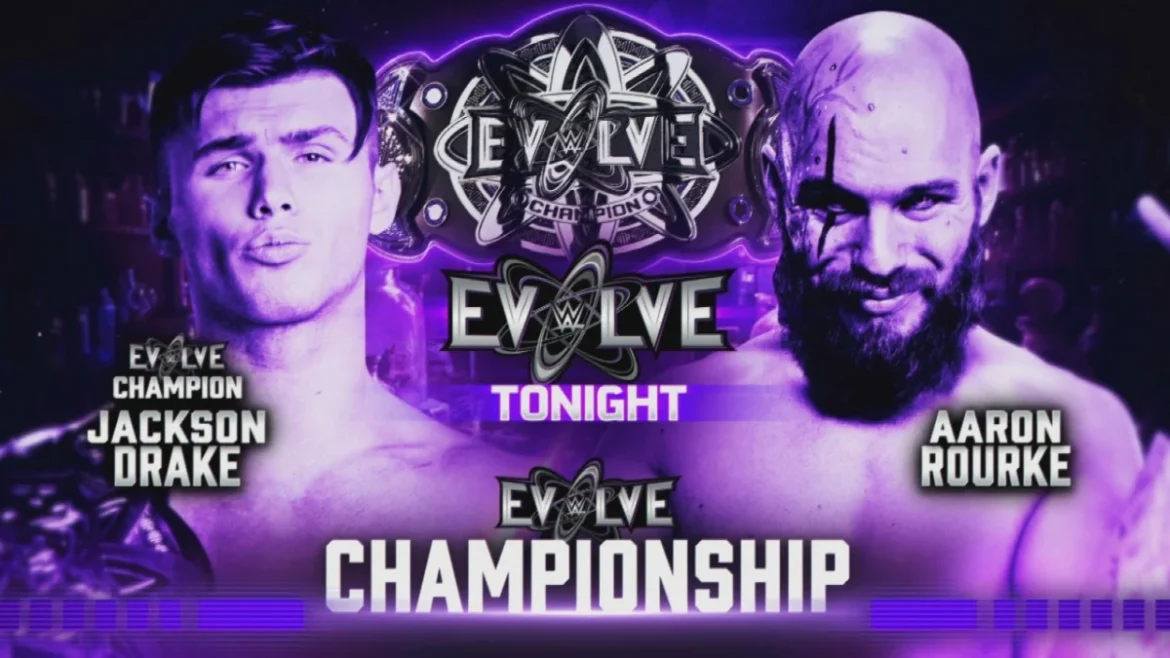
The landscape of Evolve, a critical proving ground within the expansive WWE developmental system, underwent a seismic shift on March 18, 2026, as Aaron Rourke etched his name into history, dethroning the formidable Jackson Drake to claim the coveted men’s Evolve Championship. This momentous victory, unfolding on a highly anticipated episode of Evolve programming, not only marked Rourke’s inaugural reign but also symbolized the culmination of a unique and compelling journey, underscoring the dynamic nature of professional wrestling where perseverance, distinctiveness, and raw talent invariably find their moment in the spotlight. The atmosphere was charged with anticipation, a palpable tension hanging over the arena as the two competitors, each representing different facets of Evolve’s burgeoning roster, prepared to engage in a contest that would ultimately redefine the trajectory of the brand’s top prize.
For 301 days, Jackson Drake had reigned supreme, an inaugural champion who carried the weight and prestige of a brand-new title with an almost regal authority. His championship tenure was not merely long; it was defined by an unwavering dominance, a testament to his in-ring prowess and cunning. Across his extensive reign, Drake successfully defended the Evolve Championship an impressive twelve times, each defense solidifying his position as the standard-bearer and setting a high benchmark for any future claimant. From grappling specialists to high-flyers, powerhouses to technical wizards, Drake navigated a diverse array of challengers, consistently finding a way to retain his gold, often with the clandestine assistance of his faction, The Vanity Project. This stable, comprised of the cunning Brad Baylor and the ever-present Ricky Smokes, became an almost inseparable extension of Drake’s championship persona, their interference a recurring, yet often decisive, factor in his many successful title defenses. Their collective presence instilled a sense of controlled chaos around Drake’s matches, frequently tilting the scales in his favor and frustrating opponents who sought to overcome not just one man, but an entire opportunistic unit.
The challenge presented by Aaron Rourke on this particular evening was, however, different. Rourke, an individual who had quickly garnered attention since his introduction as a WWE ID recruit in November 2024, brought a distinctive flair and an undeniable hunger to the championship contest. The WWE ID program, an innovative initiative by World Wrestling Entertainment, is designed to identify and cultivate athletes from diverse backgrounds who may not have traditional wrestling experience but possess the athletic gifts, charisma, and drive to succeed in sports entertainment. Unlike recruits from independent wrestling circuits or collegiate sports, WWE ID hopefuls often represent a raw, untapped potential, and Rourke’s rapid ascent through Evolve’s ranks served as a powerful validation of the program’s efficacy. His journey from an ID recruit to a championship contender in a relatively short span spoke volumes about his adaptability, work ethic, and natural aptitude for the squared circle.
The championship encounter itself was a brutal, hard-fought affair, a testament to the skill and determination of both men. From the opening bell, the pace was relentless, with Drake, the seasoned champion, attempting to dictate the tempo, relying on his calculated offense and strategic maneuvers. Rourke, however, met every offensive flurry with an equal measure of resilience, showcasing his agility and innovative offensive repertoire. The match ebbed and flowed, each competitor seizing moments of control, trading impactful strikes and intricate holds. The crowd, fully invested in the drama unfolding before them, buzzed with anticipation, recognizing that they were witnessing a pivotal moment in Evolve history. As the contest neared its climax, the familiar specter of The Vanity Project loomed large. Brad Baylor and Ricky Smokes, true to their established modus operandi, made their presence felt at ringside, attempting to inject themselves into the proceedings to ensure their leader, Jackson Drake, would once again walk away with the championship belt firmly in his grasp.
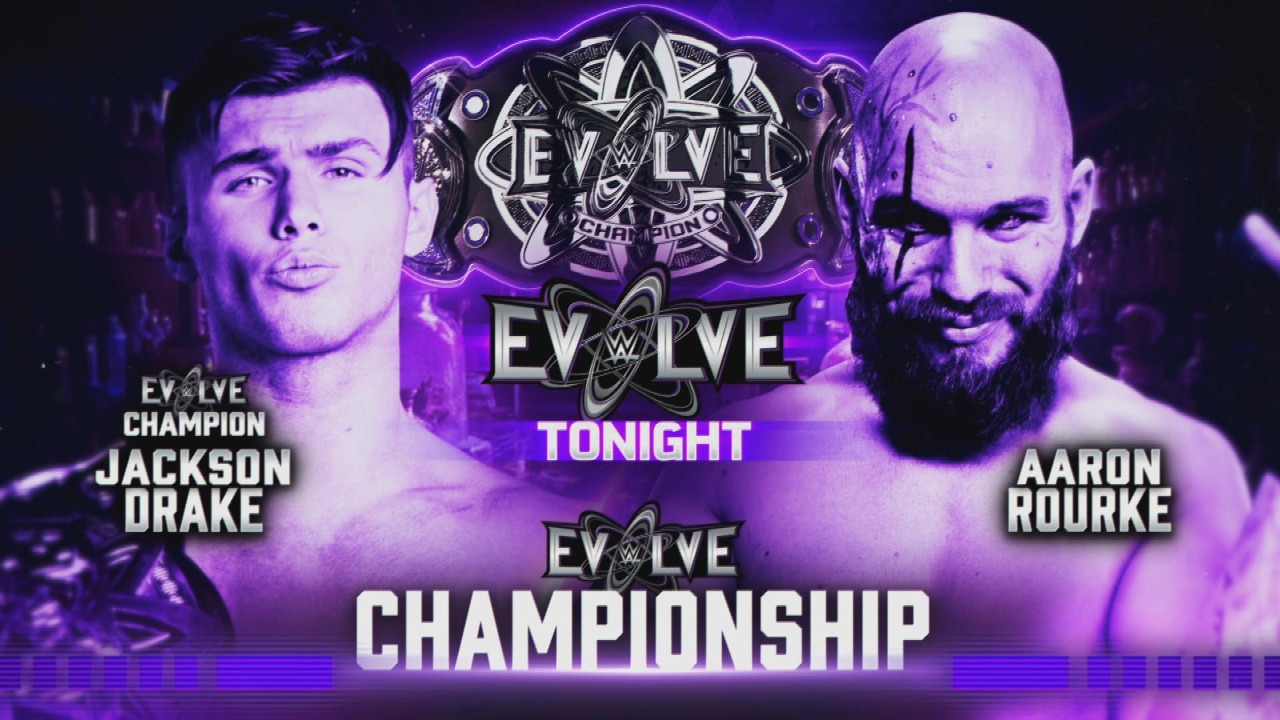
Their interference was executed with precision, designed to create a distraction and provide Drake with an opening. However, on this night, Aaron Rourke demonstrated an unforeseen level of focus and an unyielding will to overcome the numerical disadvantage. He fought through the chaos, not allowing the outside antics to derail his championship aspirations. This resilience in the face of adversity was a critical turning point, distinguishing this particular challenge from Drake’s previous title defenses. While The Vanity Project had proven to be an insurmountable obstacle for many, Rourke tapped into a deeper well of determination, seemingly fueled by the very attempts to deny him his moment. It was in these frantic, closing moments, with Baylor and Smokes circling like vultures, that Rourke seized his opportunity. He dodged a desperate charge from Drake, creating separation, and then, with an explosive burst of athleticism, launched himself skyward, executing his awe-inspiring Molly-Go-Round. This aerial maneuver, a breathtaking corkscrew senton, connected with devastating impact, flattening the reigning champion and securing the pinfall victory. The referee’s hand slapped the mat for the third and final time, signaling the end of Drake’s historic reign and the dawn of a new era.
The Molly-Go-Round, a move known for its spectacular visual and high-risk execution, carries a deeper significance for Aaron Rourke. It is a direct homage to one of his most profound inspirations, the legendary Lita. Along with Trish Stratus, Lita redefined the role of women in professional wrestling during a transformative era, breaking down barriers and captivating audiences with their athleticism, charisma, and willingness to push boundaries. Lita, in particular, was renowned for her daredevil maneuvers, often incorporating high-flying elements into her offense, with her signature Moonsault becoming an iconic finisher. For a male competitor like Rourke to openly draw inspiration from these trailblazing women, and to incorporate a move so intrinsically linked to Lita’s legacy, speaks volumes about his progressive outlook and his desire to stand out. It’s a subtle yet powerful statement, demonstrating that inspiration transcends traditional gender lines in the pursuit of athletic and artistic excellence within the wrestling ring. By adopting and perfecting such a complex maneuver, Rourke not only pays tribute to his heroes but also imbues his own wrestling style with a unique blend of high-flying spectacle and raw power, making him an incredibly exciting and unpredictable performer.
Rourke’s journey, beginning as a WWE ID recruit, highlights the evolving talent acquisition strategy of World Wrestling Entertainment. The ID program actively scouts athletes from various disciplines – including football, basketball, track and field, combat sports, and even bodybuilding – who may possess the raw physical tools and a captivating presence, but lack prior professional wrestling training. These individuals undergo intensive training at the WWE Performance Center, learning the intricacies of in-ring psychology, character development, and athletic execution from the ground up. The program offers a direct pipeline to the developmental system, emphasizing a diverse and global talent pool. For Rourke, entering WWE through this unique avenue meant he arrived with a clean slate, free from pre-conceived notions or established reputations from other wrestling promotions. His success serves as a compelling narrative for the program, showcasing that dedication, coupled with the comprehensive training environment, can indeed forge future champions. It provides a blueprint for aspiring athletes outside of traditional wrestling circles, demonstrating that there are now multiple pathways to realizing a dream of competing under the bright lights of WWE.
Jackson Drake’s tenure as the inaugural Evolve Champion was nothing short of remarkable. Being the first to hold any championship carries a distinct weight and responsibility. It means defining what that title represents, setting the tone for its legacy, and establishing the standard for all who follow. Drake embraced this role with a steely resolve, presenting himself as a dominant and cunning champion. His 301-day reign places him among the elite in terms of championship longevity within developmental territories, a testament to his consistent performance and ability to adapt to various challengers. Each of his twelve successful defenses wasn’t just a victory; it was a chapter in the story of the Evolve Championship, showcasing its value and elevating its prestige. From grueling technical battles to chaotic brawls, Drake navigated every challenge, often leveraging the strategic advantage provided by The Vanity Project. This long and successful reign firmly established Drake as a formidable presence, a champion who would be remembered not just for holding the title, but for defining its initial era.
The Evolve brand itself holds a significant place within WWE’s developmental ecosystem. Originating as a prominent independent promotion, Evolve was eventually acquired by WWE, integrating its identity and championship lineage into the larger developmental pipeline. It serves as a crucial intermediary step, a stage where promising talents from NXT and WWE ID recruits can hone their craft, develop their characters, and gain invaluable experience in front of live audiences. The Evolve Championship, therefore, is not merely a regional title; it is a vital indicator of readiness, a signal that a competitor has achieved a certain level of proficiency and main roster potential. Winning the Evolve Championship is often seen as a significant stepping stone, a final proving ground before a potential call-up to NXT proper, or even, in rare instances, a fast track to the main roster. For Aaron Rourke, capturing this title means he has graduated to a new tier of expectation and scrutiny, confirming his status as one of Evolve’s brightest prospects and a potential future star for the company.

The narrative arc for both Aaron Rourke and Jackson Drake will undoubtedly be shaped by the events of March 18, 2026. For Rourke, the challenge now shifts from hunting the championship to defending it. The pressure of being a champion, especially an inaugural champion in a new reign, brings its own set of unique demands. He will be expected to carry the brand, represent its values, and consistently deliver high-caliber performances. His unique inspirations and distinct wrestling style will surely continue to captivate audiences, and his reign promises to be an exciting chapter in Evolve history. The question now becomes: how will Rourke evolve as champion, and what fresh challenges await him as he seeks to solidify his legacy?
Conversely, for Jackson Drake, the loss of his beloved Evolve Championship marks a pivotal moment of introspection. After a dominant 301-day run, the defeat could either serve as a catalyst for a deeper, more ruthless version of himself, or it could lead to a period of self-doubt and re-evaluation. The role of The Vanity Project in his defeat—their interference failing to secure the victory—might also introduce cracks within the faction, forcing Drake to confront the efficacy of his alliance. Will he seek immediate retribution, demanding a rematch to reclaim what he believes is rightfully his? Or will he embark on a different path, perhaps one of rebuilding and recalibrating his strategy, aiming for an even grander prize within the WWE universe? The dynamics of his character and his relationship with Brad Baylor and Ricky Smokes will be fascinating to observe as they navigate this unexpected setback.
The Evolve brand continues to be a vibrant crucible of talent, where future main roster stars are forged and compelling narratives unfold. The championship scene, now invigorated by Aaron Rourke’s triumph, is poised for an exciting future. Rourke’s victory is not just a personal milestone; it’s a narrative declaration that the traditional boundaries of inspiration are being expanded, that new pathways to success are being validated, and that the competitive spirit of Evolve remains as fierce and unpredictable as ever. The March 18, 2026, episode will be remembered as the night a new champion emerged, not just through skill and determination, but by overcoming the odds and proving that even a well-oiled machine like The Vanity Project can be dismantled by sheer will and a perfectly executed Molly-Go-Round. The Evolve Universe now eagerly awaits the next chapter, as Aaron Rourke begins his reign, carrying the torch passed from a dominant champion and ushering in an era ripe with potential and untold stories.