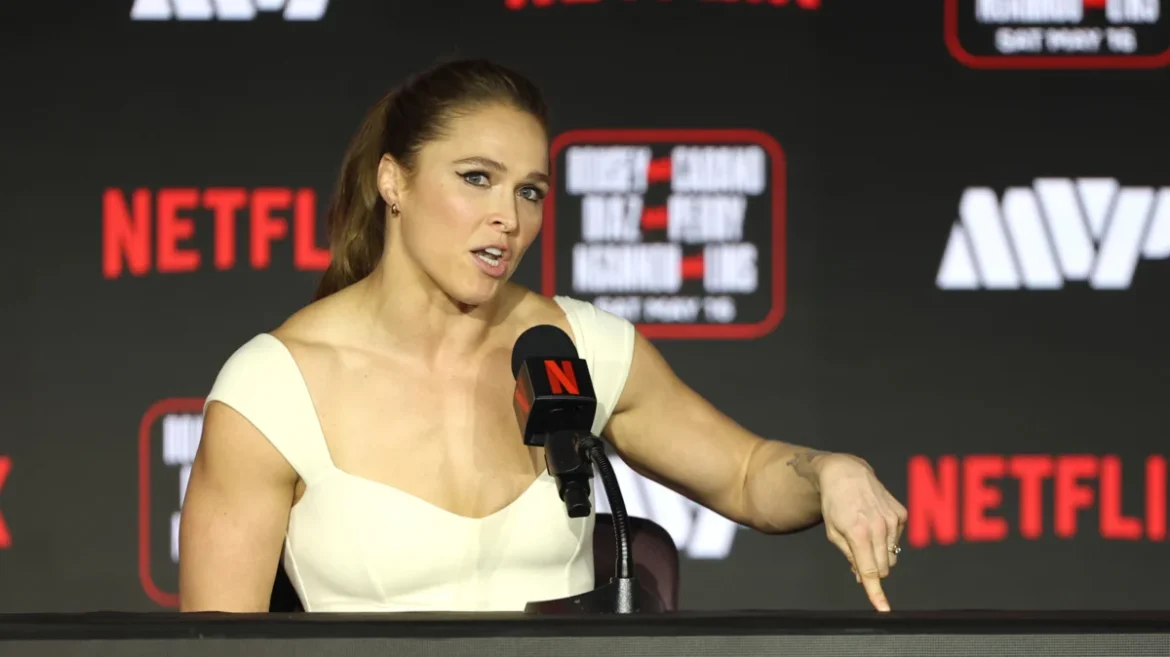
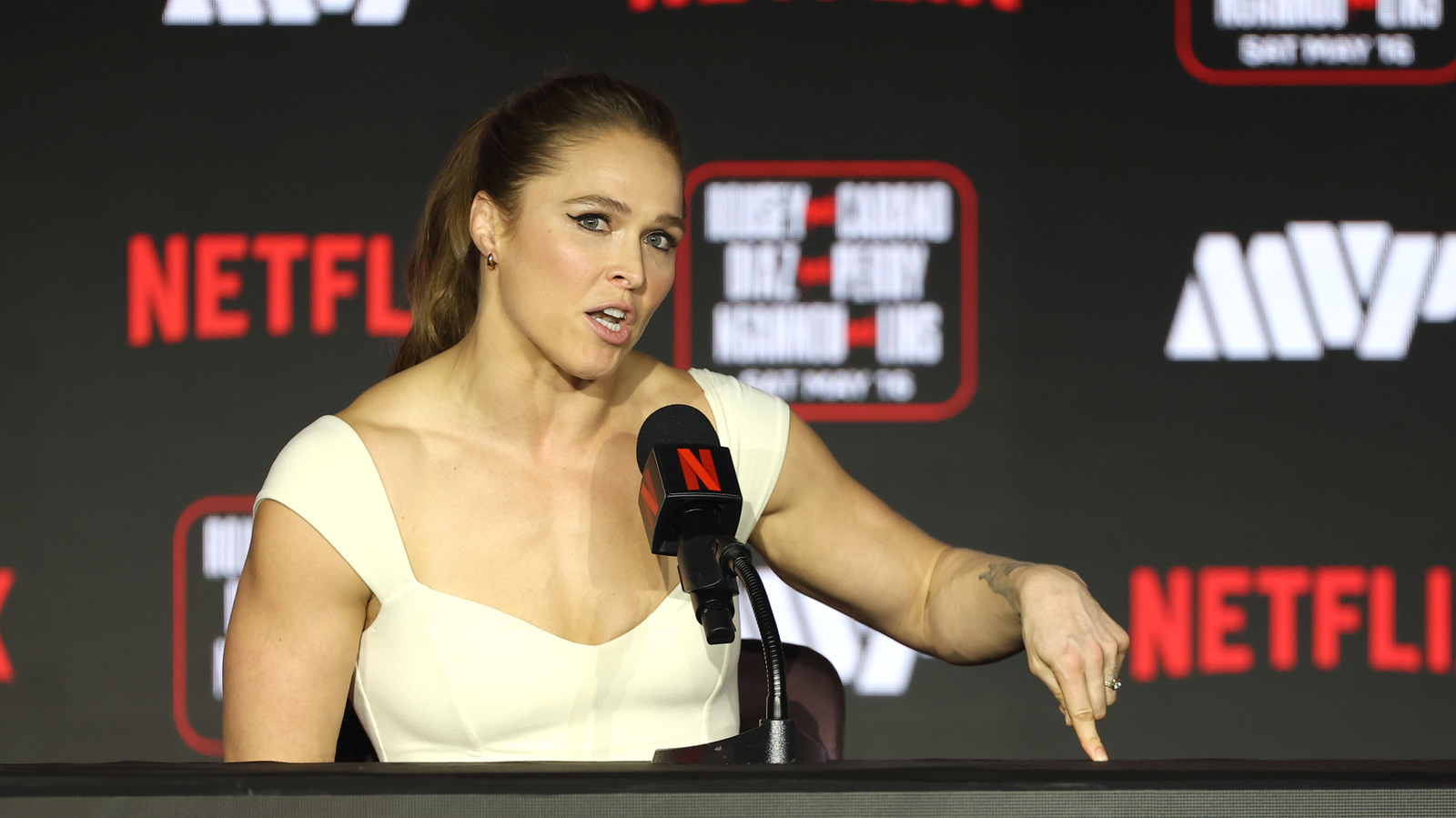
Ronda Rousey, a figure who has carved a unique path across the demanding landscapes of mixed martial arts and professional wrestling, has recently articulated a compelling perspective on how fighters can elevate their craft beyond pure athletic prowess. Speaking at a press conference for MVP MMA in New York, Rousey, a former UFC Bantamweight Champion and WWE Superstar, emphasized the critical importance of storytelling within the context of modern combat sports. Her insights, drawn from her extensive experience in both disciplines, suggest a fundamental shift in how athletes might approach their careers, urging them to embrace the theatrical and narrative elements that have long been the bedrock of sports entertainment. Rousey’s argument is not to diminish the legitimacy of MMA as a sport, but rather to highlight its potential for broader appeal when infused with compelling narratives, a concept she believes is often overlooked by athletes solely focused on the physical confrontation.
Rousey’s advocacy stems from a deep understanding of what captivates audiences. She drew a parallel between the sporadic, intense interest in events like the Olympics and the consistent engagement required to maintain a fanbase for a sport like MMA. While acknowledging the incredible athleticism displayed in Olympic disciplines, she pointed out that their infrequent occurrence limits their ability to sustain ongoing public fascination. Similarly, Rousey suggested that without a compelling narrative thread, even the most technically brilliant MMA contests might struggle to capture the sustained attention of a wide audience, especially when compared to the consistent draw of weekly sports entertainment programming. This is where her experience in WWE becomes particularly relevant. Professional wrestling, by its very nature, is built upon intricate storylines, character development, and dramatic conflict. Rousey, having been a prominent figure in this world, understands that the emotional investment of fans is often as crucial as the in-ring action itself.
Her core message to her fellow mixed martial artists is clear: every bout, regardless of its billing, should possess a discernible story. This story, she argues, is not merely a pre-fight promotion or a soundbite; it’s an intrinsic element that the fighters themselves must conceptualize and execute. Rousey encourages athletes to delve into the unique dynamics of their matchups, asking themselves what specific elements – be it personal history, contrasting fighting styles, or underlying motivations – differentiate their contest from any other. This introspective approach, she believes, allows fighters to imbue their performances with a deeper meaning and a more potent emotional resonance, thereby forging a stronger connection with the viewers. It’s about moving beyond the primal instinct of competition to the art of performance, where every strike, submission, and defensive maneuver can contribute to a larger, more engaging narrative.
Rousey elaborated on this by stating that an athlete’s primary responsibility extends beyond simply showcasing their physical capabilities. While acknowledging the inherent coolness and skill of many fighters, she cautioned against a perceived aloofness or a belief that their inherent talent is sufficient. According to Rousey, this attitude can be detrimental to building a fan base. The ultimate goal, she reiterated, is to generate interest and encourage people to watch their fights. Therefore, she implores fighters to invest thought and effort into crafting the narrative of their performances, emphasizing that this is not a secondary concern but an integral part of their professional obligation. This perspective challenges the traditional view of MMA as a purely meritocratic sport where the best fighter inevitably wins and is recognized, suggesting instead that the ‘best’ fighter in terms of fan engagement is often the one who can best tell their story.
The timing of Rousey’s remarks is particularly significant, as she is slated to headline the inaugural MVP MMA event on May 16th, facing Gina Carano in a bout that is already steeped in narrative. Both fighters are making significant comebacks, each carrying a decade or more of absence from the sport. For Rousey, this return is tinged with the memory of her devastating knockout loss to Amanda Nunes just under a minute into their fight ten years ago. This personal narrative of seeking redemption and closure is a powerful element that she and Carano have been actively promoting. Carano, in turn, is returning after a 17-year hiatus, with her last fight being a similarly swift defeat against Cris Cyborg in the opening round. The juxtaposition of these two high-profile figures, both seeking to reclaim their past glory and overcome past setbacks, creates an inherent drama that transcends the mere technicalities of their fighting styles.
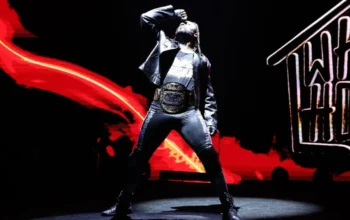
Rousey’s embrace of storytelling in MMA is not an anomaly but a logical extension of her career trajectory. After dominating the women’s bantamweight division in the UFC, her transition to WWE saw her quickly adapt to the theatrical demands of professional wrestling. She demonstrated an innate ability to connect with the audience, delivering compelling promos and participating in dramatic storylines that showcased her charisma and intensity. This period allowed her to hone her skills in character work and the art of building anticipation for a match, lessons she now feels are directly transferable to her return to MMA. She understands that while the striking and grappling exchanges are the physical manifestation of the contest, the emotional investment of the fans often hinges on the perceived stakes and the personal journeys of the combatants.
The professional wrestling world, despite its pre-determined outcomes, has long understood the power of a well-crafted narrative. Feuds are built on betrayal, revenge, or the quest for championship glory. Characters are designed with distinct personalities and motivations, making their clashes more than just athletic contests; they become dramatic confrontations. Rousey’s suggestion that MMA fighters adopt a similar mindset is not about introducing kayfabe or fabricated rivalries, but about leveraging the genuine emotions and circumstances surrounding a fight to create a more engaging spectacle. It’s about recognizing that the audience wants to invest in the fighters as people, with hopes, fears, and compelling reasons to compete.
Consider the impact of a fighter who not only possesses exceptional skills but also has a clear and relatable backstory. Perhaps they are fighting for their family, overcoming adversity, or seeking to prove a doubter wrong. These elements, when effectively communicated, transform a fight from a simple display of athletic ability into a human drama. Rousey’s experience has taught her that the ‘story of the match’ can be found in the subtle nuances of a fighter’s demeanor, their pre-fight interviews, and even the way they carry themselves. It’s about finding the unique selling points of each individual and their particular matchup, and then amplifying those aspects to create anticipation and emotional connection.
The current landscape of combat sports, particularly MMA, is increasingly recognizing the value of this narrative approach. Promoters and fighters alike understand that a compelling storyline can significantly boost ticket sales, pay-per-view buys, and overall viewership. Rousey’s comments serve as a powerful endorsement of this trend, coming from an athlete who has experienced success in both the purely competitive arena of MMA and the performance-driven world of professional wrestling. Her ability to bridge these two worlds and draw lessons from each is a testament to her sharp intellect and her understanding of what truly captivates an audience in the realm of sports entertainment.
Furthermore, Rousey’s call for fighters to be entertainers is not a criticism of their dedication or athletic integrity. Instead, it’s an invitation to embrace a more complete aspect of their professional identity. Just as a compelling actor must not only possess talent but also the ability to engage an audience, an MMA fighter, in Rousey’s view, benefits from developing their capacity to tell a story. This can manifest in various ways: through charismatic interviews, engaging social media presence, or simply by embodying a particular persona or narrative within the confines of the octagon. The goal is to create a holistic experience for the fan, one that encompasses both the thrill of the fight and the emotional investment in the fighters’ journeys.
The upcoming bout between Rousey and Carano exemplifies this principle. The narrative of two women making significant comebacks, each carrying the weight of past defeats and seeking redemption, is a powerful hook. It’s a story of resilience, determination, and the pursuit of closure. By actively promoting this narrative, both fighters and the promotion are building a compelling reason for fans to tune in, beyond just the technical aspects of their potential striking and grappling exchanges. This strategic storytelling, championed by Rousey, is what elevates a fight from a mere sporting event to a cultural moment.
In conclusion, Ronda Rousey’s perspective offers a valuable insight into the evolving nature of combat sports. Her emphasis on storytelling, drawing from her dual experiences in MMA and professional wrestling, underscores the idea that athletic competition can be significantly enhanced by compelling narratives. By encouraging fighters to think about the ‘story of their match’ and to embrace their role as entertainers, Rousey is advocating for a more holistic and engaging experience for fans. This approach not only benefits individual athletes by increasing their appeal and marketability but also contributes to the broader growth and sustained popularity of mixed martial arts as a spectacle that resonates on multiple levels. Her upcoming fight with Gina Carano is poised to be a prime example of this philosophy in action, demonstrating how a well-crafted narrative can transform a high-stakes contest into an unforgettable event.