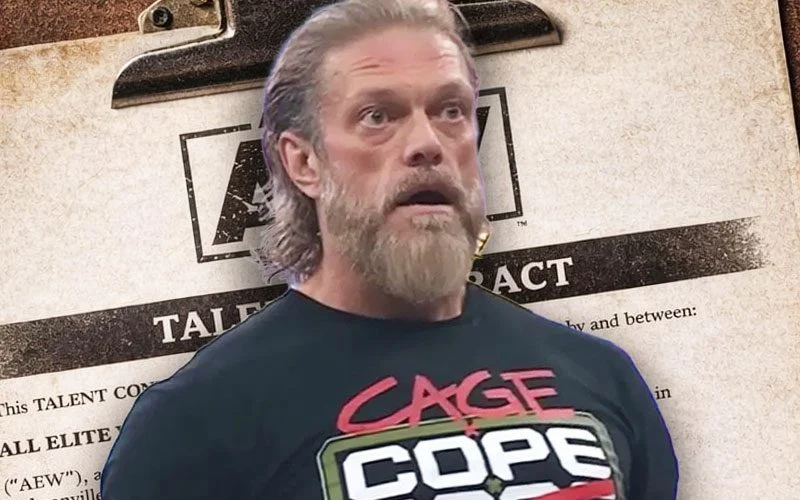
When the lights dimmed at the conclusion of WrestleDream in Seattle back in 2023, the professional wrestling world shifted on its axis as a familiar set of chords signaled the arrival of one of the most decorated legends in the history of the industry. Adam Copeland, known for decades as the Ultimate Opportunist, stepped into the All Elite Wrestling ring with a clear mission: to finish his career on his own terms while helping to bridge the gap between the legends of the past and the stars of the future. At that moment, the narrative seemed straightforward, with fans and analysts alike speculating on a three-year journey that would culminate in a final, emotional farewell. However, the reality of life in the squared circle is rarely linear, and the man who once thought he had a firm grasp on his retirement timeline now finds himself navigating a much more fluid and uncertain path. Recent revelations from the veteran performer suggest that his tenure with the Jacksonville-based promotion has become significantly more complex due to the fine print of modern wrestling contracts and the physical demands of his high-octane style.
The concept of a wrestling contract has evolved over the years, moving from simple handshake agreements to dense legal documents that account for every possible variable. One of the most significant clauses in contemporary deals involves the preservation of time during periods of inactivity. In the world of AEW, as in many major organizations, the clock on a performer’s commitment often pauses when they are unable to fulfill their in-ring duties. For Copeland, this has become a defining factor in his current status. He has openly acknowledged that the expected expiration date of his agreement is no longer a fixed point on the calendar. Instead, it has become a moving target, pushed further into the future by a combination of unfortunate physical setbacks and flourishing opportunities in the world of entertainment. While he may have initially envisioned a specific year for his final bow, the internal mechanics of his professional arrangement mean that he will likely be a fixture of the AEW roster for longer than anyone had originally anticipated.
The primary catalyst for this shift was a harrowing moment during a high-stakes championship defense that reminded everyone of the inherent risks involved in the sport. During his intense rivalry over the TNT Championship, Copeland engaged in a brutal barbed wire steel cage match against Malakai Black at the Double or Nothing pay-per-view. In a characteristic display of the "Rated R" intensity that made him a household name, he ascended to the top of the structure to deliver a devastating elbow drop. The landing, however, was unforgiving. The impact resulted in a fractured tibia, an injury that required immediate surgical intervention and a grueling rehabilitation process. For a man in his early fifties, such an injury is more than just a temporary setback; it is a significant disruption that triggers the extension clauses in a standard wrestling contract. Every week spent in a hospital bed or a physical therapy clinic is a week that is eventually tacked onto the end of his deal, ensuring that the promotion receives the full value of the time they originally negotiated.
Beyond the physical toll of the ring, Copeland’s burgeoning career in front of the camera has also played a role in the lengthening of his wrestling journey. Long before he stepped foot in an AEW ring, he had established himself as a capable actor, but his recent projects have taken his Hollywood profile to new heights. His portrayal of the god of war, Ares, in the acclaimed series Percy Jackson and the Olympians earned him widespread praise, and his involvement in major cinematic sequels like The Beekeeper 2 has required him to step away from the wrestling spotlight for extended periods. In the modern landscape of the industry, these "outside projects" are often treated similarly to injury time. When a talent is granted leave to film a television show or a movie, that time is frequently added to the back end of their contract. Copeland has been transparent about this reality, noting that his various forays into the world of acting have contributed to the ambiguity surrounding his eventual departure from the ring.
This lack of a definitive end date creates a unique dynamic for both the performer and the fans. For Copeland, the uncertainty is a byproduct of a career that he once thought was over more than a decade ago. In 2011, he was forced into a sudden and heartbreaking retirement due to severe neck issues, a moment that remains one of the most emotional segments in the history of televised wrestling. At that time, he had no control over his exit; the decision was made for him by medical professionals who warned that a single wrong move could result in paralysis. Coming back from that abyss to enjoy a multi-year "second act" has given him a different perspective on the end of his career. He has noted that while his first retirement was a traumatic shock to the system, his eventual second retirement will likely be a much more manageable experience. This time around, he is the one steering the ship, and he is doing so with the wisdom of a man who knows exactly how to navigate the emotional waters of saying goodbye.
The physical reality of being a fifty-year-old wrestler is another factor that Copeland discusses with a refreshing level of honesty. He has often joked about the state of his body, describing arthritis as a constant companion and noting the symphony of cracks and pops that accompany his morning routine. While his mind remains as sharp as ever when it comes to ring psychology and storytelling, the "Rated R Superstar" is acutely aware that his biological clock is ticking louder than any contractual one. He has admitted that his body is beginning to give up on him, making the decision to eventually walk away much easier than it was in his thirties. When the pain of the performance begins to outweigh the thrill of the crowd, the choice to retire becomes a matter of necessity rather than a difficult emotional struggle. He has reached a point where he no longer feels the need to prove anything to the world, having achieved every major milestone the industry has to offer.
Despite the looming shadow of retirement, Copeland’s run in AEW has been defined by a sense of urgency and a desire to contribute. His "Cope Open" challenges became a highlight of weekly programming, allowing him to share the ring with a diverse array of talent, from high-flying technicians to hard-hitting brawlers. These matches were not just about personal glory; they were about testing the mettle of the next generation and proving that he could still go at an elite level. His rivalry with Christian Cage, his lifelong friend and legendary tag team partner, served as the emotional backbone of his early AEW tenure. The two men, who started their journey together in the small rings of the Canadian independent circuit, were able to tell a sophisticated, multi-layered story that captivated the audience. It was a full-circle moment that underscored the importance of this final run, allowing them to recapture the magic of their youth while operating at the peak of their creative powers.
As the months turn into years, the question of exactly when Adam Copeland will hang up his boots remains unanswered. He has confessed that even he is unsure of the specific date when his obligations to AEW will be fulfilled. The accumulation of injury time and filming hiatuses has created a buffer that could see him competing well past his original target age of fifty-three. This extension is a double-edged sword for the wrestling community. On one hand, it allows fans to savor the presence of a true icon for a little while longer, providing more opportunities for dream matches and memorable promos. On the other hand, it places a significant physical burden on a man who has already given everything to the business. The "back end" of a contract can feel like a long time when you are nursing a healing leg and dealing with the long-term effects of a thirty-year career.
The legacy of Adam Copeland is already secure, regardless of when he chooses to step away. He is a multi-time world champion, a Hall of Famer, and a pioneer of the TLC match era. However, his time in All Elite Wrestling is adding a vital final chapter to his story—one defined by resilience and the pursuit of a perfect ending. He is no longer the young man chasing championships at all costs; he is the elder statesman looking to leave the business better than he found it. The fact that his contract has likely been extended is a testament to his value to the company. Tony Khan and the AEW leadership clearly view him as a foundational piece of their roster, someone whose presence brings a level of credibility and star power that is difficult to replicate. Whether he stays for another year or another three, his impact on the locker room and the product at large is undeniable.
Ultimately, the Rated R Superstar’s eventual departure will be a moment of celebration rather than sorrow. He has earned the right to go out on his own terms, a luxury that very few in his profession are ever afforded. When the time finally comes to put the boots in the center of the ring, he will do so knowing that he squeezed every possible drop of potential out of his second chance. The uncertainty of his contract end date is merely a footnote in a much larger narrative of a man who refused to let a career-ending injury be the final word on his life’s work. As he continues to heal, film, and eventually return to the ring, the wrestling world will be watching, aware that every match could be the beginning of the end for one of the greatest to ever do it. The clock may be ticking, and the timeline may be shifting, but Adam Copeland remains the master of his own destiny, ready to face the finish line whenever it finally appears on the horizon.