The landscape of combat sports is often a tapestry woven with threads of what-ifs and potential dream matchups that never quite materialize. Among these tantalizing possibilities, the hypothetical clash between two of women’s mixed martial arts’ most pioneering figures, Gina Carano and Ronda Rousey, has always held a particular allure. While their eventual meeting is now set to unfold under a different banner, recent revelations shed light on how close this monumental contest once was to becoming a reality within the hallowed octagon of the Ultimate Fighting Championship. Gina Carano, in a candid conversation, has divulged that the prospect of facing Rousey was initially something she fervently desired to pursue under the UFC’s promotional umbrella, even going so far as to express a provisional agreement for a late 2025 showdown, a timeframe that underscores the protracted nature of these high-stakes negotiations.
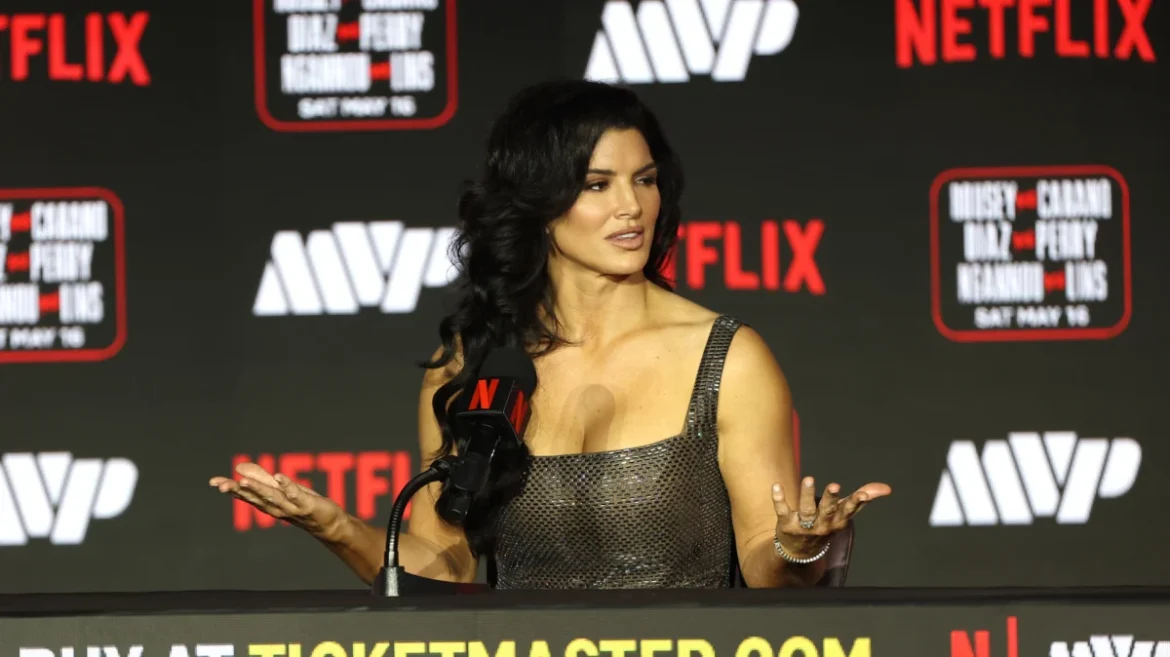
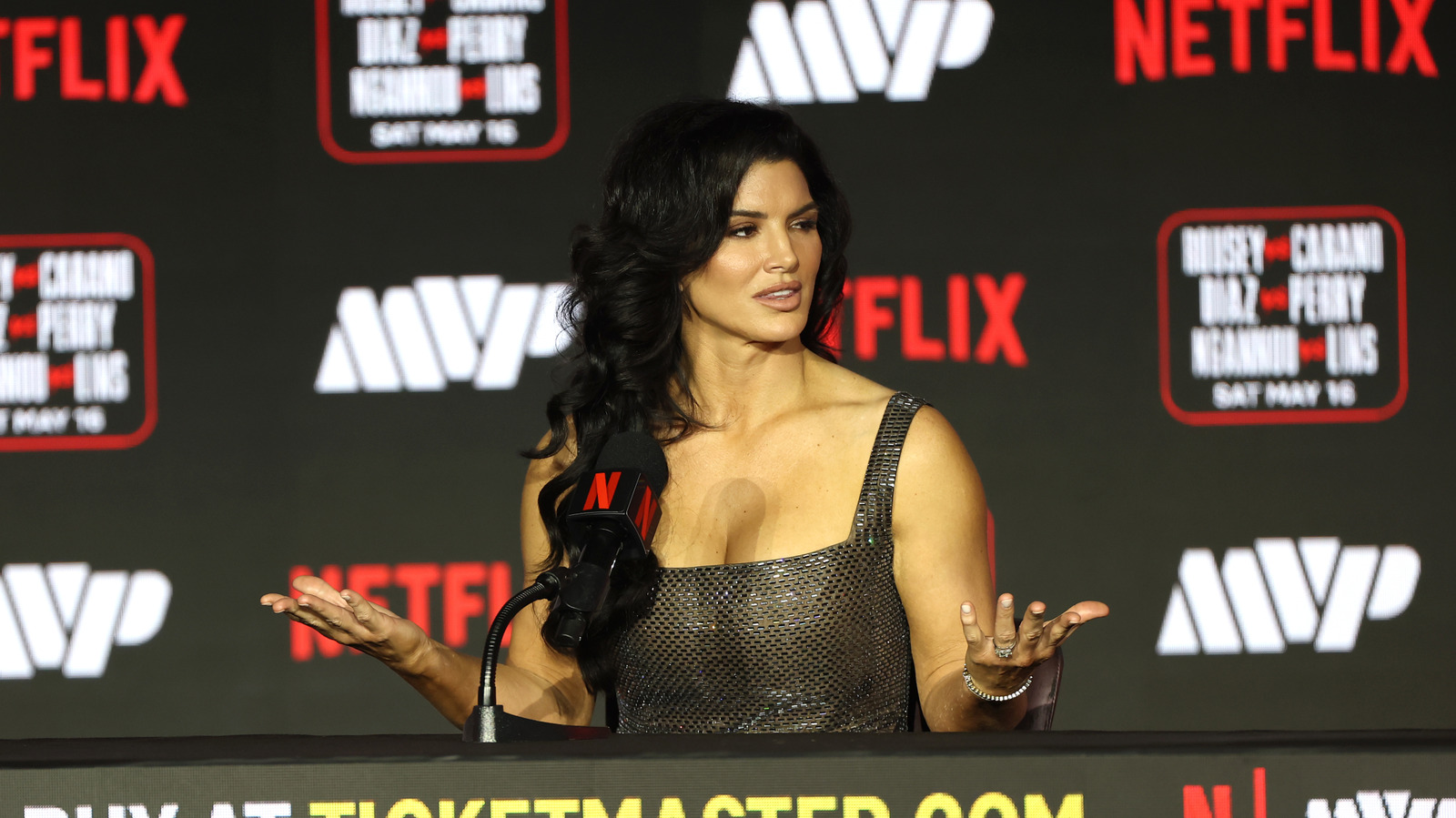
Carano’s journey back to competitive fighting, her first in seventeen years, is set to culminate in a highly anticipated bout against Ronda Rousey, who herself is returning to the forefront after a decade away. This contest, poised to be a landmark event as the inaugural MMA offering to be broadcast on Netflix, is being framed as a defining moment for two women who undeniably carved out significant paths in the sport. However, this specific platform and timing were not the initial blueprint. Carano has detailed how discussions and preparations for a comeback began in earnest around September of the previous year, though she readily acknowledged that the road back to peak fighting condition was still a considerable undertaking.
The conversation with Ariel Helwani provided a fascinating glimpse into the machinations behind the scenes. UFC President Dana White, according to Carano, had broached the subject of a return bout, proposing a potential date at the tail end of 2025, specifically December. Carano, despite the significant physical demands of shedding weight, expressed a willingness to consider the offer, stating, "Dana was like, ‘Okay, how about you’ll fight at the end of 2025, December?’ And I was like, ‘Well I still have a lot of weight to rip off, but okay.’" It was at this juncture that Rousey entered the fray, initiating direct contact with Carano. This personal appeal, coupled with the complex interplay between Rousey, the UFC, White, and the involved management figures such as Nakisa Bidarian, created a dynamic where Carano felt her negotiating leverage was largely predicated on Rousey’s singular desire to face her. "Then Ronda got a hold of me and there was just a lot happening between Ronda, UFC, Dana, and MVP, Nakisa [Bidarian] … I mean, I didn’t really have that much negotiating power except the fact that Ronda wants to fight me. She’s the only one she wants to fight. So I was just like, ‘Ronda, go for it. I’m cool either way.’" This sentiment highlights a fighter willing to defer to the desires of a fellow icon, prioritizing the marquee matchup above all else.
Carano further elaborated that White’s initial overture specifically mentioned Rousey as her opponent and set a target date of December 2025. While she verbally agreed to this timeline, she emphasized that discussions regarding financial terms had not yet taken place, understanding that such details would naturally follow. The allure of the UFC, a promotion where she had previously competed and achieved significant success, remained a powerful draw. "I really wanted to do UFC," Carano affirmed. "Make that walk." However, she also recognized Rousey’s pivotal role in driving the narrative. "But, you know, I think that Ronda, like she led the way… I don’t know [how close it got to being official]. That would be between Ronda and Dana. She led the way 1000%. I just said yes." This statement underscores Carano’s willingness to be a willing participant in a Rousey-led initiative, acknowledging that the former bantamweight queen was the primary catalyst for making the fight a reality.
The narrative of Gina Carano and Ronda Rousey’s potential UFC showdown is not just a tale of two fighters, but a reflection of the broader evolution of women’s MMA. Both athletes emerged during a period when the sport was still grappling with mainstream acceptance and when female combatants were fighting not only their opponents but also for recognition and respect. Rousey, with her Olympic judo background and devastating armbar submission, burst onto the scene like a supernova, becoming the first dominant female champion in the UFC and a bona fide global superstar. Her charisma, unapologetic attitude, and undeniable fighting prowess captivated audiences, shattering perceptions about what women could achieve in a physically demanding sport. She was the face of women’s MMA for a significant stretch, drawing massive ratings and headlining major events.
Gina Carano, meanwhile, predated Rousey’s UFC dominance but was instrumental in laying the groundwork for female fighters to be taken seriously. A highly skilled Muay Thai practitioner, Carano possessed a blend of striking power, technical proficiency, and a captivating screen presence that made her a crossover star. Before her UFC debut in 2007, she was a prominent figure in Strikeforce, where she became the inaugural women’s featherweight champion. Her fights were often exciting, showcasing her striking acumen and resilience. Her victory over Julie Kedzie and her subsequent title defense against Kaitlin Young cemented her status as one of the sport’s premier female talents. Carano’s appeal extended beyond the cage; her roles in Hollywood films like "Haywire" demonstrated her marketability and broad appeal, proving that female athletes could transcend the confines of their sport.
The inherent fascination with a Carano vs. Rousey bout stems from their contrasting yet complementary skill sets and their shared status as trailblazers. Rousey’s ground game, particularly her relentless pursuit of the armbar, was legendary. She had a knack for making her opponents uncomfortable, clinching them against the cage and dictating the pace. Carano, on the other hand, was a formidable striker, known for her powerful kicks and boxing combinations. She possessed excellent defensive skills and a toughness that allowed her to weather storms and fight back effectively. A stylistic clash between Rousey’s grappling pressure and Carano’s striking precision promised an enthralling tactical battle.
The discussions about a potential fight between them were not new. For years, fans and media alike speculated about this dream matchup. The idea gained significant traction in the mid-2010s, when both were at or near their respective peaks. However, various factors prevented it from materializing. Injuries, promotional hurdles, and differing career trajectories all played a role. Carano, after her loss to Miesha Tate in Strikeforce in 2012, took an extended hiatus from the sport, focusing on her acting career. Rousey, meanwhile, ascended to unprecedented heights within the UFC, becoming a household name. By the time Rousey experienced her own career setbacks and eventual retirement from active competition, the window for a UFC-sanctioned bout between them had seemingly closed.
The fact that Carano was willing to commit to a December 2025 date, even with the significant weight cut ahead, speaks volumes about her desire to compete against Rousey specifically. It suggests a deep-seated respect and perhaps a sense of unfinished business, not necessarily in terms of a rivalry, but in terms of a monumental clash that would have been a crowning achievement for women’s MMA. The proposed timeline, while distant, offered a realistic buffer for Carano to prepare adequately. The mention of Dana White’s involvement and the proposed date implies that UFC brass was at least exploring the possibility, understanding the immense drawing power of such a contest.
The subsequent shift to a different platform for their eventual fight is a testament to the complex world of sports promotion and athlete negotiation. While the UFC remains the premier destination for mixed martial arts, other entities are increasingly making significant inroads. The emergence of streaming services as major players in sports broadcasting has opened up new avenues for high-profile events. The ability for a platform like Netflix to secure a bout of this magnitude underscores the evolving media landscape and the continued demand for compelling combat sports content. It also highlights that fighter power and the desire for specific matchups can sometimes transcend traditional promotional boundaries.
Carano’s statement that she "didn’t really have that much negotiating power except the fact that Ronda wants to fight me" is a crucial piece of information. In the world of professional fighting, a fighter’s ability to command a certain matchup, especially against another high-profile opponent, is often the strongest negotiating chip. Rousey, by expressing her singular desire to face Carano, was essentially creating a situation where Carano held immense leverage, even if she chose not to exercise it aggressively in the negotiation room. This mutual interest, driven by Rousey, seems to have been the primary engine behind the discussions.
The mention of "MVP" and Nakisa Bidarian likely refers to Martin S. Evans (MVP) and Nakisa Bidarian, who are involved in the management and business aspects of combat sports. Their involvement suggests that serious business considerations were being explored, beyond just the athletic aspect. This points to the intricate web of contracts, financial incentives, and promotional strategies that surround any major fight announcement. The fact that Carano was willing to accept White’s initial proposal, even without concrete financial terms, indicates a strong willingness to make the fight happen within the UFC framework.
Ultimately, while the dream of a UFC-headlined Carano vs. Rousey mega-fight may not have materialized in the way originally envisioned, its near-realization serves as a powerful reminder of the sport’s rich history and the enduring legacy of these two incredible athletes. Their journeys have inspired countless individuals, and the prospect of them finally sharing the ring, regardless of the promotional banner, is a testament to their indelible impact. The conversations and negotiations, though they ultimately led down a different path, highlight the immense respect and mutual desire for this showdown that existed within the combat sports community. It’s a chapter in the "what-if" book of MMA that, while closed in one sense, still resonates with the excitement of what could have been, and what will now be.