The final broadcast of Monday Night Raw before the monumental WrestleMania 42 event unfolded on April 13th, 2026, serving as the ultimate platform to solidify narratives and inject last-minute urgency into the stacked card. As is tradition with go-home shows, the broadcast aimed to capitalize on established rivalries and burgeoning storylines, setting the stage for the year’s biggest spectacle. This particular episode, however, presented a mixed bag, offering moments of genuine brilliance alongside segments that left the audience wanting more substance and less filler. The creative team navigated the delicate balance of providing closure to some arcs while amplifying the stakes for others, with varying degrees of success. While the overarching goal was clear – to ensure every match on the WrestleMania card felt essential – the execution on this night proved to be a complex tapestry, woven with threads of both compelling drama and frustrating stagnation. The anticipation for WrestleMania is always palpable, but the effectiveness of the final push can often make or break the overall perception of the event. This edition of Raw provided a crucial, albeit imperfect, glimpse into the final preparations.
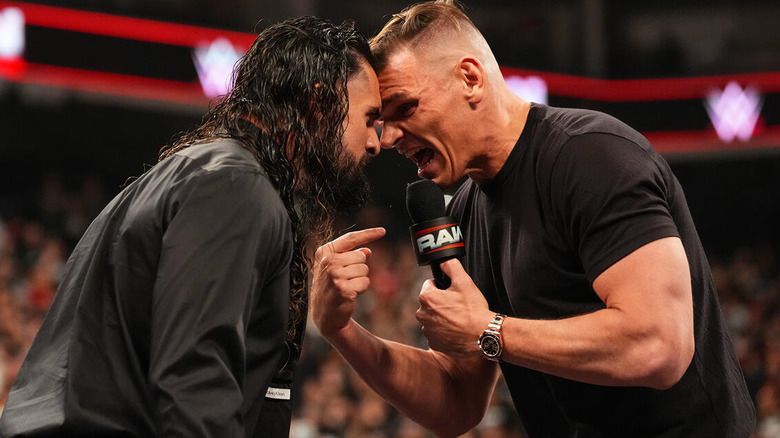
One of the most prominent criticisms leveled against this episode was its pronounced imbalance between in-ring action and protracted talking segments. In the critical period leading up to a major premium live event like WrestleMania, the expectation is often for explosive confrontations and definitive advancements of feuds. However, this Raw leaned heavily on dialogue, with lengthy promos and backstage interviews often overshadowing any physical altercations. While the creative team, under the guidance of Triple H, has often favored character development through verbal exchanges, the sheer volume of talking on this particular broadcast felt excessive, bordering on soporific for segments of the audience. This approach, while intended to flesh out motivations and personal stakes, ultimately risked diluting the impact of the few matches that did take place. The show featured a limited number of contests, with a couple of women’s bouts standing out for their quality. Beyond these, much of the broadcast felt protracted or even tangential to the core storylines leading into the biggest weekend in professional wrestling. The narrative surrounding the Bloodline’s internal machinations, specifically involving Solo Sikoa and Tama Tonga, and the budding conflict between Asuka and IYO SKY, managed to progress. However, many other promising feuds seemed to tread water, relying on verbal sparring rather than escalating physical conflict. The show did afford Oba Femi a significant opportunity to deliver a powerful monologue, a segment that was undeniably effective. Yet, this was contrasted by peculiar creative choices, such as dedicating substantial airtime to a music video for Liv Morgan while simultaneously cutting short or entirely omitting crucial promos from other talents, including Intercontinental Champion Penta, whose segment was reportedly truncated internationally as well. The decision to use a lengthy promo segment to explain the rationale behind the GUNTHER versus Seth Rollins match, a bout whose necessity on the WrestleMania card felt somewhat contrived due to the unfortunate injuries of their originally intended opponents, was another point of contention. Furthermore, the inclusion of a training montage for internet personality IShowSpeed, while an attempt to leverage his considerable social media popularity and ensure his visual presence, felt somewhat hollow given his physical absence from the broadcast itself. These pacing issues and questionable booking decisions contributed to a sense of dissatisfaction, as the build to WrestleMania 42, in general, had already been plagued by a somewhat disjointed and uninspired narrative. The hope was that the go-home episode would inject a much-needed dose of excitement, but instead, it largely mirrored the broader trend of a less-than-stellar build.
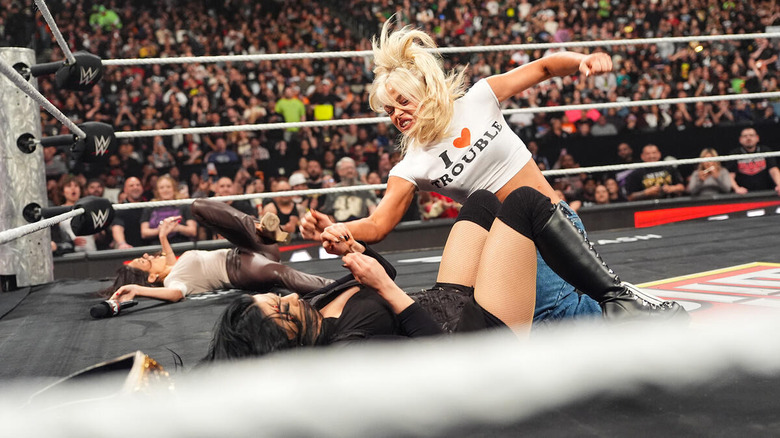
On the contrary, one shining beacon of the broadcast was the meticulously crafted final confrontation between Liv Morgan and the Women’s World Champion, Stephanie Vaquer. In a show that struggled to imbue many of its marquee matchups with a genuine sense of urgency, this segment served as a powerful punctuation mark, effectively amplifying the anticipation for their championship clash at WrestleMania. Despite its brevity, the encounter between Vaquer and Morgan resonated deeply, particularly given the extensive verbal exchanges the two women had engaged in throughout the preceding weeks. The decision to eschew further dialogue and instead deliver a raw, unadulterated pull-apart brawl proved to be an inspired choice. Morgan’s calculated provocation of Vaquer, culminating in a chaotic melee that even ensnared interviewer Cathy Kelley, captured the high-stakes intensity that had been conspicuously absent from many other segments. This aggressive, no-holds-barred exchange possessed the "big fight feel" that has been a missing element for much of the WrestleMania 42 card. It left a lasting impression, a testament to how a well-executed, emotionally charged segment can elevate a match far more effectively than endless talking. In a broadcast that felt simultaneously packed with inconsequential happenings and yet lacking in meaningful development, this brief but explosive encounter stood out as a singular moment of brilliance, a clear highlight that reminded audiences of the visceral thrill professional wrestling can deliver.
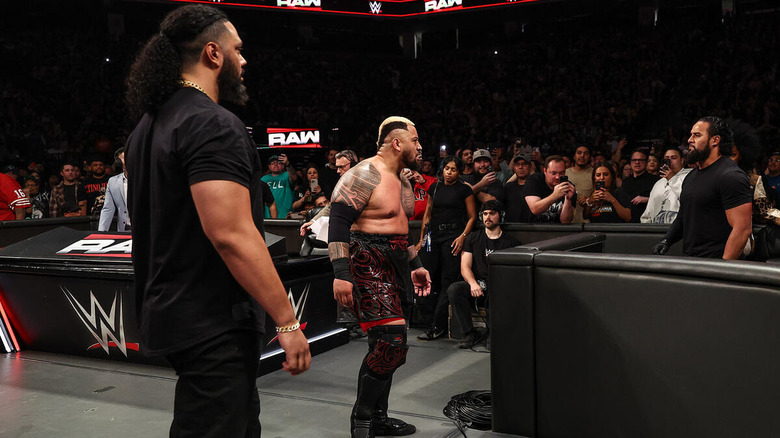
The presence of the "MFTs" (Make the Family Together) faction, even in a limited capacity, on a Raw broadcast felt like a misstep in building towards a major WrestleMania attraction. With the significant trios match on the horizon, pitting the Usos and LA Knight against IShowSpeed, Logan Paul, and Austin Theory, the responsibility fell on Knight and the Usos to generate momentum. However, the roster presented on Raw offered few credible challengers for them to face. This led to an almost obligatory cameo appearance from the MFTs, a group that includes Solo Sikoa, Talla Tonga, Tonga Loa, and JC Mateo. Sikoa, accompanied by his brethren, confronted the Usos, accusing them of disgracing the family name by aligning with LA Knight. Knight seized this opportunity, suggesting that since WWE official Adam Pearce was struggling to find opponents for them, they should face any three members of the MFTs. This led to a contest featuring Sikoa, JC Mateo, and Tanga Loa against Knight and the Usos. The segment was further complicated by the conspicuous absence and subsequent reappearance of Tama Tonga, who merely stood and observed as his brother, Sikoa, was ultimately defeated by the Usos’ signature BFT maneuver. Following the match, Knight and the Usos celebrated their victory, but the narrative thread regarding their WrestleMania encounter remained largely underdeveloped. Tama Tonga’s prolonged, intense stare-down with Solo Sikoa, punctuated by occasional glances at Talla, conveyed a sense of simmering tension, but its ultimate meaning remains obscure. This unresolved familial conflict is likely to be further dissected on Friday’s SmackDown, a show where the MFTs’ presence feels more organically aligned with their ongoing storyline concerning the Wyatt Sicks and a symbolic lantern. The inclusion of the MFTs on Raw felt like a forced addition, lacking the impact and narrative clarity necessary for a crucial go-home show.
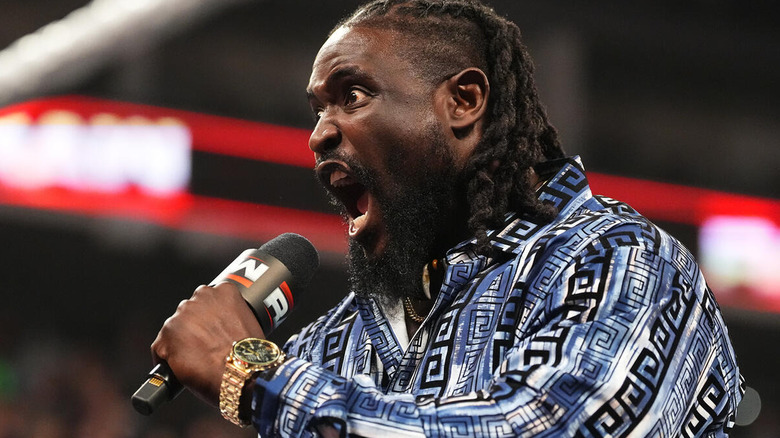
In stark contrast to the narrative stumbles, the segment featuring Oba Femi’s pre-WrestleMania promo delivered a performance that could genuinely be considered an all-time classic. Femi, a wrestler who possesses an extraordinary gift for oratory, far surpassing many of his peers, including legends like Brock Lesnar in this particular facet of his game, was given ample time to shine. The situation involved the signing of a contract for his upcoming bout, a proceeding that had been disrupted by a brawl the previous week. While many might have anticipated Lesnar to gain the upper hand in the lead-up to their match, the broadcast delivered a welcome surprise. Instead of a physical confrontation, the audience was treated to Femi engaging in a verbal joust with the seasoned veteran Paul Heyman. Heyman, acting as Lesnar’s advocate, presented a compelling case, acknowledging Femi as the fastest-rising star since Lesnar himself and even extending a hypothetical job offer for after Lesnar’s career concludes. Femi, however, swiftly dismissed the offer, his confidence unwavering. His delivery was masterful; he spoke with deliberate pacing, avoiding the pitfalls of speaking too rapidly or pausing in a manner that might invite disruptive crowd chants. His promo style perfectly complemented his imposing physical presence, projecting an aura of undeniable authority. Although he inspired a fervent "beat his ass" chant from the audience, prompting a slight recalibration of his lines, the interruption was minor and barely detracted from the overall impact. Femi declared himself "the one," a claim that resonated with the crowd, who clearly acknowledged his self-assuredness. He asserted that he knows it, the audience knows it, and by the time WrestleMania concludes, even Heyman will be convinced. The segment concluded with Femi dropping the microphone and staring down Heyman as the crowd erupted in support for "The Ruler," a powerful visual that left no doubt about his star potential. While concerns remain about Lesnar potentially winning due to his name recognition with a broader, casual audience, Femi’s performance has significantly bolstered confidence in the former NXT Champion’s ability to deliver a memorable performance on the grandest stage.
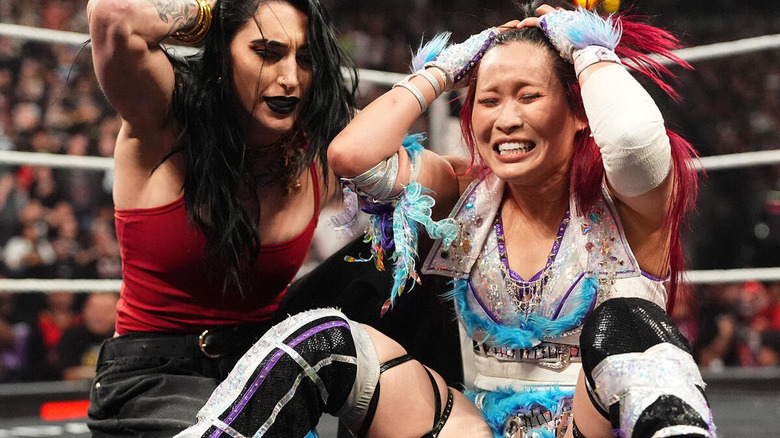
The booking of IYO SKY on this final Raw before WrestleMania left many questions unanswered and fostered a sense of creative disarray. The episode featured an impromptu singles match between SKY and her former stablemate, Kairi Sane. While the match itself was a solid display of in-ring talent, as is typical for these two performers, its significance was overshadowed by the unresolved narrative surrounding it. The interference of Asuka, who cost SKY the match, added another layer of confusion, as the purpose and long-term implications of this interference were not elucidated during the broadcast. This lack of clarity is particularly problematic for a go-home show, where definitive conclusions or at least clear pathways to resolution are expected. With SKY’s tag team partner, Dakota Kai, slated to challenge Jade Cargill for the Women’s Championship, the simmering feud between SKY and Asuka seemed poised for a confrontation. One would have anticipated this final Raw to provide a definitive timeline for this potential showdown, even if the match itself was not slated for WrestleMania. The ongoing feud between SKY and Asuka has been a prolonged affair with little apparent direction, and this episode failed to offer any semblance of closure or even a clear indication of its future trajectory. The unresolved nature of this storyline, especially on a show that felt like a compilation of lowlights rather than a compelling build, only served to exacerbate the frustration.
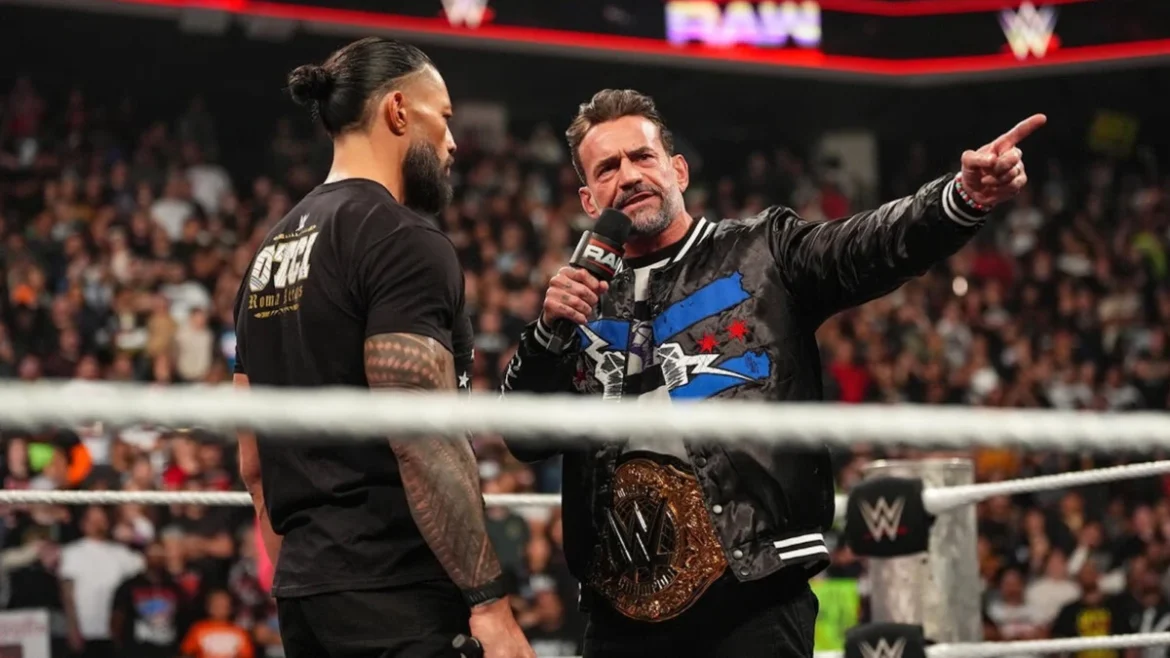
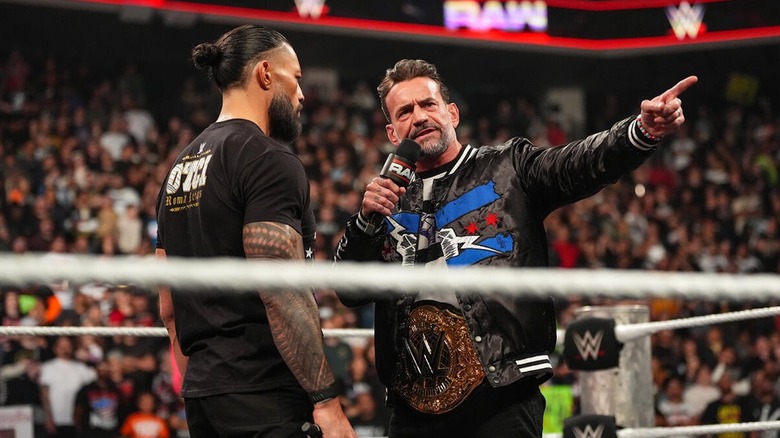
However, amidst the general narrative shortcomings, the closing segment featuring CM Punk and Roman Reigns offered a refreshing dose of raw, unadulterated honesty. In a broadcast where significant plot developments were scarce, this exchange stood out precisely because of its quiet authenticity. It evoked the powerful energy of their initial confrontation, the moment Reigns selected Punk as his WrestleMania opponent, and, more importantly, it returned to the fundamental storytelling principles of love and hate. This segment masterfully introduced another timeless thematic dichotomy: truth versus deception. The narrative was initiated by Reigns’ opening video package, which seemingly exposed Punk’s perceived falsehoods. This, in turn, prompted Punk to revive his signature "tell me when I’m telling lies" catchphrase, a nod to his AEW tenure. More significantly, it compelled both men to confront each other with unvarnished truth. The revelation was profound: each man harbored jealousy of the other, stemming from a self-loathing that fueled their animosity. Punk’s envy stemmed from Reigns’ familial bonds, the very connection Punk had always yearned for. Conversely, Reigns’ jealousy was rooted in Punk’s unparalleled connection with the fanbase, a void that birthed his "acknowledge me" mantra. Their hatred for one another was a direct consequence of possessing something the other desperately desired but could never truly attain. This portrayal of complex human emotion was far more compelling than generic threats of destruction. Punk’s apology for invoking the memory of Sika, and his subsequent abandonment of that particular angle in favor of genuine emotional resonance, was a welcome development. While the build-up to WrestleMania 42, and indeed this specific episode of Raw, may not be remembered as the zenith of wrestling storytelling, the concluding segment between Reigns and Punk succeeded in evoking genuine emotion. This powerful display has undeniably heightened anticipation for their championship encounter, making it one of the most compelling matches on the WrestleMania card.